Introduction
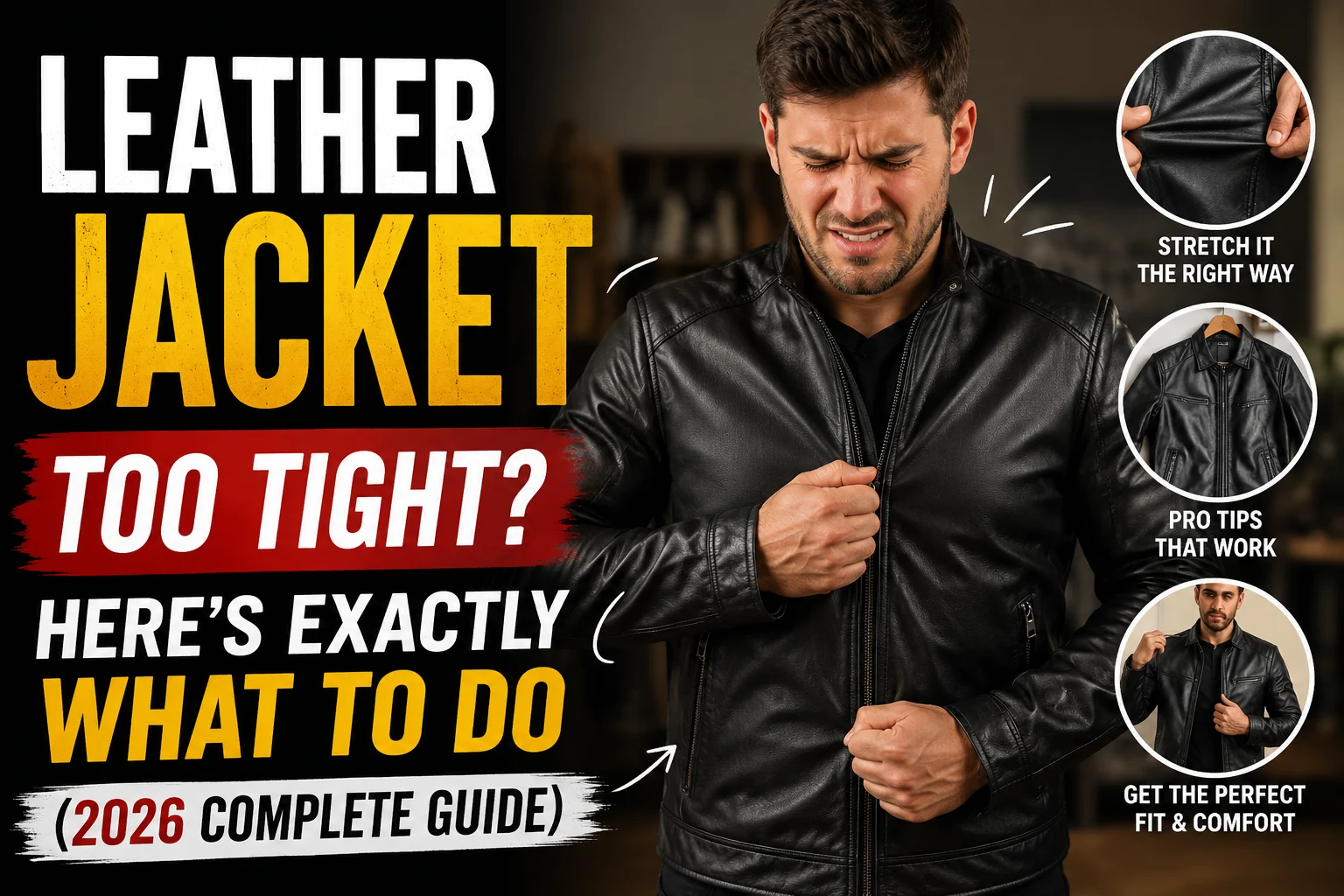
You finally got that leather jacket you’ve been eyeing for months. The leather is gorgeous, the hardware is premium, and the style is exactly what you wanted. But when you try it on, something feels off. The shoulders feel a little snug, the biceps are slightly tight, and when you zip it up, the fit feels closer than you expected. If you’re wondering “why is my leather jacket too tight?” or searching for “how to stretch a leather jacket,” you’re not alone.
Before you panic or assume you ordered the wrong size, take a closer look at how your jacket fits. If it’s only slightly tight but you can still zip it, breathe normally, and move your arms without significant restriction, the leather may simply need time to soften and become more flexible with regular wear.
The truth is, nearly every quality leather jacket feels tight at first. Unlike synthetic materials that stay exactly as they are, genuine leather is a natural material that relaxes, stretches, and conforms to your unique body shape with wear. What feels uncomfortable today can become your most beloved, perfectly fitted jacket within weeks if you know how to stretch a leather jacket that’s too tight safely.
However, there’s a big difference between a slightly snug leather jacket and one that’s genuinely too small. Genuine leather may relax with use, but it won’t necessarily stretch enough to fix an incorrect size. Trying to force an excessively tight jacket to fit can damage the leather, stitching, or lining.
In this guide, we’ll walk you through exactly why leather jackets feel tight initially, what to do if a leather jacket is too tight, how to safely stretch them without causing damage, and when to accept that you might need a different size altogether. We’ll cover everything from leather jacket stretching techniques to leather jacket break-in period expectations, so you can finally enjoy that perfect fit you’ve been dreaming of.
Whether you’re dealing with a tight leather jacket in shoulders, tight leather jacket in arms, or a leather jacket too small, we’ve got you covered with proven methods that work. For more detailed sizing advice, visit our comprehensive size guide.
Quick Answer
If your leather jacket is too tight, you have several safe options:
- Wear it regularly: Regular wear and natural body warmth can help genuine leather soften and become more flexible over time.
- Wear it over your usual layers: Try the jacket over your normal clothing to assess comfort. Don’t force it over a thick sweater just to stretch the leather.
- Use a suitable leather conditioner: If the leather is dry or stiff, a conditioner approved for that particular leather may help maintain suppleness. It won’t necessarily stretch the jacket.
- Move naturally: Bend your elbows, reach forward, and move your shoulders gently while wearing the jacket. Avoid pulling the leather forcefully or applying heat to stretch it.
Methods to avoid: Never soak your leather jacket in water or put it in a washing machine or clothes dryer, this can permanently ruin the leather, causing cracking, warping, and discoloration. Learn more about proper leather jacket care to avoid costly mistakes.
Why Leather Jackets Feel Tight at First
Leather is a natural material, and like your own skin, it has memory, flexibility, and the ability to adapt. When a leather jacket is newly made, the fibers are tightly compressed from the tanning and construction process. The leather hasn’t yet “learned” your body shape.
The Fibers Are Still Tight
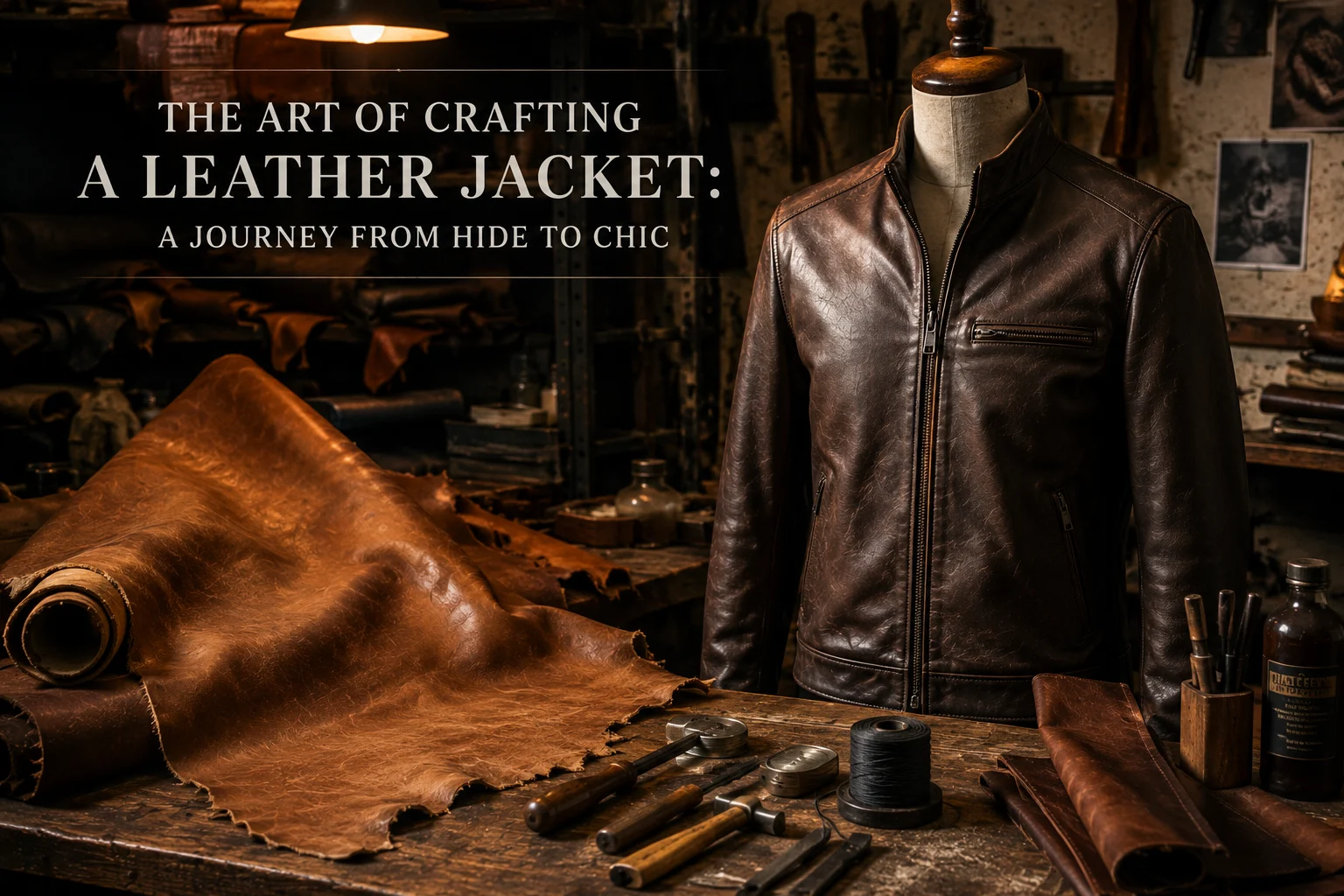
Fresh leather has dense, compressed fibers. As you wear the jacket, your body heat and movement cause these fibers to relax and expand slightly. This is the same reason leather shoes feel stiff at first but become incredibly comfortable after a few wears. To understand more about how leather is made, explore the art of crafting a leather jacket.
Intentionally Snug Fit
Quality leather jackets especially from European brands like LAMMBERG are designed to fit close to the body. Unlike cheap jackets that hang loosely, premium leather jackets are cut to mold to your frame over time. The initial snugness is intentional and part of the design philosophy. Browse our men’s leather jackets or women’s leather jackets to see the quality firsthand.
Safe and Effective Ways to Stretch Your Leather Jacket
1. Wear It Often (The Natural Method)
This is the simplest, safest, and most effective way to stretch a leather jacket.
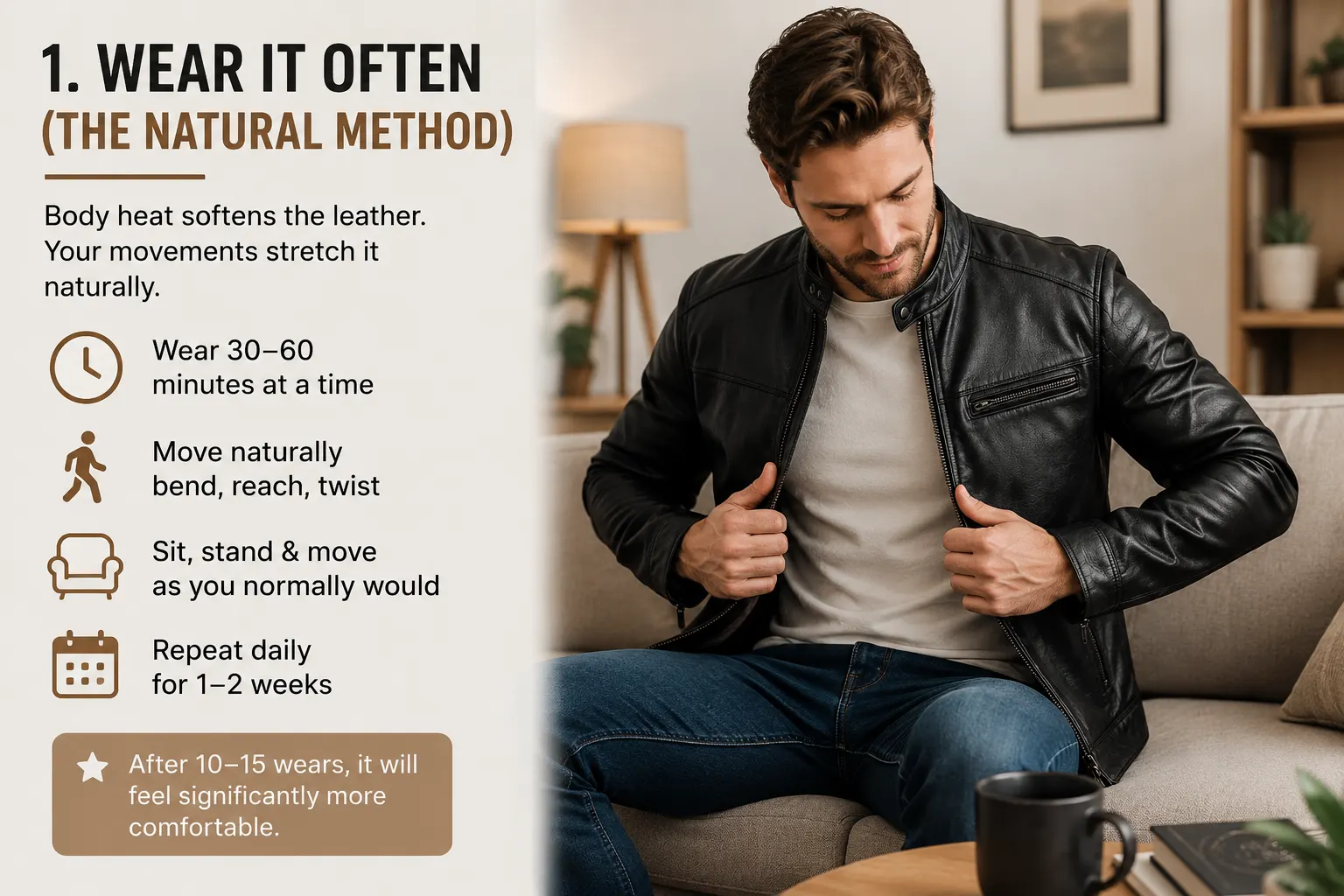
How it works: Your body heat softens the leather fibers, and your natural movements gradually stretch the material in all the right places.
How to do it:
- Wear the jacket around the house for 30–60 minutes at a time
- Start with short sessions and gradually increase duration
- Move your arms naturally bend, reach, twist
- Sit, stand, and move as you normally would
- Repeat daily for 1–2 weeks
What to expect: After about 10–15 wears, you’ll notice the jacket feeling significantly more comfortable, especially in the shoulders, elbows, and back.
2. Wear It Over Your Usual Clothing (The Fit-Check Method)
Before trying to stretch a leather jacket, make sure you’re assessing its fit over the clothes you normally wear.
How it works: Different layers change how a jacket fits. A jacket worn over a T-shirt may feel comfortable, while the same jacket worn over a thick hoodie may feel restrictive.
How to do it:
- Put on the shirt or lightweight layer you would usually wear with the jacket.
- Zip the jacket up without pulling the front panels excessively.
- Move your arms forward and bend your elbows.
- Check whether the chest, shoulders, and upper arms allow comfortable movement.
- If you plan to wear sweaters underneath, assess the fit over your usual sweater before deciding whether the size is right.
Important: Don’t force the jacket over a thick hoodie or multiple layers in an attempt to stretch it. Excessive pressure can strain the seams, lining, and leather. The jacket should remain comfortable throughout the fit check.
3. Leather Conditioner (The Softener Method)
Leather needs moisture to remain flexible. When leather fibers dry out, they become stiff and less forgiving.
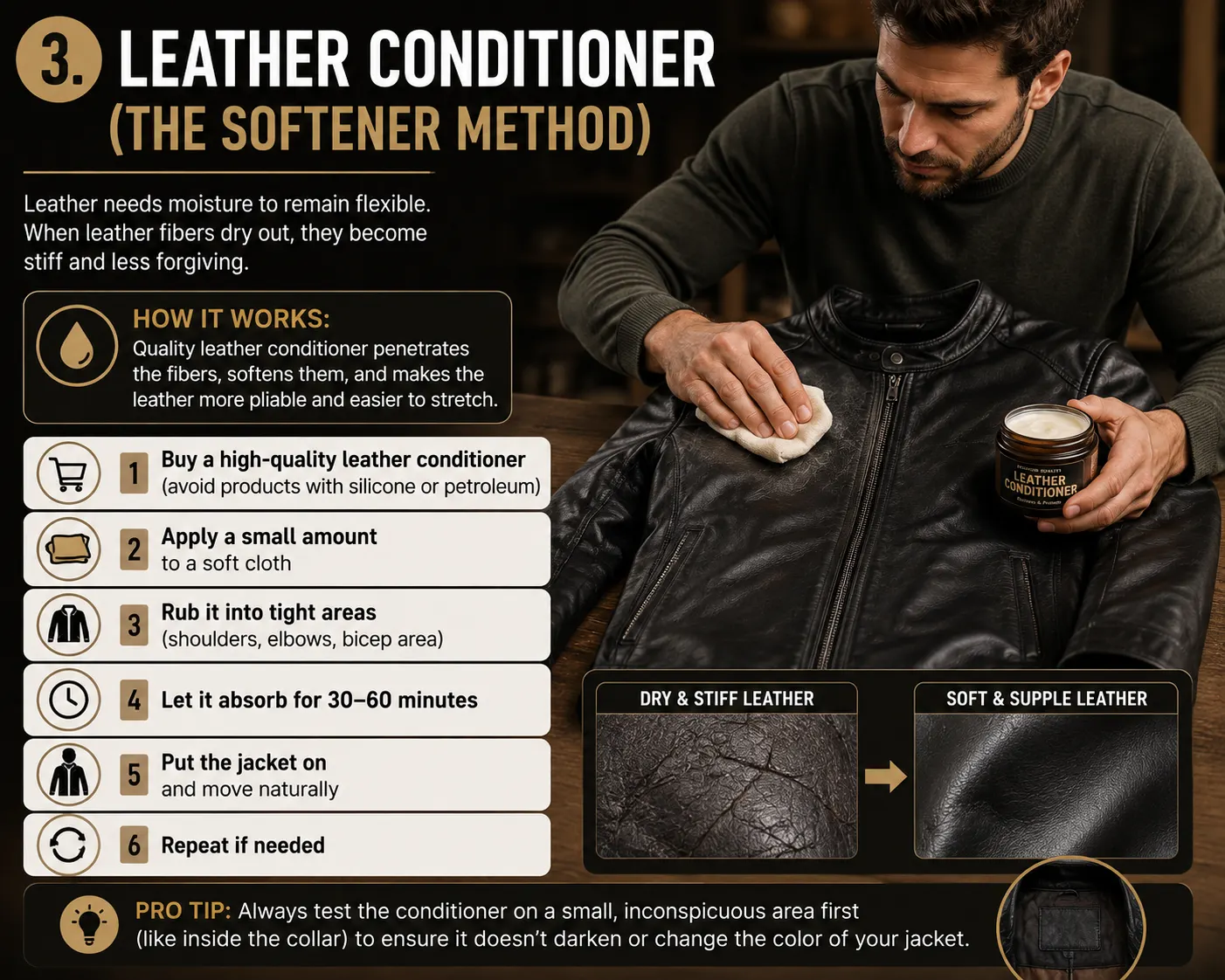
How it works: Quality leather conditioner penetrates the fibers, softens them, and makes the leather more pliable and easier to stretch.
How to do it:
- Buy a high-quality leather conditioner (avoid products with silicone or petroleum)
- Apply a small amount to a soft cloth
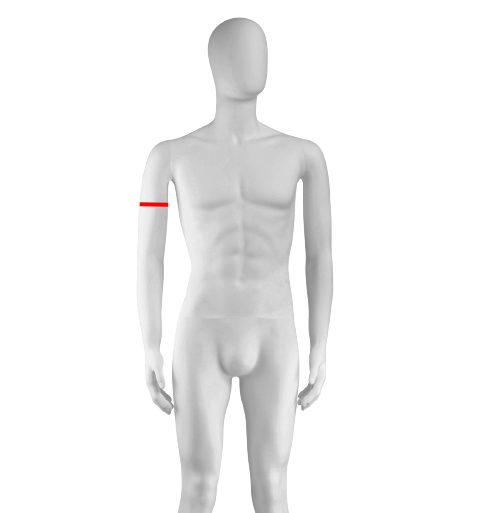
- Rub it into tight areas (shoulders, elbows, bicep area)
- Let it absorb for 30–60 minutes
- Put the jacket on and move naturally
- Repeat if needed
Pro tip: Always test the conditioner on a small, inconspicuous area first (like inside the collar) to ensure it doesn’t darken or change the color of your jacket.
4. Manual Stretching (The Hands-On Method)
Sometimes you need to target specific tight spots directly.
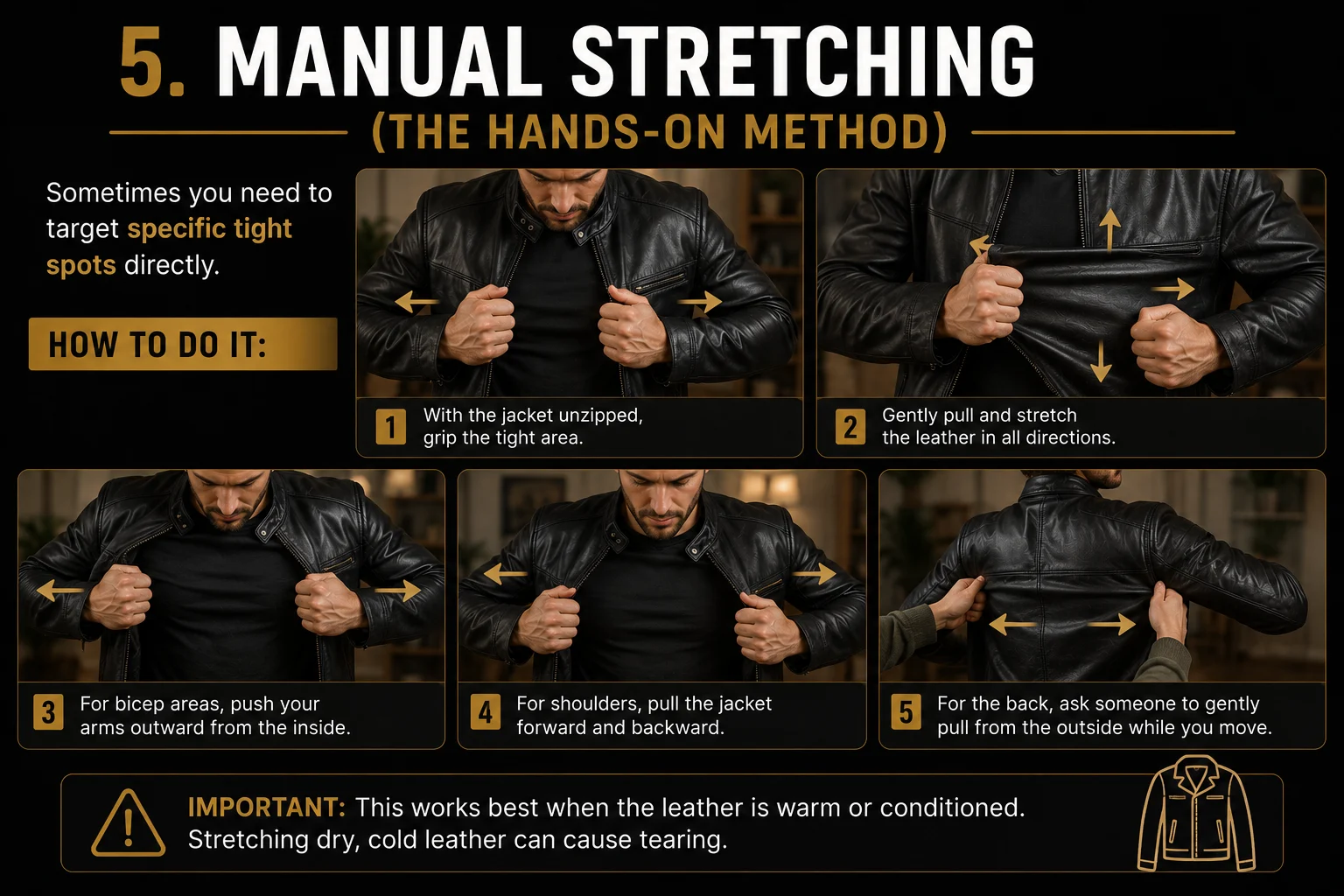
How to do it:
- With the jacket unzipped, grip the tight area
- Gently pull and stretch the leather in all directions
- For bicep areas, push your arms outward from the inside
- For shoulders, pull the jacket forward and backward
- For the back, ask someone to gently pull from the outside while you move
Important: This works best when the leather is warm or conditioned. Stretching dry, cold leather can cause tearing.
What NOT to Do (Common Mistakes to Avoid)
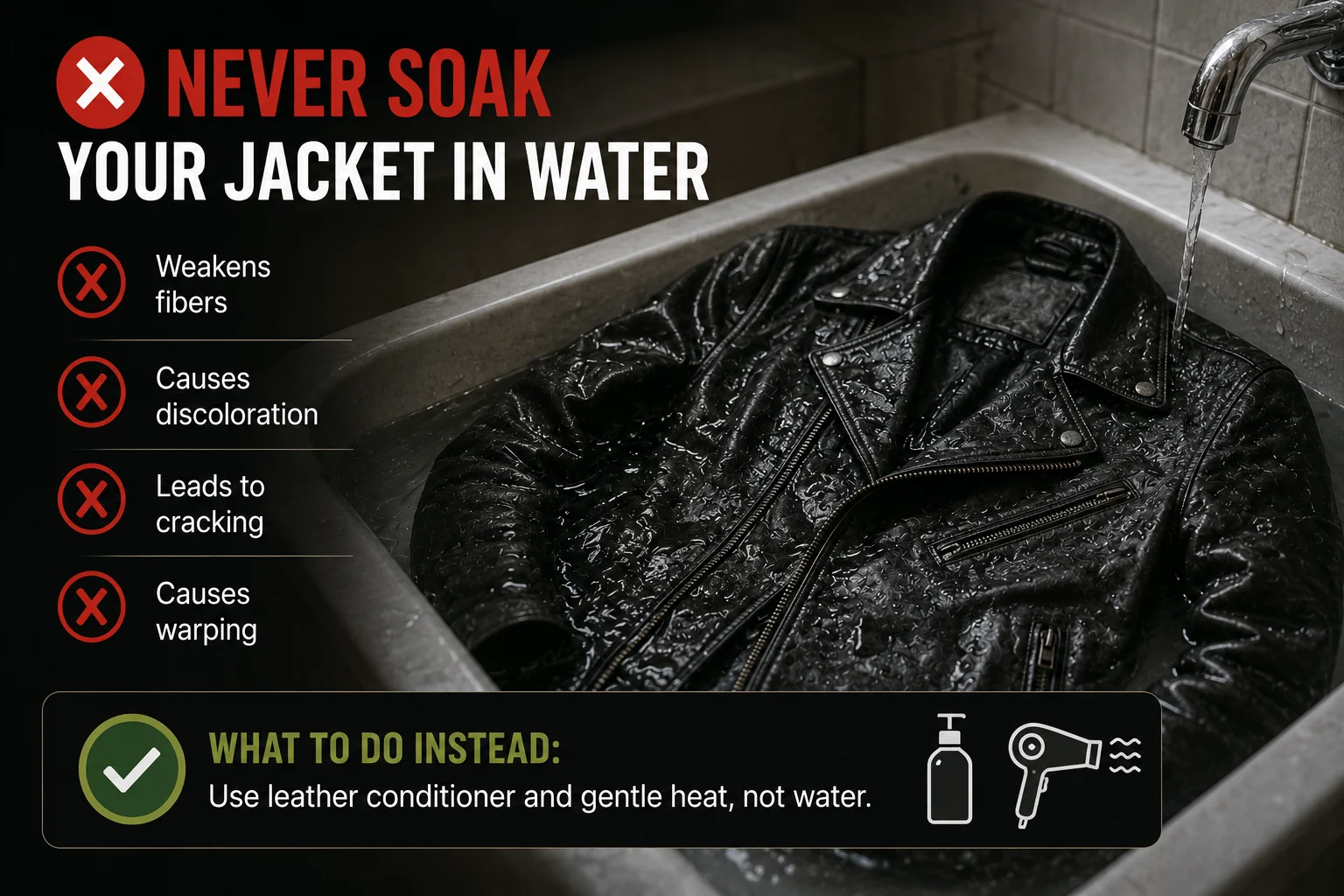
1. NEVER Soak Your Jacket in Water
This is the most common mistake people make. Water damages leather in several ways:
- Weakens fibers – Water breaks down the natural oils in leather
- Causes discoloration – Water can leave permanent spots and stains
- Leads to cracking – As water evaporates, it pulls moisture out, causing cracks
- Warping – Wet leather can lose its shape permanently
What to do instead: Use leather conditioner and gentle heat, not water.
2. NEVER Use a Washing Machine or Dryer
This should go without saying, but leather jackets should NEVER go in the washing machine or dryer. The aggressive agitation, water, and heat will ruin your jacket completely. For proper care instructions, read our guide on what every owner should know about leather jackets getting wet.
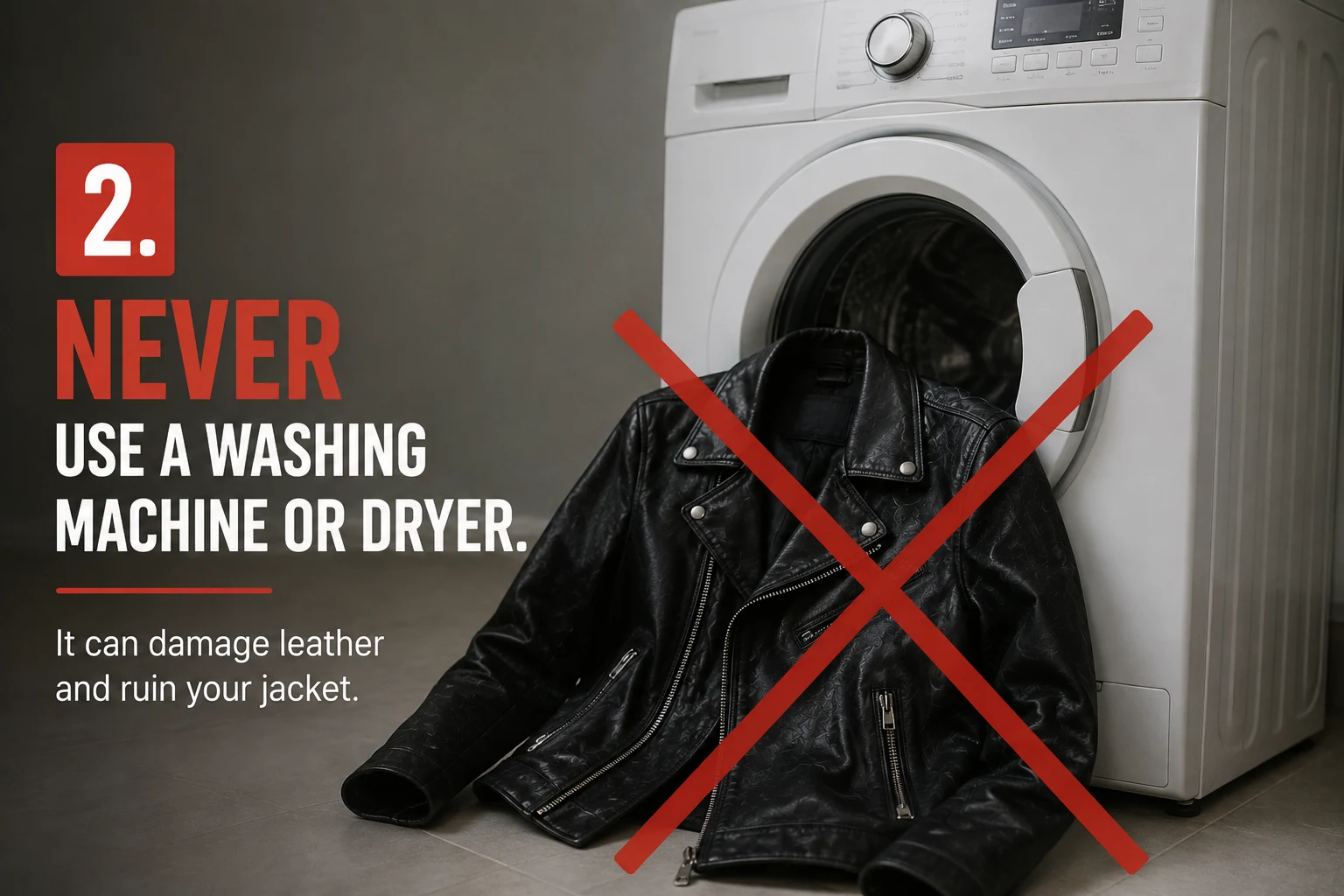
What happens: Stitching loosens, hardware gets damaged, leather cracks, shape warps, color fades.
3. Avoid Harsh Chemicals
Some people try to soften leather using household chemicals. This is dangerous for your jacket.
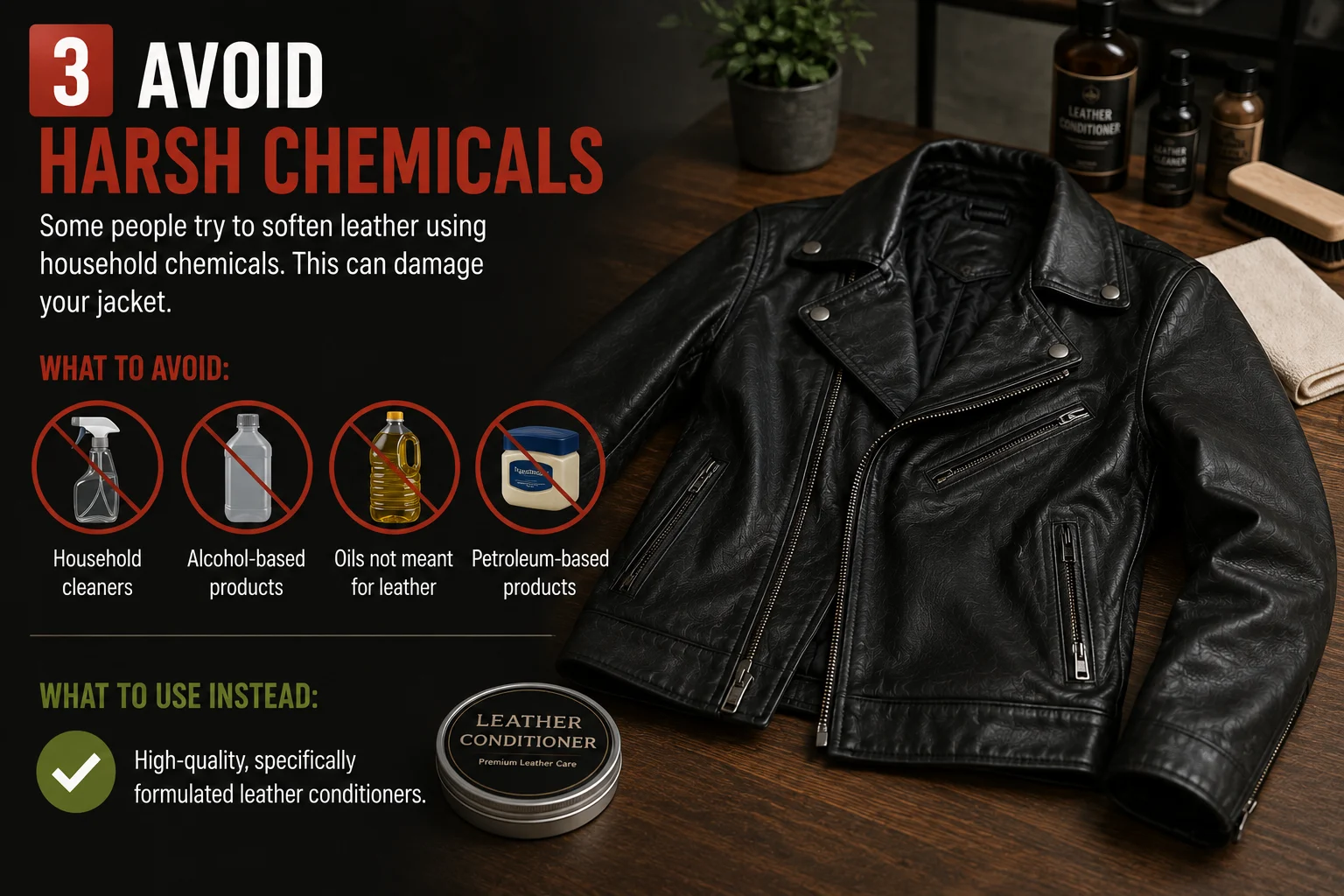
What to avoid:
- Household cleaners
- Alcohol-based products
- Oils not meant for leather (like cooking oil or baby oil)
- Petroleum-based products
What to use instead: High-quality, specifically formulated leather conditioners.
4. Don’t Rush the Process
Stretching leather takes time. Trying to stretch it all at once can damage the material.
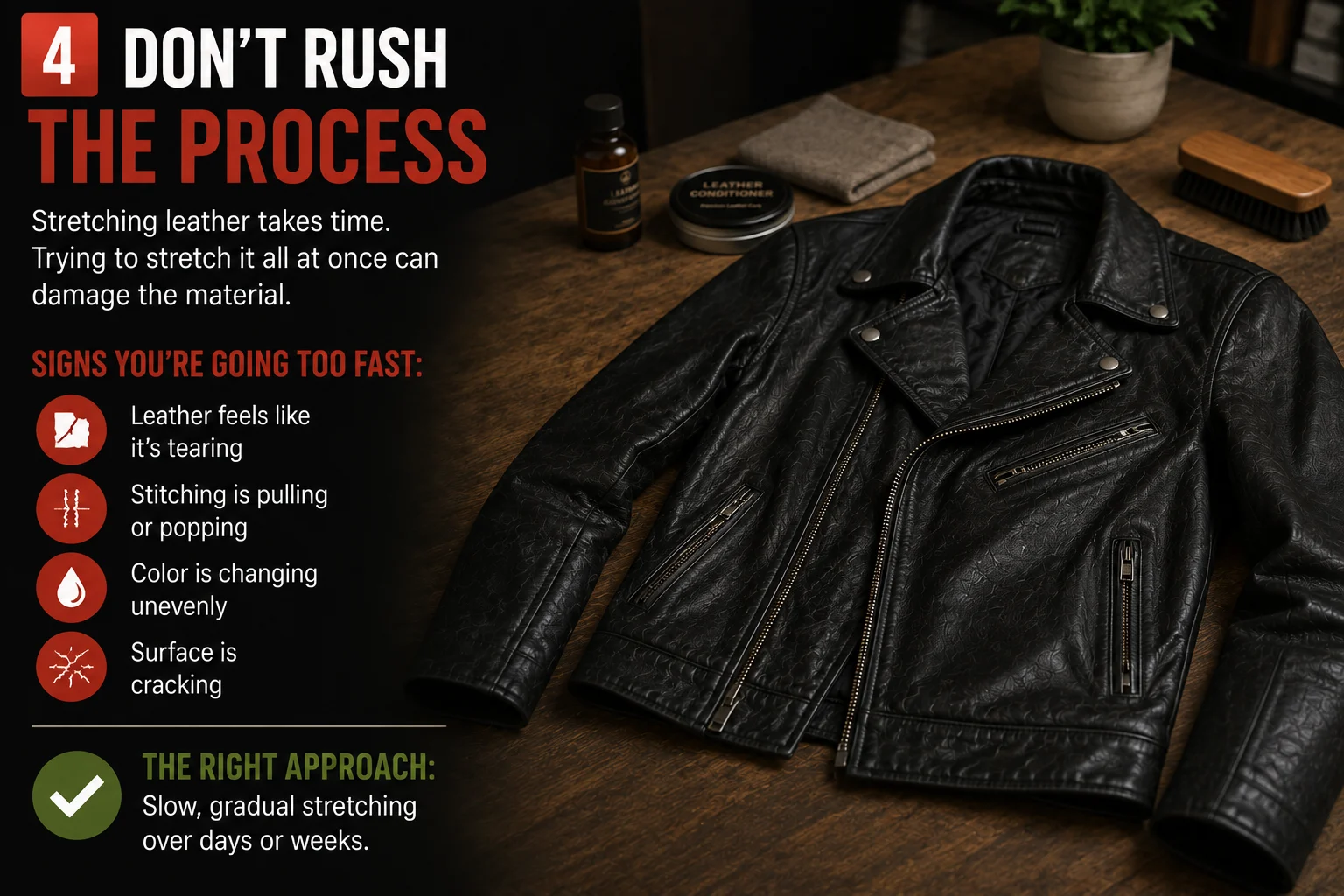
Signs you’re going too fast:
- Leather feels like it’s tearing
- Stitching is pulling or popping
- Color is changing unevenly
- Surface is cracking
The right approach: Slow, gradual stretching over days or weeks.
5. Do Not Expect the Leather to Stretch Everywhere
Leather may relax or stretch slightly in some areas, but the results are unpredictable.
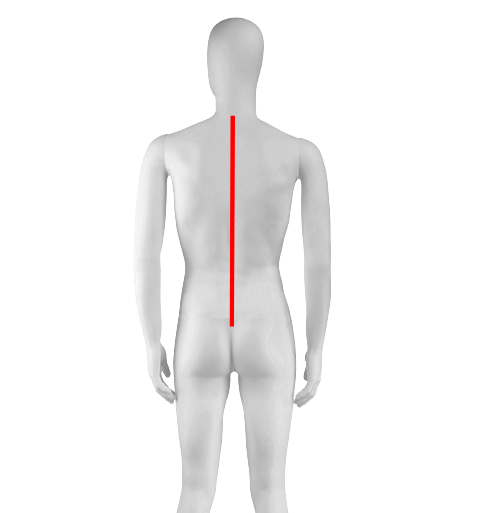
The sleeves and body length, for example, should not be expected to increase meaningfully through regular wear.
If the jacket is too short in the sleeves or torso, breaking it in will not reliably solve the problem.
Signs You Might Actually Have the Wrong Size
While most tight leather jackets will stretch to fit, sometimes the jacket is simply too small. Here’s how to tell the difference.
When to Keep and Stretch:
- The jacket is snug but not painful
- You can move your arms freely (even if it’s tight)
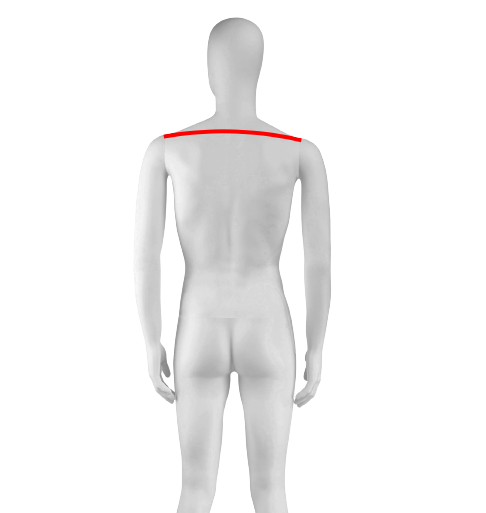
- The shoulders sit at the edge of your natural shoulder bone
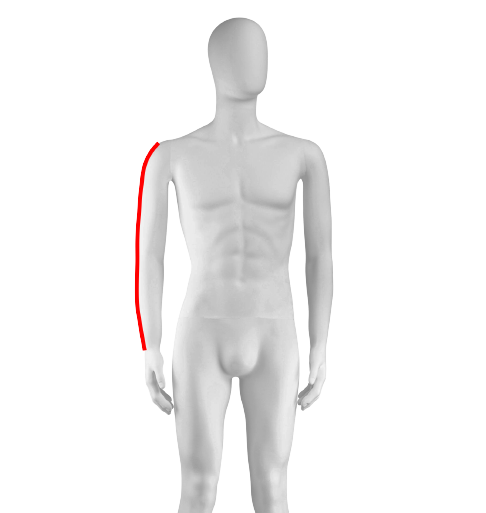
- Sleeves end at your wrist bone
- Zipping is tight but possible
- The leather feels firm rather than genuinely restrictive.
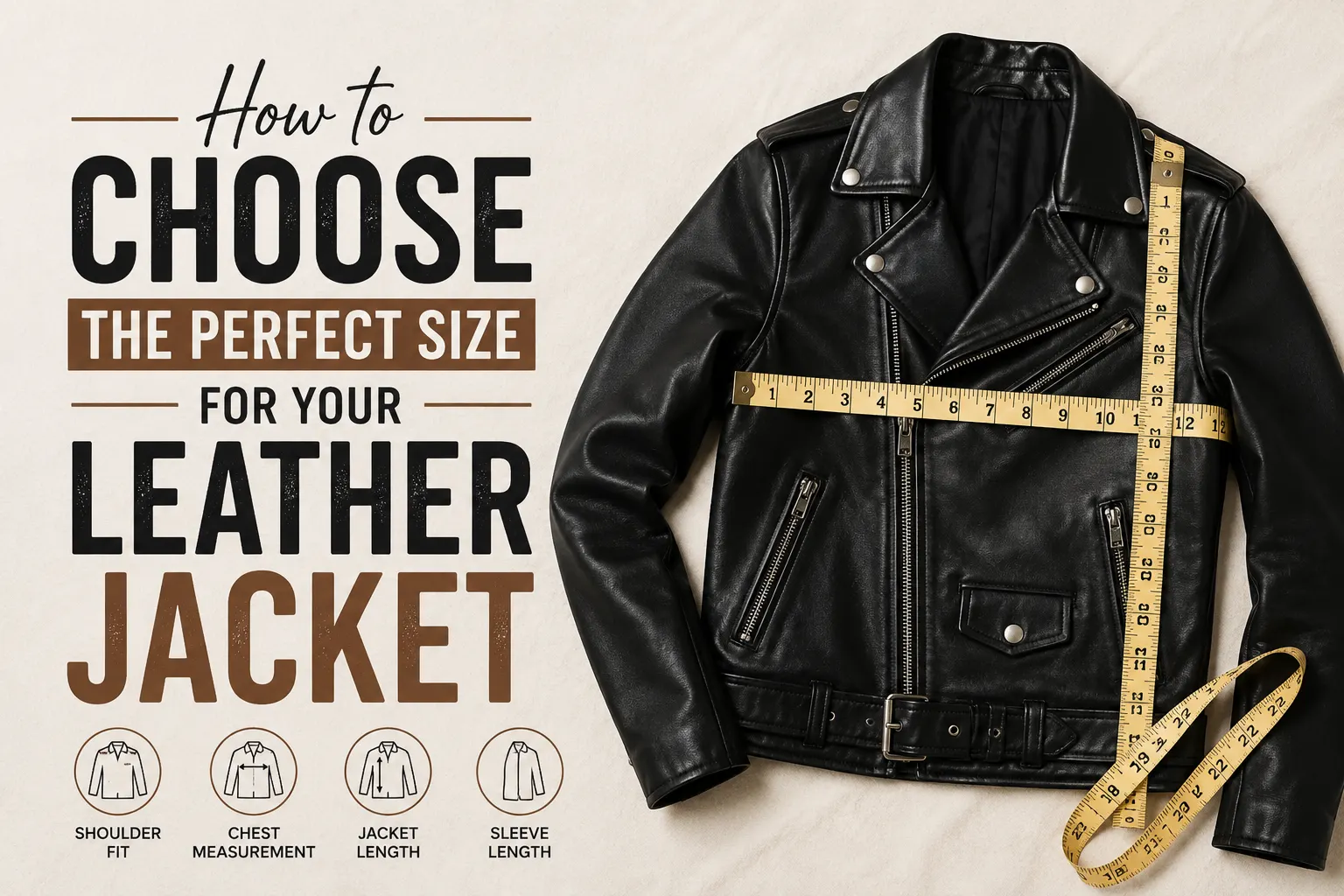
For help finding the perfect fit, visit our guide on how to choose the perfect size.
When to Consider Exchanging:
- Painful tightness – If it hurts to wear, it’s too small
- Can’t zip at all – If you can’t zip it up comfortably, size up
- Shoulders are too narrow – If shoulder seams sit on your shoulders instead of at the edge, it won’t stretch enough
- Sleeves are too short – Leather stretches in width, not length
- Feeling of constriction – If you feel like you can’t breathe naturally, it’s too small
Important: Leather stretches in width (shoulders, chest, bicep) but hardly stretches in length (sleeves, torso). If sleeves or body length are too short, exchange for a larger size.
Patience is key. Your leather jacket took time to make; it will take time to fit perfectly.
How Long Does It Take for a Leather Jacket to Become More Comfortable?
There is no universal break-in period for leather jackets.
Some jackets soften after a few wearing sessions, while others take longer because of their leather type, thickness, finish, and construction.
| Situation | What to expect |
|---|---|
| Slightly snug, flexible leather | May become more comfortable with regular wear |
| Firm, structured leather | May take longer to soften |
| Dry or stiff leather | Appropriate leather care may help, if recommended |
| Incorrect chest or shoulder fit | Break-in is unlikely to solve the underlying problem |
| Sleeves or body too short | A different size or professional alteration may be necessary |
Caring for Your Leather Jacket During the Break-In Period
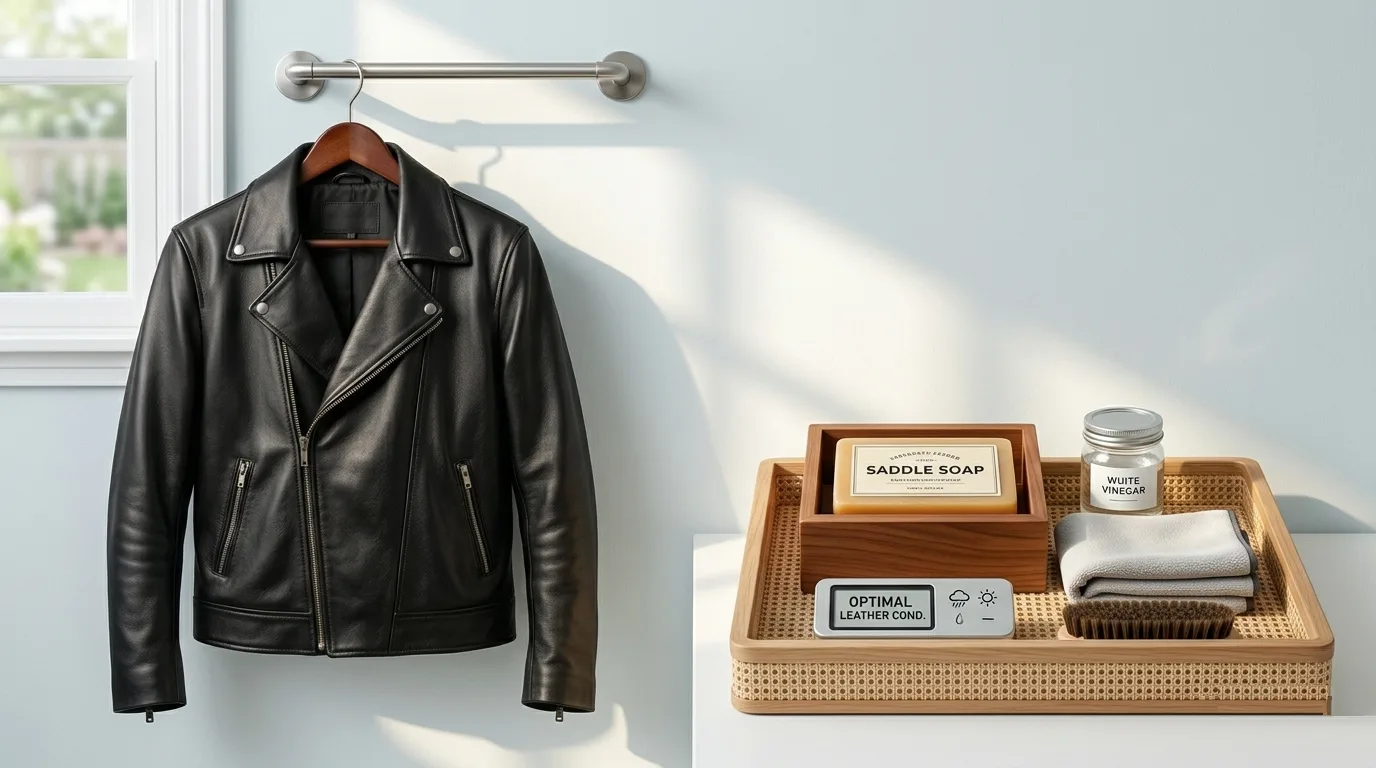
Keep It Conditioned
Conditioning isn’t just for stretching it’s essential for leather health. Well-conditioned leather stretches better, resists cracks, and looks better longer. For more detailed care advice, read our guide on how to get smell out of leather jacket.
Schedule: Condition every 3-6 months during the first year, then every 6-12 months after that.
Store It Properly
How you store your jacket affects how it breaks in.
Do:
- Hang on a padded hanger
- Keep in a cool, dry place away from direct sunlight
- Allow space between jackets to breathe
Don’t:
- Fold your leather jacket
- Store in plastic bags
- Hang in direct sunlight
- Store near heat sources
Rotate Your Wear
If you have multiple jackets, rotate them. This allows each jacket to rest and recover its shape between wears, which actually helps maintain its fit.
Does the Type of Leather Affect the Break-In Process?
Yes. Different types of leather can feel and behave differently.
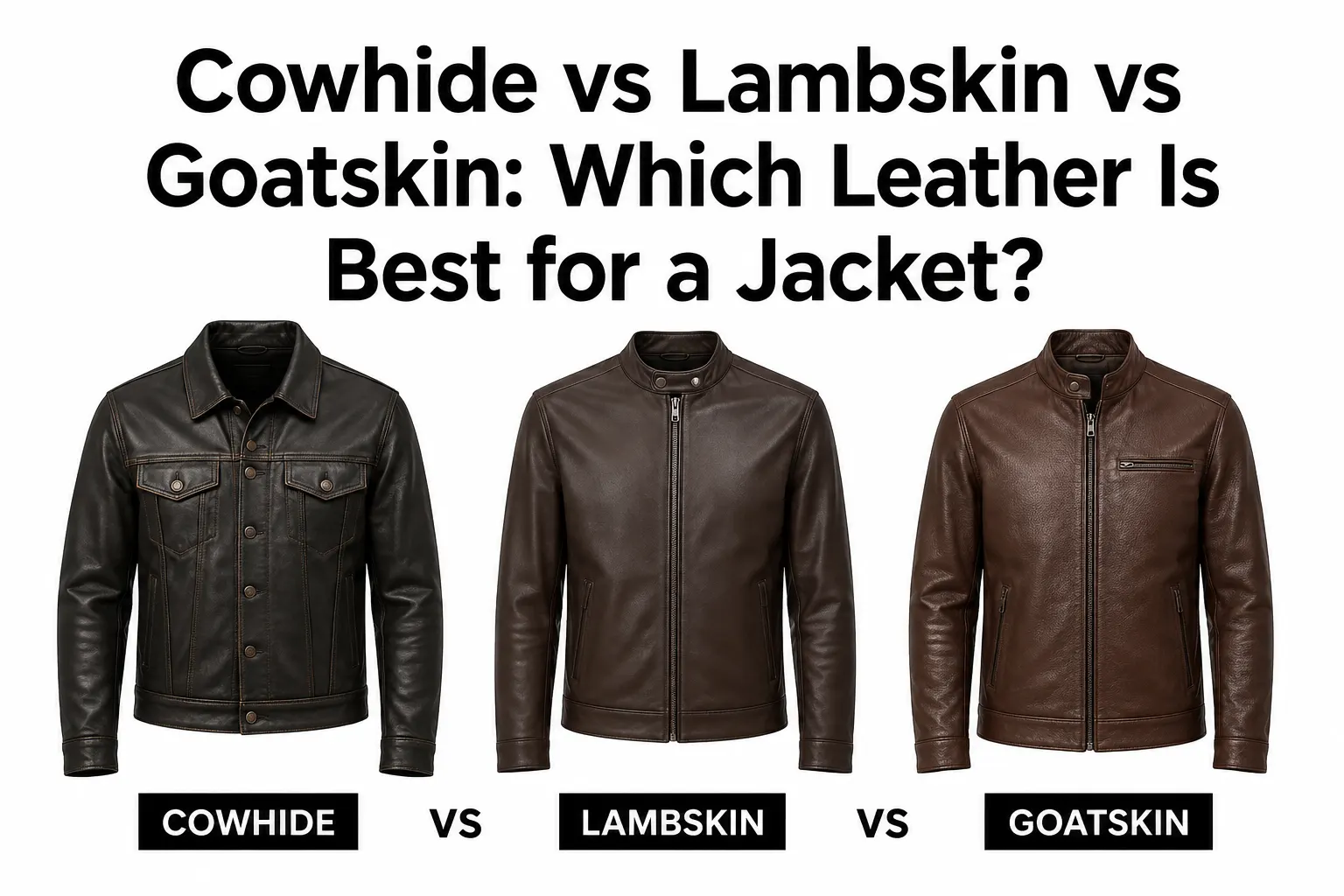
Sheep Leather
Sheep leather is often soft and lightweight, although its feel depends on the hide and finishing process. Many sheep leather jackets feel flexible from the beginning.
If a sheep leather jacket is slightly snug, normal wear may help it feel more natural. However, delicate leather should not be stretched aggressively.
Goat Leather
Goat leather can offer a combination of flexibility, durability, and a distinctive grain. Depending on its finish and thickness, it may feel supple or relatively firm.
Its ability to relax with wear depends on the particular leather and jacket construction.
Cowhide Leather
Cowhide is commonly used for structured and durable jackets. Some cowhide jackets can feel firm initially and gradually become more flexible with use.
However, a stiff cowhide jacket will not necessarily stretch enough to correct a size that is too small.
Suede and Nubuck
Suede and nubuck have specialised surface finishes that require appropriate care.
Avoid applying ordinary leather conditioners or attempting heat-based stretching unless the product and treatment are specifically suitable for that material.
If a suede or nubuck jacket is slightly snug, normal comfortable wear is the safer starting point.
Understanding Different Jacket Styles and Their Fit
Different styles of leather jackets fit differently, and understanding this helps set expectations. Explore our full men’s leather jacket collection and women’s leather jacket collection to find your perfect style.
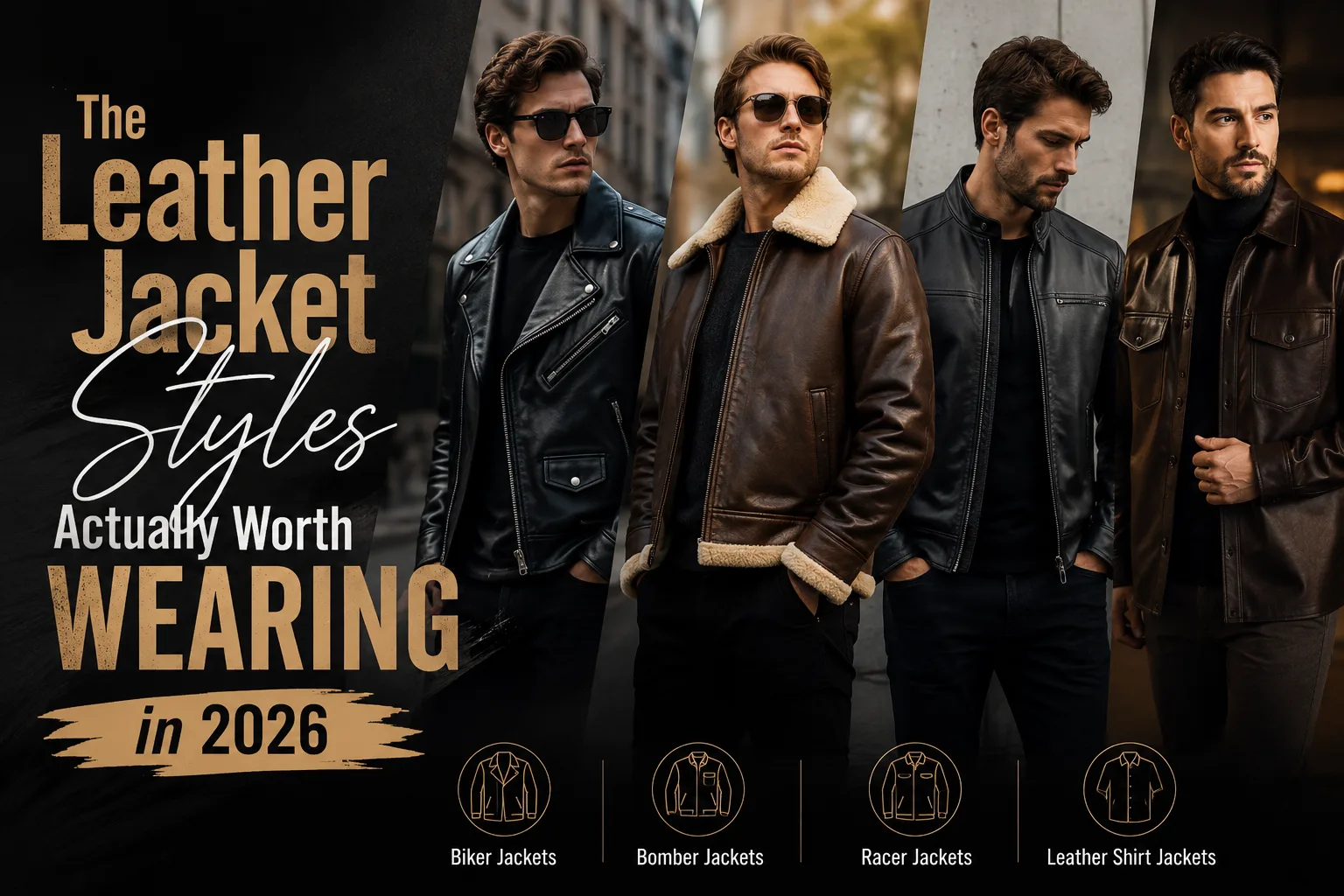
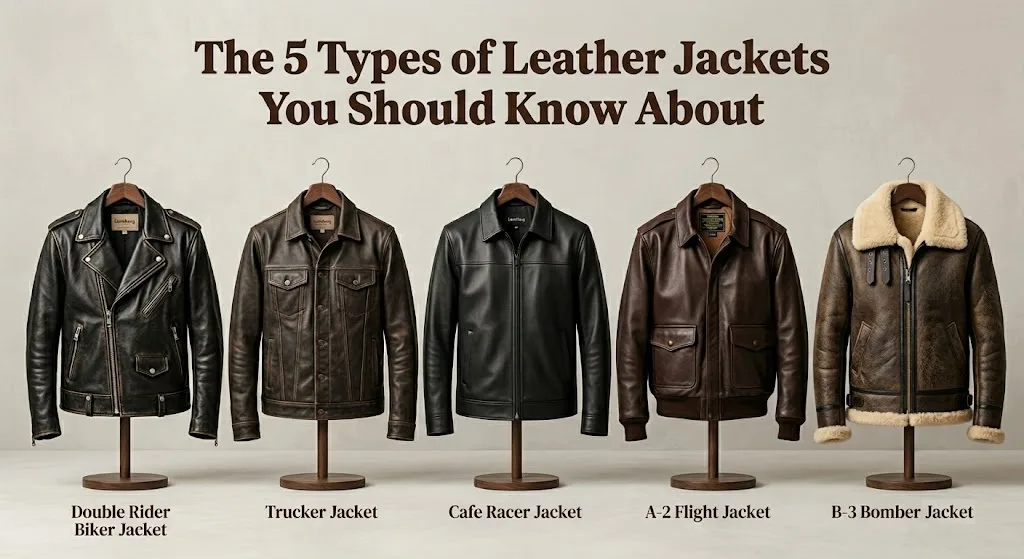
Biker Jacket (Motorcycle Jacket)
- Fit: Intentionally snug, designed for riding position
- Stretch points: Shoulders, bicep, back
- What to expect: Tightest when zipped; often worn open
- Who it’s for: Slimmer frames, confident style
Bomber Jacket
- Fit: Relaxed through the body, fitted through shoulders
- Stretch points: Shoulders, ribbed cuffs
- What to expect: More forgiving than biker styles
- Who it’s for: Most body types, versatile wear
Café Racer
- Fit: Sleek, minimalist, close-fitting
- Stretch points: Chest, shoulders
- What to expect: Very fitted through torso
- Who it’s for: Taller frames, refined casual
Leather Trucker
- Fit: Slightly boxy, Western influence
- Stretch points: Shoulders, chest
- What to expect: More relaxed than biker
- Who it’s for: Casual wear, broader shoulders
Shearling Aviator
- Fit: Boxy, designed for layering
- Stretch points: Shoulders, body
- What to expect: More forgiving than other styles
- Who it’s for: Cold climates, maximum warmth
Frequently Asked Questions
1. Will my leather jacket stretch naturally?
Yes. Real leather stretches and molds to your body over time with regular wear. The heat from your body and the natural movement of your arms and shoulders help the fibers relax. This is a normal part of the break-in process and typically takes 1-2 weeks of consistent wear.
2. Can I stretch a leather jacket with water?
It’s not recommended. Water can damage leather by weakening fibers, causing discoloration, and leading to cracks and warping. Use leather conditioner and gentle heat instead for safe stretching.
3. Does wearing a leather jacket in the rain help stretch it?
No. Rain water can damage leather, leaving water spots, weakening fibers, and potentially causing warping as it dries. If your jacket gets wet, let it air dry naturally away from heat and use leather conditioner after. Learn more about how to handle wet leather jackets.
4. How long should a leather jacket feel tight?
If you’re using natural methods (just wearing it), expect 1-2 weeks of regular use. If it’s still painfully tight after 3 weeks, it might be the wrong size.
5. Can I stretch just the arms of my leather jacket?
Yes. Focus on specific tight areas while wearing the jacket and stretching your arms outward. You can also apply leather conditioner to the tight areas before stretching.
6. What’s the difference between breaking in and stretching?
Breaking in refers to the leather softening and molding to your body naturally. Stretching is the actual expansion of the material to accommodate your size. Both happen simultaneously with regular wear.
7. What if the lining is tight but the leather fits?
If the outer leather fits well but the lining feels restrictive, a tailor can adjust or replace the lining without affecting the leather. This is a relatively simple alteration for a professional.
8. Does leather conditioner darken the jacket?
Some conditioners may slightly darken lighter leathers. Always test on a small, inconspicuous area first (inside the collar) before applying to the entire jacket.
9. Should I sleep in my leather jacket to stretch it?
No. Sleeping in a leather jacket can damage the leather and stitching. The pressure from sleeping positions can cause creasing and stress on seams. Stick to wearing it during waking hours for short sessions.
10. Can I stretch faux leather (PU leather)?
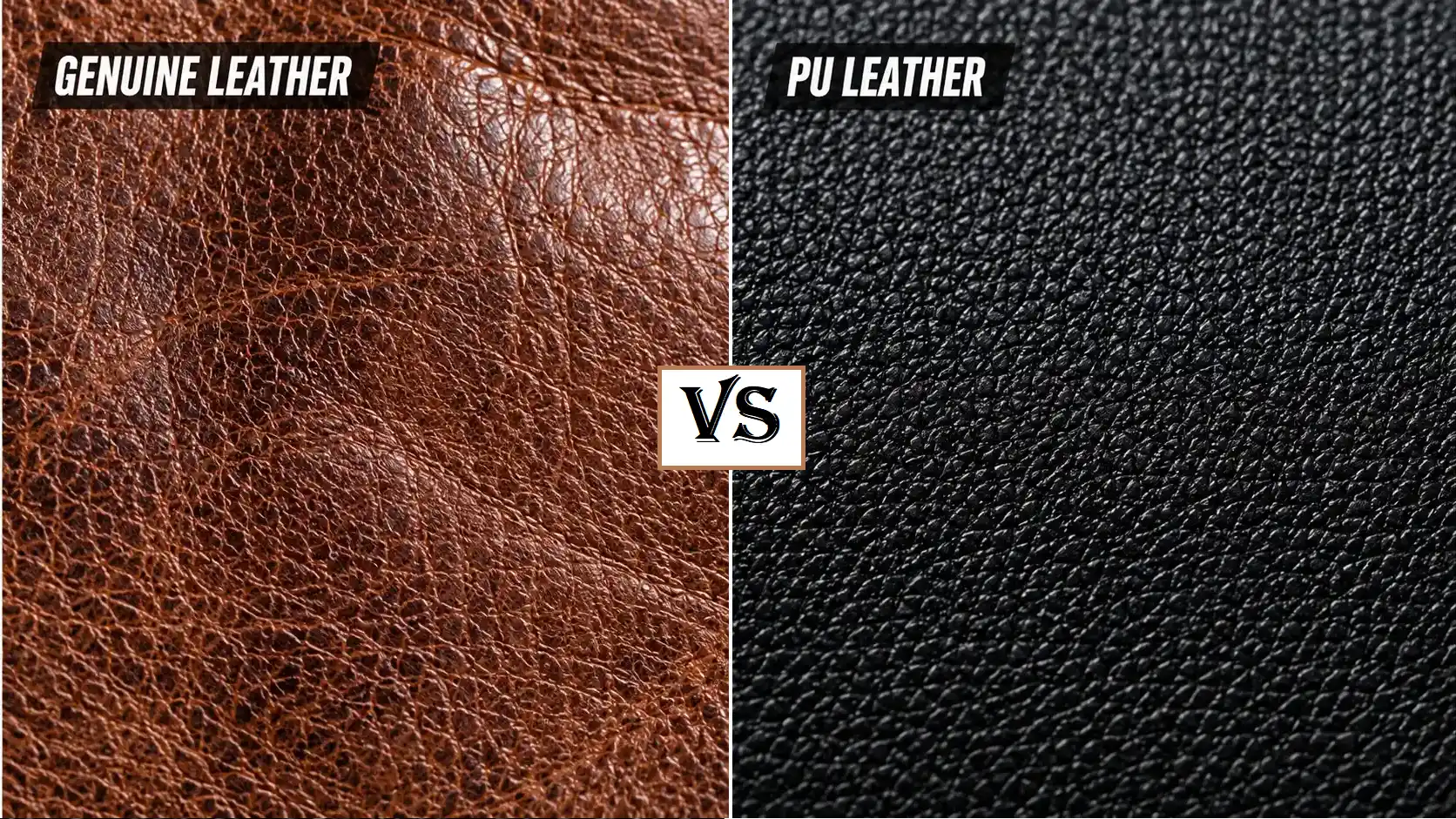
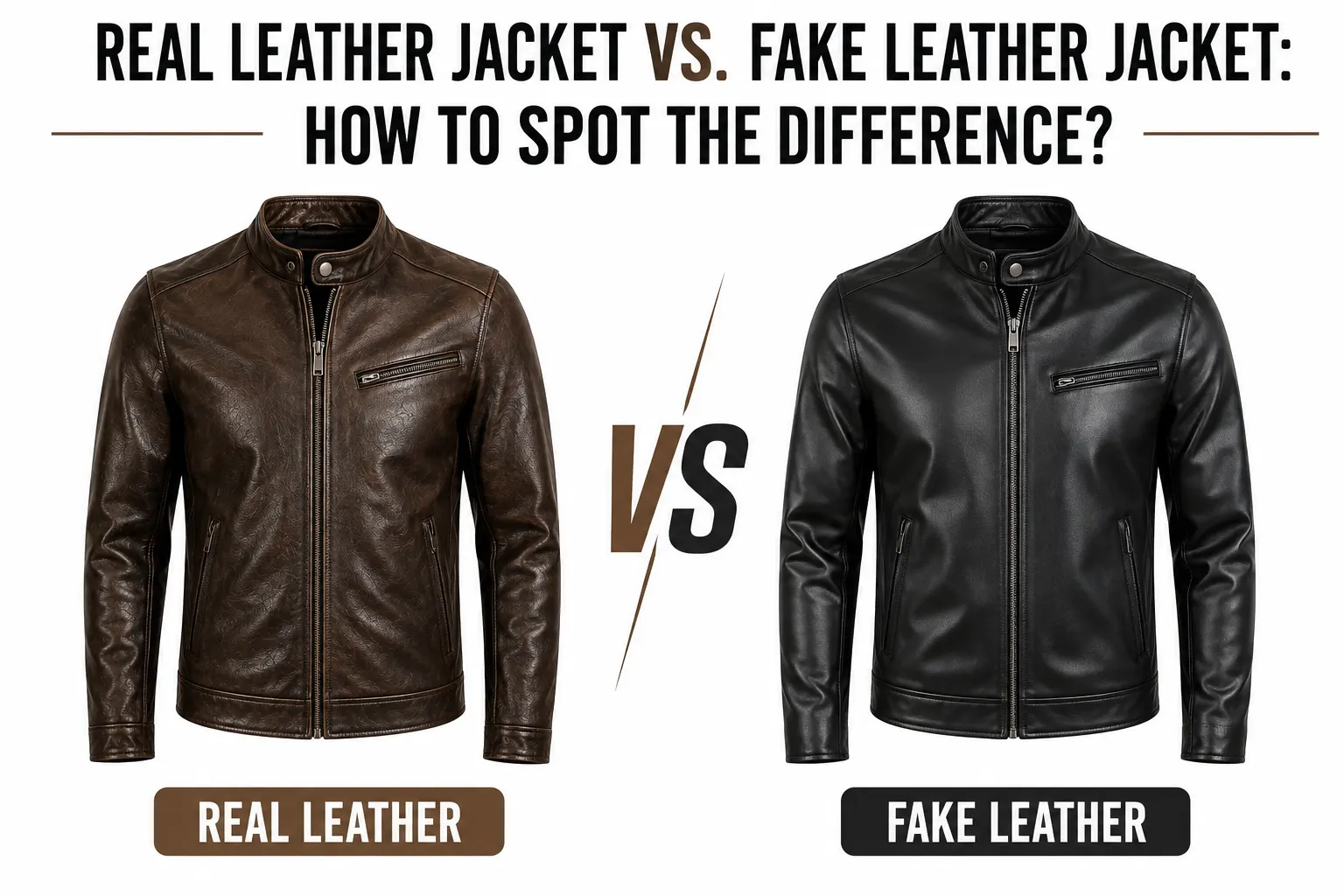
Faux leather doesn’t stretch the same way as genuine leather. It’s more likely to crack or tear under pressure. If a faux leather jacket is too tight, your options are limited exchanging for a larger size is usually the best solution. Learn the difference between PU leather vs genuine leather before buying.
11. When should I take my jacket to a professional?
Consider professional help if:
- You’ve tried home methods for 2-3 weeks with no improvement
- The jacket is very expensive or sentimental
- You’re worried about damaging it
- The fit issue is complex (e.g., both the leather and lining need adjustment)
Final Verdict: A Tight Leather Jacket is Usually a Good Sign
If your leather jacket feels tight, especially when new, you’re likely right where you should be. Quality leather jackets are designed to be snug initially, allowing the material to mold to your unique body shape over time.
Here’s what to remember:
The right tightness: The jacket should feel snug but not painful. You should be able to move your arms, breathe comfortably, and the jacket should sit correctly on your shoulders. Sleeves should reach your wrist, and the body length should be appropriate for the style.
Give it time: With 1-2 weeks of regular wear, most leather jackets become significantly more comfortable. The leather relaxes, the fibers soften, and the jacket starts to feel like it was made for you.
Use safe methods: Focus on natural methods (regular wear, layering, conditioning) before trying more aggressive techniques. Patience will pay off with a perfect-fitting jacket that ages beautifully.
Know when to size up: If the jacket is painfully tight, you can’t zip it, or the sleeves and body length are too short, it’s better to exchange for a larger size before investing time in stretching.
At LAMMBERG, we believe a well-made leather jacket should combine quality materials, thoughtful construction, and a comfortable fit.
Whether you prefer soft sheep leather, durable cowhide, or a classic biker jacket, choosing the right fit from the beginning can save you the hassle of dealing with an uncomfortable jacket later.
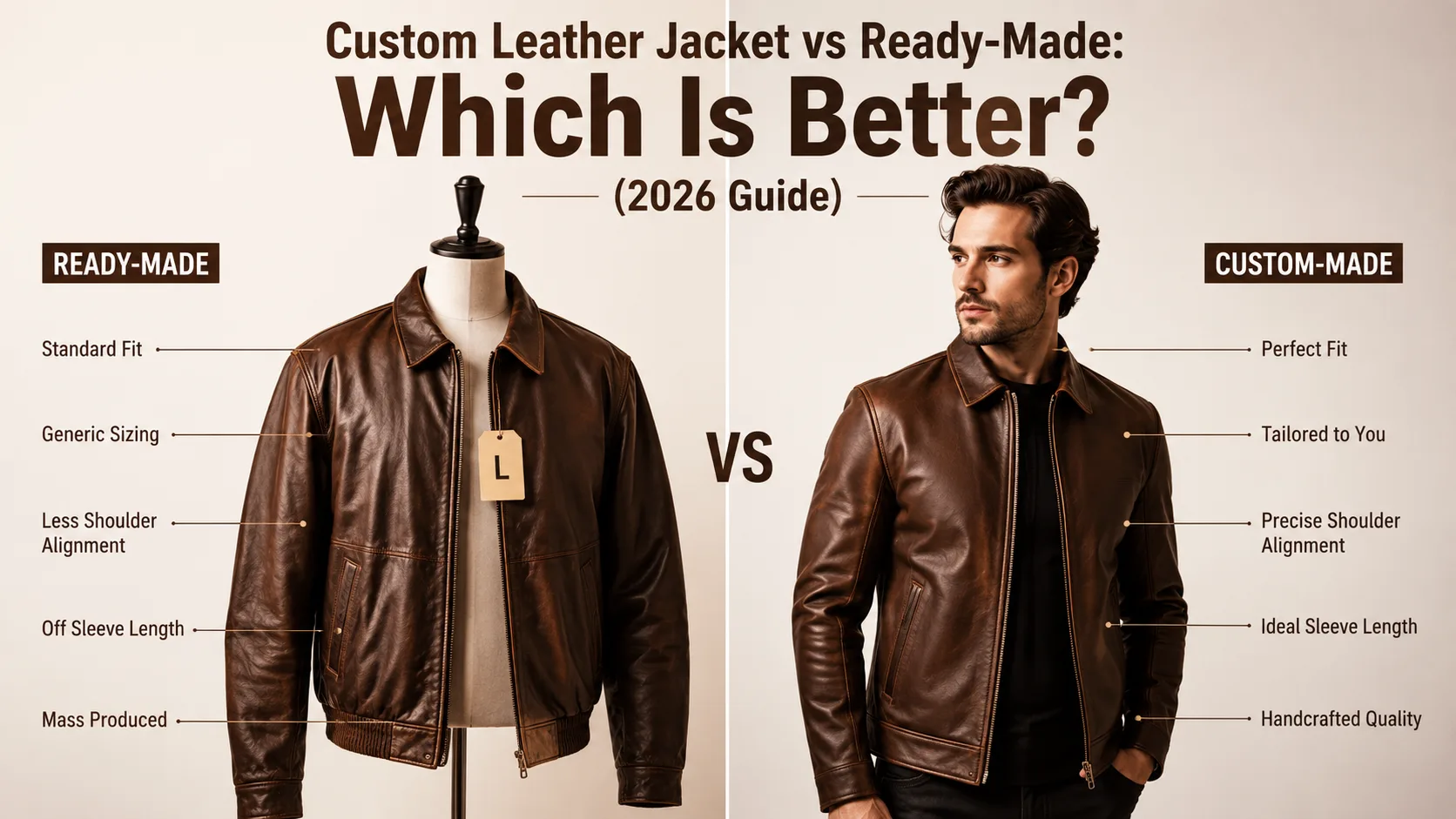
That’s why we offer bespoke leather jackets made to your measurements. Instead of buying a standard-size jacket and hoping it fits perfectly, you can have a jacket crafted to your preferred measurements for a more personalized fit. Our bespoke option helps you avoid common sizing issues and the inconvenience of trying to stretch a jacket that feels too tight or adjusting one that doesn’t fit as expected.
Explore our men’s and women’s leather jacket collections, or discover our bespoke leather jacket service if you’d prefer a jacket made to your measurements from the start.
Visit our blog section for more leather jacket care guides, style advice, and premium leather outerwear inspiration.




















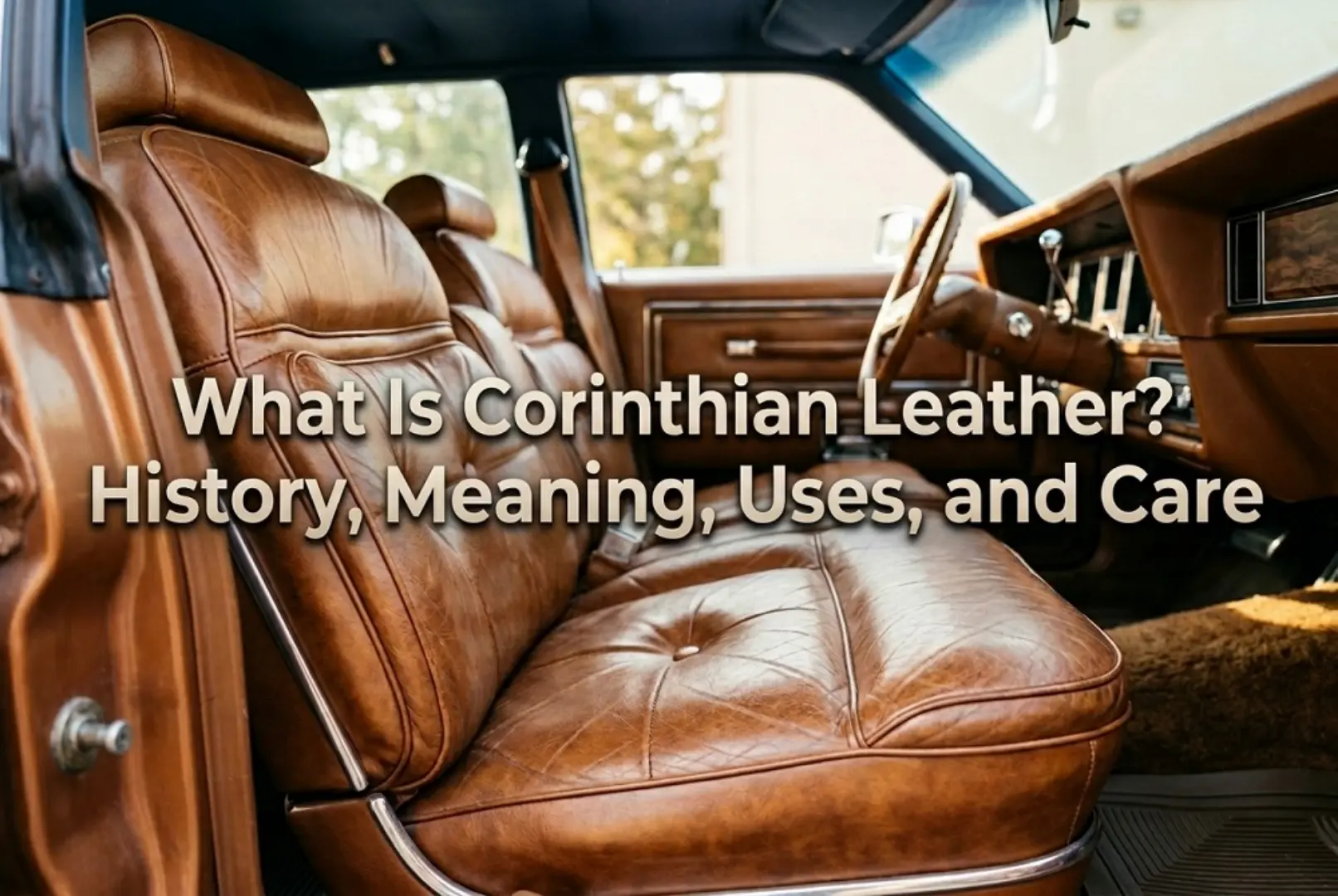
What Is Corinthian Leather? History, Meaning, Uses, and Care
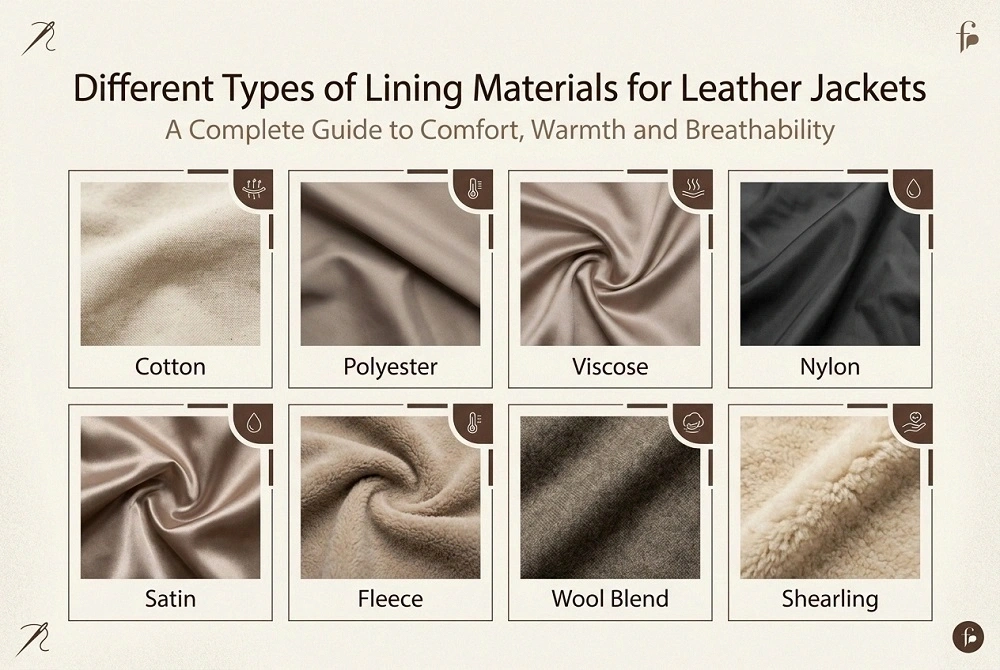
Different Types of Lining Materials Used for Jackets