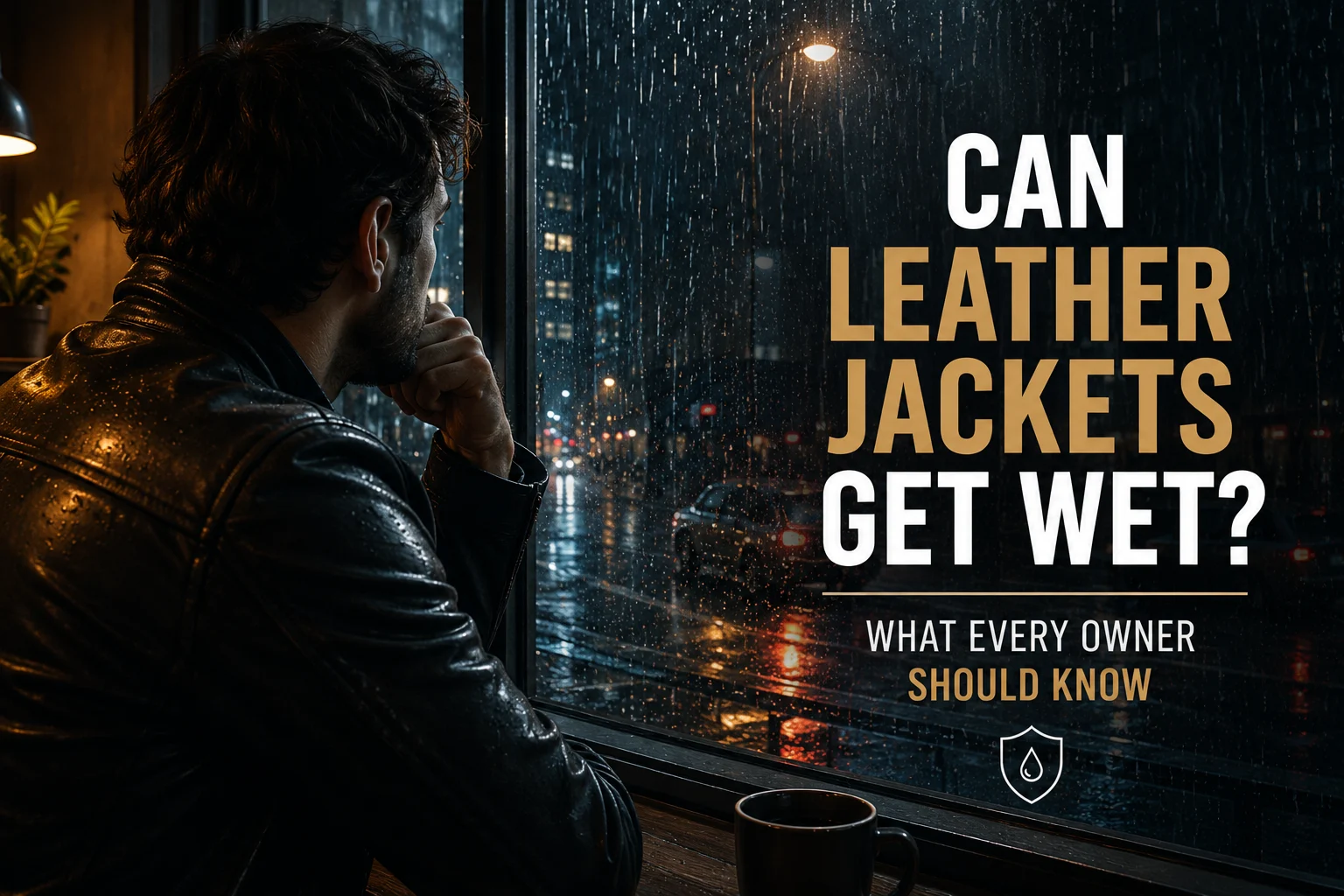
You’re a few minutes from home when the sky opens up. You’re wearing the leather jacket you saved up months for, and your first thought isn’t about staying dry it’s whether this rain just ruined it.
Short answer: no, a little rain won’t destroy a well-made leather jacket. Leather is a naturally porous material its fibers have microscopic gaps that let moisture in, which is exactly why it reacts to water differently than a raincoat or a synthetic jacket does. Brief exposure is manageable. What actually causes damage is prolonged soaking combined with poor aftercare, not the rain itself. What you do in the hour after matters more than the rain drop that started it.
Can Leather Jackets Get Wet in the Rain?
Yes. A few drops or a short walk through drizzle won’t automatically damage a quality jacket, and most leather recovers well when it’s dried correctly afterward. Where people run into real trouble is treating every jacket the same way. A heavyweight biker jacket in full-grain cowhide handles a shower very differently than a lightweight lambskin fashion piece one has more density and natural toughness, the other has a softer, more delicate finish. Both can be premium; they just carry different tolerances for weather.
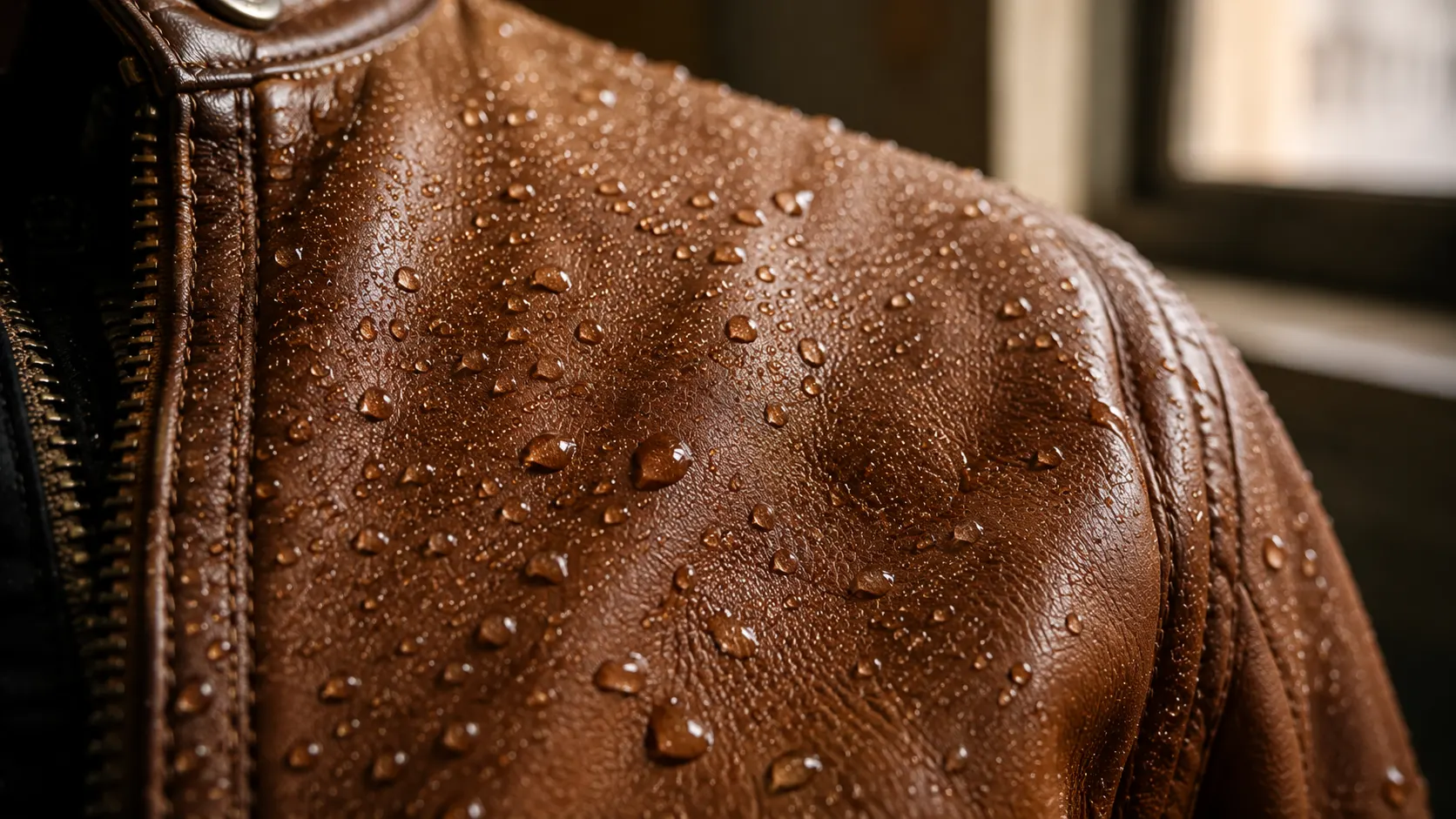
The real risk shows up with prolonged exposure getting caught in a genuine downpour for an extended stretch. That’s when moisture actually starts working its way past the surface and into the deeper fiber structure.
What Happens When Leather Gets Wet?
Because leather is porous, it absorbs moisture into its fibers rather than shedding it the way a treated synthetic surface does. This temporarily disrupts the leather’s natural balance, and depending on how wet it got and how it’s dried, it can lead to a few different outcomes:
- Loss of natural oils. Leather holds natural oils that keep it supple. As absorbed water evaporates, it pulls some of these oils out with it repeated wetting without reconditioning is what makes leather progressively stiffer over time.
- Color changes and staining. Water can shift dye pigments within the leather, causing blotches or water spots, especially on lighter colors.
- Shrinkage or stretching. Wet leather is structurally weaker than dry leather. Wearing it while damp, or letting it dry in the wrong shape, can pull it permanently out of fit.
- Stiffness and cracking. Once the oils that keep leather flexible are gone, the fibers stiffen. Left unaddressed over repeated cycles, this leads to cracking which can’t be fully undone.
- Mold and mildew. Leather stored while still damp creates the exact damp, dark environment mold needs. This is more about storage habits than the rain exposure itself.
The takeaway: brief, occasional wetting is not the threat. Prolonged soaking and improper drying are.
Which Leather Jackets Handle Water Better?
Not all leather responds to moisture the same way the type of hide and how it’s finished make a real difference.
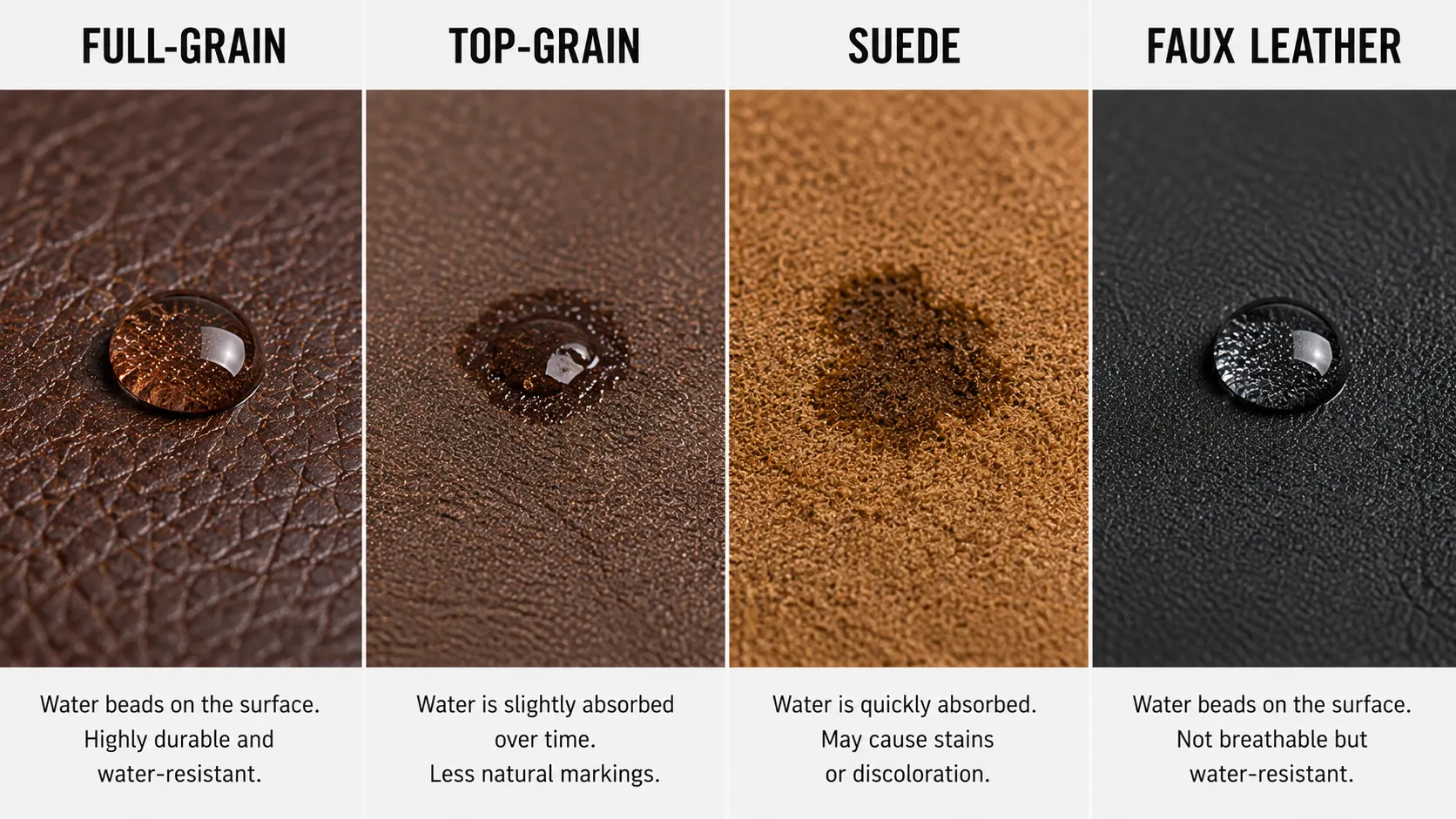
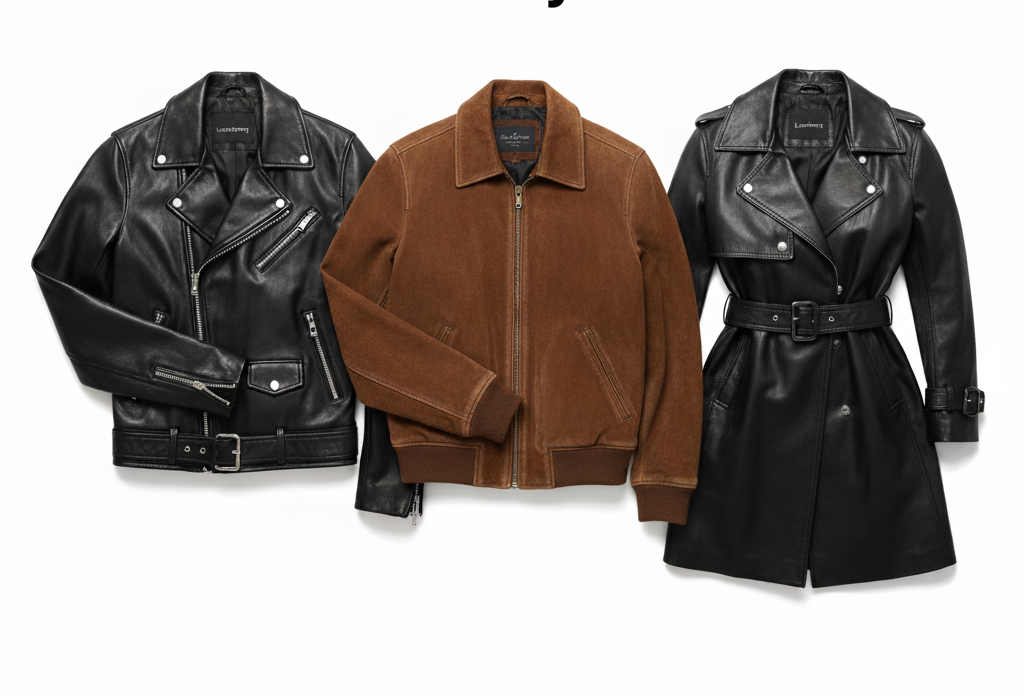
- Cowhide and buffalo leather are thicker and more rugged, generally standing up better to occasional wet conditions part of why they’re the default for motorcycle and biker jackets. If you ride, this is the material you want; a soaked lambskin jacket on a bike is a different situation than the same rain hitting a cowhide biker cut built for exactly this kind of exposure.
- Lambskin is softer, lighter, and delivers a more refined drape, but it’s less forgiving in heavy rain and needs more attentive care if it gets wet.
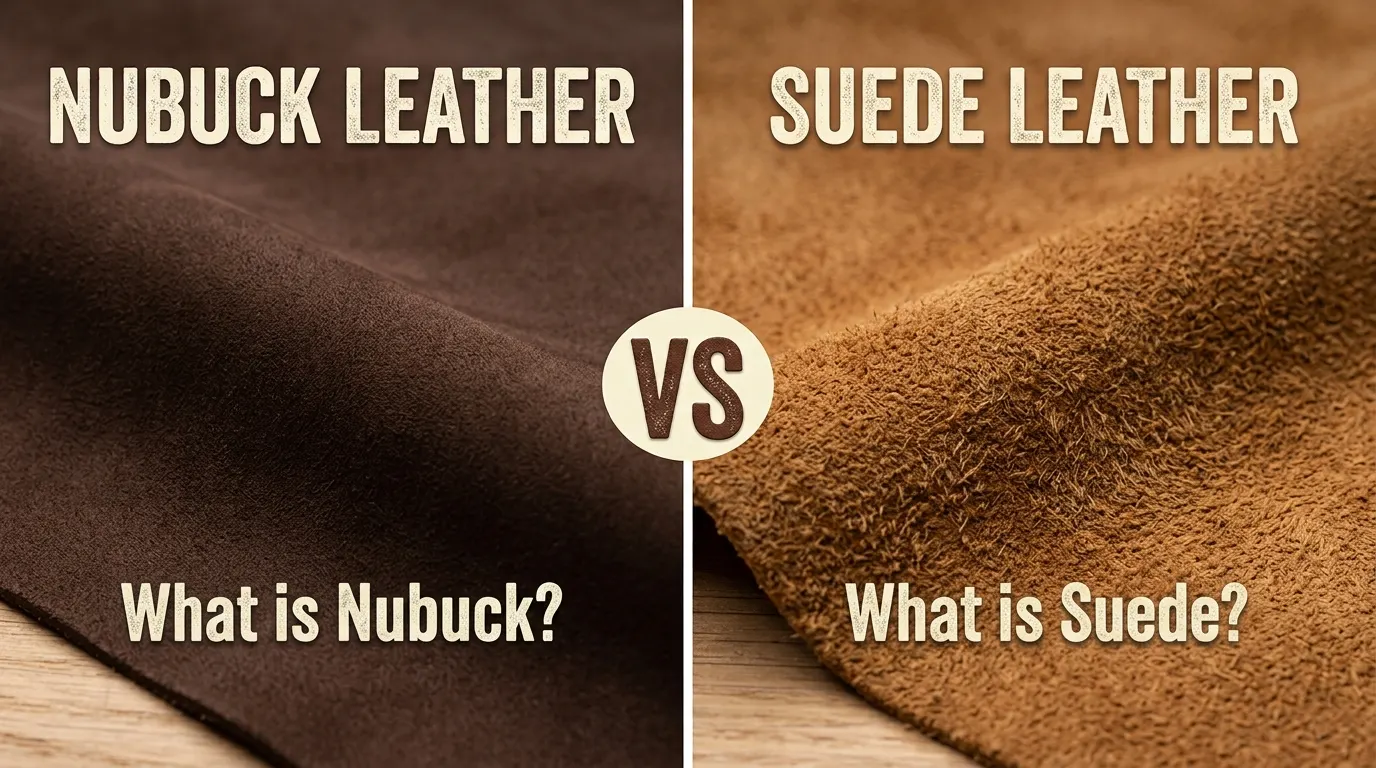
- Suede and nubuck are the most vulnerable of all their raised, open fibers soak up moisture fast and stain easily. If you own a suede piece, avoid rain entirely or use a dedicated suede protector.
- Full-grain leather retains the strongest, most natural layer of the hide and, being less processed, resists water penetration better than lower grades. It can still be treated with sprays or wax for extra protection. See our full-grain vs genuine leather guide for how grading affects durability beyond just water resistance.
- Top-grain leather has been lightly sanded to remove imperfections, which also removes some natural protective qualities slightly more vulnerable to water than full-grain.
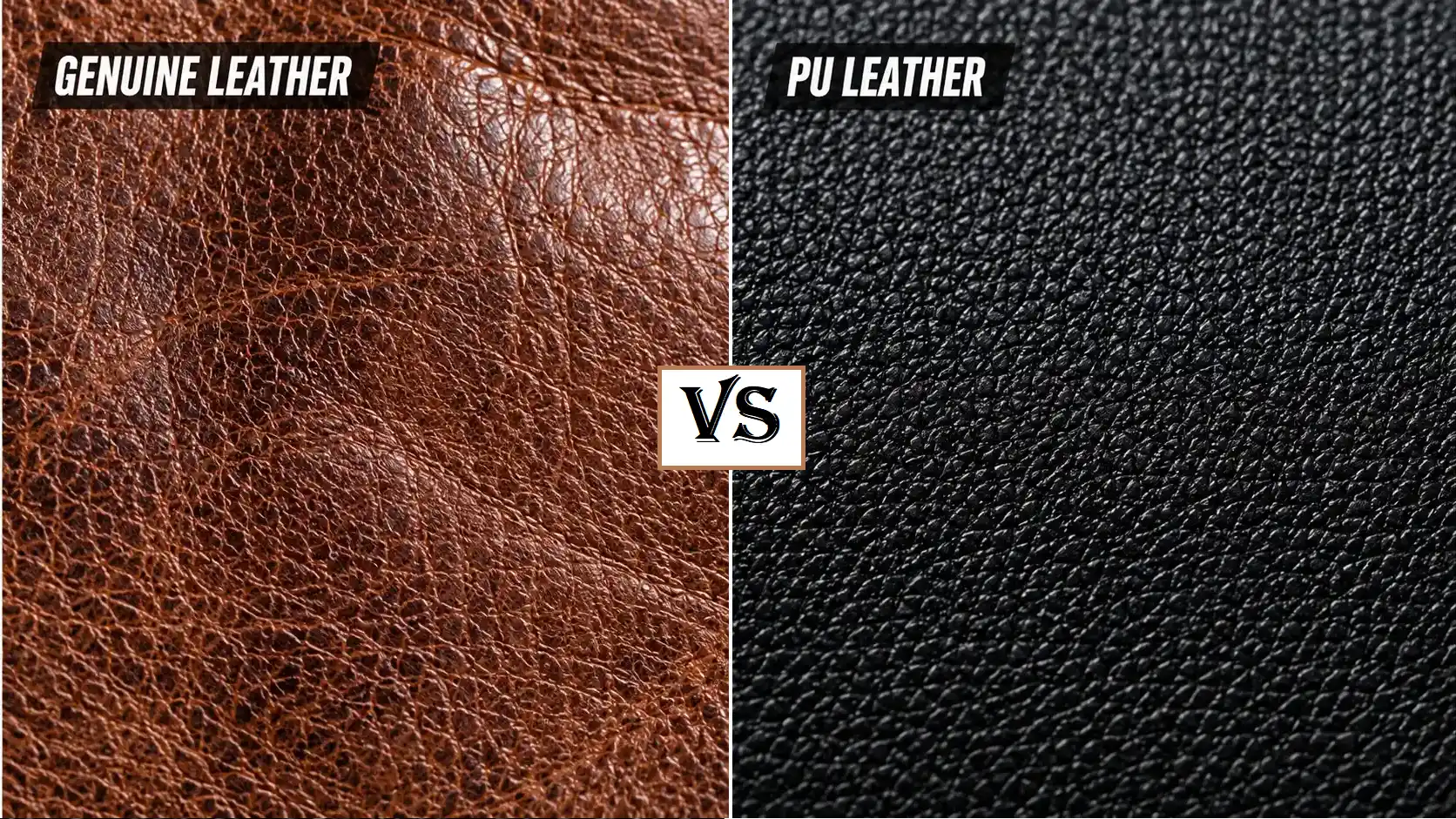
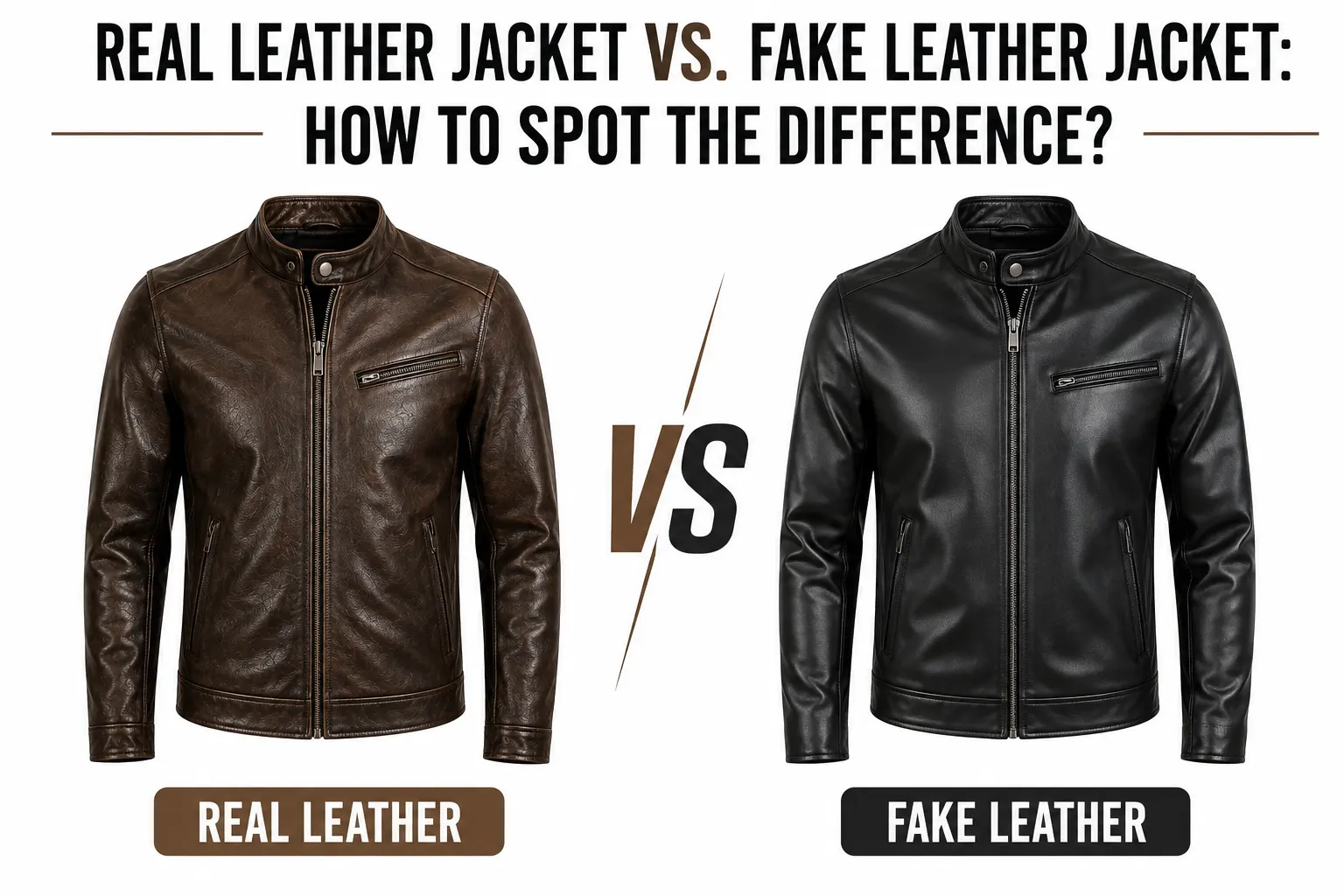
- PU and faux leather resist light rain well since the surface doesn’t absorb water the way natural hide does, but prolonged exposure can still cause the coating to bubble or peel. See our full PU vs genuine leather comparison for how the two hold up long-term, and how to tell real leather from fake before you buy.
Quick Comparison: Water Resistance by Leather Type
| Leather Type | Water Resistance | Best For |
|---|---|---|
| Full-grain leather | Best | Frequent wear, all-weather use |
| Top-grain leather | Good | Everyday wear, light rain |
| Cowhide / buffalo | Very good | Motorcycle, biker styles |
| Lambskin | Moderate | Fashion, dress wear |
| Suede / nubuck | Poor | Dry weather only |
| PU / faux leather | Moderate (short-term) | Light rain, occasional wear |
| Waxed or treated leather | Very good | All-weather with reapplication |
This isn’t a reason to avoid softer, more luxurious leathers it’s a reason to match the material to how you’ll actually use it. Lammberg’s bespoke service lets you choose the exact hide for that reason.
Are Leather Jackets Windproof?
Yes, genuine leather is naturally windproof, more so than most woven fabrics. Its dense fiber structure blocks wind from passing through the way it would through cotton or a knit sweater, which is part of why leather has been used in motorcycle and flight jackets for over a century riders needed a material that cut wind at speed, not just one that looked tough. This wind resistance holds regardless of the leather type or thickness; it’s one of the few properties that doesn’t vary much between cowhide, lambskin, or goatskin. Water resistance and windproofing are separate properties, though a jacket can block wind excellently while still needing care around rain.
How to Dry a Wet Leather Jacket the Right Way
How you dry a wet jacket matters more than the fact that it got wet at all. Most permanent damage comes from bad drying, not the rain itself.
- Blot, don’t rub. Shake off excess water, then gently blot the surface with a clean, dry, soft cloth. Rubbing pushes moisture deeper and can mark the surface.
- Reshape while damp. Smooth out wrinkles and make sure the collar, cuffs, and pockets sit correctly leather tends to dry into whatever shape it’s holding at the time.
- Air dry naturally. Hang the jacket on a sturdy, wide, padded hanger in a well-ventilated area. Avoid wire hangers, which can leave marks. If it’s heavily soaked, lightly stuff the sleeves and body with plain paper (not newspaper) to help hold shape and draw out moisture.
- Keep it away from heat. Never use a hairdryer, radiator, heater, or direct sunlight to speed things up. Fast heat pulls moisture out too aggressively and leaves leather hard, flat, or cracked.
- Let it dry completely. This can take several hours to a full day depending on how wet it got. Rushing the process is what causes the most damage.
- Condition once fully dry. If the leather feels stiffer than usual, apply a leather conditioner sparingly to restore lost oils. Never condition while the leather is still damp it traps moisture instead of letting it evaporate cleanly.
What Not to Do After a Leather Jacket Gets Wet
- Don’t use heat — no radiators, hair dryers, or direct sun. Let it dry at room temperature no matter how long it takes.
- Don’t rub the surface — always blot instead.
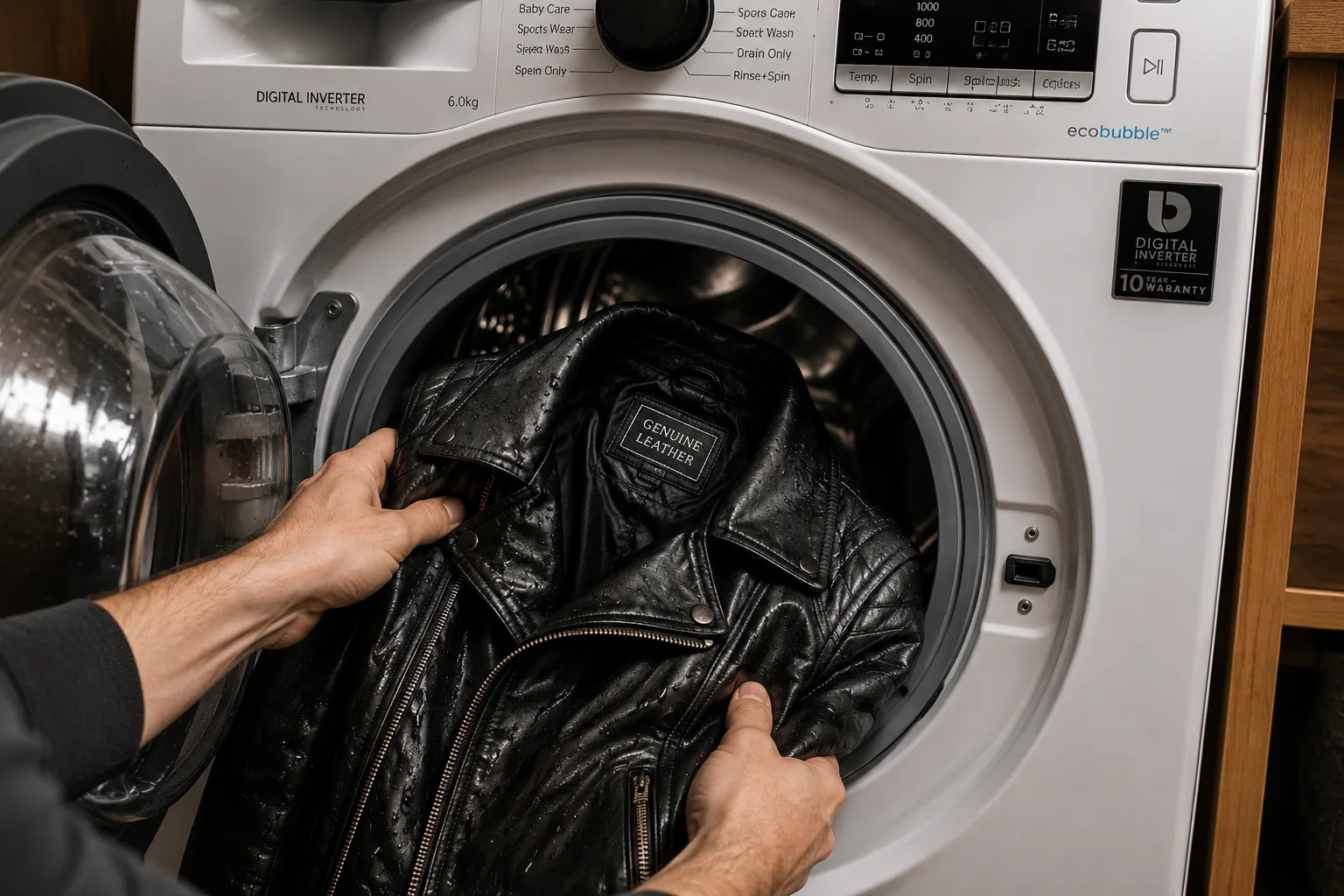
- Don’t submerge it or machine wash it — leather should never go through a washing machine; see our full breakdown on whether you can wash a leather jacket in the washing machine.
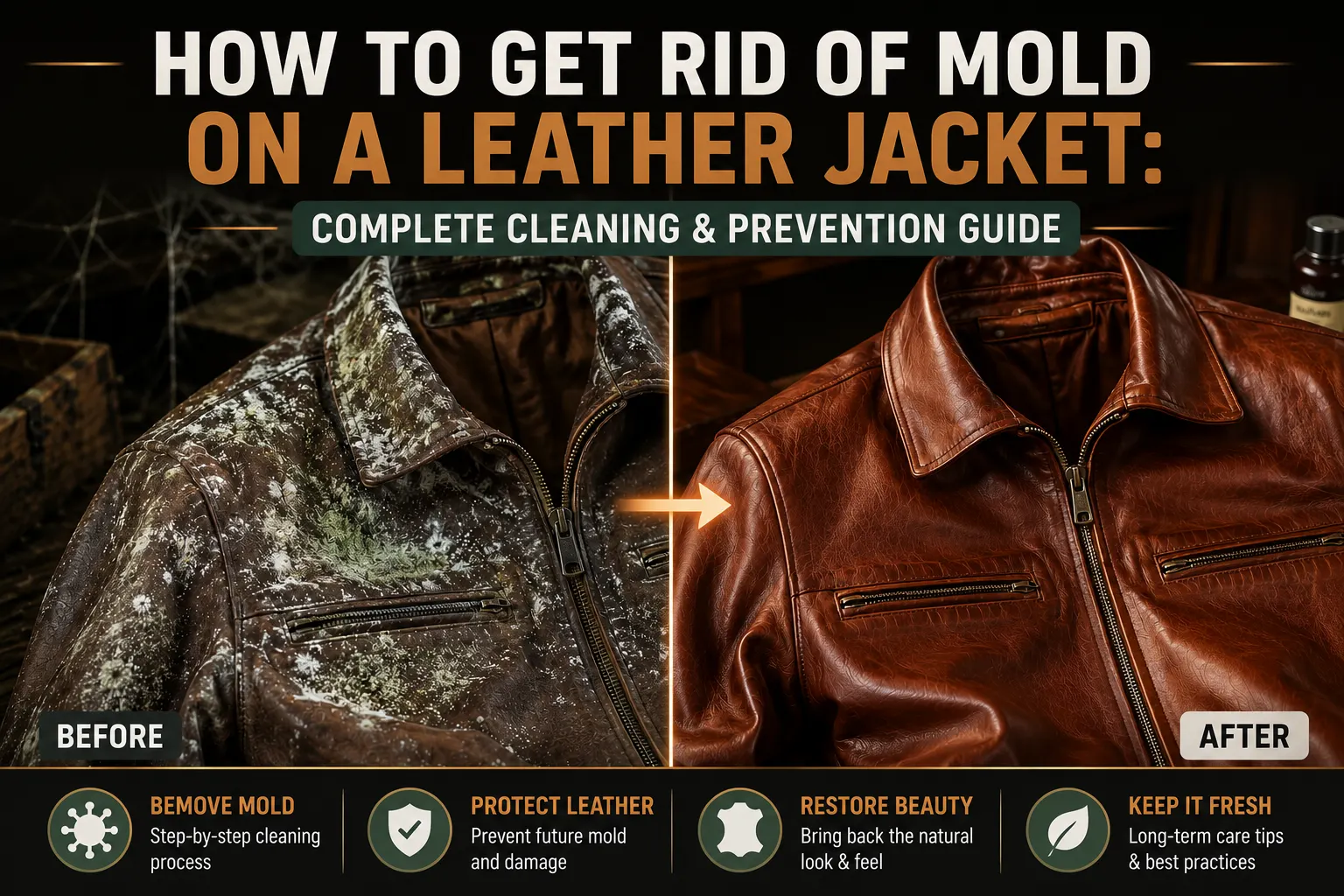
- Don’t store it damp — this is the fastest route to mold and mildew. If odor or mildew has already set in, see our guide on removing mold from a leather jacket.
- Don’t wear it while wet — wet leather stretches out of shape more easily under body movement.
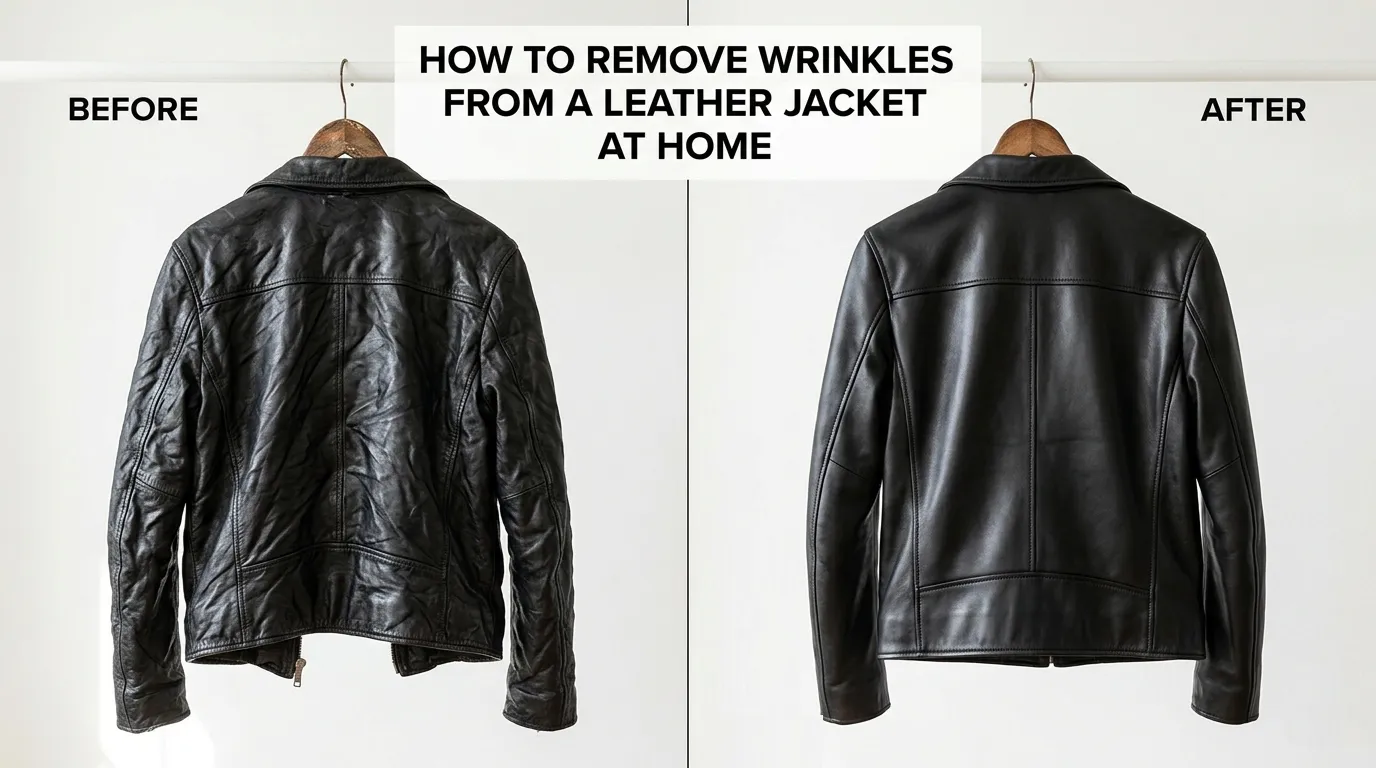
- Don’t fold it while wet — this sets creases that are far harder to remove once dry; if wrinkles do set in, see how to remove wrinkles from a leather jacket.
- Don’t condition while damp — dry completely first, condition second.
How to Protect a Leather Jacket Before Rain Happens
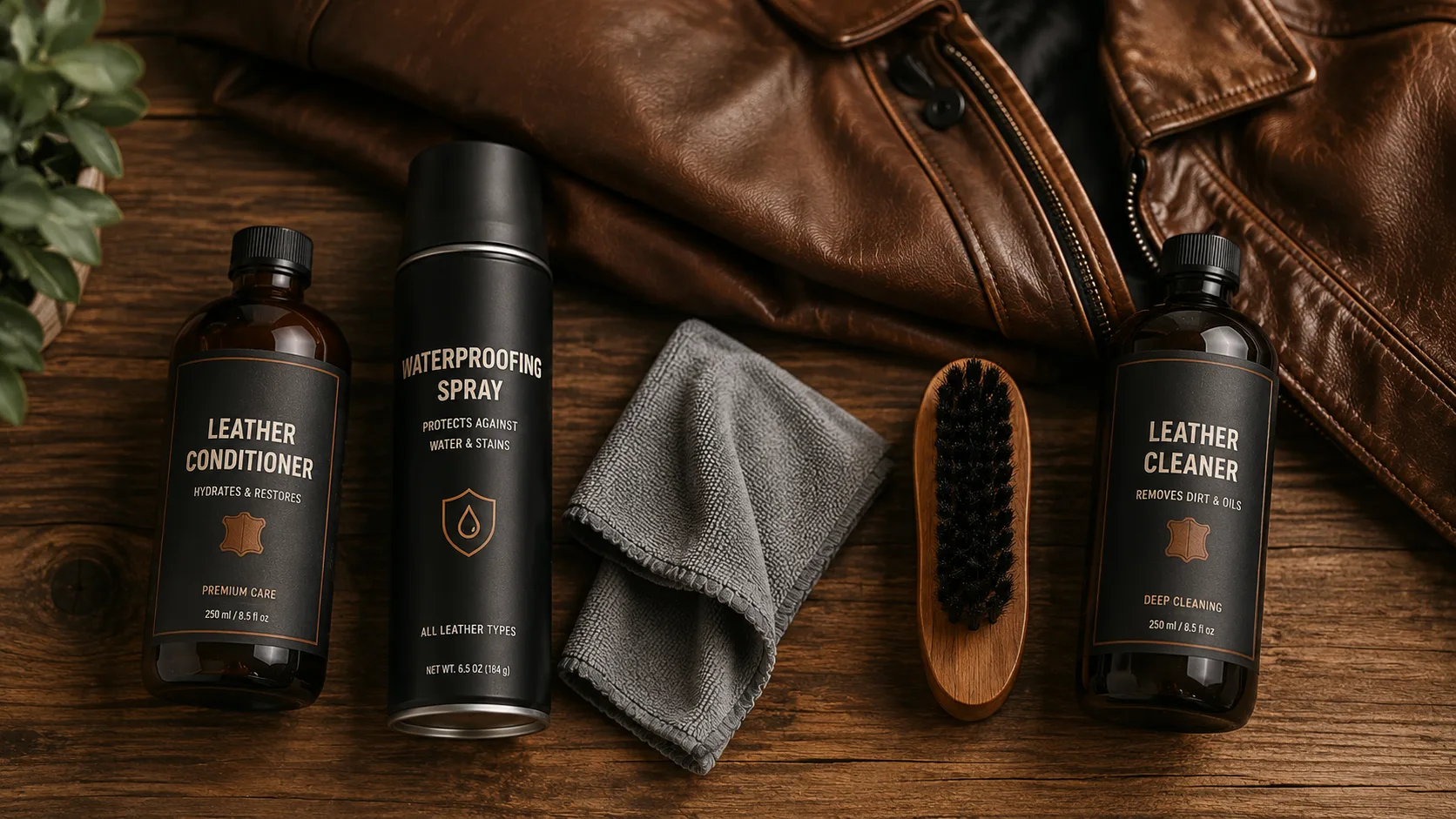
- Use a waterproofing spray made specifically for leather, misted evenly over the exterior (avoid the lining), and reapplied every few months.
- Pick the right protectant type. Silicone-based sprays repel water without clogging the leather’s pores; beeswax gives a durable natural barrier; fluoropolymer treatments offer the strongest water and stain resistance.
- Condition regularly even when the jacket hasn’t gotten wet dry leather is more vulnerable when moisture does hit it.
- Check the forecast before heading out, and grab an umbrella or a different jacket if heavy rain is likely.
- Store it properly cool, dry space, on a proper hanger with room to breathe, so it’s already in good shape before the next season’s weather starts.
When Rain Damage Needs Professional Help
Home care isn’t always enough. Get the jacket assessed by a leather specialist if you notice tide marks that won’t fade, stiff patches that don’t relax after conditioning, visible color transfer or blotching, a musty smell that persists after airing out, or any sign of mold. This is especially worth doing for lighter-colored jackets, suede finishes, or custom pieces you don’t want to risk further. Professionals have access to deep-cleaning methods, oil restoration, and re-dyeing techniques that aren’t realistic to attempt at home.
Leather Jackets by US Climate
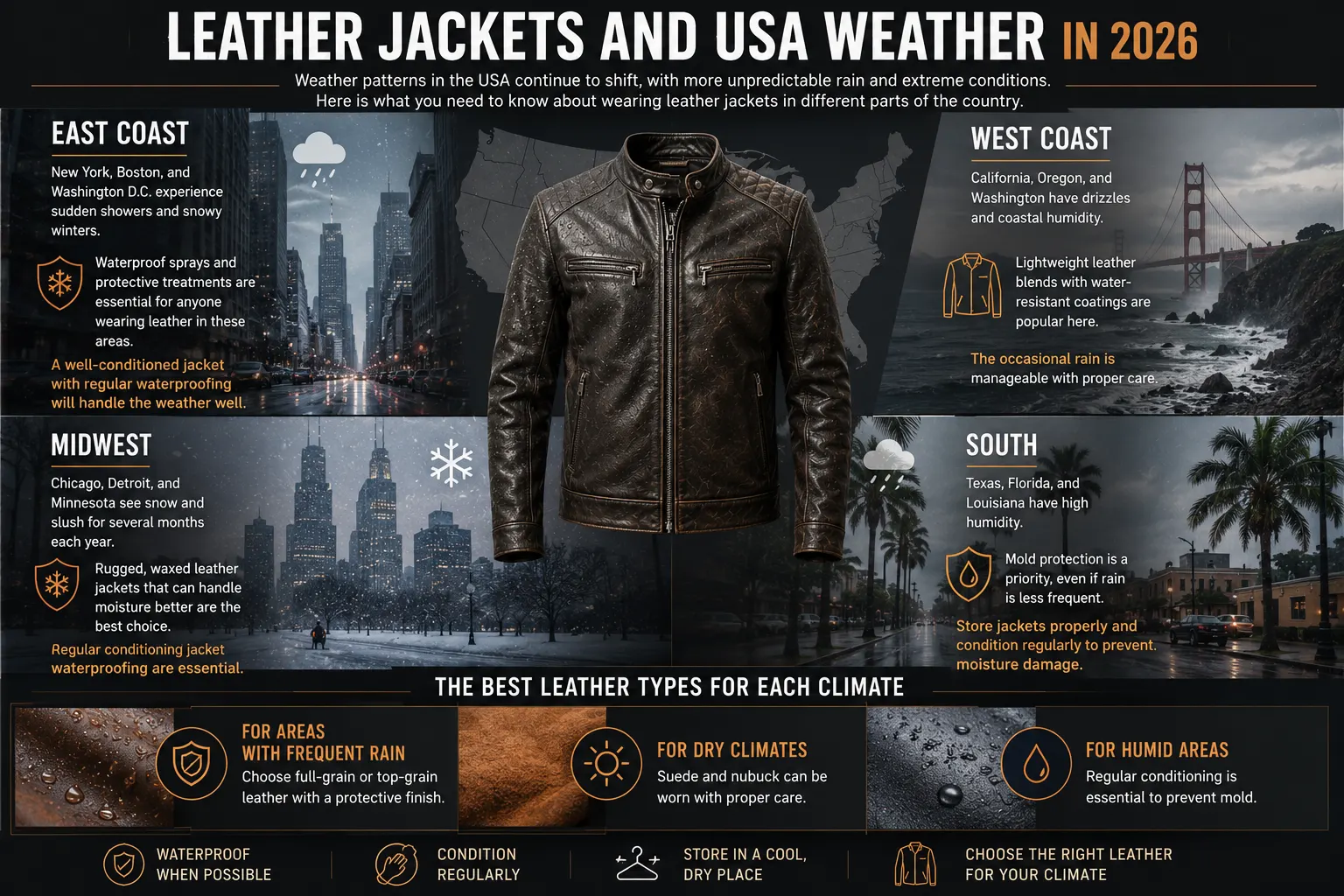
- East Coast (New York, Boston, DC): Sudden showers and snowy winters make regular waterproofing treatment close to essential.
- West Coast (California, Oregon, Washington): Drizzle and coastal humidity are manageable with lighter water-resistant finishes.
- Midwest (Chicago, Detroit, Minnesota): Snow and slush for months at a time call for ruggedly finished, well-waxed leather and consistent conditioning.
- South (Texas, Florida, Louisiana): High humidity makes mold prevention the priority, even where rainfall itself is less frequent proper storage and regular conditioning matter more here than waterproofing sprays.
Common Myths About Leather and Water
- “Leather is waterproof.” It’s water-resistant to a degree, not waterproof prolonged exposure will eventually get through.
- “A jacket is ruined the moment it gets wet.” Light rain rarely causes permanent damage; the danger is soaking plus poor drying, not moisture itself.
- “All leather handles water the same way.” Full-grain and cowhide hold up far better than suede or nubuck the hide type matters as much as how wet it got.
- “Water damage can’t be fixed.” Many water-affected jackets can be restored with proper conditioning, and professionals can often save pieces that look worse than they actually are.
Frequently Asked Questions
Is rain bad for leather jackets?
Light, brief rain isn’t harmful to a well-maintained leather jacket. Rain becomes a problem only with prolonged soaking or improper drying afterward the rain itself is rarely the real damage source.
Can you wear a leather jacket in the rain?
Yes, for short exposure. A quick walk or light drizzle is fine for most quality leather jackets. For sustained heavy rain, an umbrella or a different outer layer is the safer choice.
Will rain ruin a leather jacket?
Not from a single exposure. Rain ruins a leather jacket only through repeated soaking combined with poor aftercare skipping air-drying, using heat, or storing it while still damp.
Does water ruin real leather?
Not on its own. Real leather is more resilient than people assume it can handle brief, occasional wetting without lasting harm. What actually causes damage over time is water repeatedly stripping natural oils without reconditioning afterward.
Can real leather get wet?
Yes. Genuine leather has been worn in rain for generations without issue, as long as it’s dried properly afterward and conditioned periodically. It’s not fragile it just isn’t waterproof.
Does leather stretch when wet?
Yes. Wet leather is weaker and more pliable than dry leather, which makes it prone to stretching out of shape if worn or handled while still damp. Remove a wet jacket as soon as possible and let it dry flat or on a wide hanger before wearing it again.
Are leather jackets windproof?
Yes, leather’s dense fiber structure blocks wind more effectively than most woven fabrics, which is why it’s been the material of choice for motorcycle and flight jackets for decades. Windproofing and water resistance are separate qualities, though, so a jacket can excel at one without being fully protected against the other.
Can you wash a leather jacket in a washing machine?
No. Machine washing exposes leather to prolonged water submersion, agitation, and detergent, all of which strip natural oils and can permanently distort the material. Spot-clean with a damp cloth instead see our full guide on washing a leather jacket safely for what actually works.
Can you wear a leather motorcycle jacket in the rain?
Yes, more confidently than most other leather styles motorcycle jackets are typically made from thicker cowhide specifically chosen for durability and weather exposure. Even so, a waterproofing treatment before riding season extends how well it holds up.
Is leather waterproof or just water-resistant?
Water-resistant, not waterproof. Leather can handle light rain reasonably well, especially full-grain with a protective treatment, but prolonged exposure will eventually let moisture through.
Should I condition my jacket after it gets wet?
Yes, but only once it’s completely dry. Conditioning damp leather traps moisture underneath instead of letting it evaporate properly.
Final Thoughts
A leather jacket should feel like something you actually live in, not something you’re afraid to wear outside. Yes, it can get wet the goal isn’t avoiding rain entirely, it’s knowing the difference between weather-resistant and waterproof, and handling the aftermath correctly when it does happen. Blot fast, dry slow, skip the heat, and condition once it’s dry, and an occasional rain shower won’t shorten your jacket’s life at all.
If you’re shopping for a jacket built to handle real-world weather from day one, browse Lammberg’s full leather jacket collection full-grain and top-grain options both hold up well with basic care. And before you order, a quick check of our sizing guide ensures the fit stays right even after the occasional damp day.
Related Articles
- How to Remove Cigarette Smell from Leather Jacket
- Is Leather Really the Best Jacket? What Reddit Users Actually Say
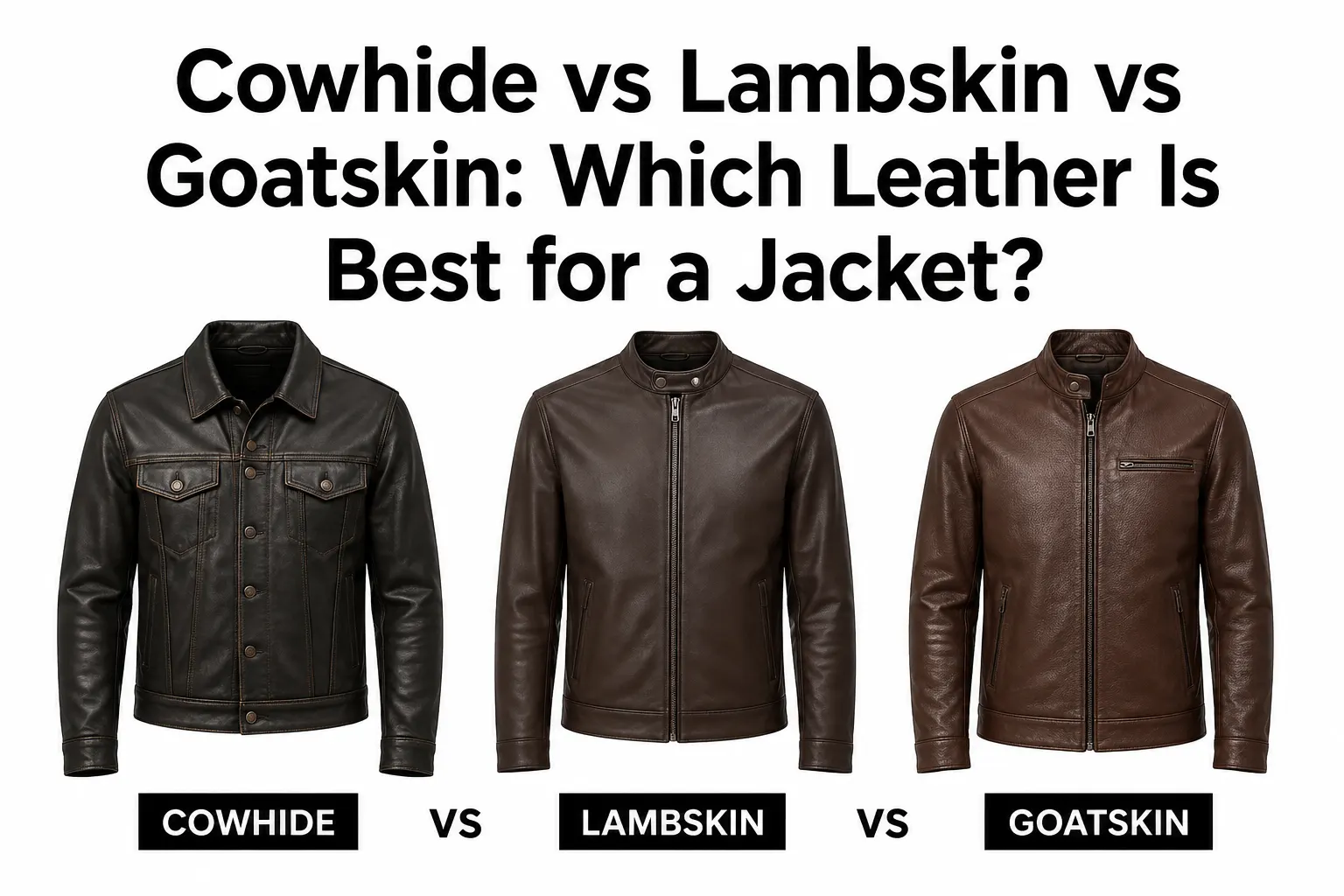
- Cowhide vs Lambskin vs Goatskin: Which Leather Is Best for a Jacket?
- The Leather Jacket Styles Actually Worth Wearing in 2026
- Vintage Brown Leather Jackets Are Trending in 2026
- 14 Black Leather Jacket Outfits for Men – 2026 Style Guide
- How to Get Rid of Mold on a Leather Jacket: Complete Cleaning & Prevention Guide
- Custom Leather Jacket vs Ready-Made: Which Is Better? (2026 Guide)
- How to Remove Wrinkles from a Leather Jacket
- How to Style a Leather Jacket for Men
- The Ultimate Leather Jacket Size Guide
- PU Leather vs Genuine Leather – The Truth Most Sellers Won’t Tell You
- Full Grain vs Genuine Leather Biker Jacket Guide
- Top 10 Genuine Leather Jackets in USA
- Real vs Fake Leather Jackets – How to Spot the Difference
- How to Get Smell Out of Leather Jacket – The Ultimate Guide
























Global Leather Industry: What Each Country Does Best
What Is Bison Leather? Durability, Uses & Cowhide Comparison