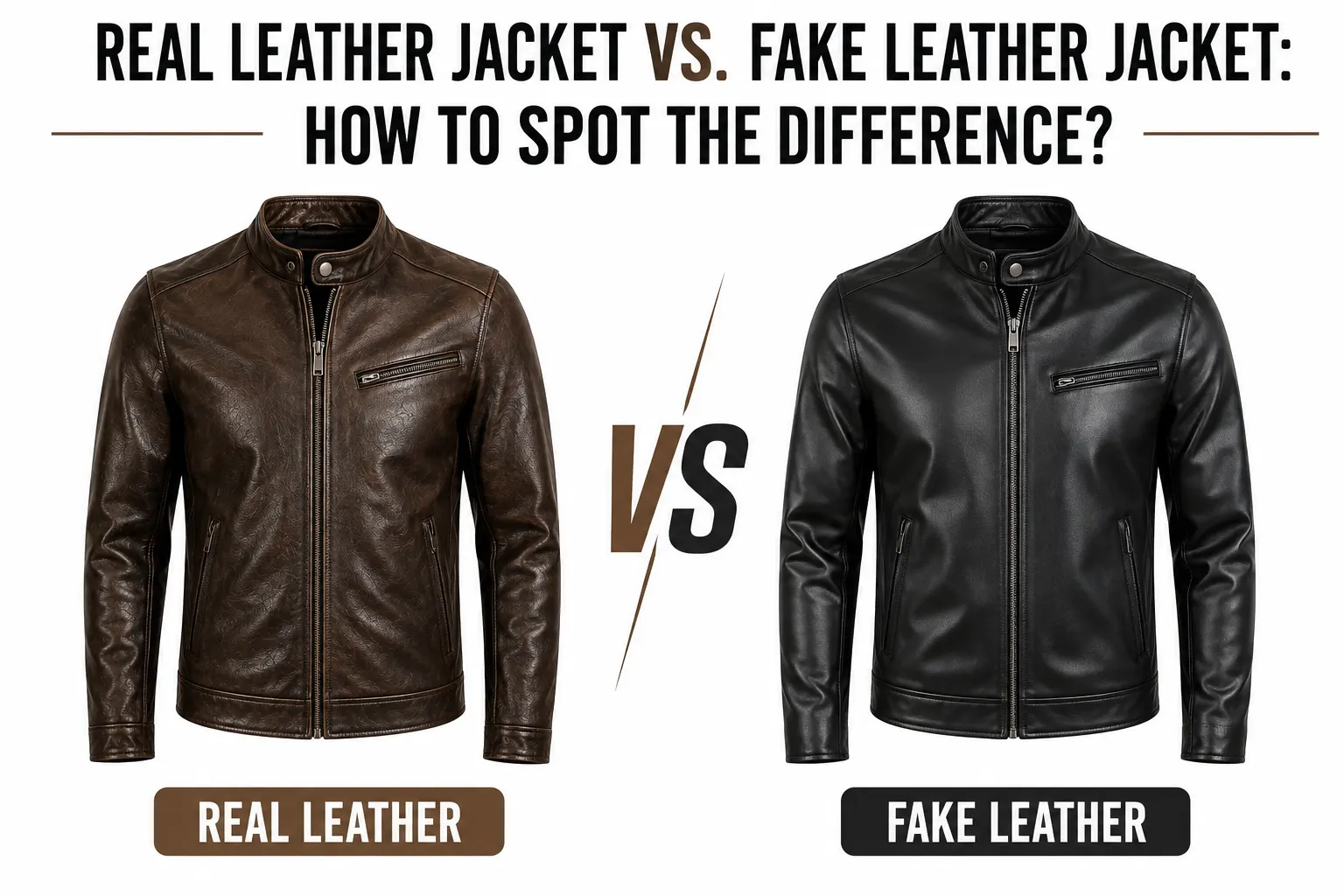
Leather has long been associated with luxury, durability, and timeless style. Whether it’s a classic leather jacket, a premium handbag, or a stylish pair of boots, leather items symbolize sophistication. However, with the rise of synthetic leather (also known as faux leather, PU leather, or vegan leather), distinguishing between real and fake leather has become a challenge for many buyers.
If you’re investing in a high-quality leather jacket, knowing how to spot genuine leather from artificial alternatives is crucial. This guide will help you identify key differences between real and fake leather so you can make an informed purchase.
Explore 100% Real Leather Jackets at LAMMBERG!
1. The Touch Test: Feel the Texture
One of the easiest ways to tell if a jacket is made of real leather or fake leather is by feeling the material.
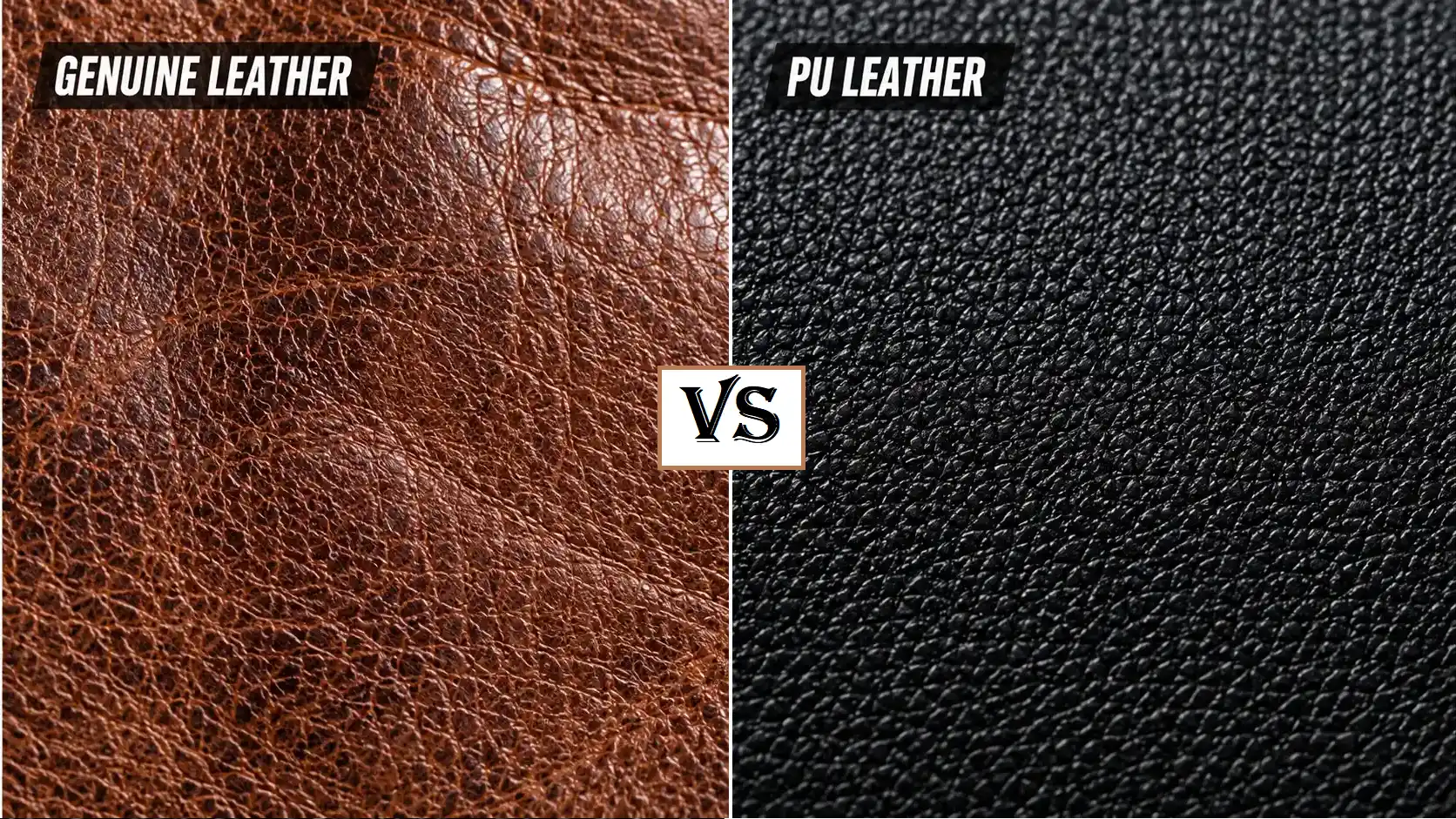
- Real Leather: Has a soft, flexible, and slightly uneven texture. The grain is natural and unique, meaning no two leather jackets will be identical.
- Fake Leather: Feels smooth, overly uniform, and plastic-like. Since it is machine-made, it lacks the imperfections and irregularities of real leather.
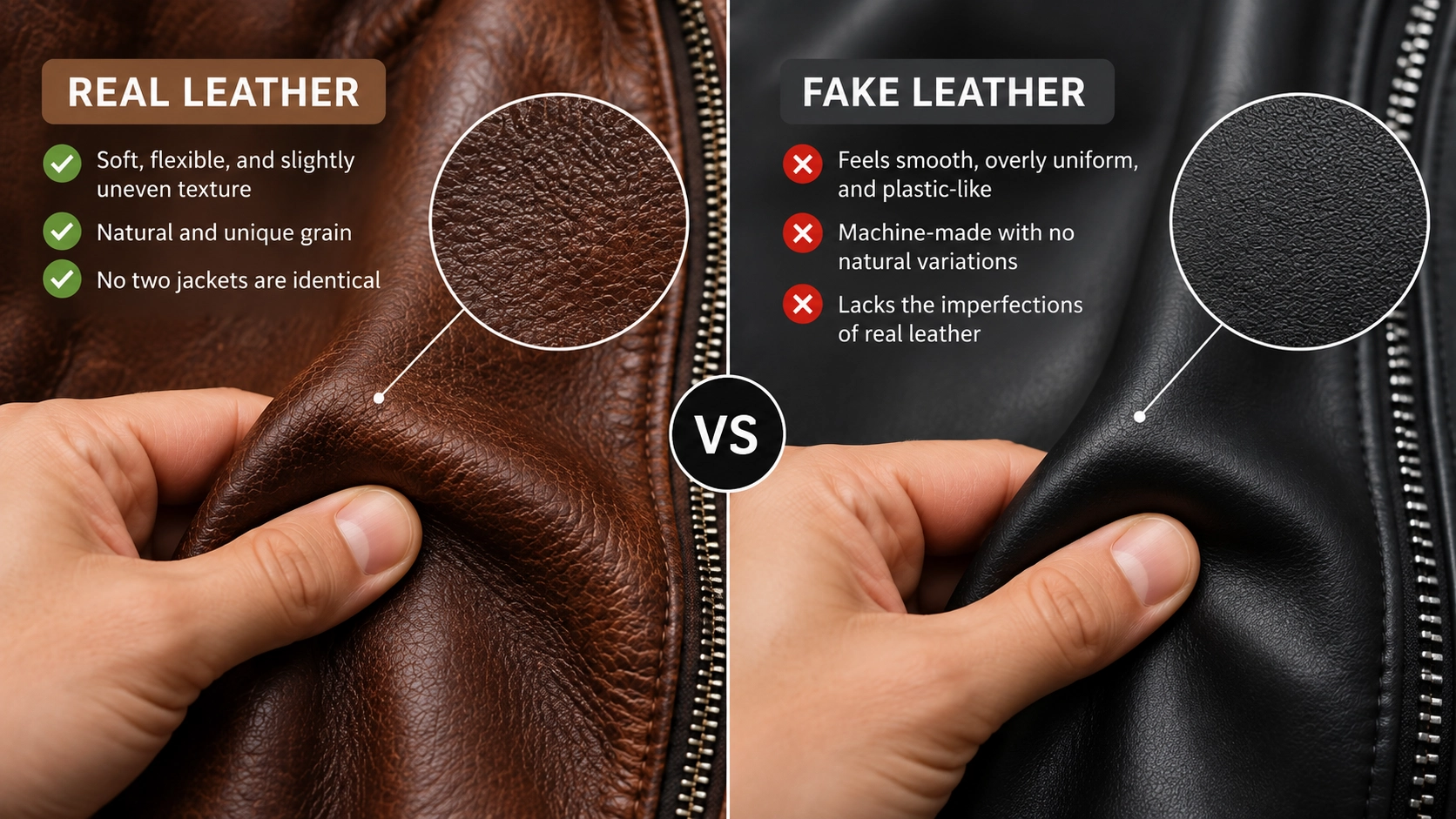
Pro Tip: Gently press your fingers into the surface. Real leather wrinkles and shows creases, while fake leather remains stiff and smooth.
Get the Best Textured Leather Jackets at LAMMBERG!
2. The Smell Test: The Scent of Authenticity
Leather has a distinct, rich aroma that is difficult to replicate.
- Real Leather: Smells natural, earthy, and slightly musky due to the tanning process and natural animal hide.
- Fake Leather: Has a strong chemical or plastic-like odor, as it is made from synthetic materials like polyurethane (PU) or polyvinyl chloride (PVC).
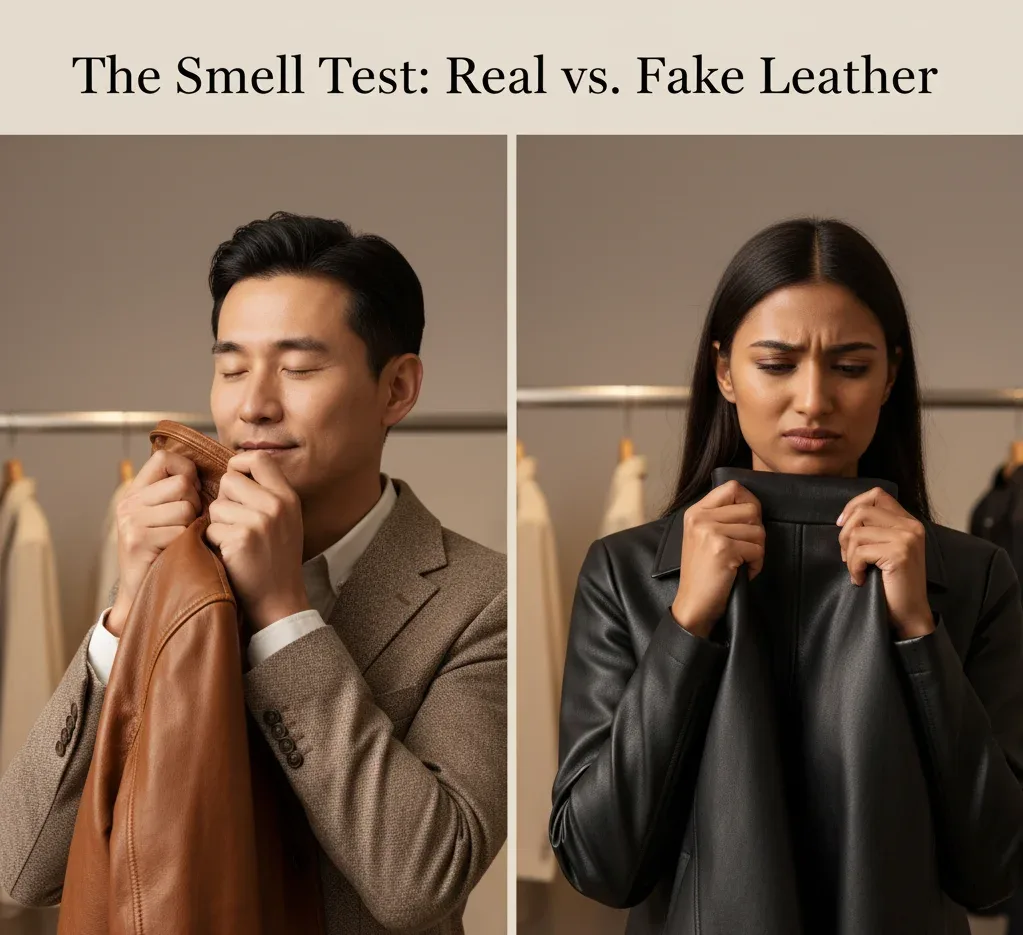
Pro Tip: If your leather jacket smells like chemicals or plastic, it’s likely fake.
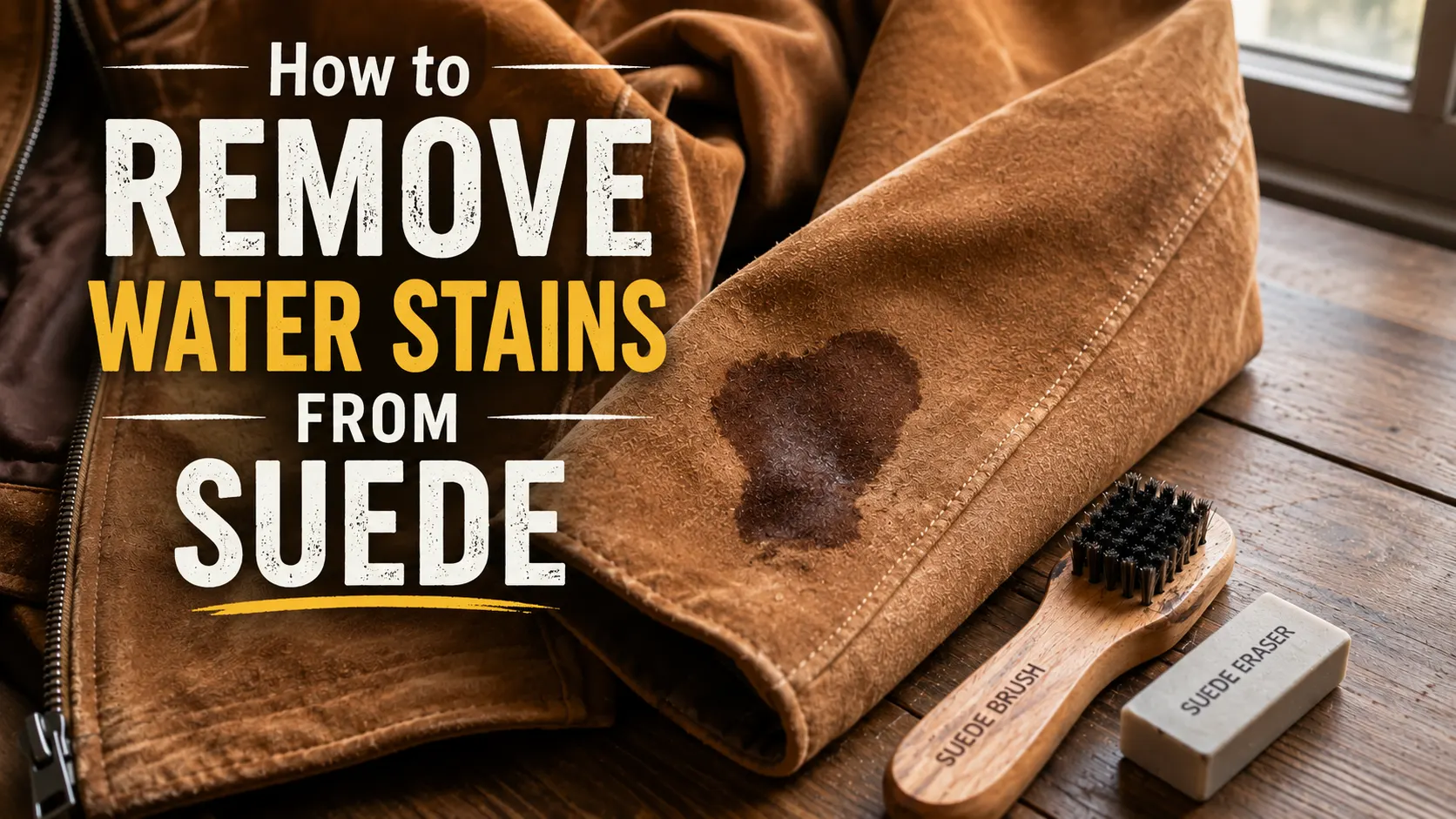
How to Remove Cigarette Smell & Mildew from a Leather Jacket 2026
3. The Water Absorption Test
Real leather is porous and absorbs moisture, while fake leather repels liquid.
- Real Leather: Absorbs small amounts of water and darkens slightly before drying.
- Fake Leather: Water beads up and does not absorb.
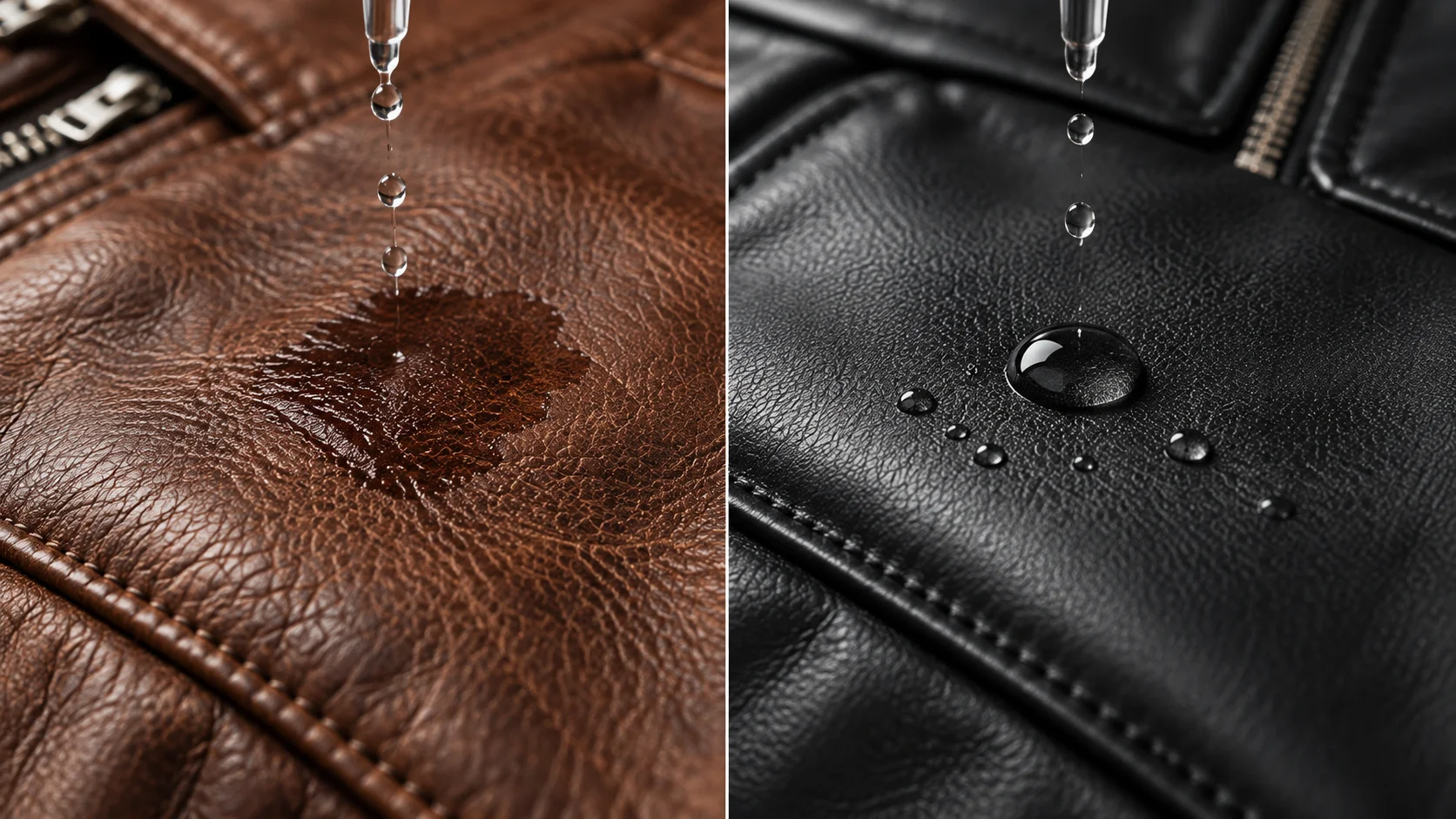
Pro Tip: Put a few drops of water on an inconspicuous area. If it soaks in, it’s real leather.
4. The Burn Test (For Experts Only)
If you’re confident enough to test a small, hidden part of the material, a burn test can differentiate real from fake leather.
- Real Leather: Burns slowly, smells like burnt hair, and does not melt.
- Fake Leather: Burns quickly, melts, and smells like burning plastic.
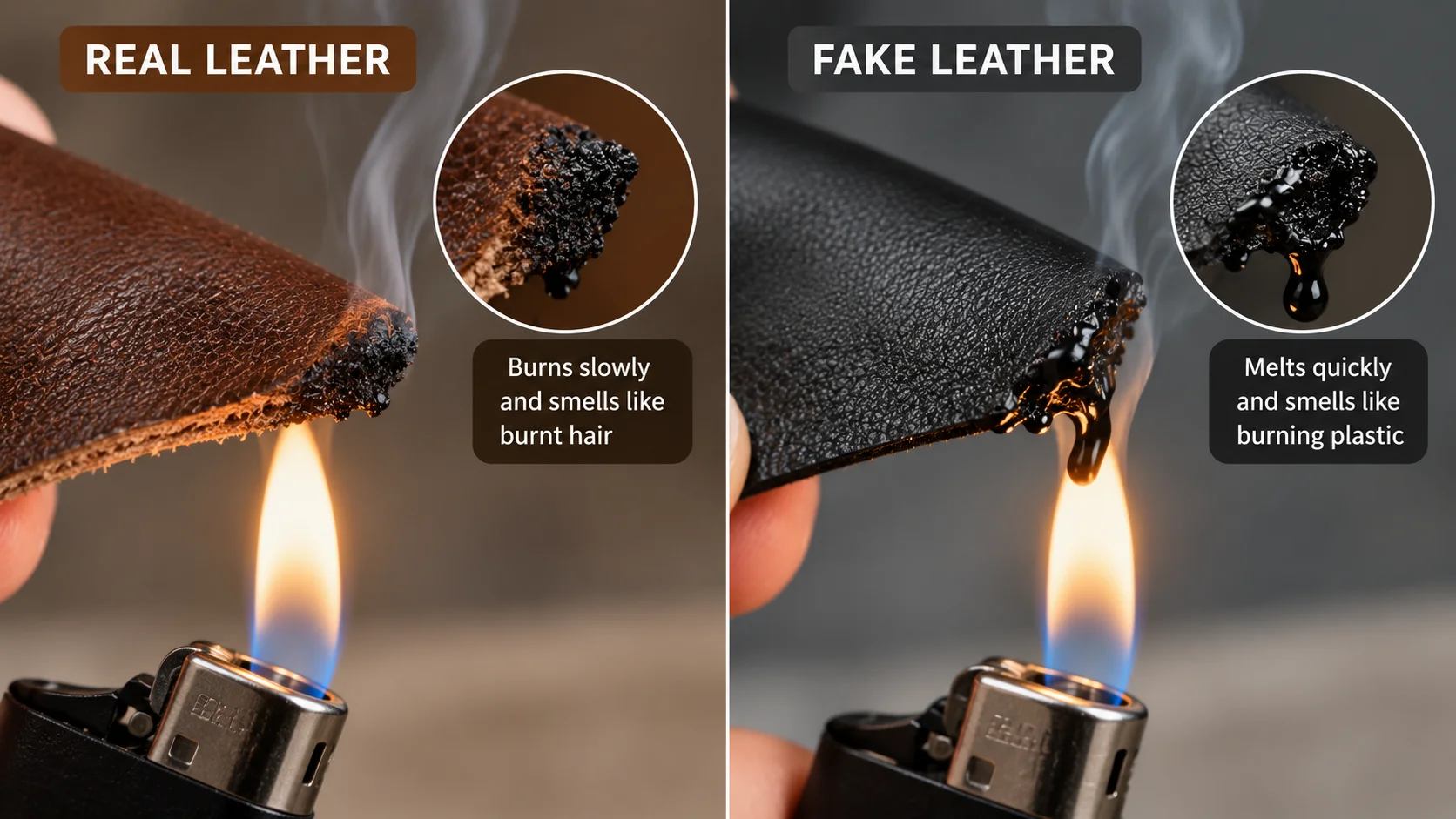
Warning: This test is not recommended unless you are testing a small scrap of leather or an item you don’t mind damaging.
Shop Burn-Tested Premium Leather Jackets at LAMMBERG!
5. The Longevity Test: Real Leather Ages Beautifully
Real leather ages well and develops a beautiful patina over time, while fake leather peels and cracks.
- Real Leather: Becomes softer and develops a rich character over time.
- Fake Leather: Starts cracking, peeling, or flaking within a few years.
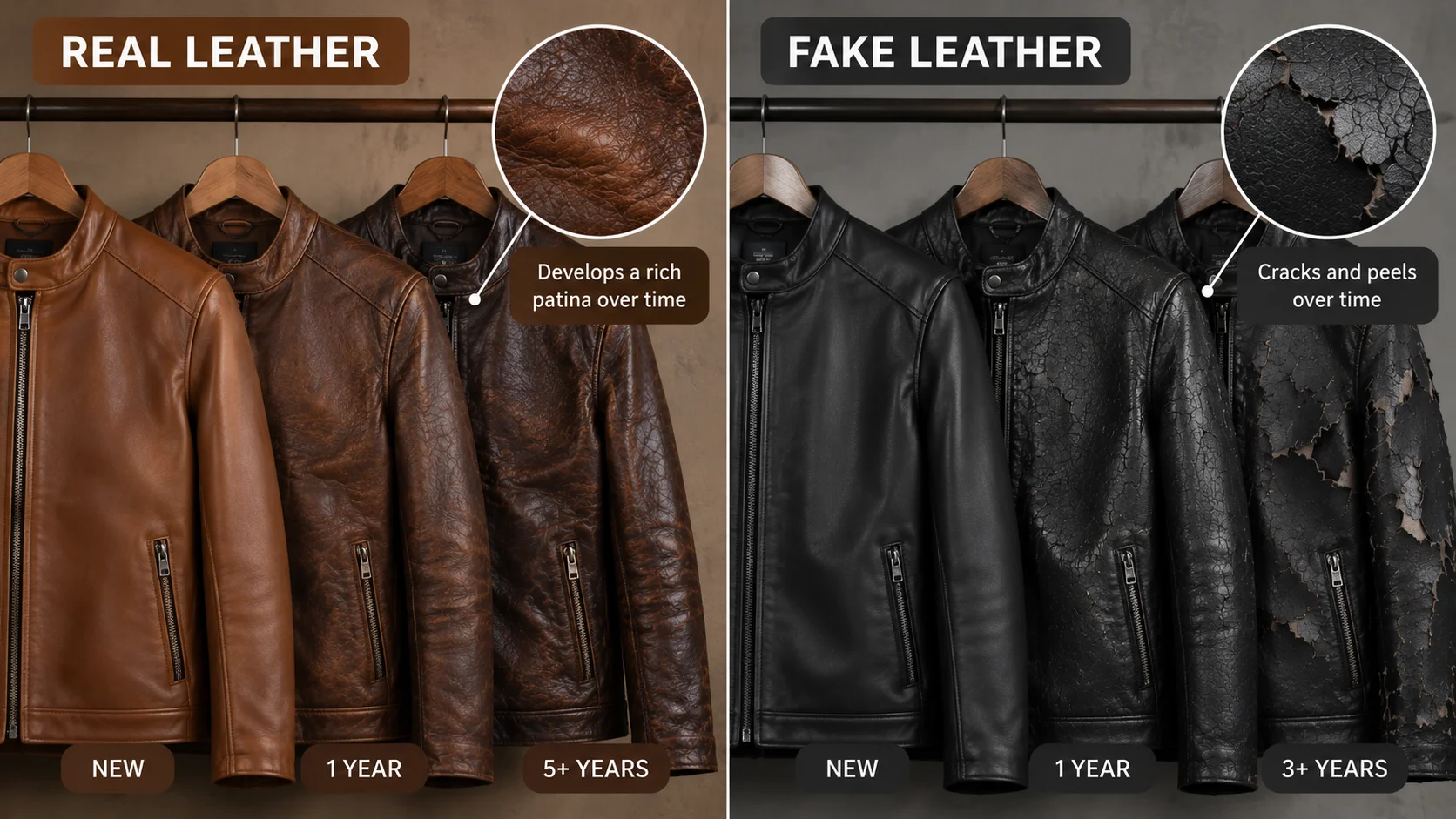
Pro Tip: If a jacket looks worn out within a short time, it’s likely fake.
Invest in Long-Lasting Leather Jackets at LAMMBERG!
6. The Price Test: Real Leather is Pricier
Real leather is expensive due to the cost of raw materials and craftsmanship involved in tanning and production.
- Real Leather Jackets: Usually priced $200–$1000+.
- Fake Leather Jackets: Typically much cheaper, ranging from $30–$150.
Pro Tip: If a leather jacket is advertised as genuine but seems too cheap, it’s probably fake.
Find Affordable Yet Premium Leather Jackets at LAMMBERG!
7. The Flexibility Test: Check for Wrinkles
Real leather is flexible and will crease naturally when folded.
- Real Leather: Folds and develops natural wrinkles when bent.
- Fake Leather: Remains stiff or wrinkles unnaturally.
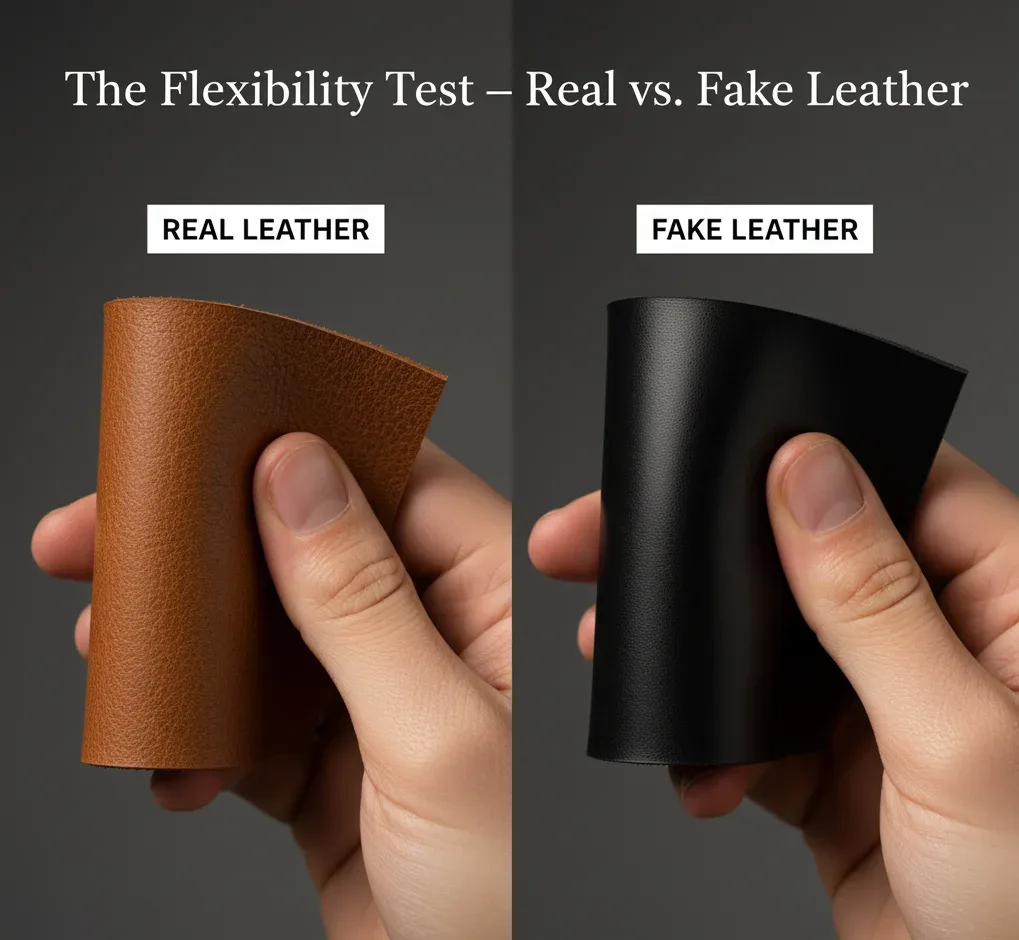
Pro Tip: Bend a small section of the leather to see if it behaves like natural skin.
Get Ultra-Flexible Custom Leather Jackets at LAMMBERG!
Frequently Asked Questions
Is real leather or fake leather better?
It depends on what you’re optimizing for. Real leather wins on durability, feel, and how it looks after years of use, since it softens and develops character instead of wearing out. Fake leather wins on price, weight, and ease of care, and it’s the more animal-friendly option. If you plan to keep a jacket for a decade or more, real leather is the better buy. If you want a trend piece you’ll wear for a season or two, fake leather makes more financial sense.
Are fake leather jackets worth it?
For the right buyer, yes. A decent faux leather jacket from a brand that uses quality polyurethane rather than cheap PVC can look almost identical to real leather at a fraction of the price, and it needs far less upkeep. Where it falls short is longevity: even well-made faux leather is a laminated material, so the coating will eventually crack or peel, and once that happens it can’t really be restored. Buy fake leather when you want style now and don’t mind replacing it later. Buy real leather when you want the same jacket to still be usable years from now.
How to tell if real leather vs fake leather?
The fastest checks are the ones covered above: real leather has an uneven grain and a natural, slightly musky smell, while fake leather looks too uniform and often carries a plastic or chemical scent. A drop of water is another reliable test, since it will sink into real leather but sit on top of fake leather. You can also check the cut edge or the inside lining. Real leather usually shows a rougher, fibrous underside, while faux leather reveals a fabric backing once you look closely at any seam or torn edge.
How long will a fake leather jacket last?
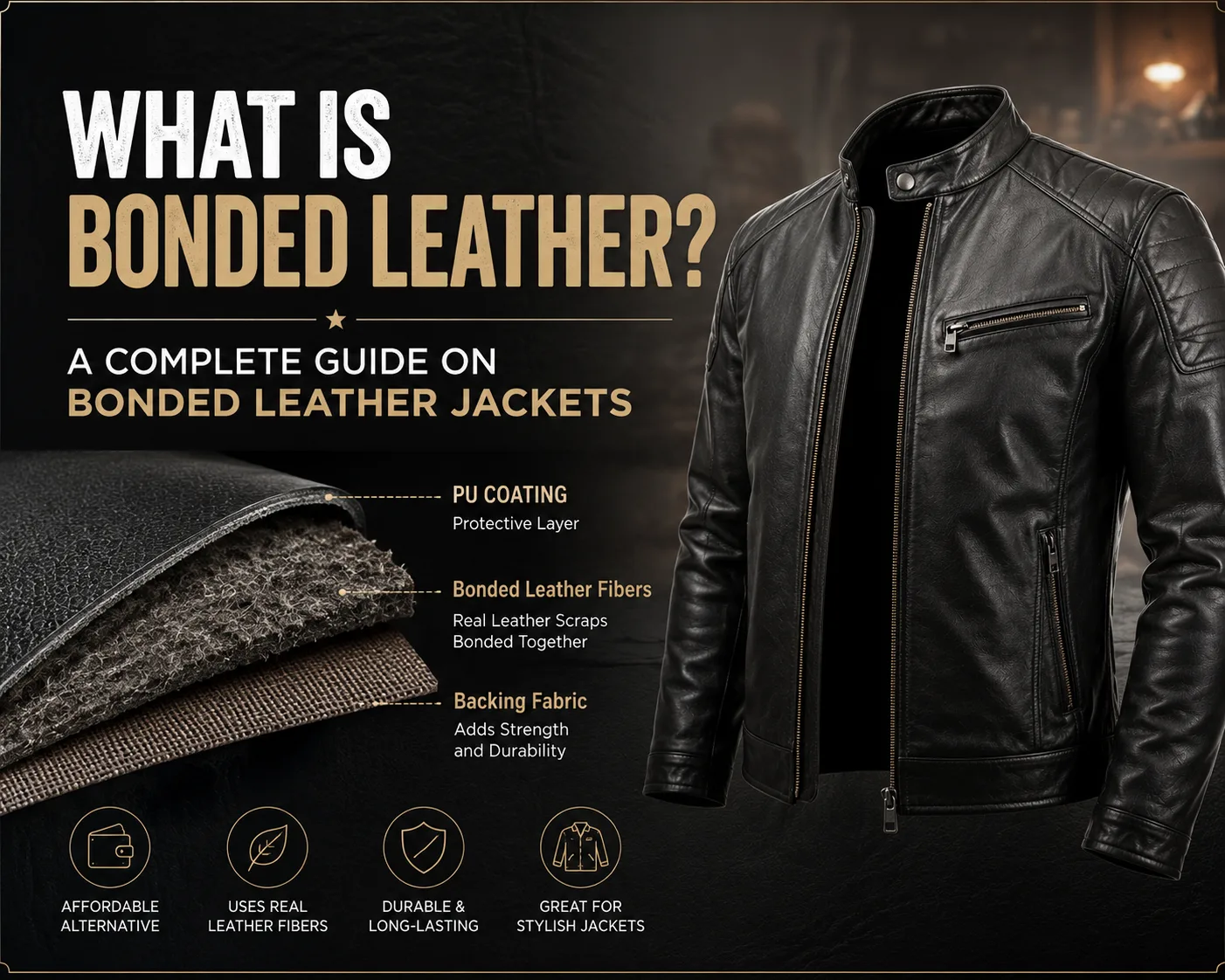
Most faux leather jackets hold up for about two to five years of regular wear before the surface starts cracking or peeling, since that coating is a thin layer of polyurethane or PVC bonded to a fabric base rather than a solid material all the way through. Careful storage, keeping it away from direct heat and sunlight, and avoiding harsh cleaners can stretch that closer to seven or eight years in some cases. Once peeling starts, though, there’s no real fix, since the plastic layer can’t be reconditioned the way real leather can.
Is “genuine leather” the same as real leather?
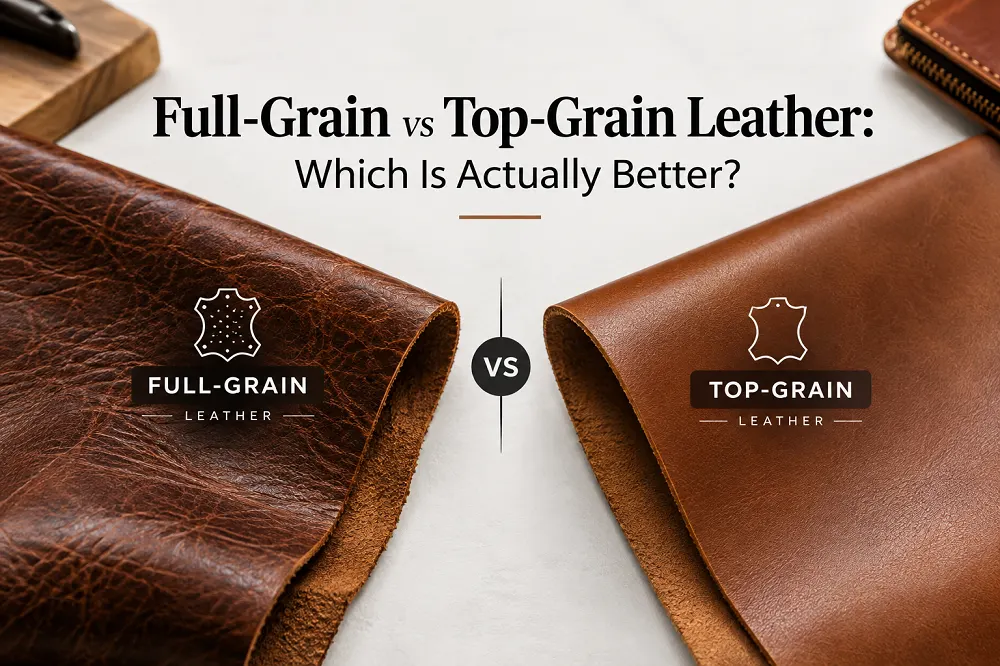
Technically yes, but it’s often used as a marketing term rather than a mark of quality. “Genuine leather” simply means the product came from actual animal hide, not synthetic material, but within the leather industry it usually refers to one of the lower grades, made from leftover layers that are heavily sanded and coated to look better than they are. So a “genuine leather” jacket is real leather, just not necessarily good leather. Full-grain and top-grain are the terms to look for if durability matters to you.
Does fake leather smell like real leather?
No, and this is one of the easiest ways to catch a fake. Real leather has an earthy, slightly musky smell that comes from the tanning process and the natural hide itself. Fake leather is made from polyurethane or PVC, so it tends to carry a chemical or plastic-like odor, especially when it’s brand new. Some higher-end faux leather is treated with a scent additive to mimic real leather, but that smell is usually fainter and fades faster than the real thing.
Can a peeling fake leather jacket be repaired?
Only to a limited extent. Small scuffs or minor surface cracks can sometimes be touched up with a leather repair kit or color-matched filler, which can buy you some extra time. But once the polyurethane coating starts flaking off in larger sections, there’s no way to reattach or restore it, since the surface layer is bonded to a fabric backing rather than being a single solid material. At that point, most people find it’s easier to replace the jacket than to keep patching it.
Conclusion: How to Make the Right Choice
Buying a leather jacket is a long-term investment, so it’s crucial to distinguish between real and fake leather. If you want durability, comfort, and luxury, real leather is the best choice. However, if you’re looking for a budget-friendly and cruelty-free alternative, faux leather might be a suitable option.
Key Takeaways:
- Real leather has a unique texture, natural imperfections, and absorbs water.
- Fake leather looks uniform, has a plastic feel, and repels water.
- Real leather is expensive but lasts decades; fake leather is cheaper but deteriorates faster.
- Perform simple tests like smell, touch, and pore examination to confirm authenticity.