When buying a leather jacket, most people focus on the leather quality, colour, fit, and design. However, the fabric inside the jacket also deserves attention. The lining affects how comfortably the jacket slides over your clothes, how much warmth it provides, and how well it holds its shape during regular wear.
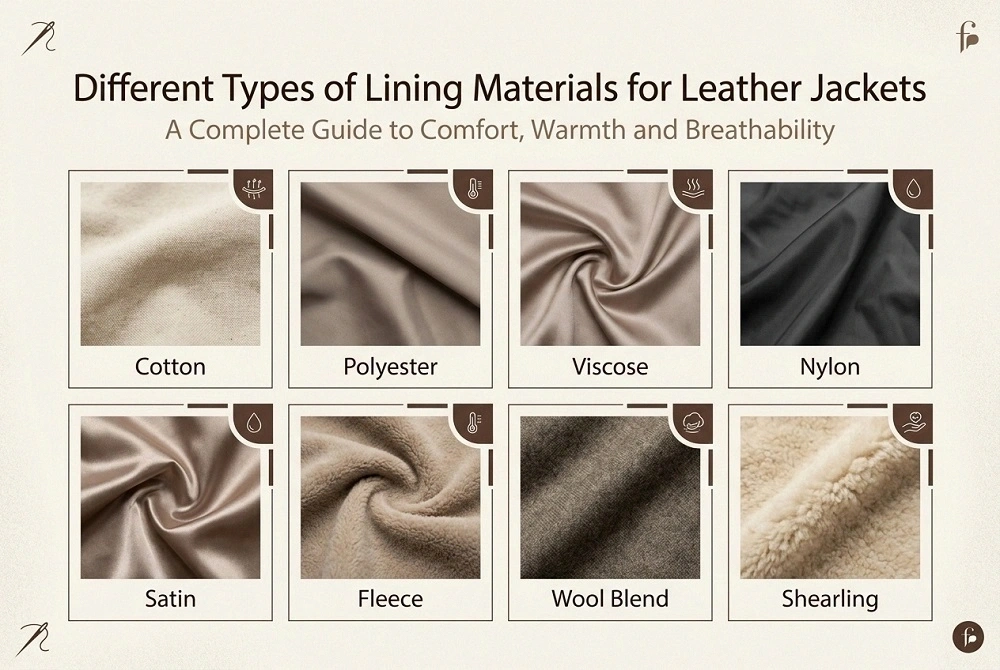
Different jacket lining materials serve different purposes. Cotton offers a breathable feel, polyester provides practical durability, viscose delivers a smooth finish, and fleece or shearling adds insulation for colder weather. The best choice depends on the season, your comfort preferences, and how you plan to wear the jacket.
This guide explains the most common lining materials used in jackets, their advantages and limitations, and how to choose the right option for your needs.
What Is Jacket Lining?
Jacket lining is the fabric attached to the inside of a garment. In a leather jacket, it creates a finished interior between the outer leather and the clothing underneath.
A well-made lining helps the jacket slide over shirts and sweaters, covers internal seams, and provides a comfortable surface against your clothes. Depending on its material and construction, it can also add insulation, support the jacket’s shape, and protect the interior from everyday friction.
Not every lining provides the same benefits. A lightweight lining designed for mild weather will feel different from a padded lining made for winter.
Why Does Lining Material Matter?
The lining influences several aspects of a jacket’s performance.
- Comfort: A smooth interior makes the jacket easier to put on and take off, especially over long-sleeved clothing.
- Warmth: Insulating linings help retain heat, while lightweight options provide less insulation.
- Breathability: Certain fabrics allow better air circulation and help manage moisture during wear.
- Durability: Strong fabric and reinforced stitching help the lining withstand repeated friction around the sleeves, underarms, and pockets.
- Appearance: The lining covers internal construction details and contributes to the jacket’s overall finish and drape.
The outer leather and inner lining work together, but they perform different jobs. A thick lining alone does not guarantee that a jacket will keep you warm in severe cold. The insulation, outer construction, fit, and weather conditions also matter.
Different Types of Lining Materials Used for Jackets
1. Polyester Lining
Polyester is a widely used synthetic lining material because it offers a smooth surface, resists wrinkles, and generally requires less maintenance than delicate fabrics. Its slippery finish helps the jacket slide over shirts and other layers.

Manufacturers also use polyester in quilted linings, where a layer of padding adds insulation without requiring a heavy wool interior.
Advantages:
- Durable and generally resistant to shrinking.
- Smooth enough for comfortable layering.
- Quick-drying and relatively easy to maintain.
- Available in lightweight and insulated constructions.
Limitations:
- Some polyester fabrics can feel warm or less breathable during extended wear.
- Low-quality versions may feel stiff or develop wear in high-friction areas.
Best for: Everyday leather jackets, bomber jackets, and jackets that need a practical, easy-care lining.
2. Cotton Lining
Cotton is a natural fibre valued for its softness and breathability. It can feel comfortable during extended wear, particularly when you prefer a lining that does not feel overly slick or synthetic.

Cotton linings suit casual jackets and lightweight leather styles. However, cotton does not automatically provide better insulation, and the fabric’s weave and thickness affect its performance.
Advantages:
- Soft and comfortable against clothing.
- Generally breathable and absorbent.
- Suitable for people who prefer natural fibres.
- Available in different weights and weaves.
Limitations:
- Can wrinkle more readily than polyester.
- May shrink if the fabric receives unsuitable washing or heat.
- Can hold moisture longer than some synthetic alternatives.
Best for: Lightweight jackets, casual wear, and people who prioritise a natural fabric feel.
3. Poly-Cotton Lining
Poly-cotton combines cotton and polyester in one fabric. The cotton contributes softness and moisture absorption, while polyester can improve wrinkle resistance, dimensional stability, and everyday durability.

The exact balance depends on the blend ratio. A fabric with more cotton may feel different from one containing mostly polyester, so check the composition rather than relying on the name alone.
Advantages:
- Balances softness with practical durability.
- Usually wrinkles less than pure cotton.
- Offers a comfortable option for regular wear.
- Often requires less demanding care than delicate natural-fibre linings.
Limitations:
- May feel less breathable than a comparable pure-cotton fabric.
- Comfort varies with the fibre ratio, weave, and fabric quality.
Best for: Everyday leather jackets and people looking for a balance between cotton comfort and easy maintenance.
4. Viscose Lining
Viscose, also called rayon, is a regenerated cellulose fibre commonly made from processed plant-based pulp. It is popular in jacket linings because it feels soft, drapes smoothly, and can help a jacket slide over other clothing.

Viscose can be a useful choice when you want a refined interior without the cost of silk. However, its durability and care requirements depend on the specific fabric construction.
Advantages:
- Smooth, soft feel.
- Comfortable drape and a polished finish.
- Often a good option for moderate-weather jackets.
- Usually less expensive than genuine silk.
Limitations:
- Can wrinkle and may weaken when wet, depending on the construction.
- May require careful cleaning and drying.
- Quality varies between fabrics.
Best for: Premium everyday jackets, tailored leather styles, and people who value a smooth, comfortable interior.
5. Nylon Lining
Nylon is a lightweight synthetic material known for its strength and resistance to abrasion. Its smooth surface helps reduce friction when you put on or remove a jacket.

Manufacturers often use nylon in performance-oriented outerwear. However, nylon is not automatically waterproof or windproof; those properties depend on the fabric construction and any applied coating.
Advantages:
- Lightweight and strong.
- Smooth against other clothing.
- Can resist abrasion and tearing.
- Useful for jackets designed for active use.
Limitations:
- Some nylon fabrics may feel less breathable.
- Certain finishes can be affected by heat.
- Performance varies depending on weave and coating.
Best for: Lightweight outerwear, utility jackets, and some motorcycle or outdoor jackets.
6. Taffeta Lining
Taffeta is a closely woven fabric with a crisp feel and a smooth surface. It can have a subtle sheen and helps create a neat interior finish without adding much bulk.

Manufacturers can make taffeta from different fibres, including polyester and silk. Its properties therefore depend on the fibre used, not just the fabric name.
Advantages:
- Lightweight and smooth.
- Helps jackets slide over clothing.
- Can provide a crisp, structured finish.
- Works well in lightweight outerwear.
Limitations:
- Some versions may crease or snag.
- Crisp fabrics can feel less flexible than softer knits.
- Care requirements vary by fibre composition.
Best for: Lightweight leather jackets, structured styles, and jackets where a smooth interior matters more than heavy insulation.
7. Satin Lining
Satin describes a weave that creates a smooth surface and a distinctive sheen. It is not a fibre in itself. Satin linings can use polyester, silk, acetate, or other fibres, so their breathability, durability, and care needs vary.

A satin lining can make a jacket feel polished and help it glide over shirts or sweaters.
Advantages:
- Smooth surface reduces friction.
- Creates a clean, refined interior.
- Works well for layering over long-sleeved clothing.
- Available at different price points.
Limitations:
- Some versions can snag or wear through with repeated friction.
- A glossy surface does not guarantee high quality.
- Warmth and breathability depend on the fibre and construction.
Best for: Fashion jackets, dressier leather styles, and people who want a smooth interior.
8. Silk Lining
Silk is a natural protein fibre known for its soft feel, light weight, and refined appearance. Silk lining can feel comfortable in a lightweight jacket, but genuine silk requires more careful handling than many everyday synthetic fabrics.

It is not necessarily the most durable option for a jacket worn daily. Friction around the sleeves, underarms, and pockets can wear down delicate silk over time.
Advantages:
- Soft, lightweight feel.
- Smooth surface for layering.
- Natural fibre with a refined finish.
- Suitable for lightweight or premium garments.
Limitations:
- Usually more expensive than common synthetic linings.
- Can be vulnerable to abrasion and snags.
- Often requires delicate cleaning.
Best for: Premium jackets, occasional wear, and people who prioritise a natural, luxurious lining and are willing to maintain it carefully.
9. Fleece Lining
Fleece is generally a soft, brushed synthetic fabric, commonly made from polyester. Its raised fibres trap air, which helps retain body heat without requiring a heavy, dense fabric.
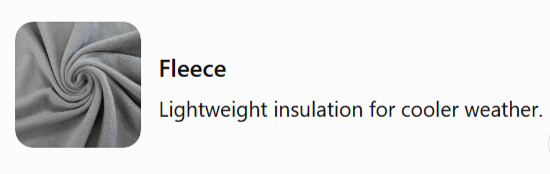
Fleece can make a jacket feel warm and comfortable, but it usually adds more bulk than a smooth woven lining.
Advantages:
- Soft, warm texture.
- Lightweight insulation.
- Often dries relatively quickly.
- Suitable for casual cold-weather clothing.
Limitations:
- Can feel bulky under fitted outerwear.
- May collect lint, dust, or pet hair.
- Does not provide wind or water protection on its own.
Best for: Casual winter jackets and outerwear designed for cool conditions.
10. Wool-Blend Lining
Wool-blend linings combine wool with other fibres to balance insulation, comfort, durability, and care requirements. The exact performance depends on the wool content and the other fibres in the blend.

Wool helps retain warmth in cool conditions, making it useful in jackets designed for colder weather.
Advantages:
- Provides insulation for cool temperatures.
- Can feel soft and comfortable when well constructed.
- Blends can improve shape retention or ease of care.
- Suitable for jackets intended for cold-weather use.
Limitations:
- Some blends require specialist cleaning.
- May add weight and bulk.
- Care needs vary by fibre composition.
Best for: Winter jackets, heavier outerwear, and people who need additional warmth.
11. Faux Fur and Sherpa Lining
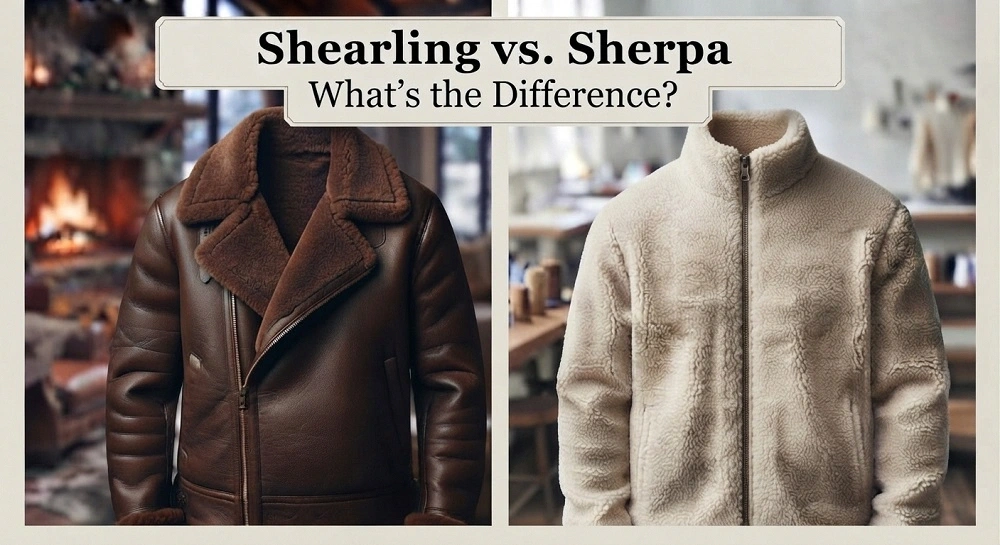
Faux fur and sherpa are usually made from synthetic fibres designed to create a fluffy, fleece-like surface. They imitate the appearance or feel of wool and sheepskin without using a natural sheepskin lining.

Their thick pile traps air and provides warmth, making them common in casual winter jackets.
Advantages:
- Soft, plush texture.
- Adds noticeable insulation.
- Available in different pile lengths and thicknesses.
- Offers a synthetic alternative to genuine shearling.
Limitations:
- Adds bulk and may feel too warm indoors.
- Can collect dust and loose fibres.
- Performance and durability vary with fabric quality.
Best for: Winter bomber jackets, casual outerwear, and jackets designed for cold weather.
12. Genuine Shearling Lining
Genuine shearling comes from sheepskin that retains its wool fleece on one side. Unlike a separate fabric sewn inside a jacket, shearling combines the hide and wool in one material.

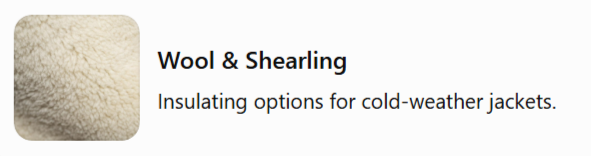
It provides substantial insulation and a distinctive natural texture. However, shearling jackets can feel heavier and require more specialised care than jackets with ordinary fabric linings.
Advantages:
- Strong insulation for cold conditions.
- Natural wool texture and distinctive appearance.
- Comfortable warmth when the jacket fits properly.
- Often used in traditional aviator and winter jacket designs.
Limitations:
- Usually costs more than common fabric linings.
- Can add considerable weight and bulk.
- Requires suitable leather and shearling care.
Best for: Cold-weather jackets and styles designed around substantial insulation.


Jacket Lining Materials Compared
The following table summarises the main differences to help you compare materials before choosing a jacket.
| Lining material | Main strength | Main limitation | Best suited for |
|---|---|---|---|
| Polyester | Durability and easy care | May retain heat | Everyday wear |
| Cotton | Breathability and natural feel | Wrinkles and may shrink | Lightweight jackets |
| Poly-cotton | Balance of comfort and durability | Breathability depends on blend | Regular use |
| Viscose | Smooth feel and drape | Needs suitable care | Premium everyday jackets |
| Nylon | Lightweight strength | Breathability varies | Utility and outdoor styles |
| Taffeta | Crisp, smooth finish | Some types may snag | Lightweight outerwear |
| Satin | Smooth, polished surface | Fibre quality varies | Dressier jackets |
| Silk | Soft natural-fibre feel | Delicate and costly | Premium or occasional wear |
| Fleece | Warmth with relatively low weight | Can add bulk | Casual winter wear |
| Wool blend | Insulation | Care needs vary | Cold-weather jackets |
| Faux fur or sherpa | Plush warmth | Bulky and may collect lint | Winter jackets |
| Genuine shearling | Substantial natural insulation | Heavy and costly | Very cold conditions |
How to Choose the Best Lining for Your Leather Jacket
The right lining depends on where you live, how often you wear the jacket, and what you wear underneath it.
Consider the Season
For mild weather: Cotton, poly-cotton, viscose, and lightweight woven linings can provide comfort without substantial insulation.
For cold weather: Fleece, wool blends, quilted linings, and shearling can provide additional warmth. The outer shell and overall jacket construction still matter.
For changing temperatures: Choose a versatile lining with moderate weight, or consider a jacket with a removable insulating layer.
Think About Breathability and Comfort
If you often feel hot in synthetic fabrics, look for cotton or a suitable cellulose-based lining such as viscose. Poly-cotton may also work well, especially when the blend contains a high proportion of cotton.
If you usually wear sweaters underneath your jacket, pay attention to surface smoothness. A slick woven lining may slide over knitwear more easily than a rough or brushed interior.
Remember that fibre content is only part of the equation. The weave, thickness, finish, fit, and amount of lining also influence comfort.
Check Durability and Maintenance
A jacket you wear several times a week needs a lining that can withstand repeated friction, particularly around the sleeves and underarms. Polyester and many poly-cotton fabrics can be practical choices for frequent use.
Silk and some viscose fabrics may offer a pleasant feel but need more careful maintenance. Always follow the garment’s care label, particularly when the lining is attached to genuine leather.
Consider the Jacket’s Construction
Material alone does not determine warmth. A thin polyester lining provides a different level of insulation from quilted polyester containing padding.
Similarly, a jacket with a full lining may feel heavier than one with partial lining, even when both use the same fabric. Consider the complete construction rather than judging the jacket by the material name alone.
What Is the Best Fabric for Lining a Leather Jacket?
There is no single lining material that works best for every leather jacket.
- For everyday durability: Polyester or a well-made poly-cotton blend can be practical.
- For a breathable feel: Cotton or a suitable viscose fabric may be a better choice.
- For easy layering: Smooth polyester, nylon, satin, or taffeta can help the jacket slide over clothing.
- For added winter warmth: Fleece, wool blends, quilted insulation, or shearling may be more suitable.
- For a premium natural-fibre feel: Silk can be appealing, but consider its cost and wear resistance.
If you want a lining that feels smooth over sweaters but still offers a more breathable experience, consider a good-quality viscose or a suitable cotton-rich blend with a smooth finish. The actual fabric construction matters, so test the material when possible rather than choosing by fibre name alone.
How to Care for a Leather Jacket Lining
The lining needs care, but the leather shell limits which cleaning methods you can safely use.
- Read the care instructions: Check the manufacturer’s guidance before using any cleaning product.
- Address small marks carefully: Use a method suitable for the lining and avoid soaking the leather.
- Air out the jacket: Hang it in a well-ventilated area after wearing it, especially if it has absorbed moisture.
- Avoid direct heat: Radiators, hair dryers, and intense sunlight can damage leather and some lining fabrics.
- Use professional cleaning when needed: For deep stains, persistent odours, or delicate linings, consult a cleaner experienced with leather garments.
- Repair worn areas early: If the lining starts tearing around the sleeves or underarms, a leather repair specialist may be able to repair or replace it before the damage spreads.
Do not machine-wash a leather jacket unless the manufacturer explicitly confirms that the garment is designed for that treatment.
Frequently Asked Questions
What material is commonly used for jacket lining?
Polyester, cotton, poly-cotton, viscose, and nylon are common options. Jackets designed for colder conditions may also use fleece, wool blends, faux fur, sherpa, or shearling.
Which lining material is best for a leather jacket?
The best choice depends on your needs. Polyester suits practical everyday use, cotton prioritises a natural breathable feel, viscose offers a smooth finish, and fleece or shearling provides additional warmth.
Is cotton lining better than polyester lining?
Cotton generally offers a more natural, absorbent feel, while polyester usually resists wrinkles and dries faster. Neither is always better; your climate, comfort preferences, and how often you wear the jacket should guide your choice.
Is viscose a good lining for leather jackets?
Yes, viscose can be a good option because it feels smooth and drapes well. However, its resistance to abrasion and cleaning requirements depend on the specific fabric.
Which jacket lining is best for winter?
Fleece, wool blends, quilted insulation, and genuine shearling can all work well for winter jackets. Choose according to the expected temperature, jacket construction, and amount of layering you need.
Can a leather jacket lining be replaced?
Yes. A specialist can often replace a worn or damaged lining. The cost and complexity depend on the jacket’s construction, pocket placement, and the replacement fabric you choose.
Does a thicker lining always mean a warmer jacket?
No. Thickness alone does not determine warmth. The lining’s structure, insulation, outer shell, fit, and protection from wind all affect how warm the jacket feels.
Final Thoughts
The lining is an important part of a leather jacket because it affects comfort, layering, warmth, and the garment’s interior finish. Cotton, poly-cotton, polyester, viscose, and nylon each offer different advantages, while fleece, wool blends, and shearling suit jackets designed for colder conditions.
Before choosing a jacket, consider the season, the clothing you will wear underneath it, and how much maintenance you are comfortable with. A lining that suits your lifestyle can make a leather jacket more comfortable to wear and more practical for regular use.
Explore Lammberg’s men’s leather jackets and women’s leather jackets to compare styles and find a jacket that suits your preferences. If you want a design tailored to your requirements, learn more about our bespoke leather jacket service.




















What Is Corinthian Leather? History, Meaning, Uses, and Care

Can Men Wear Women’s Leather Jackets and Women Wear Men’s Leather Jackets?