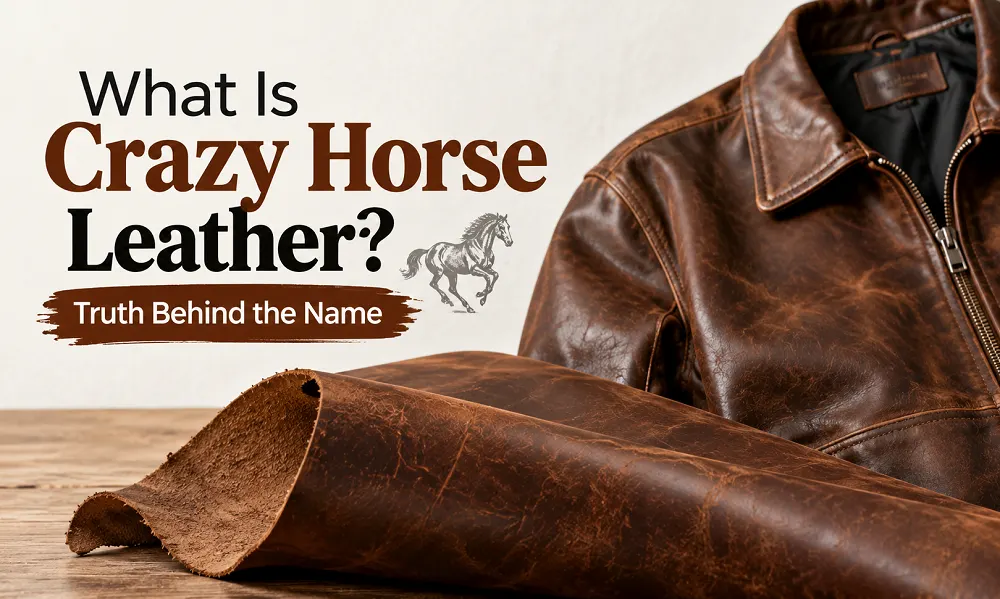
Crazy Horse leather is a type of real leather known for its distinctive pull-up effect, rugged appearance, and ability to develop character with use. It is usually made from cowhide or buffalo hide and treated with oils and waxes that create its characteristic color-changing appearance.
Despite the name, Crazy Horse leather does not come from horses. Instead, the term is commonly used for leather with a waxed or oiled pull-up finish, often associated with the durable leather traditionally used for saddles and other equestrian goods.
When the leather is bent, rubbed, or scratched, its surface can become lighter or darker as the oils and waxes move. This gives Crazy Horse leather its recognizable vintage, worn-in appearance.
But is Crazy Horse leather good quality? Is it full-grain? Does it work well for jackets? And how does it compare with other types of leather?
Here’s what you need to know.
What Is Crazy Horse Leather?
Crazy Horse leather is real leather finished with oils and waxes to create a pull-up effect. The underlying hide is commonly cowhide, although buffalo and other hides can also be used.
Unlike heavily coated leather, Crazy Horse leather usually retains much of the natural character of the hide. Its surface can change in tone when it is folded, stretched, rubbed, or scratched.
This gives the leather two characteristics that make it easy to recognize:
- A waxy or oily surface
- A visible pull-up effect when the leather is moved or handled
The exact appearance and feel can vary considerably depending on the hide, leather grade, thickness, tanning process, and finishing formula.
So, Crazy Horse is better understood as a type of leather finish rather than a specific animal hide or guaranteed leather grade.
Why Is It Called Crazy Horse Leather?
The exact historical origin of the name Crazy Horse leather is not clearly documented. Today, the term is generally associated with rugged leather used for products that benefit from strength, flexibility, and a worn-in appearance.
The name is particularly connected with the traditional world of saddlery and equestrian leather goods, where durable leather has long been used for saddles, tack, and other equipment.
Importantly, the name does not mean the leather is made from horsehide.
Instead, “Crazy Horse” has become a commonly used trade term for leather with an oil-and-wax or pull-up finish.
The most useful thing to understand when buying it is therefore not the name itself, but what hide was used, what grade it is, and how it was finished.
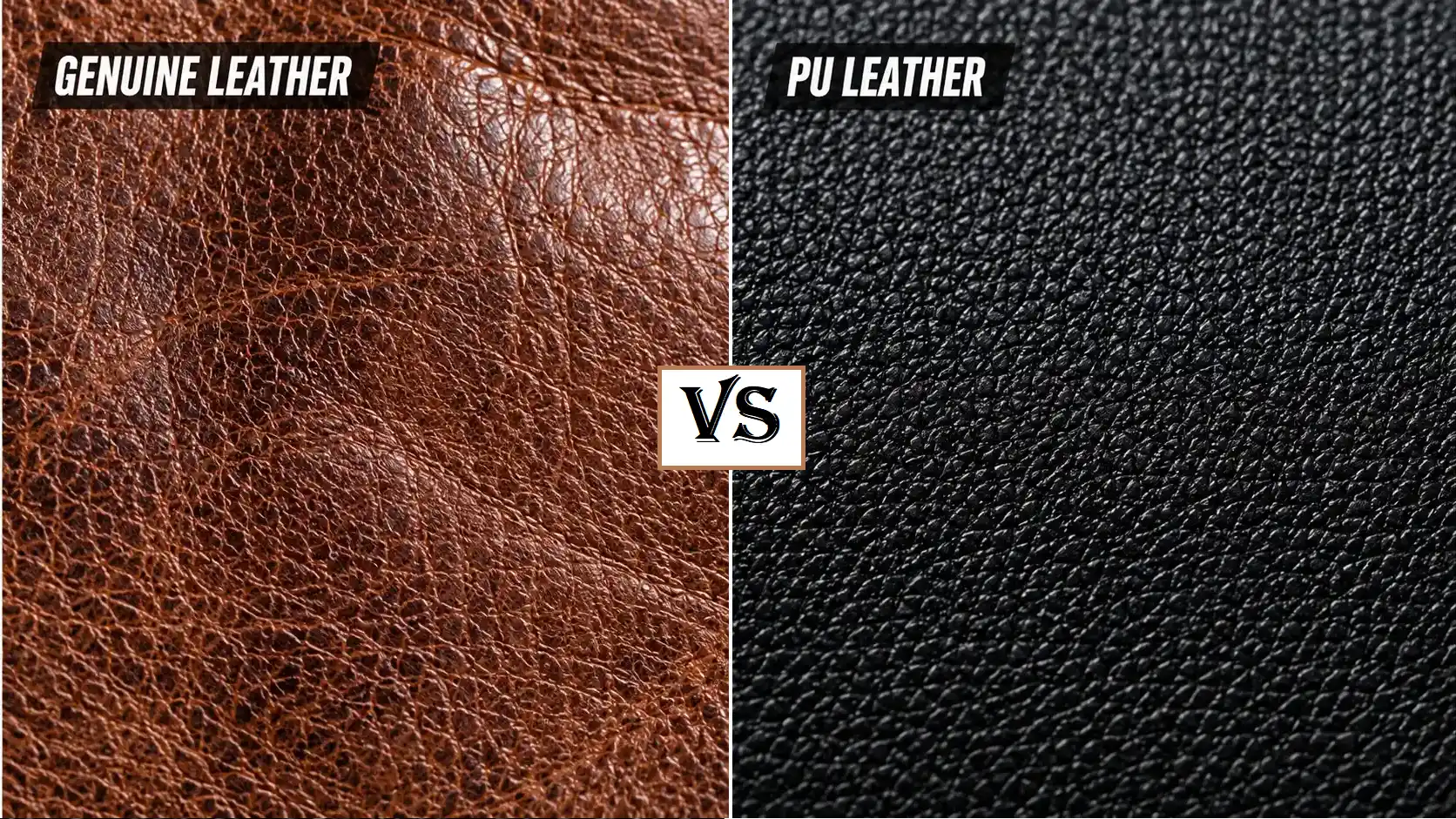
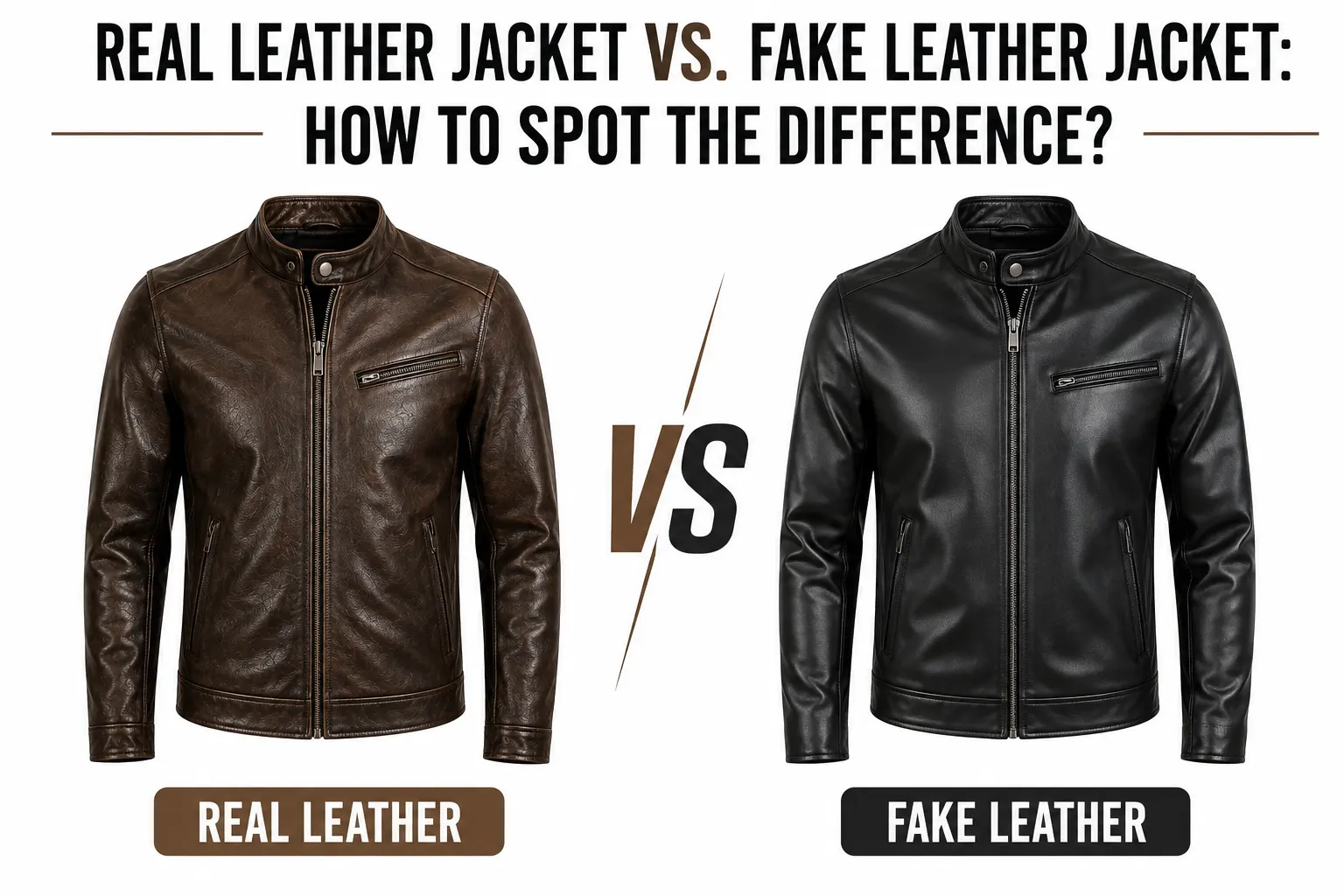
Related Article: Genuine Leather vs PU Leather – What is the Difference?
Is Crazy Horse Leather Made From Horses?
No. Crazy Horse leather is not horse leather.
The name can easily make it sound as though the material comes from horses, but that is not what the term means.
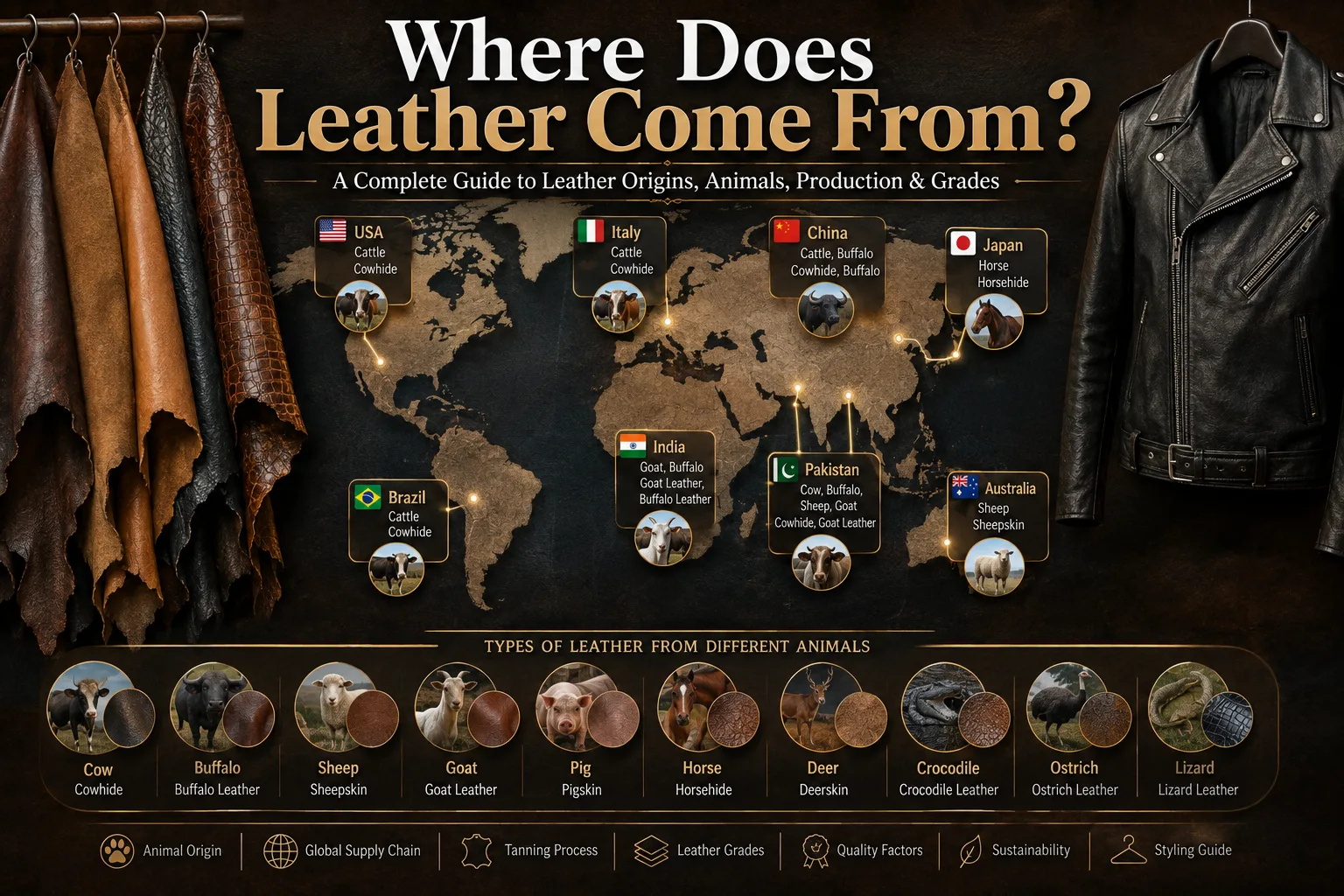
Crazy Horse leather is commonly produced from cowhide, although buffalo and other types of animal hide may also be used.
What gives it the Crazy Horse appearance is the oil-and-wax treatment applied to the leather, not the animal from which the hide came.
This distinction is important because two products can both be called Crazy Horse leather while being made from different hides or having different levels of quality.
How Is Crazy Horse Leather Made?
The exact manufacturing process differs between tanneries, but Crazy Horse leather generally involves several important stages.
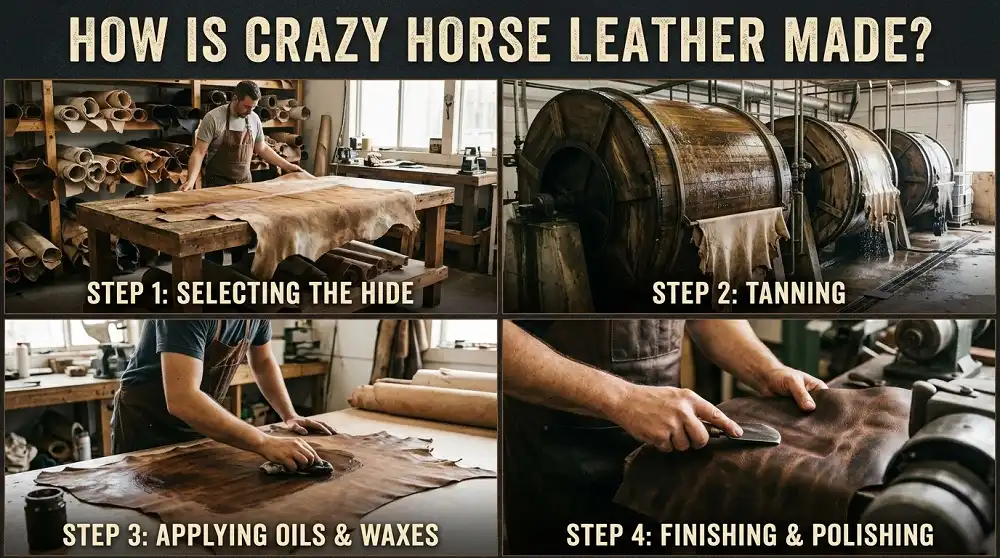
1. Selecting the Hide
The process begins with a suitable animal hide, most commonly cowhide.
The quality of the original hide has a major effect on the finished leather. Factors such as natural grain, thickness, fiber structure, and the number of visible imperfections all influence the final result.
2. Tanning the Leather
The hide is then tanned to preserve it and turn it into usable leather.
Different tanning methods can produce different characteristics. For example, vegetable-tanned leather can be firmer and develop a pronounced patina, while chrome-tanned leather is often softer and more flexible.
3. Applying Oils and Waxes
This is the stage that gives the leather its characteristic Crazy Horse finish.
Oils and waxes are worked into the leather, creating a surface that can change tone when pressure, bending, or friction moves the oils within the material.
The exact mixture varies between manufacturers, which is one reason why Crazy Horse leather can look and feel different from one product to another.
4. Finishing the Surface
The leather is then finished and polished to achieve the desired balance of texture, appearance, and durability.
The result is a leather surface with a distinctive pull-up effect and a naturally rugged appearance.
What Does Crazy Horse Leather Look Like?
Crazy Horse leather typically has a rugged, vintage, slightly distressed appearance.
Its most noticeable feature is the pull-up effect.
When the leather is bent or folded, the surface can become lighter along the crease. Once the leather is released, some of the original color may return.
This creates natural variations in tone that become more noticeable as the leather is used.
Over time, Crazy Horse leather can develop:
- Creases
- Scratches
- Scuff marks
- Color variation
- A deeper patina
- A more worn-in appearance
For people who like leather that develops visible character instead of staying perfectly uniform, this changing appearance is one of Crazy Horse leather’s biggest attractions.
What Does Crazy Horse Leather Feel Like?
The feel of Crazy Horse leather depends on the hide and finishing process.
It can range from smooth and waxy to firm and dense.
A thick piece of Crazy Horse leather used for a jacket may feel considerably different from a thinner version used for a wallet or bag.
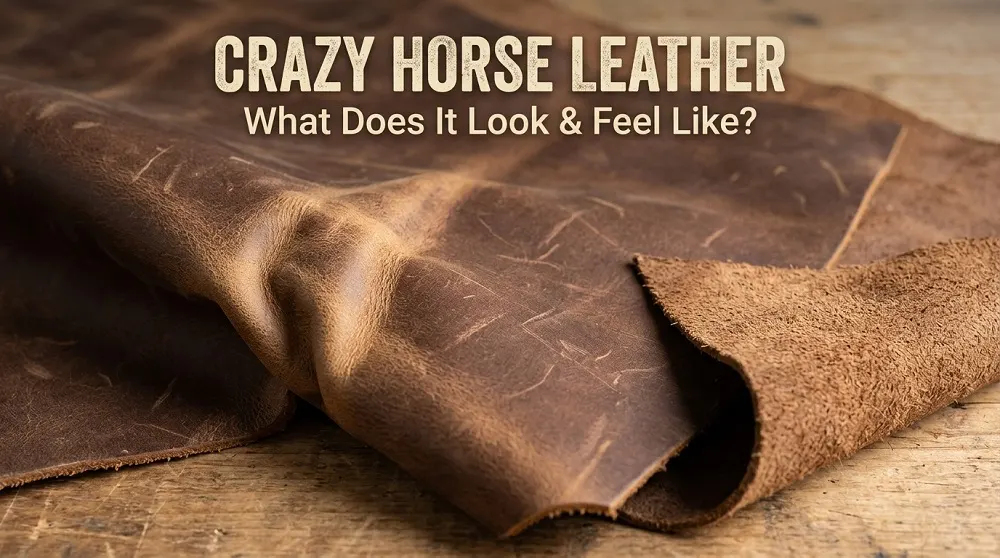
Generally, you may notice:
- A slightly waxy surface
- A smooth but natural texture
- Moderate firmness
- Visible natural grain
- A more fibrous texture on the underside
There is no single texture that applies to every Crazy Horse leather product because the final feel depends on factors such as hide thickness, tanning method, and the amount of oil and wax used.
What Is the Crazy Horse Leather Pull-Up Effect?
The pull-up effect is one of the defining characteristics of Crazy Horse leather.
When you bend, stretch, fold, or rub the leather, the oils and waxes within the finish shift. This can temporarily change the way light reflects from the surface, creating lighter or darker areas.
For example, bending a Crazy Horse leather jacket sleeve may create a lighter-looking crease.
Once the pressure is released, some of the color can return toward its original appearance.
This is why Crazy Horse leather can appear to “change color” when handled.
The effect also helps give the leather its distinctive worn and vintage character.
Does Crazy Horse Leather Scratch Easily?
Crazy Horse leather can show scratches and scuffs more visibly than heavily coated leather.
However, minor marks are not necessarily considered a defect. They are part of the appearance that many people actually like about this type of leather.
Small surface marks can sometimes become less noticeable when the leather is gently rubbed with a clean, soft cloth. This can redistribute some of the surface oils.
Deep scratches are different and may remain visible.
So if you want leather that stays extremely uniform and clean-looking, Crazy Horse may not be the best choice. If you like leather that develops character, the visible marks can be part of its appeal.
Is Crazy Horse Leather Full-Grain?
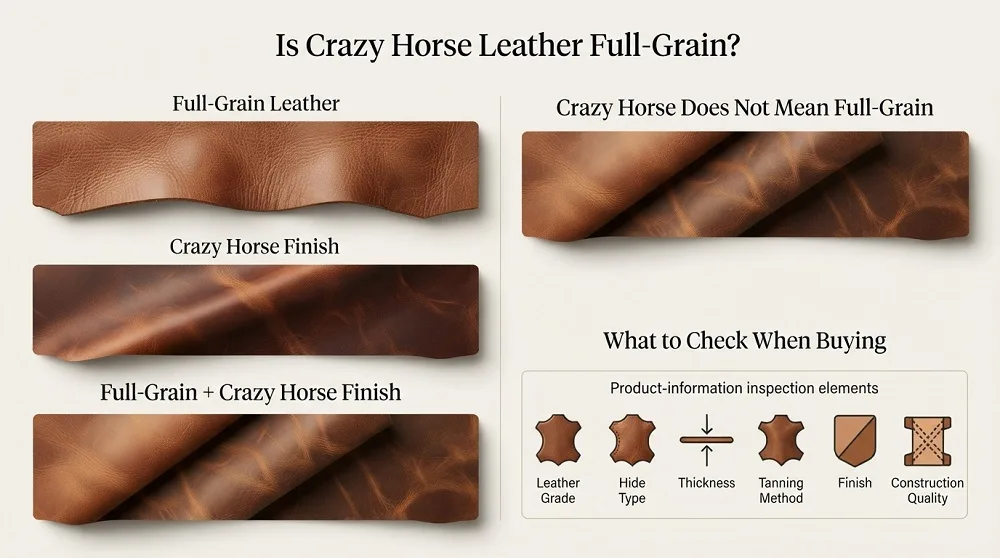
Crazy Horse leather can be full-grain, but “Crazy Horse” does not automatically mean full-grain.
This is an important distinction.
Full-grain describes the part of the hide being used, while Crazy Horse generally describes the oil-and-wax or pull-up finish applied to leather.
That means a leather product can technically be:
Full-grain + Crazy Horse finish
But another product could use a different grain grade while still being marketed as Crazy Horse leather.
When buying, don’t judge quality from the words “Crazy Horse” alone. Check the product description for:
- Leather grade
- Hide type
- Thickness
- Tanning method
- Finish
- Construction quality
How to Identify Real Crazy Horse Leather
If you’re shopping for Crazy Horse leather, don’t rely only on the product name.
Look for these characteristics:
1. Check the Leather Description
A reliable seller should tell you what hide was used and, ideally, its leather grade.
2. Look for the Pull-Up Effect
Bending or pressing the leather should create some visible variation in tone if it has a noticeable pull-up finish.
3. Look at the Natural Grain
Higher-quality leather may retain a more natural grain pattern instead of having a heavily artificial surface.
4. Check the Texture
Crazy Horse leather commonly has a smooth-to-waxy feel rather than a plastic-like coated surface.
5. Ask About the Finish
The seller should be able to explain that the leather has been treated with oils, waxes, or a similar pull-up finish.
6. Don’t Assume “Crazy Horse” Means Premium
The term describes the finish, not necessarily the quality of the underlying hide.
Is Crazy Horse Leather Good Quality?
It can be excellent quality, but the name alone doesn’t guarantee it.
The overall quality depends on the underlying hide and how it has been processed.
When evaluating a Crazy Horse leather product, consider:
- Leather grade
- Hide quality
- Thickness
- Tanning method
- Oil and wax finish
- Stitching
- Lining
- Hardware
- Overall construction
A high-quality Crazy Horse leather product can combine a strong natural hide with a durable finish and excellent construction.
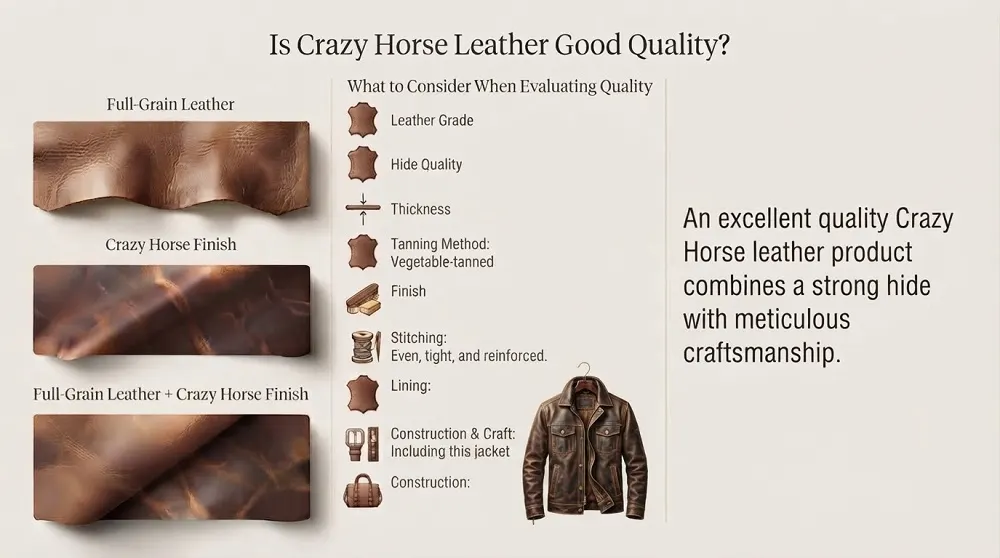
On the other hand, a product can use the Crazy Horse name while relying on a lower-grade or heavily processed leather.
That’s why the material specification matters more than the marketing name.
Pros and Cons of Crazy Horse Leather
Pros
- Distinctive appearance: The pull-up effect creates a rugged, vintage look.
- Develops character: Scratches, creases, and tonal changes can add personality over time.
- Real leather: Genuine Crazy Horse leather is made from animal hide.
- Durable: Quality Crazy Horse leather can be highly durable, particularly when made from a substantial hide.
- Unique finish: The surface changes visually when bent or rubbed.
- Versatile: It is used for jackets, boots, bags, wallets, belts, and other leather goods.
- Some resistance to light moisture: Its wax content can provide some surface protection.
Cons
- Scratches are more noticeable: Surface marks can appear quickly.
- Appearance changes with use: It won’t remain perfectly uniform.
- Needs care: Oils and waxes don’t eliminate the need for maintenance.
- Quality varies: “Crazy Horse” doesn’t specify a particular leather grade.
- Can be expensive: Higher-quality hides and craftsmanship increase the price.
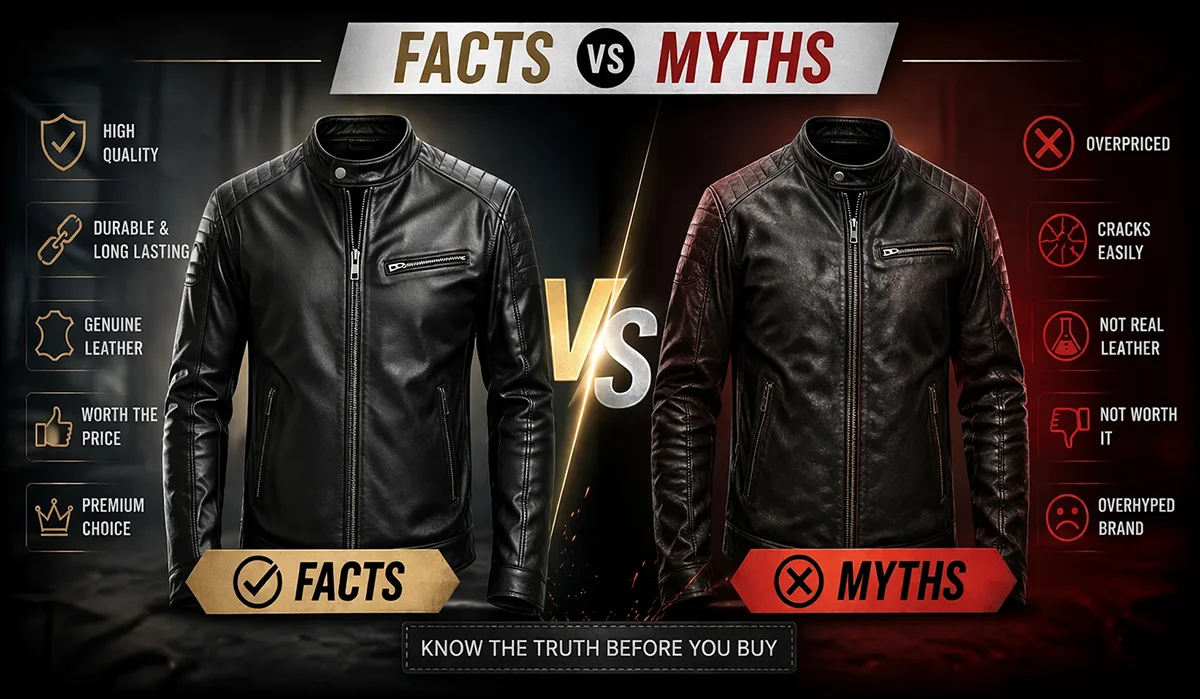
THE TRUTH ABOUT LEATHER JACKETS: MYTHS VS. FACTS
Is Crazy Horse Leather Good for Jackets?
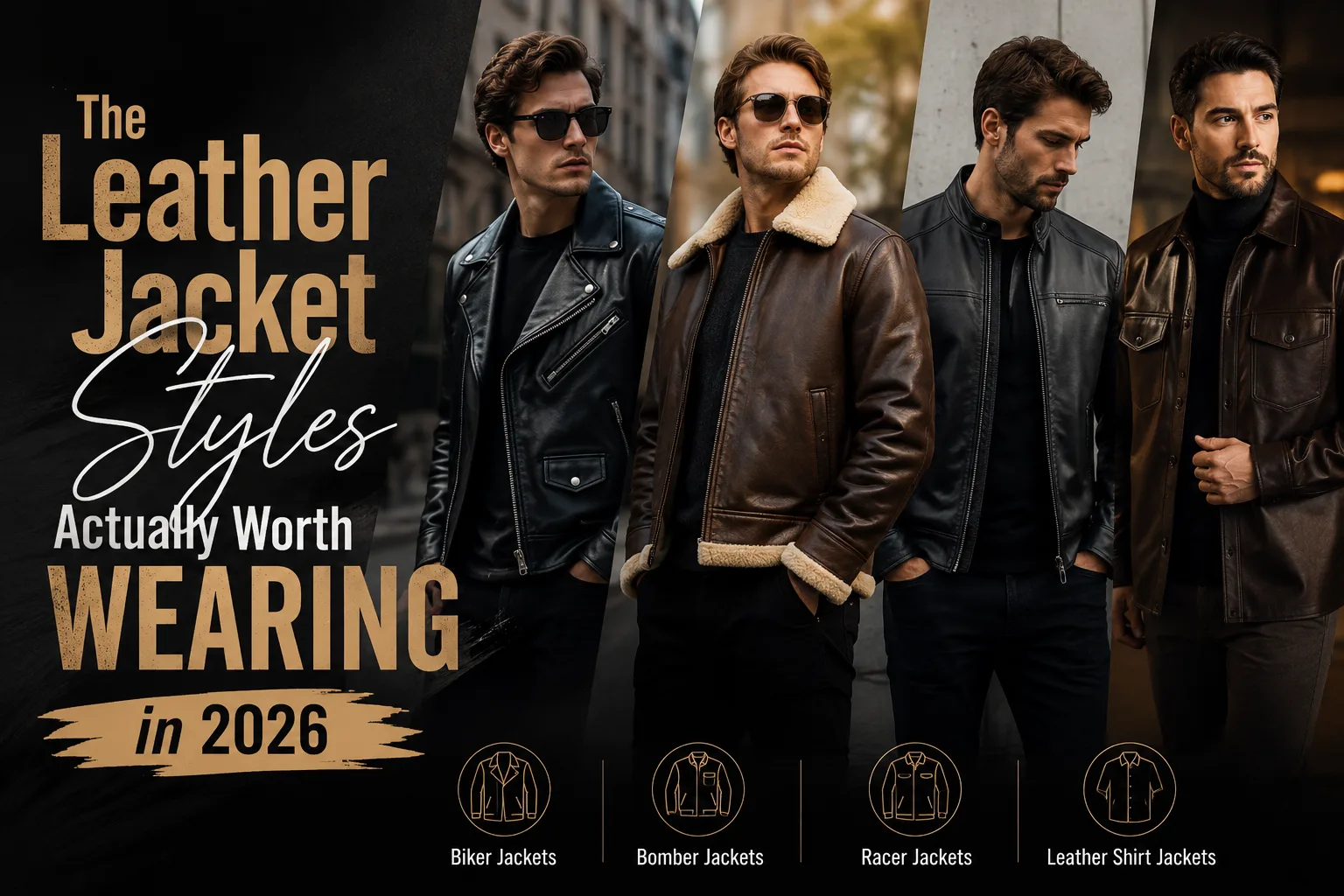
Yes. Crazy Horse leather can be an excellent choice for leather jackets, particularly if you prefer a rugged, vintage-inspired appearance.
One of its biggest advantages for jackets is the way the material develops character with wear.
Areas such as:
- Elbows
- Cuffs
- Shoulders
- Pockets
- Waist
- Sleeves
can develop natural creases and tonal variation as the jacket is worn.
Why Choose Crazy Horse Leather for a Jacket?
It can offer:
- A rugged appearance
- A distinctive pull-up effect
- Natural-looking aging
- Strong visual character
- A vintage-inspired finish
What Should You Consider?
The same characteristics can be disadvantages for some buyers.
Crazy Horse leather may show scratches and marks more readily than smooth, heavily finished leather. If you want your jacket to maintain a perfectly uniform appearance, another finish may suit you better.
But if you like a jacket that looks more personal and worn-in over time, Crazy Horse leather is worth considering.
What Is Crazy Horse Leather Used For?
Crazy Horse leather is used across many different leather products.
Common examples include:
- Leather jackets
- Boots
- Belts
- Wallets
- Bags
- Backpacks
- Briefcases
- Card holders
- Watch straps
- Journal covers
- Furniture upholstery
It works particularly well for products that are handled or worn regularly because the surface can develop additional character through everyday use.
How Much Does Crazy Horse Leather Cost?
There is no single price for Crazy Horse leather.
The cost depends on several factors, including:
- Type of hide
- Leather grade
- Hide quality
- Thickness
- Tanning method
- Oil and wax treatment
- Tannery quality
- Manufacturing quality
For finished products such as jackets, bags, and boots, the price also includes labor, hardware, lining, construction, and design.
This is why two products both described as “Crazy Horse leather” can have very different prices.
The name alone is not a reliable indicator of quality or value.
How to Care for Crazy Horse Leather
Crazy Horse leather is relatively straightforward to maintain, but its care differs from heavily coated smooth leather.
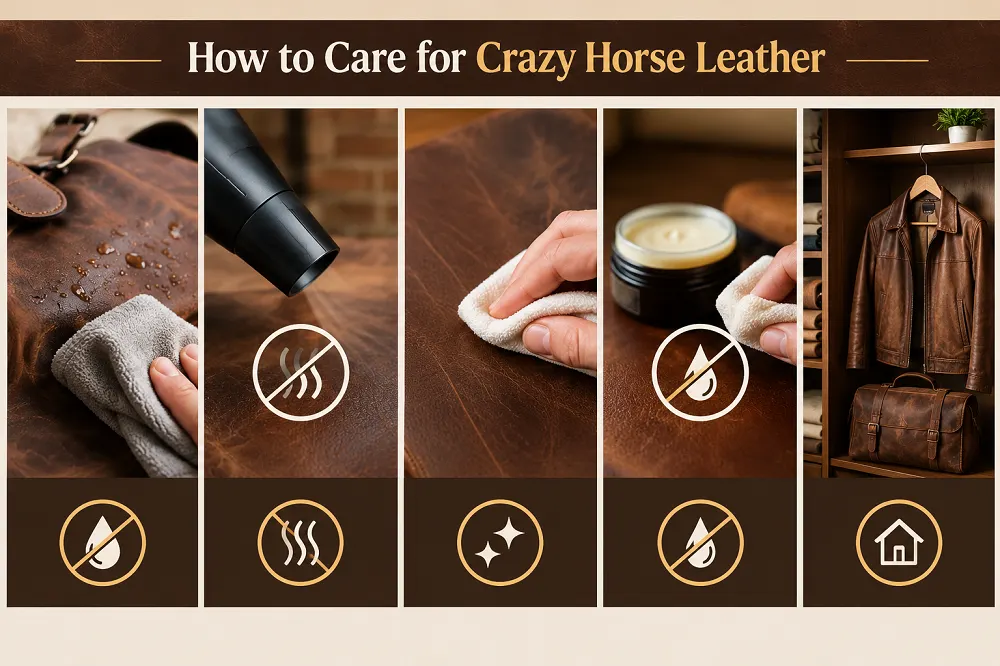
Keep It Away From Heavy Water
Light moisture is generally less concerning than prolonged soaking. If the leather becomes wet, remove excess moisture and allow it to dry naturally.
Avoid Direct Heat
Don’t use a hair dryer, radiator, heater, or other direct heat source to dry the leather.
Rapid drying can affect the leather and its finish.
Remove Minor Surface Marks Carefully
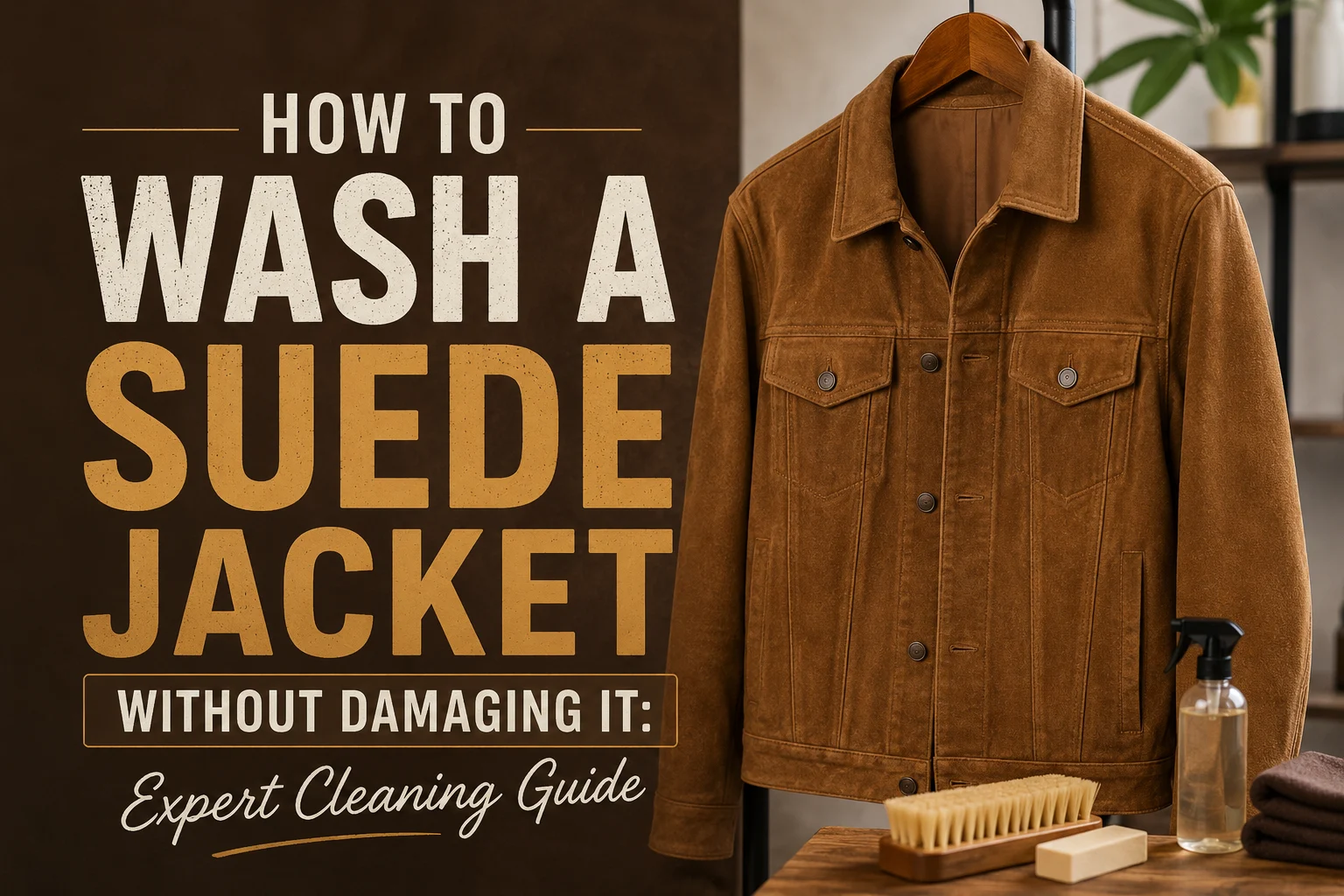
For small scratches, gently rubbing the area with a clean, soft cloth may help redistribute surface oils and reduce the appearance of the mark.
Don’t Over-Condition
Crazy Horse leather already contains oils and waxes. Adding too much conditioner can change its color or make the surface excessively greasy.
Always test a new product on a hidden area first.
Store It Properly
Keep Crazy Horse leather in a cool, dry location away from prolonged direct sunlight.
For jackets and bags, allow enough space to prevent unwanted creasing or distortion.
These care principles retain the useful guidance from the original article while keeping the instructions concise.
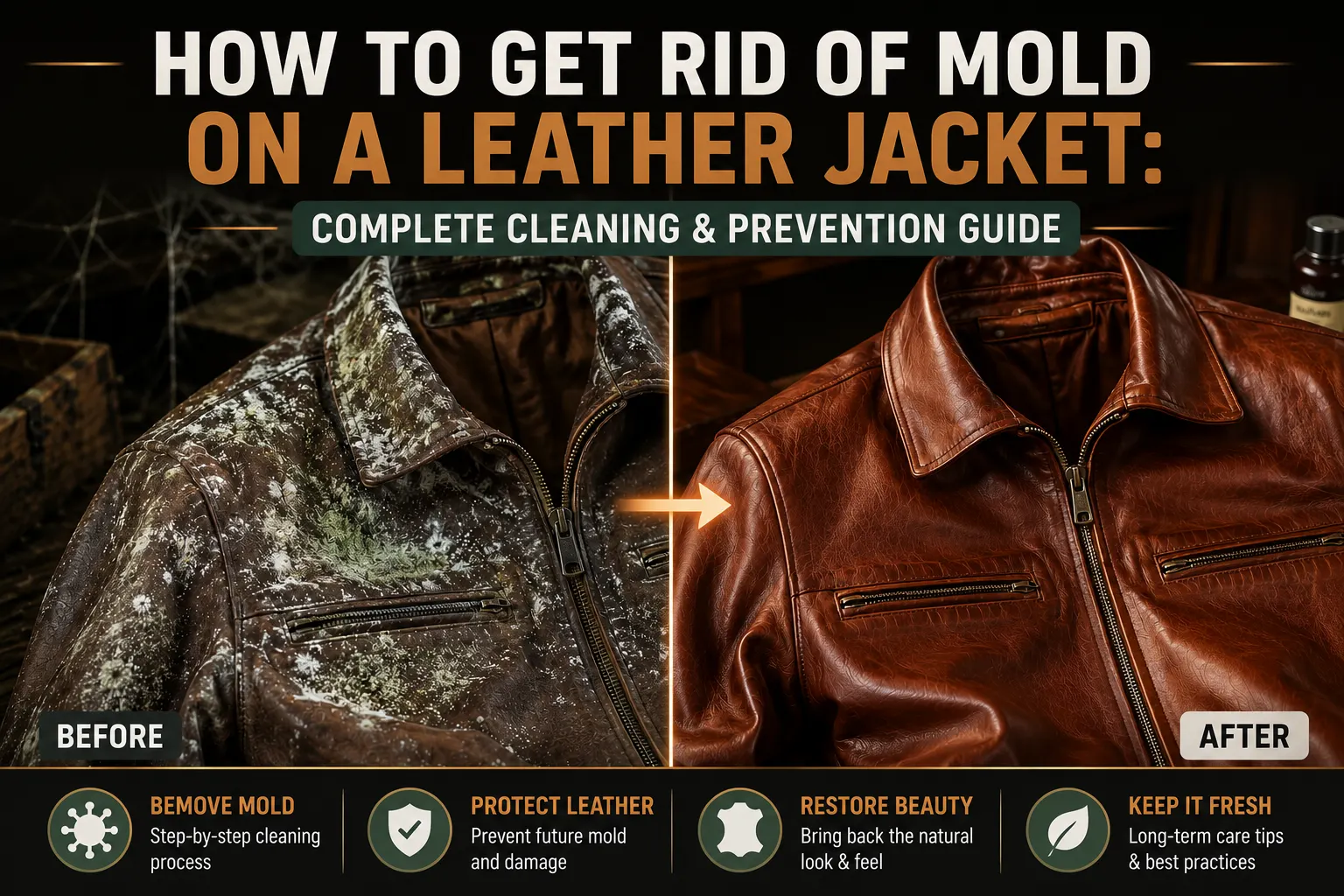
Related Article: How to Remove Cigarette Smell & Mildew from a Leather Jacket 2026
Crazy Horse Leather vs Other Types of Leather
One of the most important things to understand is that Crazy Horse and full-grain aren’t necessarily competing leather categories.
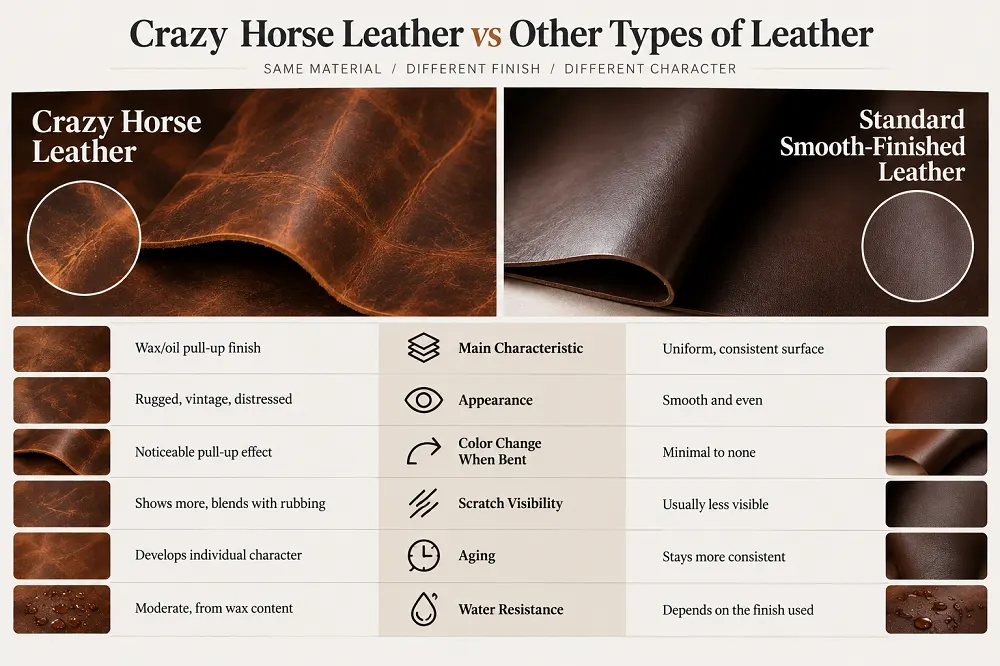
They describe different things.
- Full-grain describes the part of the hide being used.
- Crazy Horse generally describes the oil-and-wax pull-up finish.
Therefore, a product can be both full-grain and Crazy Horse leather.
| Feature | Crazy Horse Leather | Smooth-Finished Leather |
|---|---|---|
| Main characteristic | Oil/wax pull-up finish | More uniform surface |
| Appearance | Rugged and vintage | Smooth and consistent |
| Color change when bent | Noticeable | Usually minimal |
| Scratch visibility | More visible | Often less visible |
| Aging | Develops individual character | Usually stays more consistent |
| Water resistance | Some resistance from waxes | Depends on finish |
Crazy Horse Leather vs Full-Grain Leather
These terms describe different characteristics.
Full-grain leather refers to leather that retains the outer grain layer of the hide.
Crazy Horse leather refers to a finish that uses oils and waxes to create the characteristic pull-up effect.
So you don’t necessarily have to choose between them.
A product can be:
Full-grain leather + Crazy Horse finish
When shopping, pay attention to both the leather grade and the finish rather than treating them as alternatives.
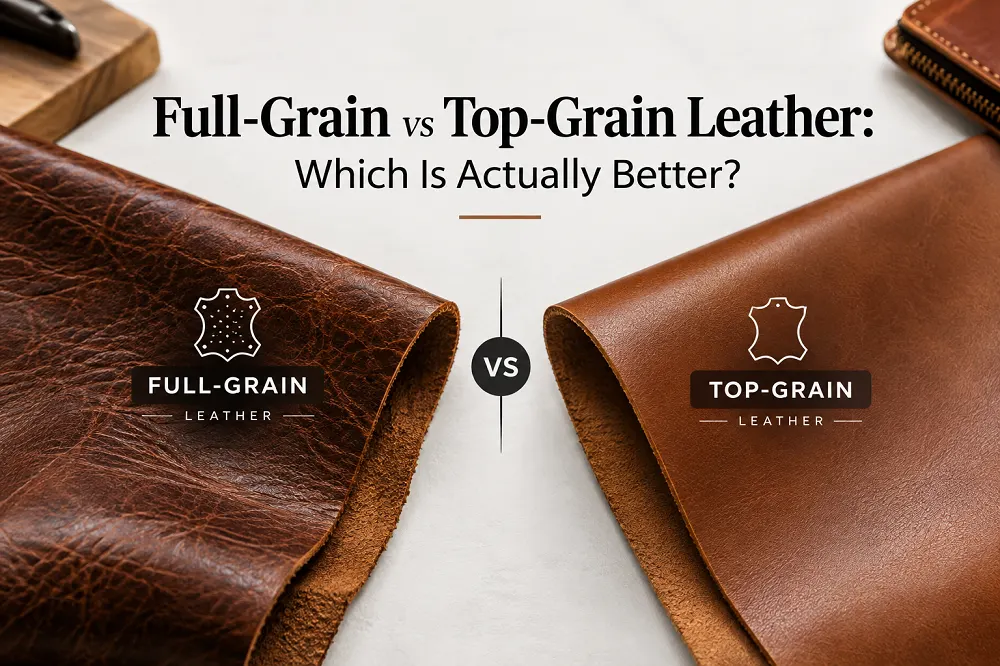
Related Article: Full-Grain vs Top-Grain Leather: Which Is Actually Better?
Is Crazy Horse Leather Waterproof?
No. Crazy Horse leather is not waterproof.
The oils and waxes can provide some resistance to light moisture, but that doesn’t make the leather completely waterproof.
Avoid prolonged exposure to:
- Heavy rain
- Standing water
- Soaking
- Excessive humidity
If the leather gets wet, wipe away excess moisture and let it dry naturally.
Is Crazy Horse Leather Worth Buying?
Yes, if you like leather that develops character with use.
Crazy Horse leather is particularly appealing if you want:
- A rugged appearance
- A vintage-inspired finish
- Visible color variation
- Natural-looking wear
- A leather product that changes over time
It may be less suitable if you prefer:
- A perfectly uniform surface
- Minimal scratches
- A brand-new appearance that stays unchanged
- A highly polished or heavily coated finish
Ultimately, whether Crazy Horse leather is worth buying depends less on the name and more on the quality of the hide, finish, construction, and the look you want.
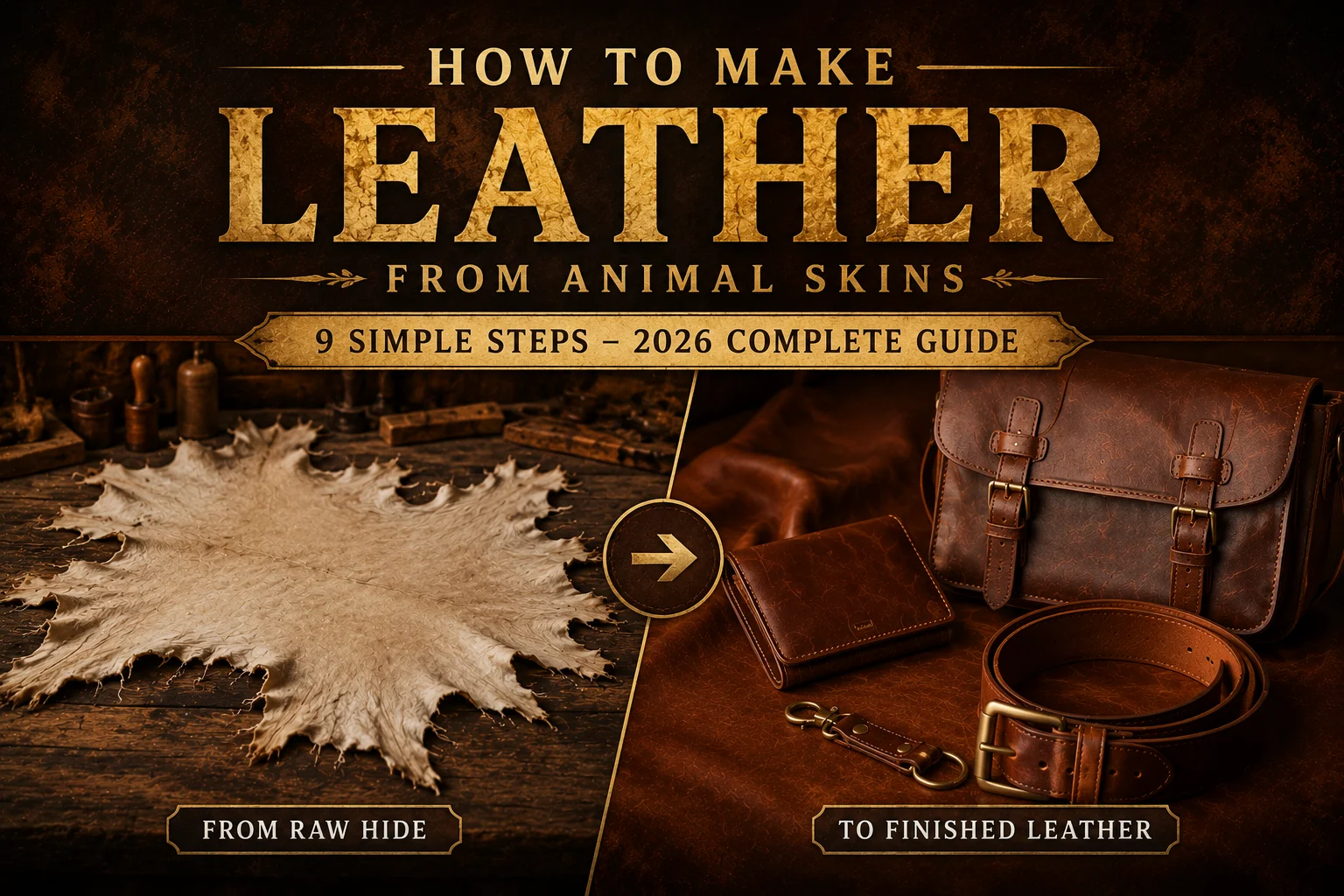
Related Article: How to Make Leather from Animal Skins at Home – 9 Simple Steps (2026 Guide)
Frequently Asked Questions
Is Crazy Horse leather made from horses?
No. Crazy Horse leather is not horsehide. It is commonly made from cowhide or other animal hides and finished with oils and waxes to create a pull-up effect.
Is Crazy Horse leather real leather?
Yes. Genuine Crazy Horse leather is real animal hide treated with an oil-and-wax or similar pull-up finish.
Is Crazy Horse leather full-grain Short Answer?
Not necessarily. Crazy Horse describes the finish, while full-grain describes the leather grade. A Crazy Horse product can be full-grain, but the name doesn’t guarantee it.
What makes Crazy Horse leather change color?
The oils, waxes, and finish shift when the leather is bent, rubbed, or pressed. This creates lighter and darker areas known as the pull-up effect.
Does Crazy Horse leather scratch easily?
It can show scratches and scuffs more clearly than heavily coated leather. Minor marks may sometimes soften when gently rubbed, while deeper scratches can remain.
Is Crazy Horse leather waterproof?
No. It can have some resistance to light moisture because of its wax content, but it is not waterproof.
Is Crazy Horse leather good for jackets?
Yes. Its rugged appearance and ability to develop creases and character make it a popular choice for leather jackets.
Is Crazy Horse leather expensive?
It varies widely. Price depends on the hide, leather grade, thickness, tanning process, finishing, craftsmanship, and the type of finished product.
Does Crazy Horse leather get better with age?
For many people, that’s one of its biggest advantages. Scratches, creases, and changes in tone can create a more worn-in and individual appearance over time.
How do you clean Crazy Horse leather?
For everyday marks, gently wipe the surface with a clean, soft cloth. Avoid soaking the leather and avoid aggressive cleaners unless they are specifically suitable for the particular finish.
Final Thoughts
Crazy Horse leather stands out because it changes with use rather than trying to hide the signs of wear.
Its oil-and-wax finish creates the characteristic pull-up effect, while scratches, creases, and changes in tone gradually give the leather a more individual appearance.
But the term “Crazy Horse leather” should not be treated as a guarantee of quality. When buying, look beyond the name and consider the hide type, leather grade, tanning method, thickness, finish, and overall craftsmanship.
For leather jackets, bags, boots, and other products where a rugged, naturally worn appearance is desirable, a well-made Crazy Horse leather product can be an excellent choice.
























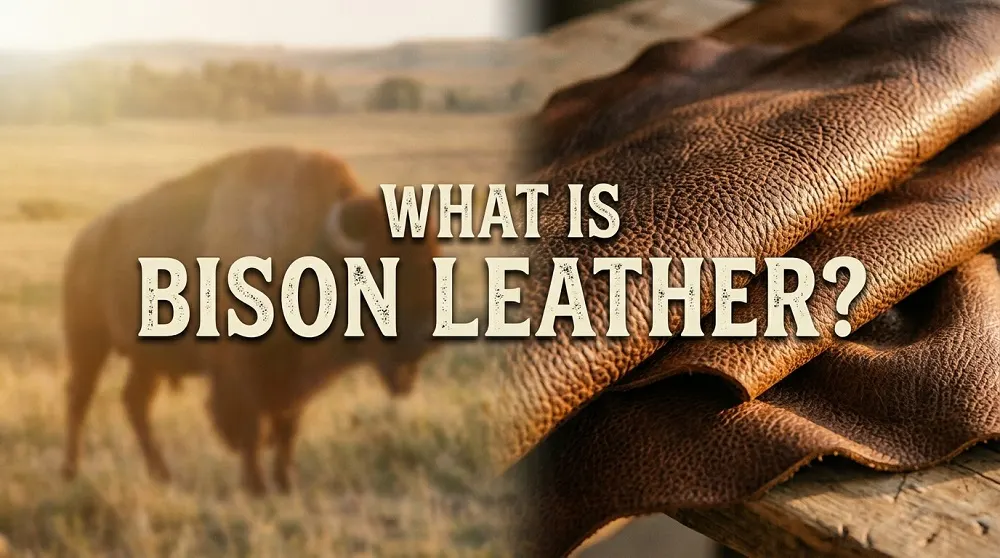
What Is Bison Leather? Durability, Uses & Cowhide Comparison
What Is Bovine Leather?