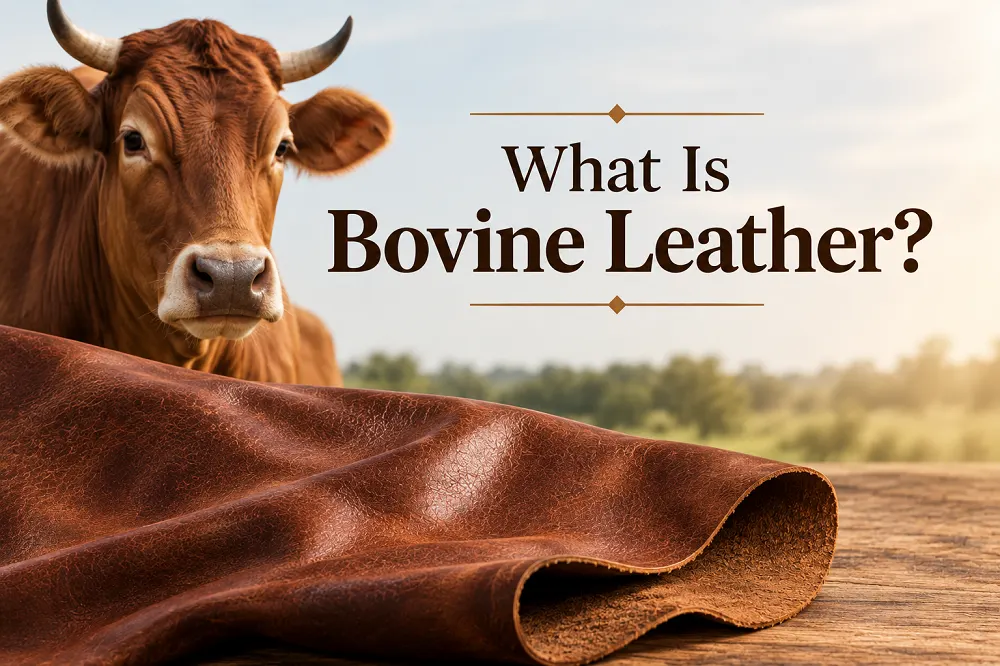
Quick Answer: Bovine leather is genuine leather made from the hides of cattle-family animals, including cows, bulls, steers, buffalo, and calves. It is the most common, most durable, and most affordable type of real leather in the world. If you own a leather jacket, belt, wallet, or pair of shoes, there is a very good chance it is bovine leather.
What Is Bovine Leather Made From?
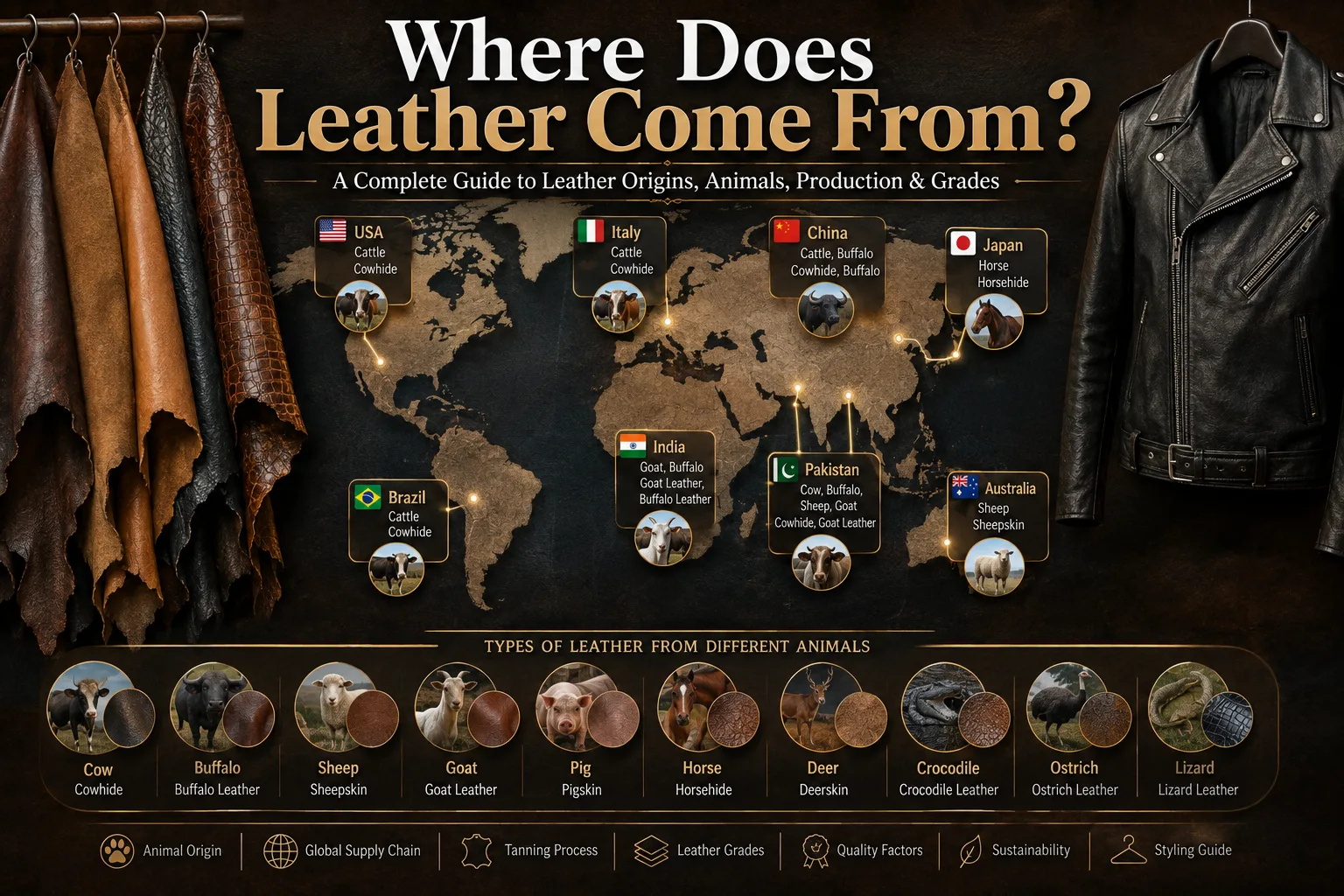
The word “bovine” comes from Latin and refers to the entire cattle family, including domestic cows, bulls, steers, buffalo, and bison.
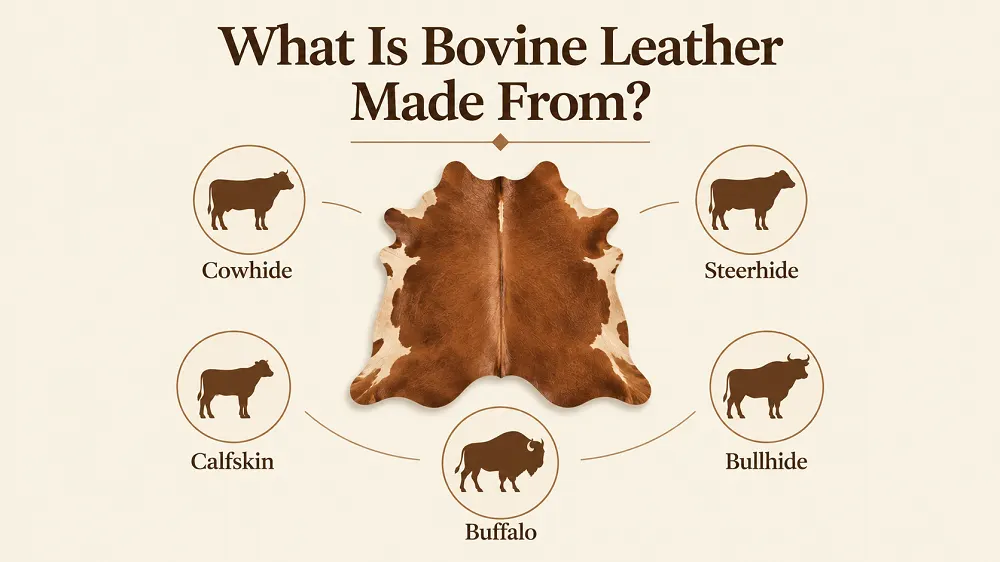
Bovine leather is not made from a single animal. It comes from:
- Cowhide: from mature female cattle
- Steerhide: from castrated male cattle (most common for jackets)
- Bullhide: from mature bulls (thicker, heavier)
- Calfskin: from young calves (softer, finer grain)
- Buffalo or Bison: from buffalo or bison (heavier, tougher grain)
Important: Bovine hides are a byproduct of the meat and dairy industry. Cattle are not raised specifically for their hides; the leather industry uses what the food industry would otherwise discard. This makes bovine leather one of the most sustainable and widely available leathers in the world.
The hide goes through a chemical and mechanical process called tanning, which transforms a raw, rotting skin into durable, stable leather.
Is Calf Leather Technically Bovine Leather?
Yes, technically. Calf leather comes from the same cattle family, so it falls under the bovine umbrella. But in the leather industry, the two are treated as separate categories, and for good reason.
| Feature | Bovine Leather | Calf Leather |
|---|---|---|
| Source | Mature cattle (cow, bull, steer) | Young calves (under 6 months) |
| Family | Bovine | Bovine |
| Industry term | Separate category | Separate category |
| Grain | Visible, coarser | Finer, smoother |
| Thickness | Thicker, heavier | Thinner, lighter |
| Softness | Firmer, needs break-in | Soft from day one |
| Durability | Extremely high | High, but less than bovine |
| Price | More affordable | More expensive |
| Best for | Belts, bags, jackets, shoes | Luxury shoes, gloves, tailored jackets |
Think of it this way: an SUV is still a car, but the industry treats it as its own category. Calf leather works the same way. It is bovine by origin, but different enough in grain, feel, and price to stand on its own.
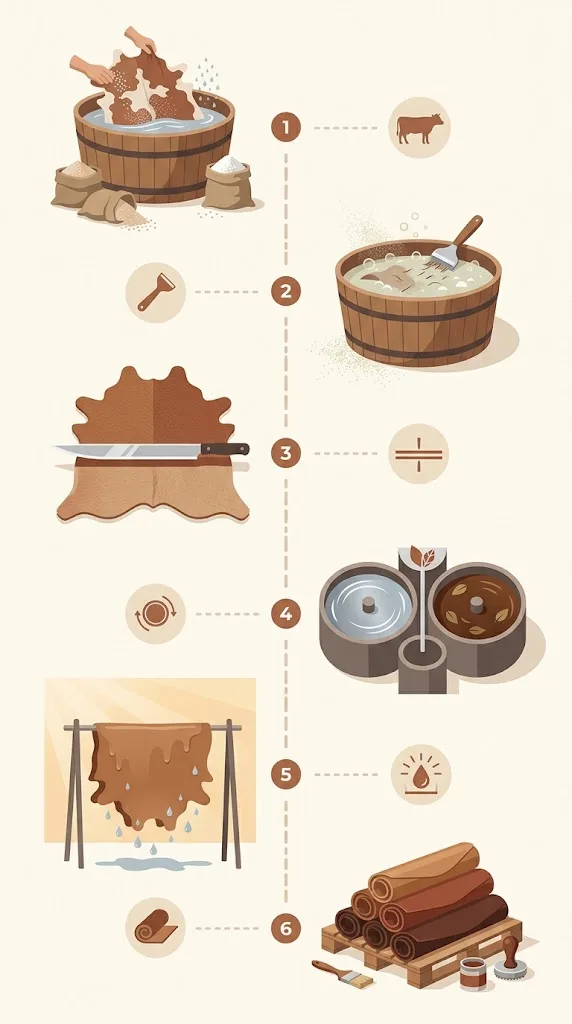
The Bovine Leather Production Process: Step By Step
Step 1: Curing and Soaking
Fresh hides from the slaughterhouse are salted or cured to prevent decomposition during transport. At the tannery, they are soaked in water to restore softness and remove salt, dirt, and blood.
Step 2: Liming and Dehairing
The hides are treated with lime and chemicals to remove hair, epidermis, and fats. This also swells the collagen fibers so tanning agents can penetrate deeper.
Step 3: Splitting
The hide is split horizontally into two layers:
- Top grain: the outer layer with the grain surface (higher quality)
- Split grain: the inner layer (lower quality, often turned into suede)
Step 4: Tanning (The Most Important Step)
This is what actually turns skin into leather. There are two main methods:
| Method | Share of Market | Notes |
|---|---|---|
| Chrome tanning | ~80% | Uses chromium salts; fast, durable, heat-resistant |
| Vegetable tanning | ~15% | Uses plant tannins; eco-friendly, develops patina over time |
| Aldehyde or Combination | ~5% | Used for specialty or chrome-free leathers |
Step 5: Crusting and Drying
The tanned leather (called “crust”) is squeezed, dried, and re-moistened to prepare for finishing.
Step 6: Finishing and Grading
The leather is dyed, coated, embossed, or buffed depending on its final use. This step determines the leather’s appearance, feel, and grade. Hides are then sorted into quality tiers (A, B, C, and so on).
Pros And Cons Of Bovine Leather
Pros
Extremely durable: tight fiber structure resists tearing and abrasion better than almost any other leather
Excellent value: abundant supply keeps prices reasonable compared to exotic leathers
Versatile: used for jackets, belts, shoes, bags, wallets, sofas, car interiors, and more
Long lifespan: a well-cared-for bovine leather item can last decades
Ages beautifully: full-grain bovine leather develops a rich patina over time
Breathable: natural pores allow air circulation (unlike synthetic leather)
Low maintenance: simple cleaning and occasional conditioning keep it in top shape for years
Comfortable once broken in: molds to the body and softens with use
Water resistant: repels light moisture and can be enhanced with a leather protector spray
Cons:
Stiffer feel: not as soft as lambskin or calfskin; requires break-in time
Natural imperfections: scars, insect bites, and stretch marks are normal and not defects
Heavier: thicker than many other leathers, which can feel bulky in jackets
Can crack if neglected: without conditioning, low-grade bovine leather dries out and cracks
Not fully waterproof: water-resistant but not water-proof; prolonged soaking damages it
Stretching and marks: can stretch at pressure points and show grain variation over time
Limited colors: natural earth tones are common; bright colors need heavy coating
Breathability varies: heavily coated or corrected-grain leathers can block airflow
Environmental impact: tied to large-scale cattle farming, including methane and land use
Ethical concerns: linked to the meat and dairy industries, which some buyers avoid
Chemical use in tanning: chrome tanning uses chromium salts, which can harm workers and the environment if not managed properly.
Different Types Of Bovine Leather
Understanding the grade is the single most important thing when buying bovine leather. Here is the hierarchy from best to worst:
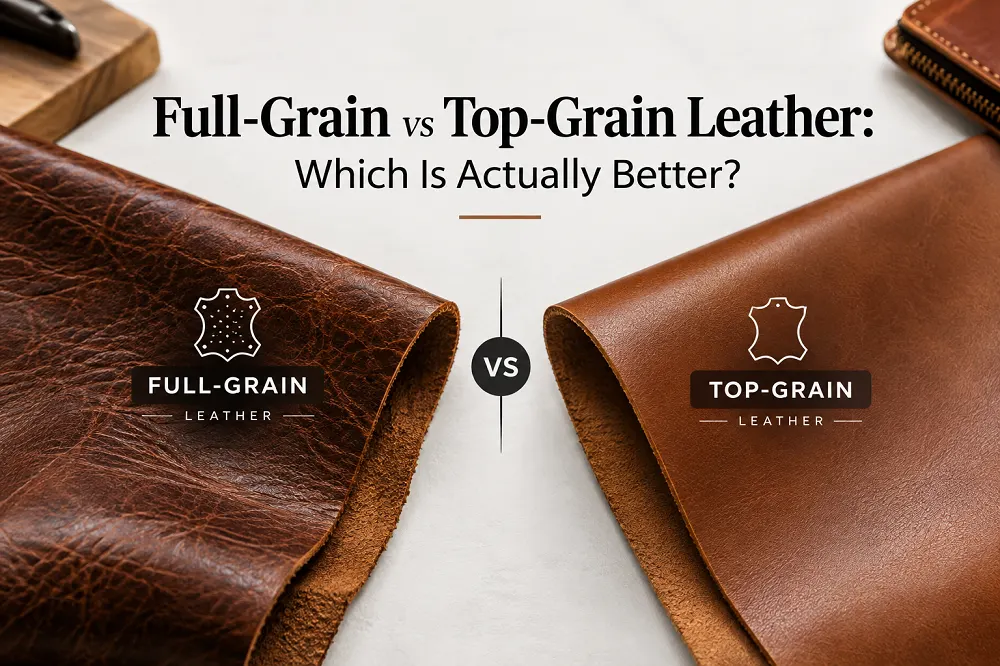
1. Full-Grain Leather (The Best)
The entire grain surface is left intact. No sanding, no buffing, no corrections. The most durable, breathable, and valuable type. It develops a unique patina. Used in high-end jackets, boots, and bags.
2. Top-Grain Leather (Very Good)
The grain is lightly sanded to remove imperfections, then dyed and finished. Smoother and more uniform than full-grain, more stain-resistant, but less breathable and doesn’t patina as richly.
3. Split-Grain Leather (Mid to Low)
The inner layer after the top grain is removed. Usually turned into suede or heavily coated to mimic top grain. Weaker and less durable.
4. Genuine Leather (Low Grade)
Warning: “Genuine” does not mean high quality. It is a marketing term that usually refers to split leather or heavily processed low-grade hide. Often used in cheap belts, wallets, and shoes.
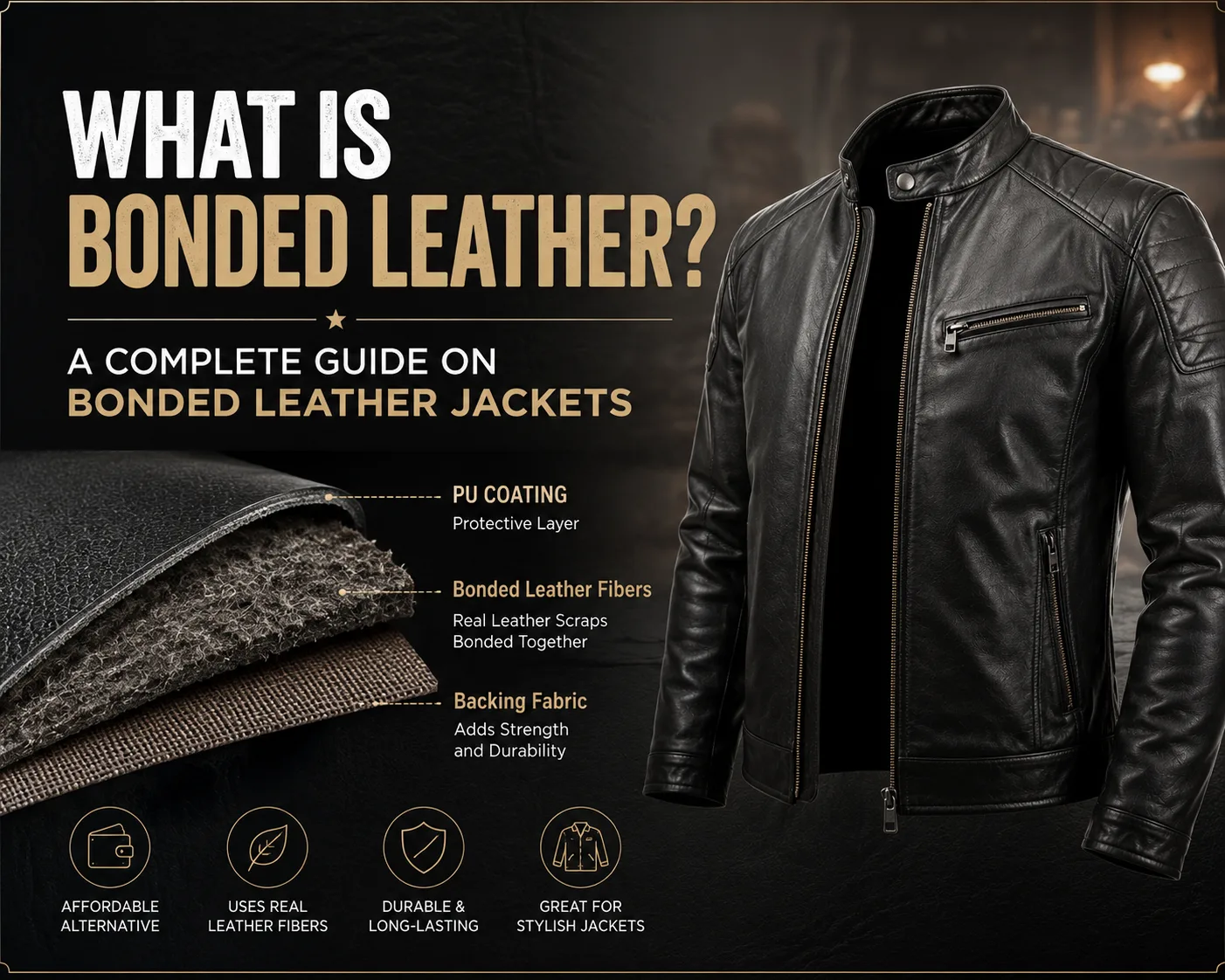
5. Bonded Leather (Lowest Grade)
Made from leather scraps and glue, pressed into sheets. May contain only 10 to 20 percent actual leather. Cracks, peels, and falls apart quickly. Avoid.
By Animal Type:
- Steerhide: most common for jackets, even thickness, consistent
- Cowhide: softer belly, more natural marks
- Bullhide: heaviest, thickest, distinct shoulder wrinkles
- Calfskin: softest, finest grain, most expensive
- Buffalo or Bison: heavy, tough, unique grain pattern
Important Note
At Lammberg, we use only full grain leather. It is the outermost and strongest layer of the hide, which means maximum longevity, natural breathability, and a feel that stays authentic over time. We do not cut corners with corrected grain or split leather, because those grades trade durability and character for a uniform look that never lasts.
Every Lammberg piece keeps its natural markings and develops a rich patina with age. What you get is not leather that looks perfect on day one and fades later, but leather that gets better the longer you wear it.
Bovine vs. Calf Leather in Italian Craftsmanship
Italian leather has a worldwide reputation for quality, and much of that reputation is built on the choice between bovine and calf leather. Both come from the cattle family, but they are not the same, and understanding the difference helps you judge what you are paying for.
Bovine leather comes from mature cattle. It is thicker, denser, and more durable. Italian tanneries often use bovine hides for structured products like belts, bags, and heavy jackets, where strength matters more than softness.
Calf leather comes from young calves, usually under six months old. The grain is finer, the fibers are tighter, and the surface is naturally smoother. It takes dye more evenly and feels softer to the touch. This is why Italian luxury houses often choose calfskin for high-end shoes, gloves, and tailored jackets.
What Italian craftsmanship adds:
Italian tanneries are known for slow, traditional tanning methods, especially vegetable tanning. This preserves the natural character of the hide and produces leather that ages beautifully. Whether it is bovine or calf, Italian leather usually means better finishing, stricter grading, and more attention to natural grain.
Which should you choose?
Choose bovine leather for durability and value. Choose calf leather for softness, refinement, and a more polished luxury feel. Both are excellent when the craftsmanship behind them is real.
How To Identify Good-Quality Bovine Leather
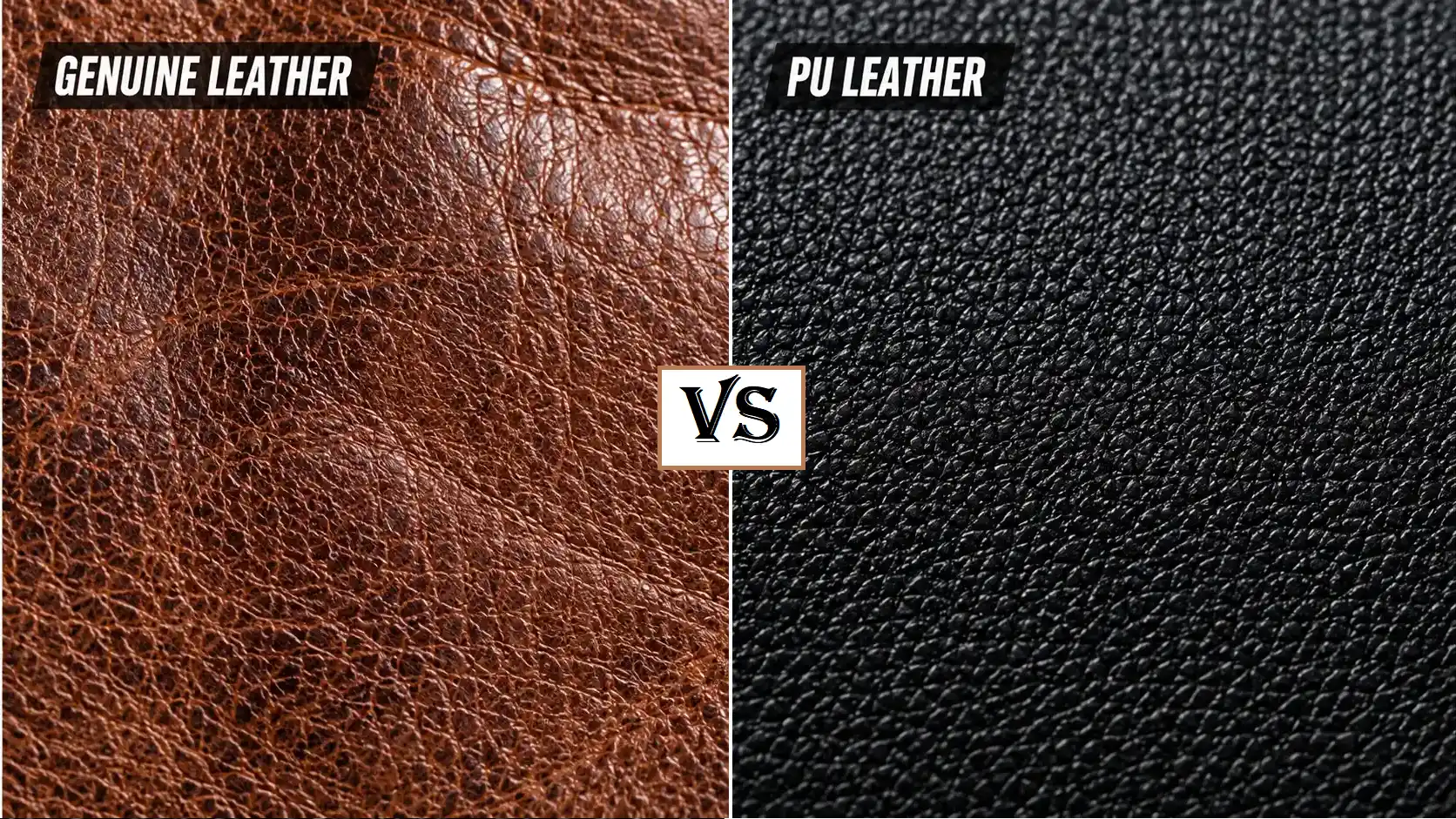
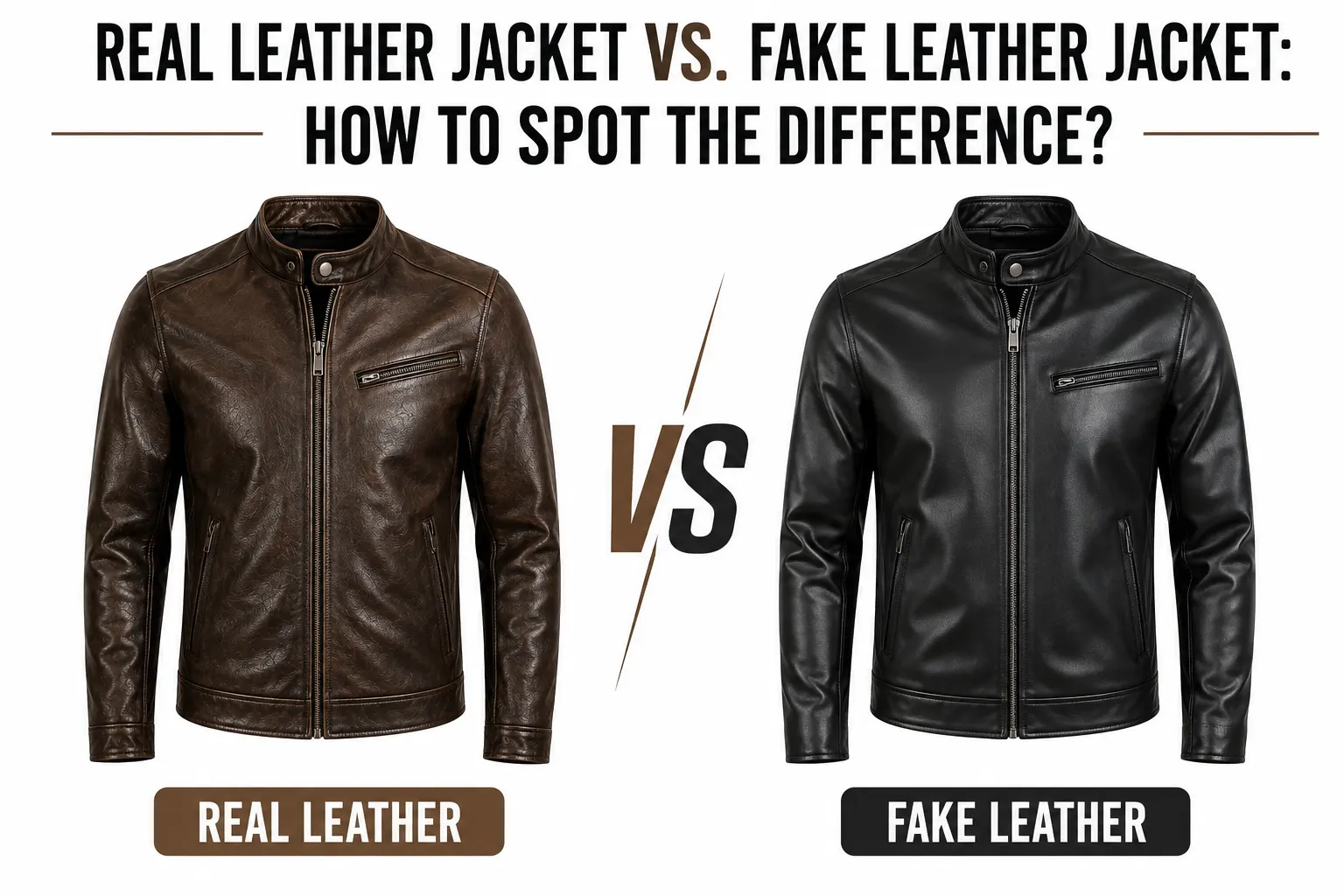
- Look at the grain: Full-grain has visible natural pores and slight variations. Fake or low-grade is perfectly uniform.
- Smell it: Real leather has a natural, earthy scent. Fake smells like plastic or chemicals.
- Press test: Press with your thumb; real leather wrinkles subtly and springs back. Synthetic stays flat.
- Check the edge: Real leather has a fibrous, interwoven cross-section. Bonded leather looks layered or foamy.
- Read the label: “Full-Grain” or “Top-Grain” is trustworthy. “Genuine” or just “Leather” is a red flag.
- Check weight and flexibility: Good bovine leather is firm but pliable, not stiff as cardboard or floppy as vinyl.
- Look for a patina: Older high-quality leather darkens and develops character; cheap leather just wears out.
Conclusion
Bovine leather is the world’s most widely used genuine leather, made from the hides of cattle-family animals, primarily a byproduct of the meat and dairy industries. Its key strengths are durability, versatility, and value. Its main drawbacks are stiffness, natural imperfections, and weight.
When buying, remember the quality hierarchy:
Full-Grain > Top-Grain > Split-Grain > Genuine > Bonded
Don’t be fooled by the word “genuine.” Check the specific grade, and you will always get real value for your money.
FAQs: What Is Bovine Leather?
Can bovine leather get wet?
Bovine leather is water-resistant but not waterproof. Light rain is fine; just wipe it dry. Prolonged soaking can cause stiffness, deformation, or mold. Use a leather protector spray for extra protection.
What is the benefit of bovine leather?
Its biggest benefit is durability. The tight fiber structure resists tearing and abrasion better than most other leathers. It is also widely available, affordable, and versatile across countless products.
Is bovine leather genuine leather?
Yes. Bovine leather is real leather made from animal hides through tanning. Whether it is high-quality genuine leather depends on the grade; full-grain is premium, while “Genuine Leather” labeled products are often low-grade.
Does bovine leather get better with age?
Full-grain bovine leather does. It develops a rich patina: darker color, glossy surface, and unique character marks. Top-grain and split-grain do not patina; they just wear down over time.
Is bovine leather better than sheepskin?
Depends on use. Bovine is tougher and better for belts, shoes, bags, and everyday jackets. Sheepskin is softer, lighter, and better for fashion jackets and gloves, but less durable.
Will bovine leather crack?
High-quality bovine leather, properly conditioned, will not crack for decades. Low-grade split and bonded leather will crack and peel. Condition your leather 2 to 3 times a year to prevent drying.
What is the difference between bovine leather and split leather?
Bovine leather can refer to either top grain or split grain. Split-grain specifically means the inner layer after the top grain is removed: weaker, less breathable, often heavily coated or turned into suede.
What is the difference between calfskin and cowhide?
Calfskin comes from young calves: thinner, softer, finer grain, more expensive. Cowhide comes from mature cattle: thicker, more durable, stiffer. Calfskin for luxury goods; cowhide for durability.
Is bovine leather real leather or faux leather?
Bovine leather is 100 percent real leather, made from actual animal hides. Faux leather (PU, vinyl, pleather) is synthetic and contains no animal products. Do not confuse the two.
How long does bovine leather last?
With proper care, a full-grain bovine leather jacket or bag can last 20 to 30 plus years. Top-grain lasts 10 to 20 years. Split and bonded leather may only last 2 to 5 years.
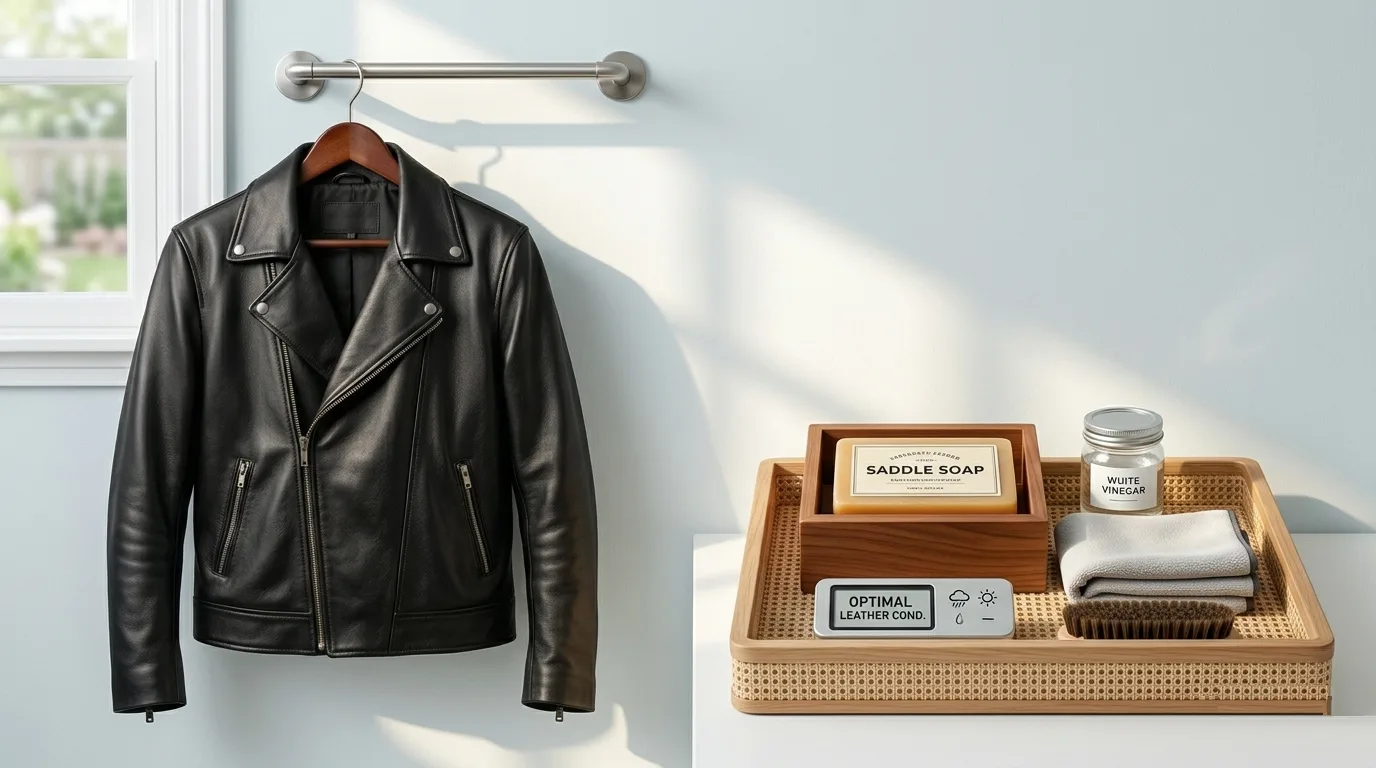
How do I care for bovine leather?
- Keep it dry; blot water immediately
- Condition every 3 to 6 months with leather conditioner
- Store in a cool, dry place away from sunlight
- Use padded hangers for jackets
- Avoid harsh chemicals and heat
- Use a leather protector spray for water resistance
Is bovine leather eco-friendly?
Bovine leather is a byproduct of the meat and dairy industry, so it does not require additional animal farming. Vegetable-tanned bovine leather is more eco-friendly than chrome-tanned. Overall, it is more sustainable than synthetic leathers made from petroleum.
Which is better, bovine leather or buffalo leather?
Buffalo leather is technically a type of bovine leather (buffalo are in the bovine family). Buffalo hides are thicker, heavier, and have a more distinct grain. Cowhide is more uniform and easier to work with. Both are durable; choice depends on the product.
Why is bovine leather cheaper than other leathers?
Because cattle are raised in huge numbers for meat and dairy, their hides are abundant and inexpensive. This supply makes bovine leather far cheaper than exotic leathers (alligator, ostrich) or premium alternatives (full-grain Italian calfskin).


















What Is Bison Leather? Durability, Uses & Cowhide Comparison
What Is Crazy Horse Leather? Complete Guide to Quality, Uses, Care & More