Global Leather Industry: What Each Country Does Best
Global Leather Industry: What Each Country Does Best
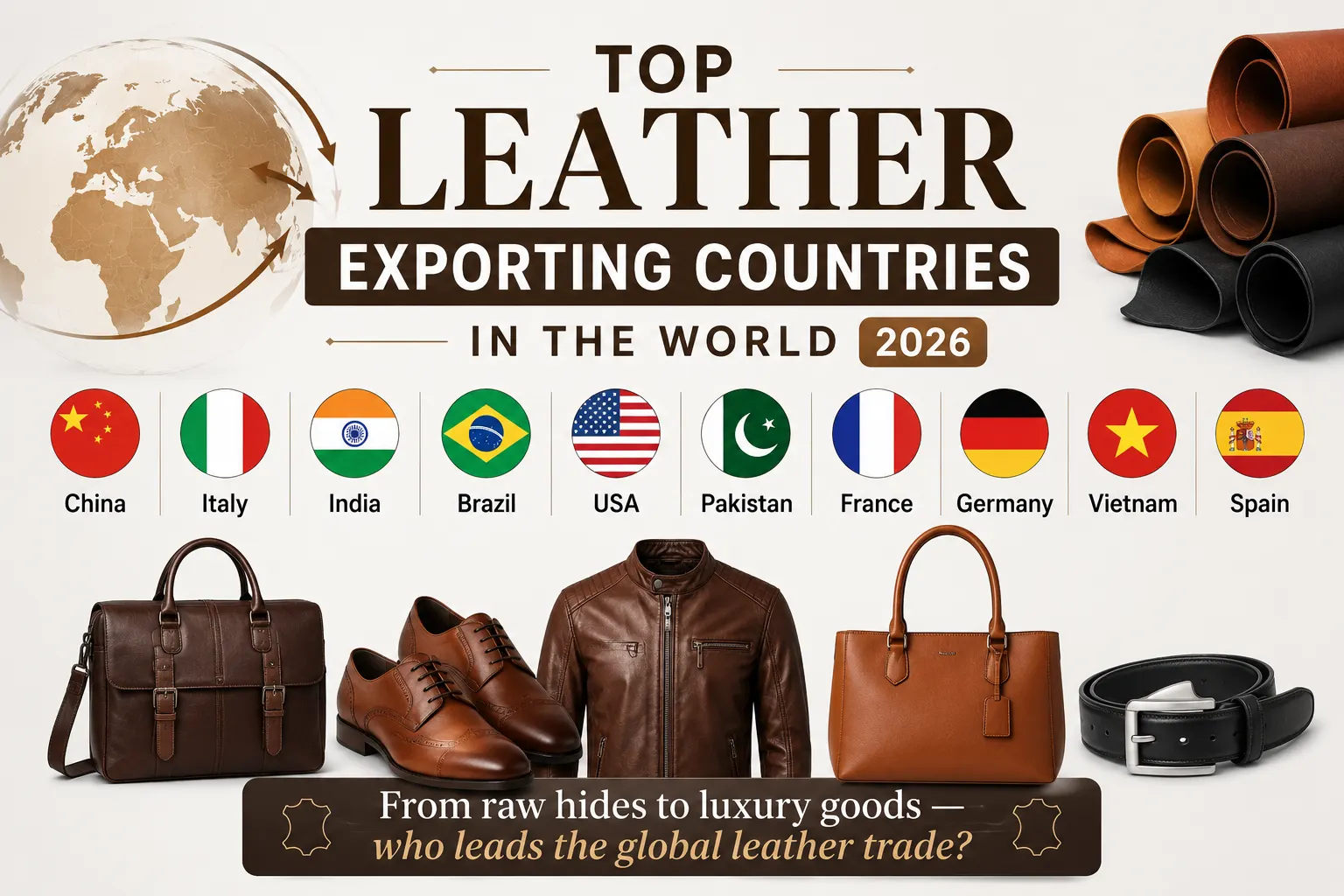
Leather is a global industry with different countries developing expertise in different parts of the supply chain. Some countries are known for premium tanning and luxury leather, while others have built their reputation around large-scale manufacturing, leather garments, gloves, footwear, automotive leather, or raw hides.
This makes the global leather industry more diverse than a simple list of the world’s largest exporters.
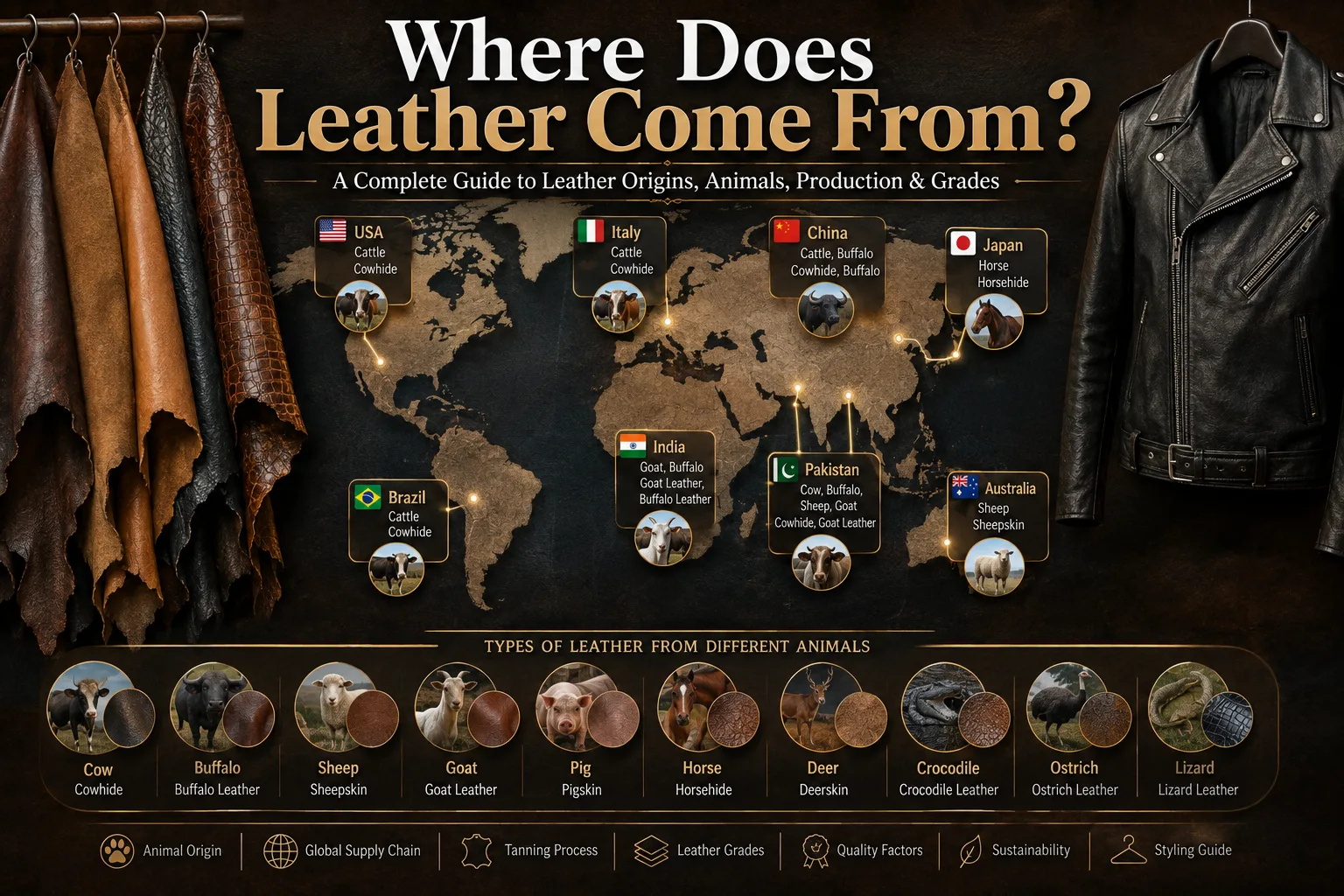
A country can be particularly strong in one area while another country may be better known for a different type of leather or finished product. Italy, for example, is closely associated with premium leather, luxury goods, and high-end finishing, while Brazil has a major advantage in bovine hides because of its large cattle industry. China is known for its enormous manufacturing ecosystem, while Pakistan has developed strong capabilities in leather garments, gloves, footwear, and private-label production.
Understanding these differences can be useful for fashion brands, manufacturers, wholesalers, retailers, and businesses looking for leather suppliers.
Italy: Premium Leather, Luxury Goods and High-End Finishing
Italy is one of the most recognized names in the international leather industry. Its reputation is particularly strong in premium finished leather, luxury leather goods, footwear, fashion products, and leather apparel.
Italian leather manufacturing is closely connected to the country’s fashion and luxury sectors. Italian tanneries and manufacturers are known for sophisticated finishing techniques, color development, surface treatments, softness, and consistency.
Italy’s strength extends well beyond leather as a raw material. The country has a major presence in finished leather products, where craftsmanship, design, finishing, and brand positioning can significantly increase the value of the final product.
Italy is particularly known for:
Premium finished leather
Luxury leather goods
Handbags
Shoes
Leather garments
Automotive leather
Furniture leather
Fashion accessories
Italy demonstrates how a country’s importance in leather can come from quality, finishing, design, and high-value manufacturing, rather than simply the quantity of leather produced.
Brazil: Bovine Hides and Large-Scale Leather Production
Brazil has an important position in the global leather industry because of its enormous livestock sector and extensive supply of cattle hides.
The country’s large cattle industry gives Brazilian tanneries access to substantial quantities of bovine hides. This makes Brazil particularly relevant to businesses looking for bovine leather and leather produced on a large industrial scale.
Brazil’s leather industry supplies international tanneries, manufacturers, and industries that use leather in a variety of applications.
Brazil is particularly known for:
Bovine hides
Finished bovine leather
Automotive leather
Upholstery leather
Footwear leather
Industrial leather
Export-oriented tanning
Brazil’s leather industry shows the importance of having a strong raw-material base. A large livestock sector can provide a significant advantage throughout the leather supply chain.
United States: Hides, Automotive and Industrial Applications
The United States is another important participant in the global leather and hide industry.
Part of its importance comes from the country’s large livestock and meat-processing industries, which generate substantial quantities of hides. The United States has historically been a major source of hides and leather for international markets.
At the same time, the domestic market has significant demand for leather in industries beyond fashion.
The United States is particularly associated with:
Hides
Automotive interiors
Furniture
Footwear
Workwear
Saddlery
Accessories
Industrial applications
This gives the United States an interesting position in the leather supply chain, with activity connected to both the production of hides and the consumption and use of leather in large industrial markets.
China: Large-Scale Manufacturing and Leather Goods
China has one of the world’s largest leather manufacturing ecosystems.
While some countries have developed highly specialized reputations around tanning or luxury products, China’s major strength is its manufacturing scale and extensive supplier network.
Chinese factories produce large quantities of leather and leather-related products for both domestic and international markets. The country’s manufacturing infrastructure is supported by suppliers of hardware, textiles, packaging, footwear components, synthetic materials, and other manufacturing inputs.
China is particularly known for:
Shoes
Bags
Wallets
Belts
Gloves
Leather accessories
Furniture products
Large-scale leather goods manufacturing
China’s strength is therefore not limited to one type of leather product. Its extensive industrial ecosystem allows manufacturers to produce a broad range of finished goods at significant scale.
For businesses looking for high-volume manufacturing, China’s broader production infrastructure can be an important consideration.
India: Leather Footwear, Garments and Skilled Manufacturing
India has a long-established leather industry covering tanning, manufacturing, and exports.
The country has developed significant manufacturing clusters and a large skilled workforce, allowing Indian companies to produce a wide range of leather products for international markets.
India is particularly known for:
Leather footwear
Leather garments
Gloves
Bags
Saddlery
Finished leather
Leather accessories
India is especially relevant in labor-intensive leather manufacturing, where skilled workers and established production clusters play an important role.
Its broad leather ecosystem covers multiple stages of production, from leather processing to finished consumer products.
Pakistan: Leather Garments, Gloves and Custom Manufacturing
Pakistan has developed a strong position in leather manufacturing, particularly in leather garments, gloves, footwear, finished leather, and leather accessories.
The country’s leather industry benefits from locally available hides and skins, established tanneries, skilled workers, and an export-oriented manufacturing base.
Pakistan is particularly relevant to businesses looking for leather apparel and made-to-order manufacturing.
Pakistan is particularly known for:
Leather jackets
Leather coats
Leather trousers
Leather gloves
Leather shoes
Belts
Bags
Wallets
Saddlery
Finished leather
Private-label leather products
Leather garments are an especially important part of Pakistan’s manufacturing sector. The country has experience producing jackets, coats, trousers, vests, and other leather clothing for international buyers.
Pakistan is also relevant for brands that require custom leather jackets, private-label manufacturing, bespoke production, and made-to-order leather apparel.
For ecommerce brands and retailers, this type of manufacturing flexibility can be particularly useful because products can be developed according to specific designs, materials, colors, sizing requirements, branding, and labeling.
France: Luxury Leather Goods and Fashion
France has a strong presence in the higher-value side of the global leather industry.
The country’s leather sector is closely connected to its luxury fashion ecosystem. French companies and manufacturers are particularly associated with premium leather goods, handbags, fashion accessories, footwear, leather apparel, and other high-end products.
France is particularly known for:
Luxury handbags
Premium leather accessories
Fashion products
Leather apparel
High-end footwear
Luxury saddlery
France illustrates another important feature of the leather business: value is not determined only by production volume.
Design, craftsmanship, brand positioning, finishing, and connection to luxury markets can all contribute to the importance of a country’s leather industry.
Turkey: Leather Garments, Tanning and European Supply
Turkey has developed a well-established leather manufacturing and export industry.
Its geographic position between Europe and Asia has helped connect Turkish manufacturers with major international markets. The country has experience in tanning, finished leather production, leather clothing, footwear, bags, gloves, and accessories.
Turkey is particularly known for:
Leather garments
Finished leather
Footwear
Bags
Gloves
Belts
Furniture leather
Automotive applications
Turkey can be particularly relevant for buyers supplying European markets because of its established manufacturing base and geographic proximity to Europe.
The country’s leather industry combines tanning and finished-product manufacturing, giving it capabilities across several parts of the supply chain.
Germany: Automotive, Technical and Industrial Leather
Germany’s leather industry is closely connected to its broader industrial and manufacturing base.
While Germany is also involved in fashion and leather apparel, its leather-related manufacturing is particularly relevant to automotive, footwear, furniture, and technical applications.
Germany is particularly associated with:
Automotive leather
Technical leather applications
Footwear
Furniture
Leather apparel
Industrial products
The country’s strong automotive and industrial sectors create demand for leather beyond traditional fashion applications.
This makes Germany an important example of how leather can play a role in highly specialized industrial supply chains.
Thailand: Tanning, Bovine Leather and Regional Manufacturing
Thailand is another significant leather-producing and leather-processing country in Asia.
Its leather industry is connected to the country’s broader manufacturing infrastructure and regional supply chains.
Thailand has developed capabilities in bovine leather processing and supplies leather to industries including footwear, automotive, furniture, and other manufacturing sectors.
Thailand is particularly known for:
Bovine leather
Finished leather
Leather processing
Footwear applications
Automotive applications
Furniture leather
Regional manufacturing
Its location within Southeast Asia also connects Thailand with important regional manufacturing networks.
Different Countries, Different Leather Strengths
Looking at the global leather industry country by country makes one thing clear: there is no single country that dominates every part of the leather business.
Different countries have developed different competitive strengths.
Leather garments, tanning, footwear, European supply
Germany
Automotive, technical, industrial and specialty applications
Thailand
Bovine leather, tanning, regional manufacturing
This comparison also explains why businesses should not select a leather supplier based only on the country name.
The right sourcing market depends on what you actually need.
A luxury fashion brand may prioritize premium finishing and design. A footwear manufacturer may focus on leather consistency and availability. An automotive supplier may require specialized processing and technical specifications. An ecommerce brand selling leather jackets may instead prioritize garment manufacturing, customization, private labeling, minimum order quantities, and production flexibility.
Leather by Product Type
Another way to understand the global leather industry is to look at the products themselves.
Premium and Luxury Leather
Italy and France are strongly associated with premium and luxury leather products.
Their industries are closely connected to fashion, design, craftsmanship, and high-value finished goods.
Bovine Leather and Hides
Brazil, the United States, and Thailand have important roles in bovine hides and leather processing.
Their large livestock or manufacturing ecosystems support substantial leather supply chains.
Leather Garments
Leather apparel is an important area for countries including Italy, India, Pakistan, France, Germany, China, and Turkey.
However, the strengths of these countries can differ. Some are more closely associated with luxury fashion, while others have developed expertise in large-scale or cost-effective manufacturing.
Leather Goods
Bags, wallets, belts, cases, and accessories are manufactured across many leather-producing countries.
China has a particularly large manufacturing ecosystem for leather goods, while Italy and France are strongly associated with premium and luxury segments.
Automotive Leather
Automotive leather is an important industrial application in countries with large automotive and manufacturing sectors.
The United States, Germany, Italy, Brazil, China, and Thailand all have connections to automotive leather supply chains.
Why the “Best Country” Depends on the Product
When people ask which country is best for leather, the question is often too broad.
Leather is not one single product.
There are major differences between:
Raw hides and skins
Finished leather
Full-grain leather
Nappa leather
Suede
Automotive leather
Furniture leather
Leather garments
Footwear leather
Luxury handbags
Industrial leather
A country that is highly specialized in one category may not necessarily be the main sourcing destination for another.
For example, a buyer looking for premium fashion leather may focus on different suppliers than a manufacturer looking for large volumes of bovine leather. Similarly, a brand looking for finished leather jackets needs a manufacturing partner with garment-making capabilities rather than simply a tannery.
This is why country specialization is often more useful than a simple overall ranking.
What Should Businesses Consider When Choosing a Leather-Producing Country?
The right sourcing location depends on several factors.
1. Type of Leather
First determine whether you need sheep, lamb, cow, goat, suede, Nappa, or another type of leather.
Different countries and suppliers have different areas of specialization.
2. Finished Leather or Finished Product
There is a major difference between buying leather hides and buying a finished product.
A tannery may be ideal for a brand that needs leather material, while a garment manufacturer may be more appropriate for a company looking for finished leather jackets.
3. Production Volume
Large manufacturers may be better suited to high-volume orders, while smaller specialized manufacturers may offer more flexibility for custom or limited production.
4. Customization
For fashion brands, customization can be important.
This may include:
Custom colors
Custom sizing
Custom designs
Branding
Labels
Embroidery
Patches
Hardware
Packaging
5. Private-Label Manufacturing
Ecommerce brands often need products manufactured under their own brand rather than purchasing generic products.
Countries with established export-oriented garment and leather-product manufacturing sectors can therefore be particularly useful for private-label businesses.
6. Quality and Consistency
Leather is a natural material, so consistency in thickness, color, finish, softness, and grain can be important.
Buyers should evaluate samples and production quality rather than relying solely on the reputation of a country.
7. Shipping and Market Access
Distance from the target market, shipping infrastructure, trade arrangements, lead times, and logistics can all affect the final sourcing decision.
The Global Leather Industry Is More Diverse Than a Simple Ranking
The global leather industry is made up of different manufacturing traditions and areas of specialization.
Italy is strongly associated with premium leather, luxury goods, and sophisticated finishing. Brazil has major strength in bovine hides and large-scale leather processing. China has built an enormous manufacturing ecosystem, while India has established capabilities across footwear, garments, gloves, and leather goods.
Pakistan has developed particular strengths in leather garments, gloves, footwear, finished leather, and custom manufacturing. France is closely connected with luxury leather and fashion, Turkey combines tanning and manufacturing with strong access to European markets, Germany has important industrial and automotive applications, and Thailand plays a significant role in bovine leather processing and regional manufacturing.
The key takeaway is that the leading leather countries are not necessarily leading for the same reason.
For buyers, brands, manufacturers, and retailers, the more useful question is not simply “Which country produces the most leather?” but rather:
“Which country and supplier are best suited to the type of leather product I need?”
Understanding each country’s strengths makes it easier to identify the right sourcing market, whether the requirement is premium leather, raw hides, finished leather, leather garments, footwear, automotive leather, luxury goods, or private-label manufacturing.
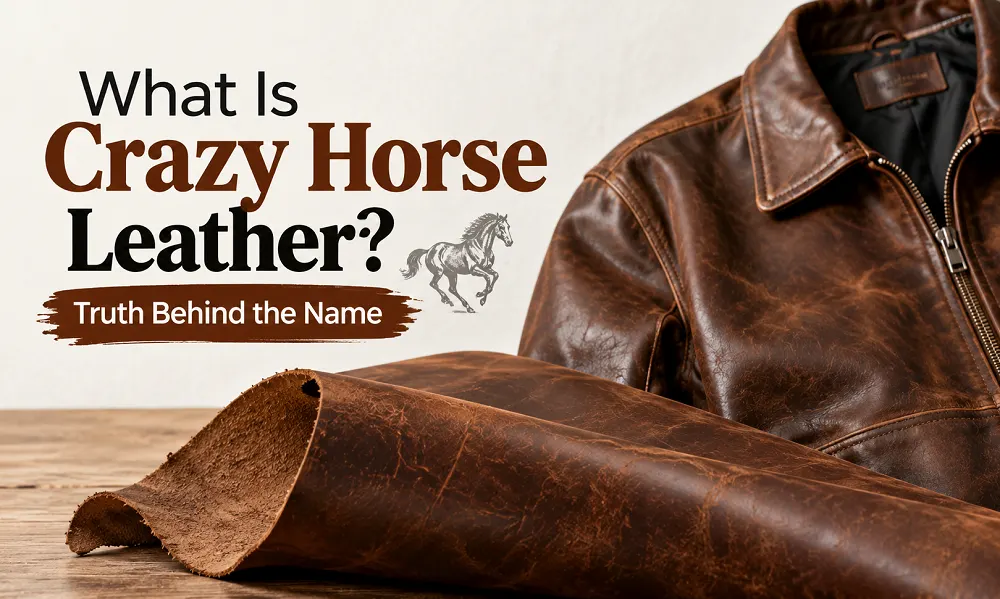
Crazy Horse leather is a type of real leather known…
How to Measure Your Weight
Place the weighing scale on a flat, hard floor (not on carpet) and step on it to measure your weight. Wear your everyday light clothing and don’t forget to remove your shoes while weighing.
At lammberg, your privacy is of paramount importance to us. When you provide your measurements and upload pictures while ordering our made-to-measure items, rest assured that this information is collected solely for internal purposes related to pattern making and determining the appropriate size for your order. We understand the sensitivity of the data you share with us, and we want to assure you that your pictures will be treated with the utmost confidentiality. They will never be disclosed or shared with any third party. Instead, they will be securely stored with industry-standard encryption, and access will be restricted to authorized personnel directly involved in the pattern making and sizing process. We are committed to using this information solely for the purpose it was provided and will not retain it longer than necessary.
Thank You!
We are truly excited that you’ve chosen us for crafting your custom jacket!
Your dream jacket is our mission, and we can’t wait to bring it to life.
Our dedicated support agent will be in touch via email to have a conversation about all the intricate details and options you have mentioned, ensuring a stress-free experience for you.
To ensure our messages reach you promptly and smoothly, kindly add customized@lammberg.com to your address book.
We can’t wait to start working on your perfect jacket!
Thank You!
We are truly excited that you’ve chosen us for crafting your bespoke jacket!
Your dream jacket is our mission, and we can’t wait to bring it to life.
Our dedicated support agent will reach out to you via email to have a conversation about tailoring a bespoke jacket based on your preferences, ensuring a stress-free experience for you.
To ensure our messages reach you promptly and smoothly, kindly add bespoke@lammberg.com to your address book.
We can’t wait to start working on your perfect jacket!
How to Measure Your Height
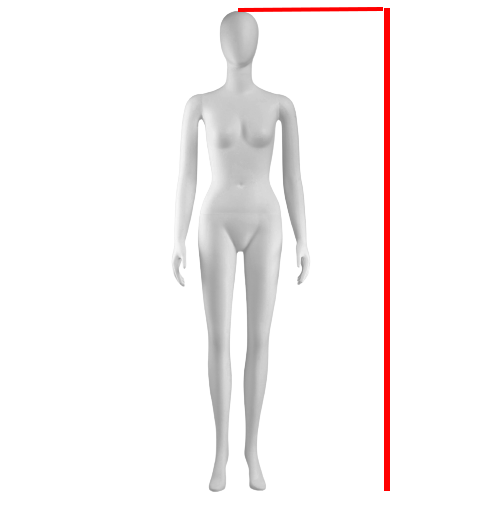
Stand against a wall without shoes. Place a straight object such as a book or ruler on your head and mark where it meets the wall. And then measure from the floor to the mark for an accurate height reading.
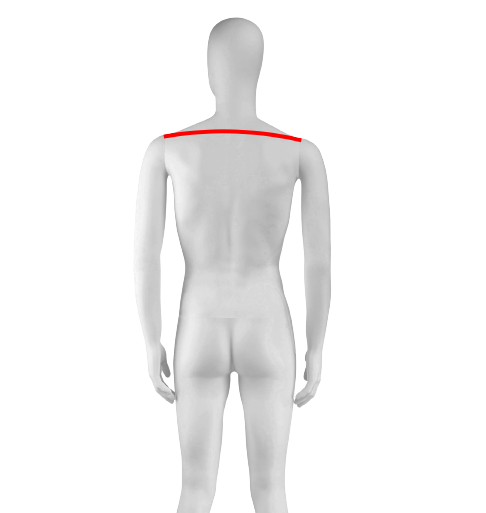
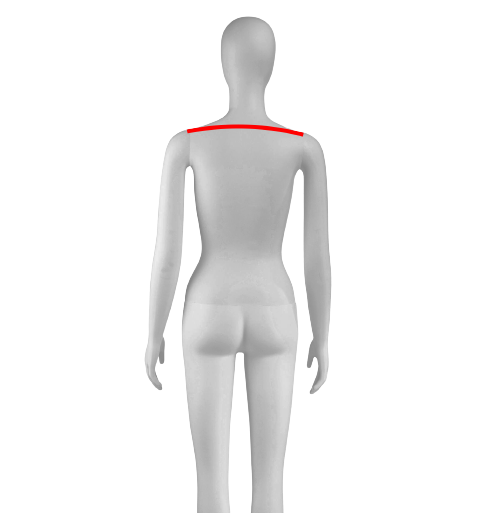
How to Measure Your Shoulder
Measure the distance from the bony end of one shoulder, straight across the back of the neck, continuing to the bony end of the other shoulder.
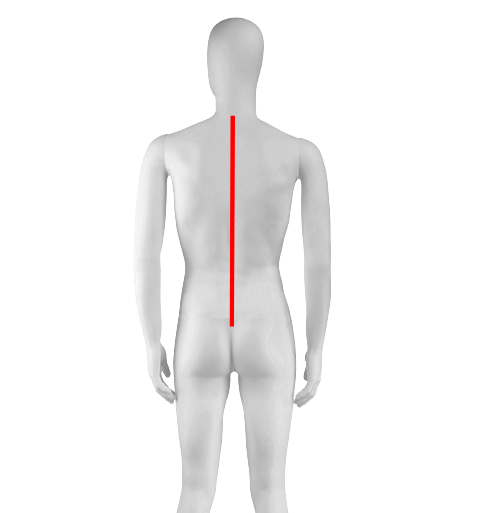
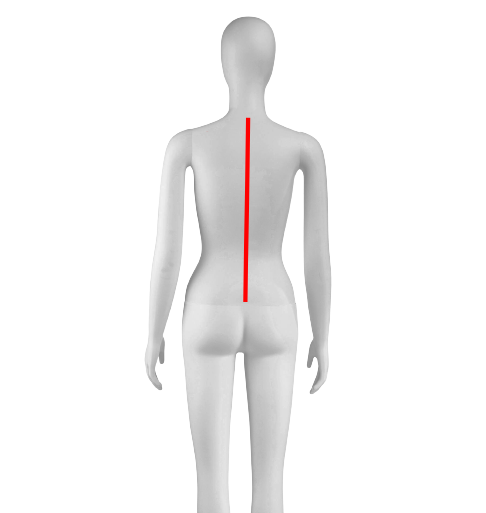
How to Measure The Required Length
Facing backwards, measure vertically down, from the bone at the base of your neck, to your required length. If you are unsure of the perfect length, this will vary depending on the style of the jacket and your personal preference, but typically falls somewhere where your arms end.
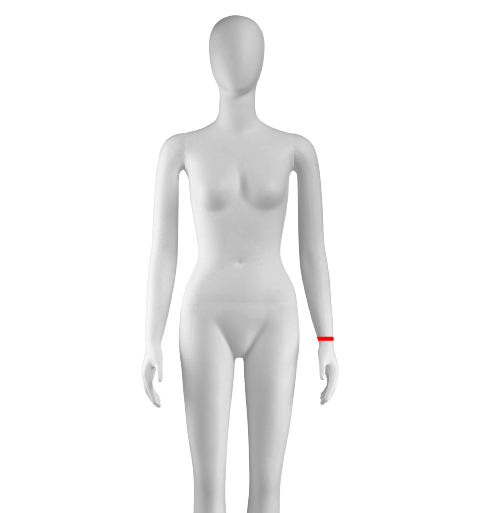
How to Measure Your Wrist
Measure around the fullest part of your wrist, that is exactly above your wrist bone and you will get your wrist measurement.
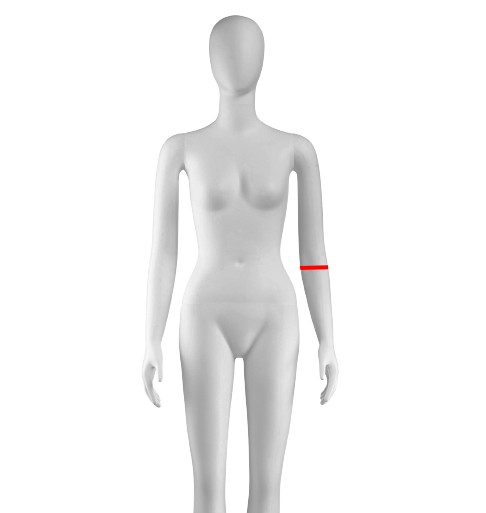
How to Measure Your Forearm
Wrap the tape measure around the widest part of your forearm, which is usually 2 inches below the elbow.
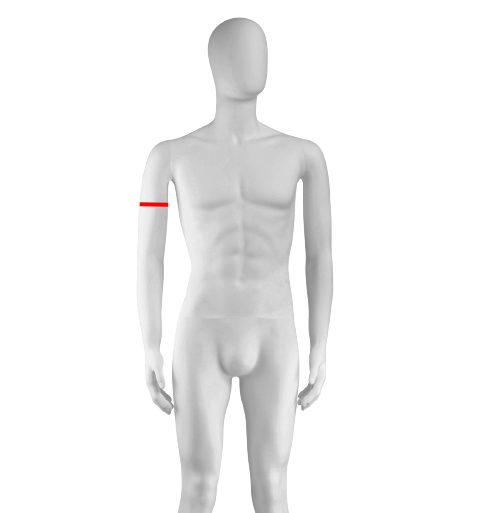
How to Measure Your Bicep
To know your bicep measurement, measure around the fullest part of your bicep with your arms relaxed.
How to Measure Your Armhole
To measure your armhole, wrap the tape measure around your arm and shoulder, drawing it up from behind your shoulder until it meets the starting end.
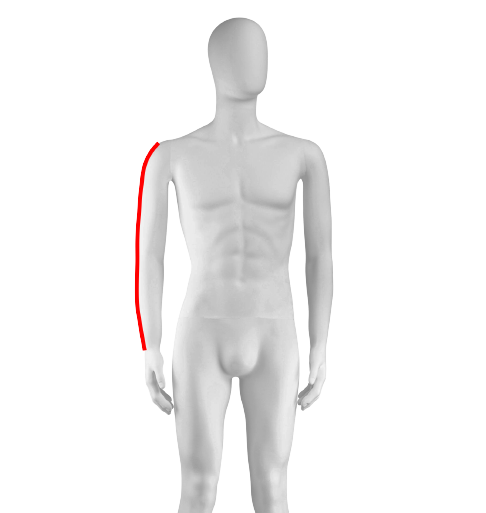
How to Measure Your Sleeve Length
Place the tape measure at the edge of your shoulder. Guide it down alongside your arm straight to the point where you would like your sleeve to end.
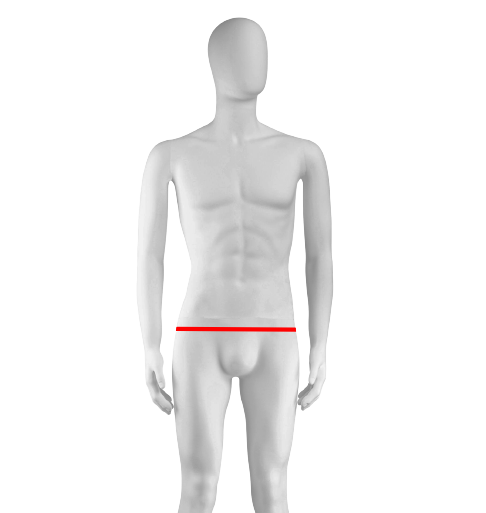
How to Measure your Hip
Measure around the fullest part of your hips. Start at one hip, then bring the tape measure around the back and over the other hip, and back to where you started. Stand straight and make sure the tape is leveled all the way around.
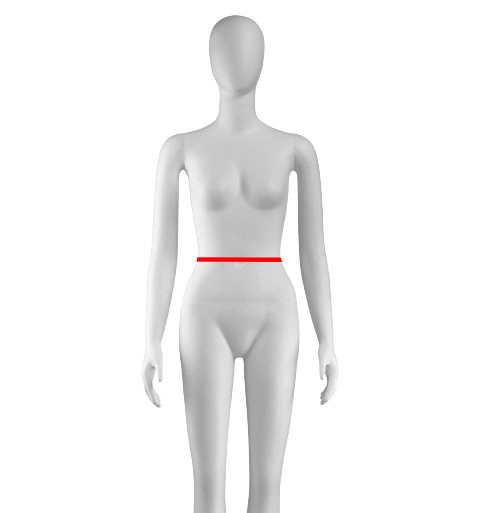
How to Measure Your Waist
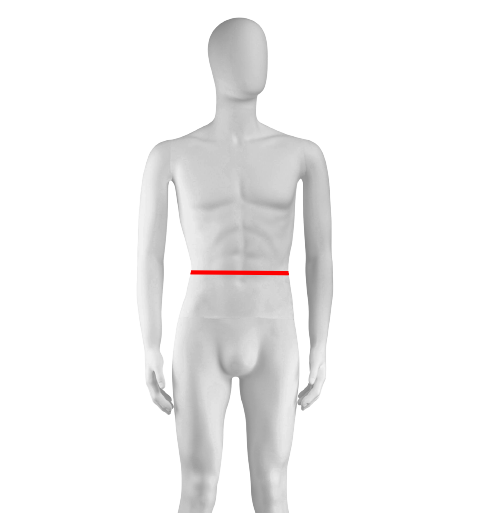
To know your waist measurement, measure the circumference of your waist. Use the tape to circle your waist (sort of like a belt would) at your natural waistline across the belly button. Breathe normally while taking the measurement and make sure the tape is leveled all the way around.
How to Measure Your Midriff
Your midriff is part of the body between your chest and the waist. Measure around the circumference of your body, above your belly button and below your rib cage. Relax and breathe normally.
Make sure the tape is leveled all the way around.
How to Measure Your Chest
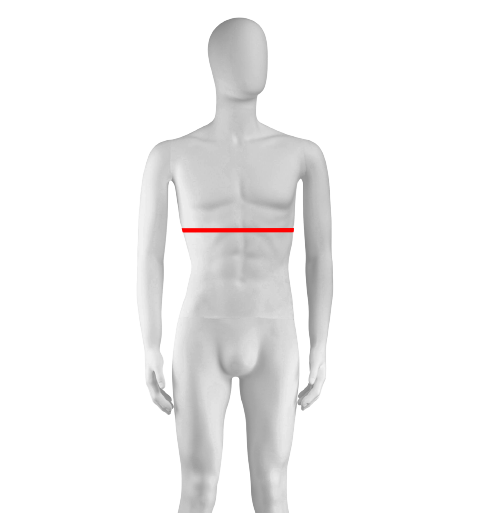
To measure your chest, raise your arms, wrap the measuring tape an inch below the armhole.
Now lower your arms and measure around the circumference of the body, covering the broadest part of the chest and across the shoulder blades. Relax and breathe normally.
Make sure the tape is leveled all the way around.
How to Measure Your Neck
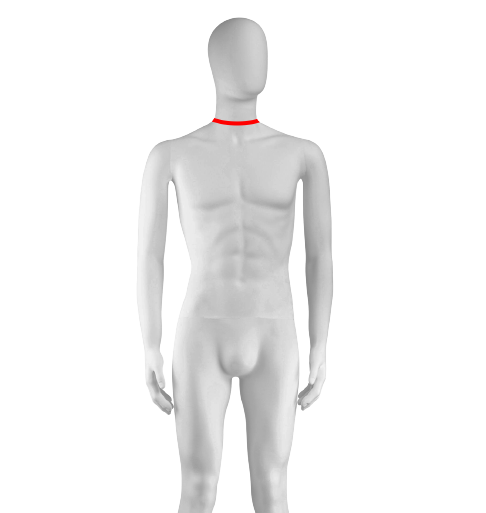
Wrap the measuring tape around your neck and measure around the thickest part of your neck just above your collar bone. The thickest part of your neck is typically just below your Adam’s apple. Be careful not to pull too tightly.
You should be able to comfortably fit two fingers between your neck and the measuring tape.
How to Measure Your Height
Stand against a wall without shoes. Place a straight object such as a book or ruler on your head and mark where it meets the wall. And then measure from the floor to the mark for an accurate height reading.
Unit of Measurement
Select your preferred unit of measurement. We will follow this throughout your measurements.
How to Measure Your Shoulder
Measure the distance from the bony end of one shoulder, straight across the back of the neck, continuing to the bony end of the other shoulder.
How to Measure The Required Length
Facing backwards, measure vertically down, from the bone at the base of your neck, to your required length. If you are unsure of the perfect length, this will vary depending on the style of the jacket and your personal preference, but typically falls somewhere where your arms end.
How to Measure Your Wrist
Measure around the fullest part of your wrist, that is exactly above your wrist bone and you will get your wrist measurement.
How to Measure Your Forearm
Wrap the tape measure around the widest part of your forearm, which is usually 2 inches below the elbow.
How to Measure Your Bicep
To know your bicep measurement, measure around the fullest part of your bicep with your arms relaxed.
How to Measure Your Armhole
To measure your armhole, wrap the tape measure around your arm and shoulder, drawing it up from behind your shoulder until it meets the starting end.
How to Measure Your Sleeve Length
Place the tape measure at the edge of your shoulder. Guide it down alongside your arm straight to the point where you would like your sleeve to end.
How to Measure your Hip
Measure around the fullest part of your hips. Start at one hip, then bring the tape measure around the back and over the other hip, and back to where you started. Stand straight and make sure the tape is leveled all the way around.
How to Measure Your Waist
To know your waist measurement, measure the circumference of your waist. Use the tape to circle your waist (sort of like a belt would) at your natural waistline across the belly button. Breathe normally while taking the measurement and make sure the tape is leveled all the way around.
How to Measure Your Midriff
Your midriff is part of the body between your chest and the waist. Measure around the circumference of your body, above your belly button and below your rib cage. Relax and breathe normally.
Make sure the tape is leveled all the way around.
How to Measure Your Bust
To measure your bust, raise your arms, wrap the measuring tape around the fullest part of your chest.
Now lower your arms and measure around the circumference of the body, covering the broadest part of the chest and across the shoulder blades. Relax and breathe normally.
Make sure the tape is leveled all the way around.
How to Measure Your Neck
Wrap the measuring tape around your neck and measure around the thickest part of your neck just above your collar bone. The thickest part of your neck is typically just below your Adam’s apple. Be careful not to pull too tightly.
You should be able to comfortably fit two fingers between your neck and the measuring tape.
Measurement Instructions
You will need a fabric tape measure and a helping hand. You may also do the measurements yourself, but for the most accurate results, we suggest getting a friend or a relative to do it for you. It’s more fun as well.
You must provide full, accurate and legible measurements on this form.
Please make sure you have precisely followed the demonstration pictures to obtain measurements.
We guarantee that your item will fit you perfectly if you provide us the correct measurements. There will be no returns or exchanges related to fit when pertaining to wrongly submitted measurements.
Once you have given us the measurements, we will process your order immediately, so any changes at later stage may not be possible.
When taking measurements, the tape should be held flat against the body; hold it snugly enough to prevent drooping, but not so tight as to feel restrictive.
Wear what you would normally wear under a jacket while taking measurements.
Make sure to measure without any bulky clothing or layers that might affect the accuracy of the measurement.
Stand as you normally would stand in your day to day stance.
If you wish to, please send 3 full length photos of yourself (Front, Back and Side pose) wearing a t-shirt and a trouser for a better perception for our production team.
Should you need further clarification or assistance, we are always available to you, please write to tailorsupport@lammberg.com