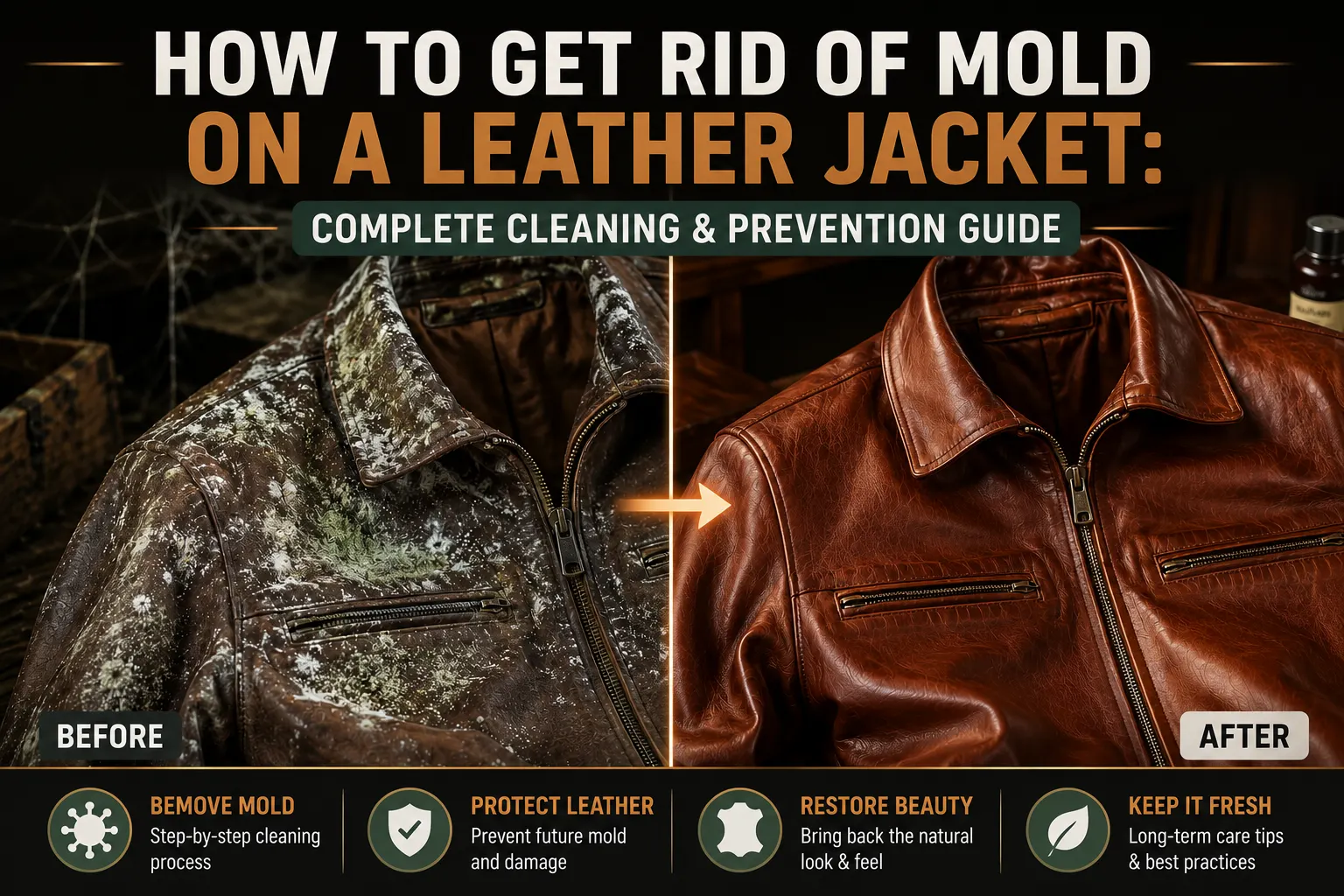
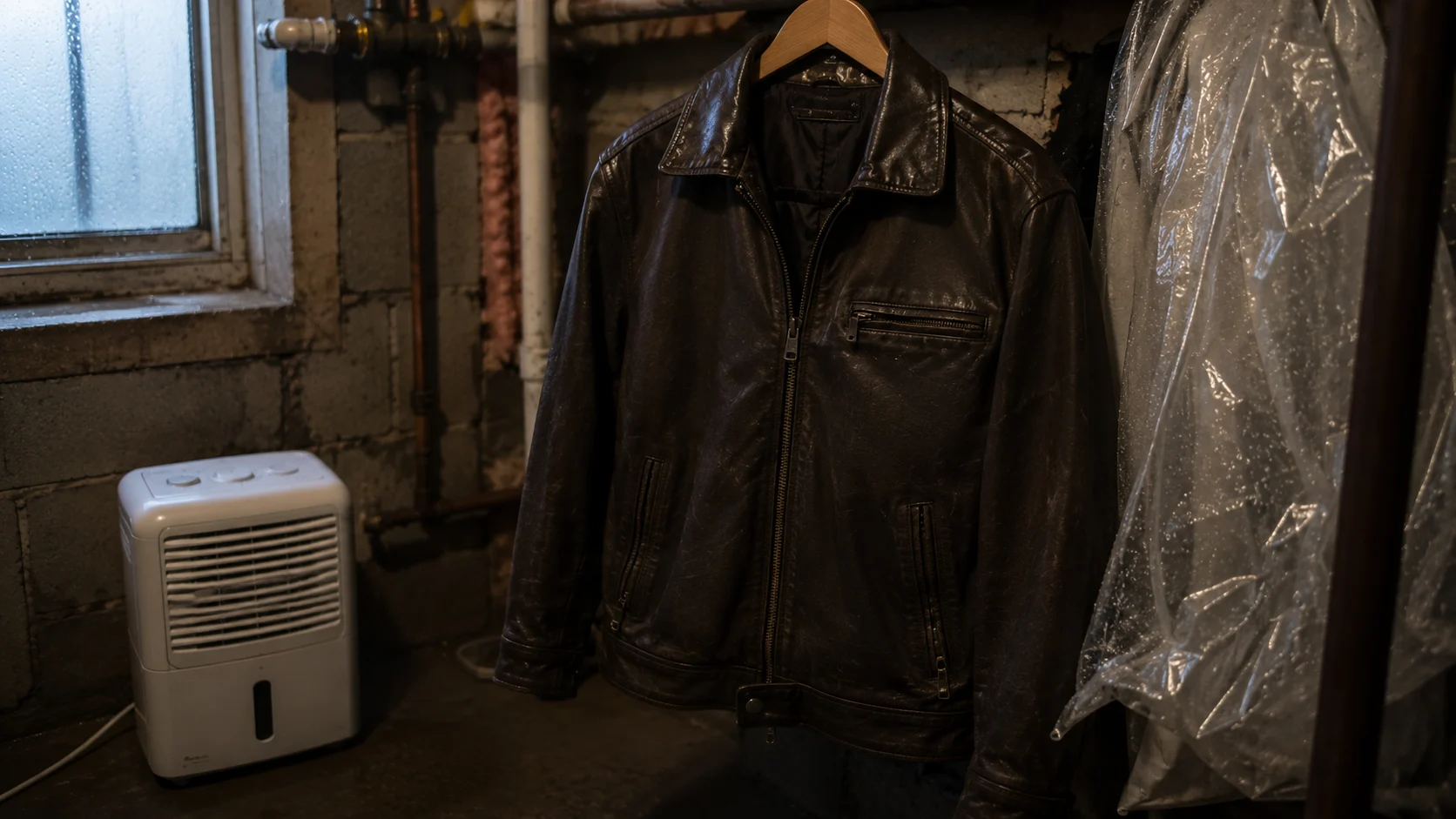
Finding white, greenish, or dark spots on your favourite leather jacket is never a pleasant surprise. Mold not only looks unpleasant but can also produce a musty smell and, if left untreated, permanently damage the leather. The good news is that in most cases, surface mold can be removed safely at home using simple household items. This guide provides a professional, step‑by‑step cleaning process, explains common mistakes to avoid, and shows you how to prevent mold from returning.
Why Mold Grows on Leather Jackets
Leather is a natural, porous material. When it stays damp, warm, and in a poorly ventilated space, mold spores can settle and begin to grow. Common causes include:
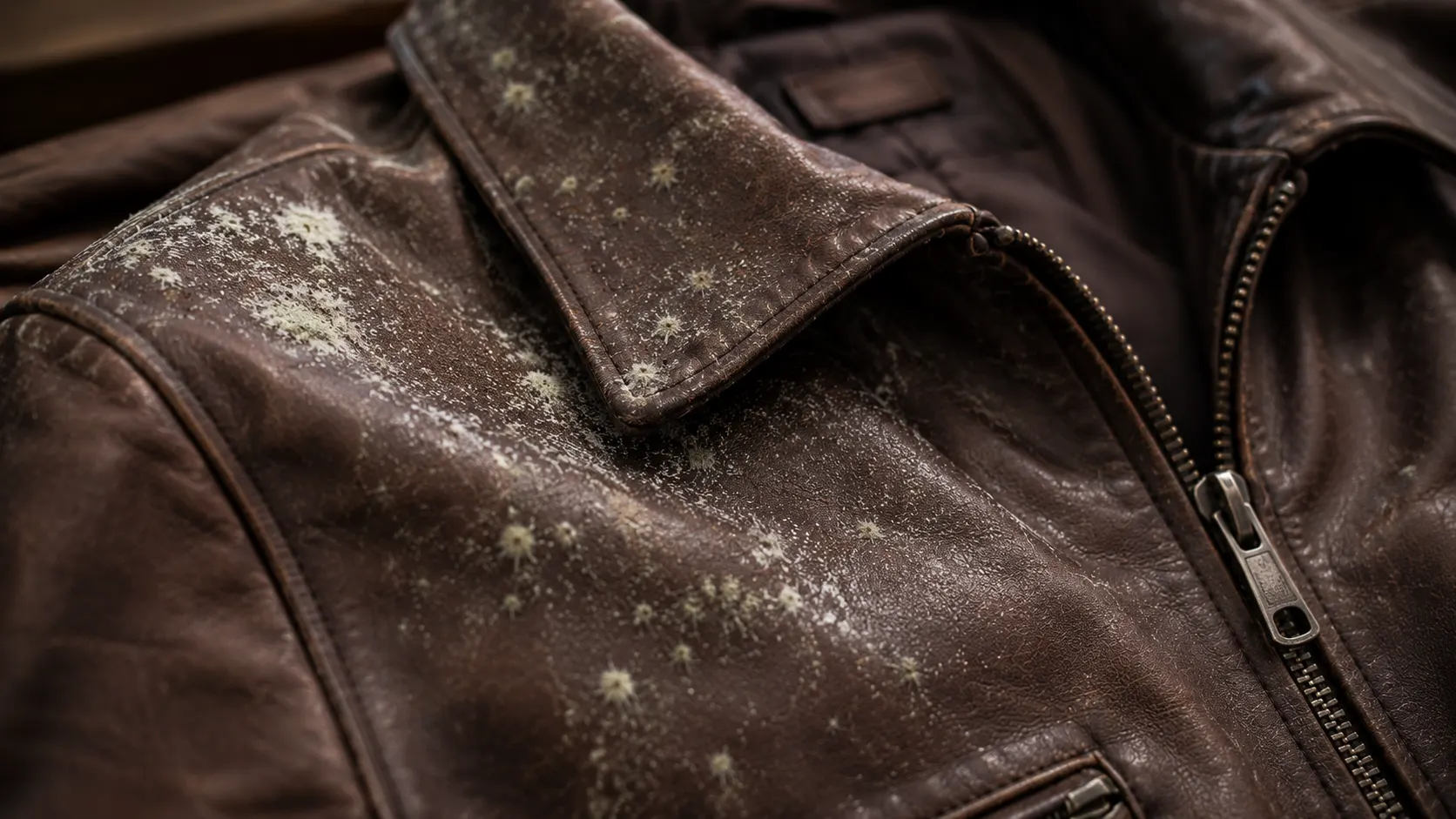
- Storing the jacket in a dark, humid closet or basement
- Putting the jacket away while still slightly damp after rain or snow
- Using non‑breathable plastic garment bags that trap moisture
- Living in a high‑humidity climate without proper moisture control
Mold usually appears as powdery white, grey, or greenish patches. It may also leave dark stains or a persistent musty odour. If you catch it early, you can almost always save the jacket.
What You Will Need
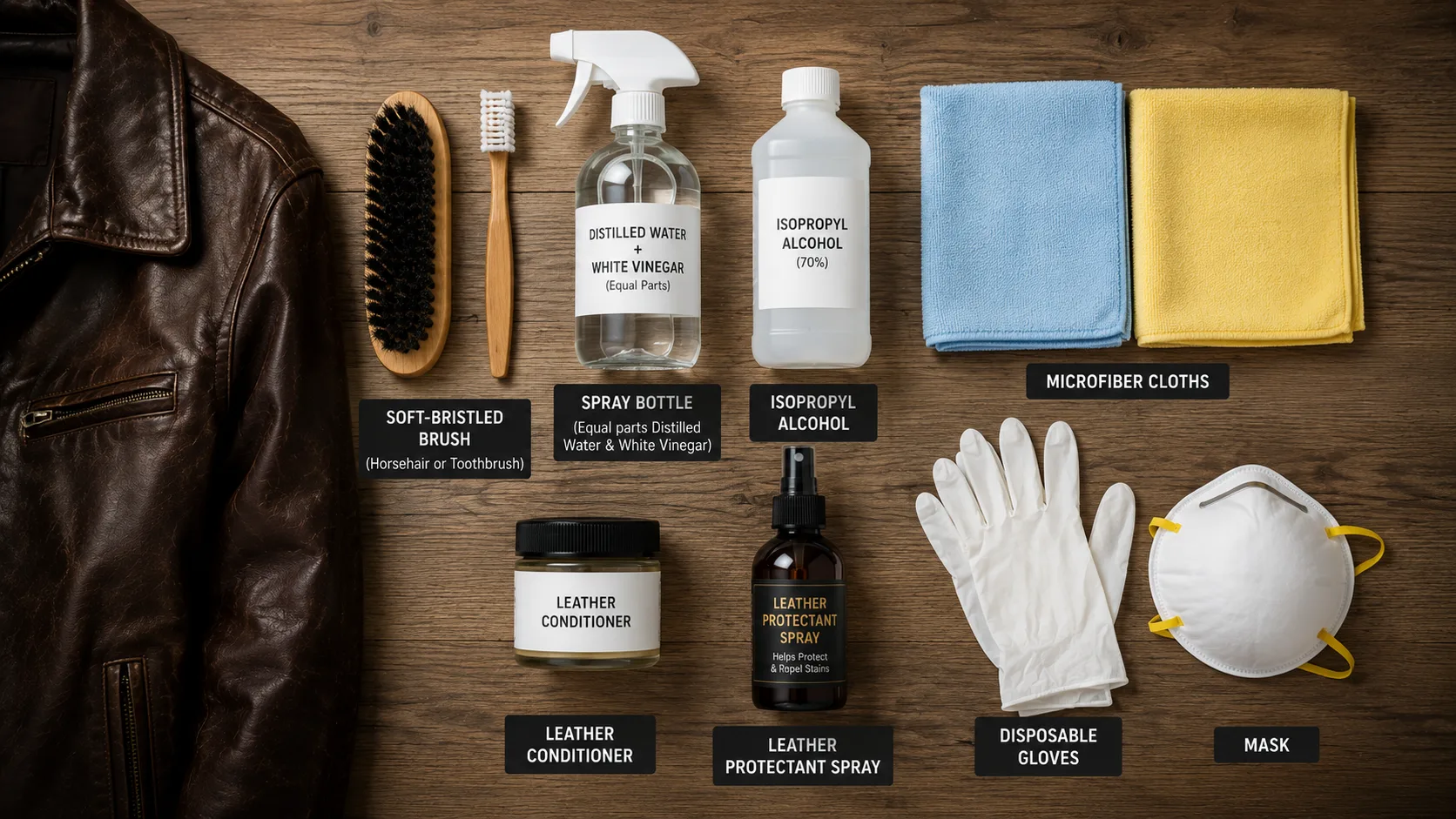
Before you start, gather these supplies:
- Soft‑bristled brush (a clean toothbrush or horsehair brush works well)
- Distilled white vinegar or isopropyl alcohol (70% concentration)
- Distilled water (tap water can leave mineral residues)
- Two clean microfiber cloths
- Leather conditioner (preferably without silicone or heavy wax)
- Optional: a dedicated leather cleaner and protectant spray
- A well‑ventilated workspace (outdoors or near an open window)
- Disposable gloves and a mask (recommended to avoid inhaling spores)
Step‑by‑Step Cleaning Process
Follow these steps carefully. The key is to use gentle motions and avoid soaking the leather.
Step 1: Brush Off Loose Mold Outdoors
Take your jacket outside before you do anything else. This prevents mold spores from spreading inside your home.
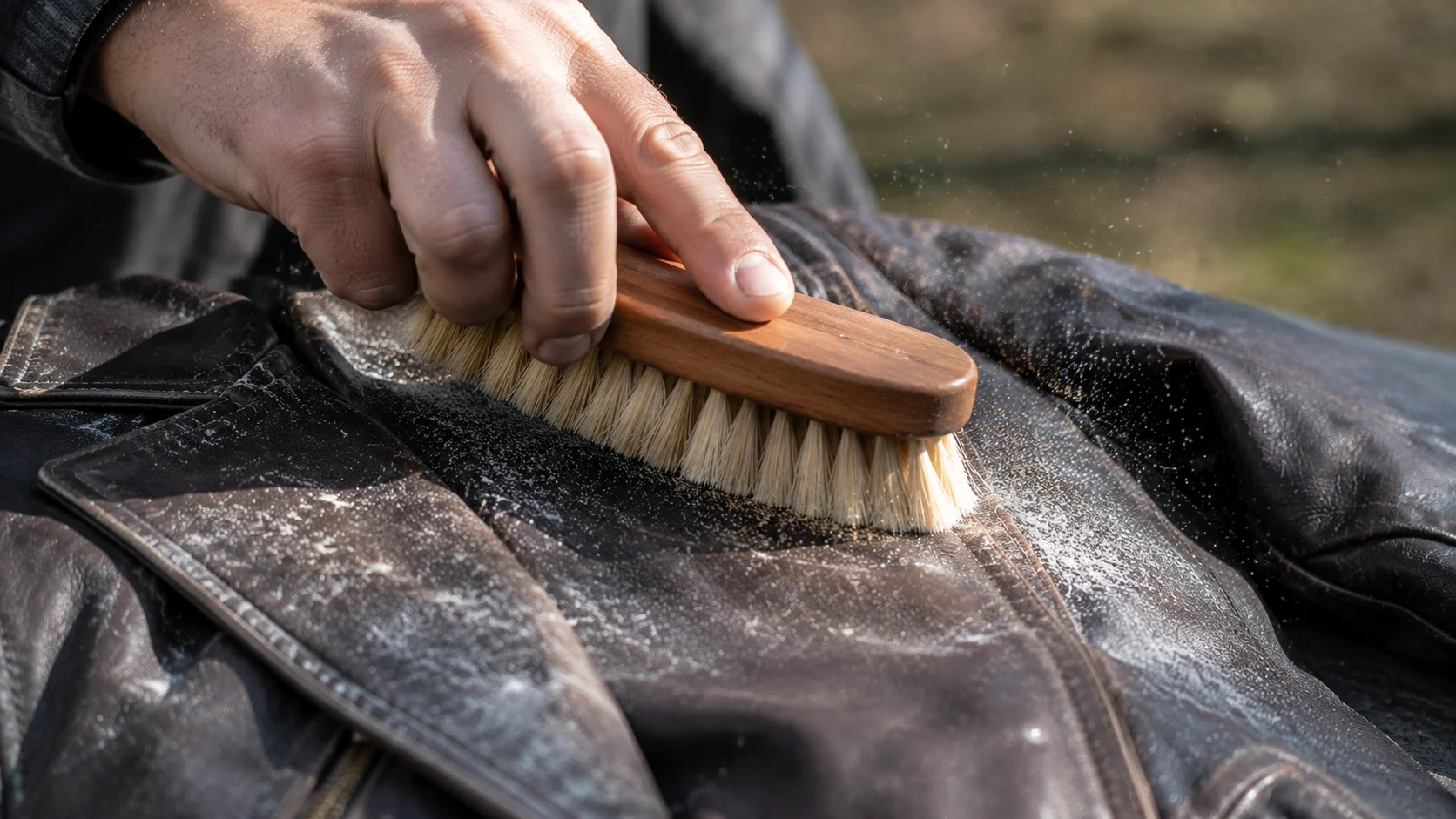
Use a soft‑bristled brush or a dry microfiber cloth to gently sweep away loose, powdery mold from the surface. Work in one direction. Pay extra attention to seams, pockets, and the inside of the collar. After brushing, immediately dispose of the cloth or clean the brush outside.
Step 2: Test on a Hidden Area
Leather can react differently to cleaning solutions. Before treating the entire jacket, test your chosen cleaner on a small, hidden spot such as the inside hem or behind the collar.
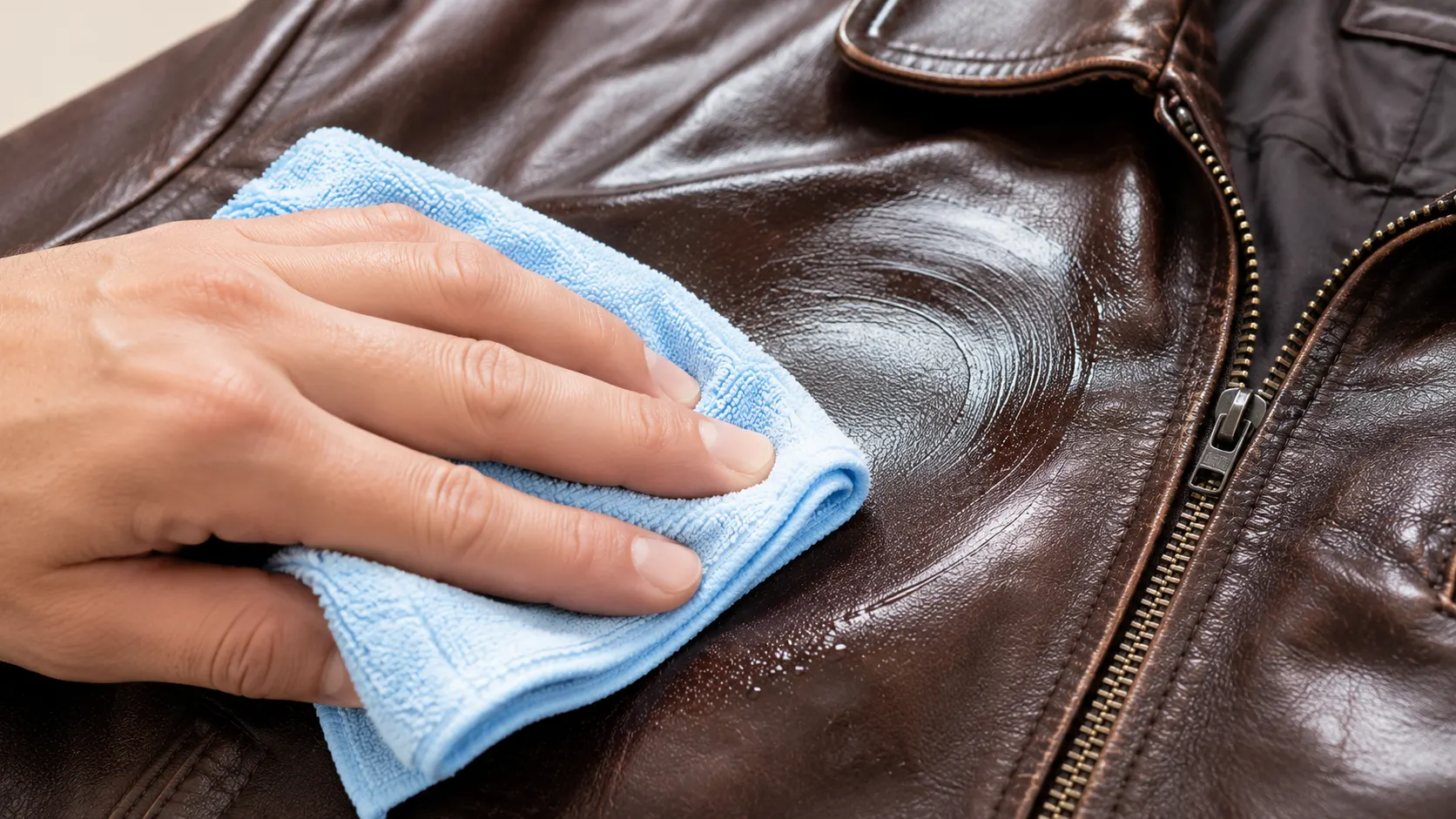
Apply a tiny amount of the solution with a cloth, wait five minutes, and check for colour changes or damage. If the test area looks fine, proceed.
Step 3: Prepare Your Cleaning Solution
Mix equal parts distilled water and either distilled white vinegar or isopropyl alcohol (70% concentration). Both vinegar and alcohol are effective at killing mold without being overly harsh on leather.
- Vinegar is milder and naturally anti‑fungal. Its smell fades once dry.
- Alcohol evaporates faster and is slightly stronger, but it can dry out leather more quickly.
Choose based on what you have available and the severity of the mold.
Step 4: Wipe Down the Moldy Areas
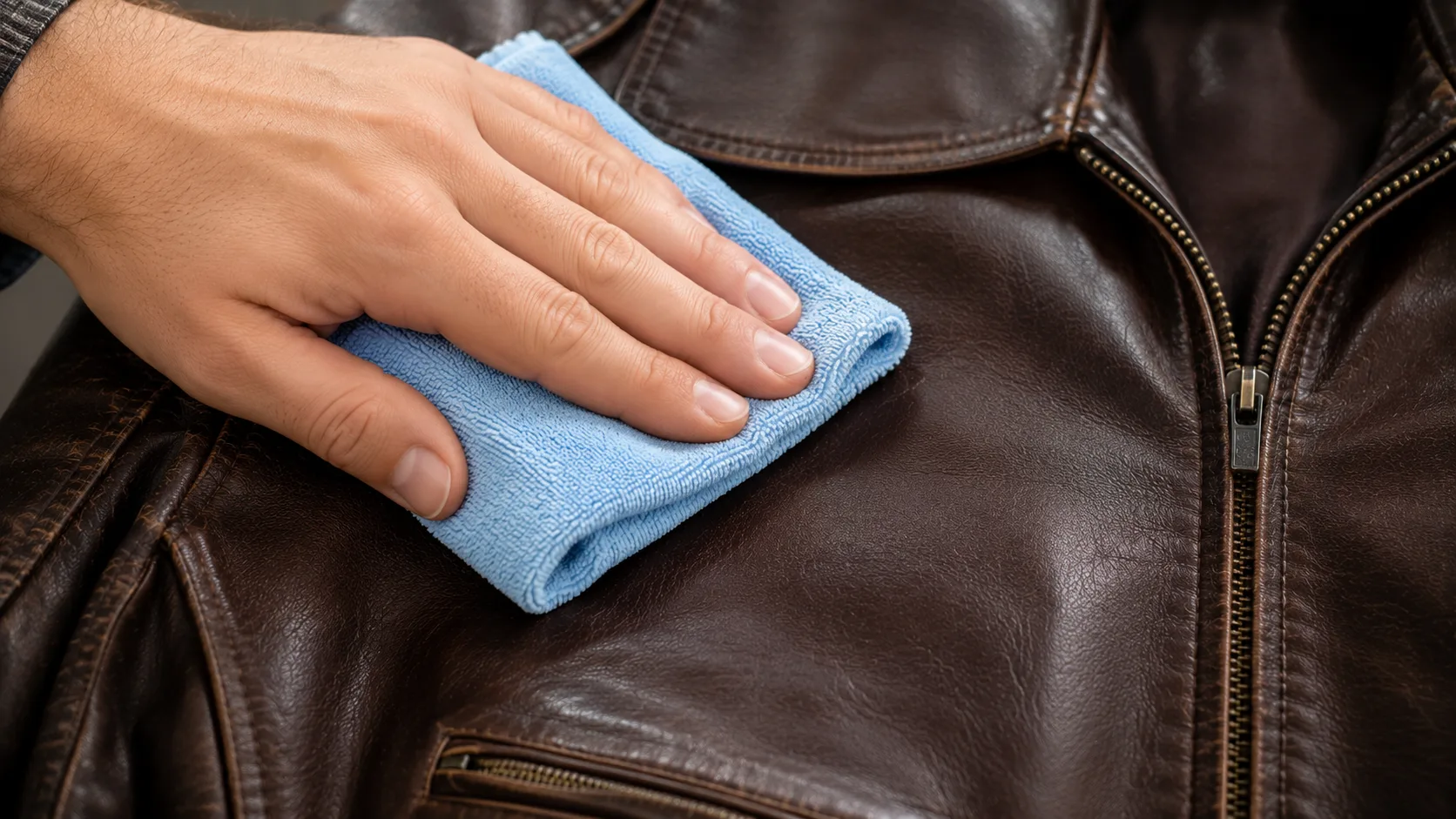
Lightly dampen a clean microfiber cloth with your cleaning solution. Do not soak the cloth it should be barely damp. Gently wipe all areas affected by mold using circular motions. Do not scrub hard; let the solution do the work.
For heavy mold growth, you may need to repeat this step two or three times with a fresh cloth each time.
Step 5: Use a Dedicated Leather Cleaner (Optional but Recommended)
After removing the visible mold, some leather care experts recommend applying a specialised leather cleaner or a product like LRC1 (Leather Repair Cleaner). This type of cleaner is formulated to penetrate deeper, remove residual spores, and prepare the leather for conditioning.
If you choose to use such a product, follow the manufacturer’s instructions. Typically, you spray or wipe it onto the affected area, let it sit briefly, then wipe off with a clean cloth.
Step 6: Remove Residue with Plain Water
Take a second clean microfiber cloth, dampen it with plain distilled water (again, just barely damp), and gently wipe the jacket down. This removes any remaining vinegar, alcohol, or cleaner residue, which could otherwise dry out the leather over time.
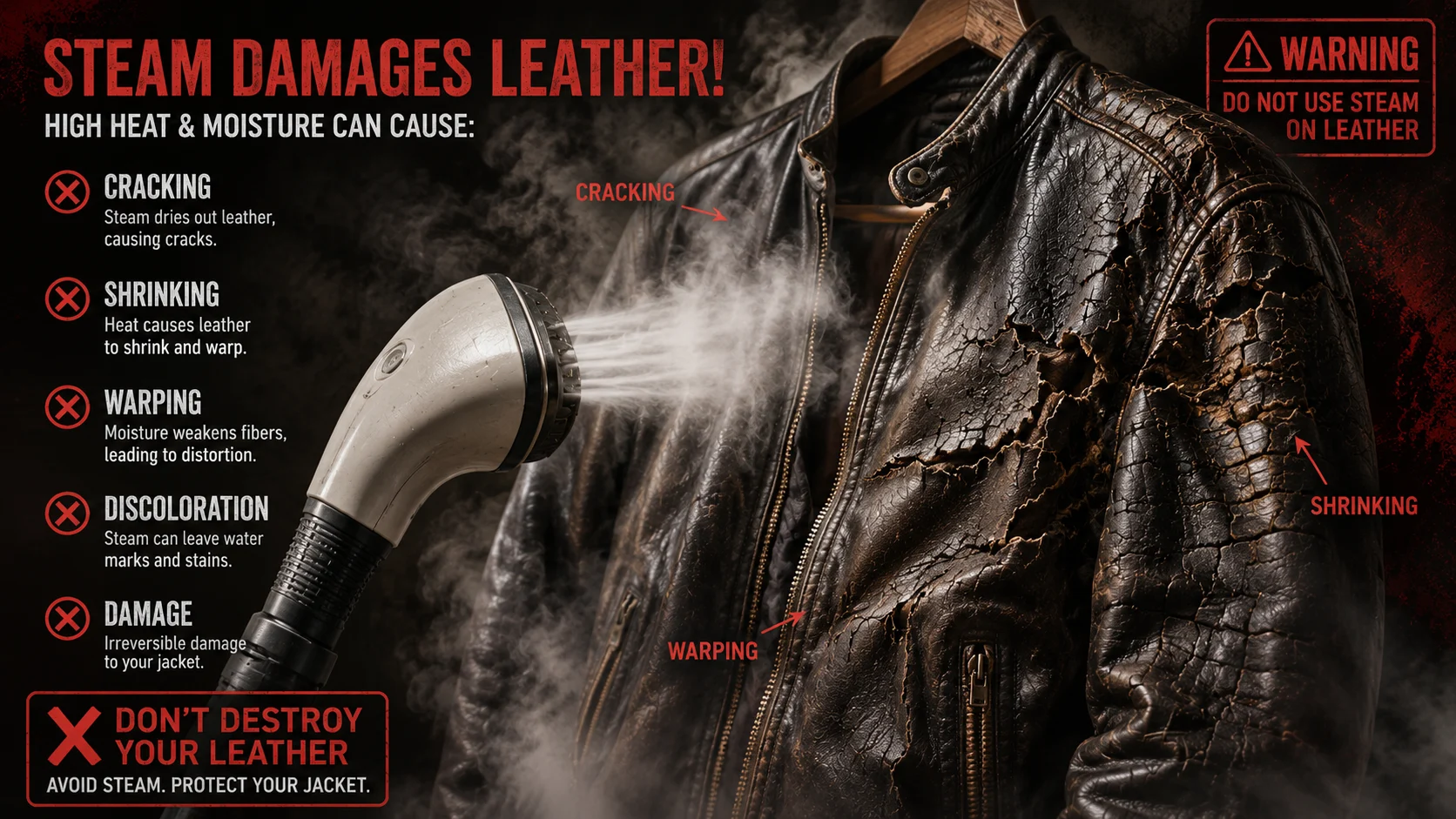
Step 7: Let the Jacket Dry Completely – Never Use Steam or Direct Heat
Hang the jacket in a well‑ventilated area away from direct sunlight, radiators, hair dryers, or steam.
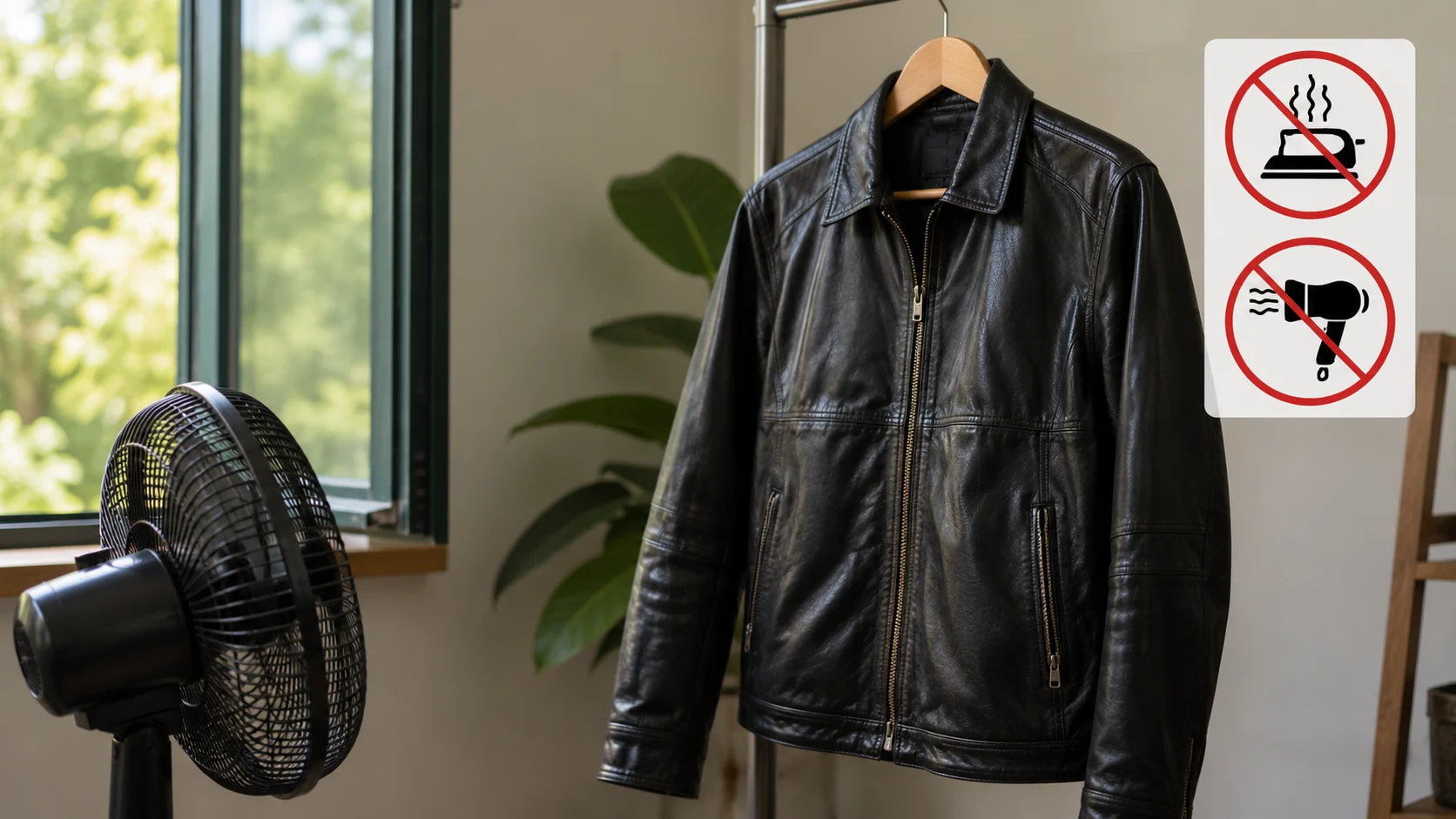
Important warning: Steam is extremely harmful to leather. The high heat and moisture can cause the leather to shrink, warp, lose its natural oils, and crack. Many people mistakenly believe steam is a gentle way to clean mold, but leather professionals strongly advise against it. Always air dry at room temperature.
Depending on humidity levels, drying may take 12 to 24 hours. Do not rush this step.
Step 8: Condition the Leather
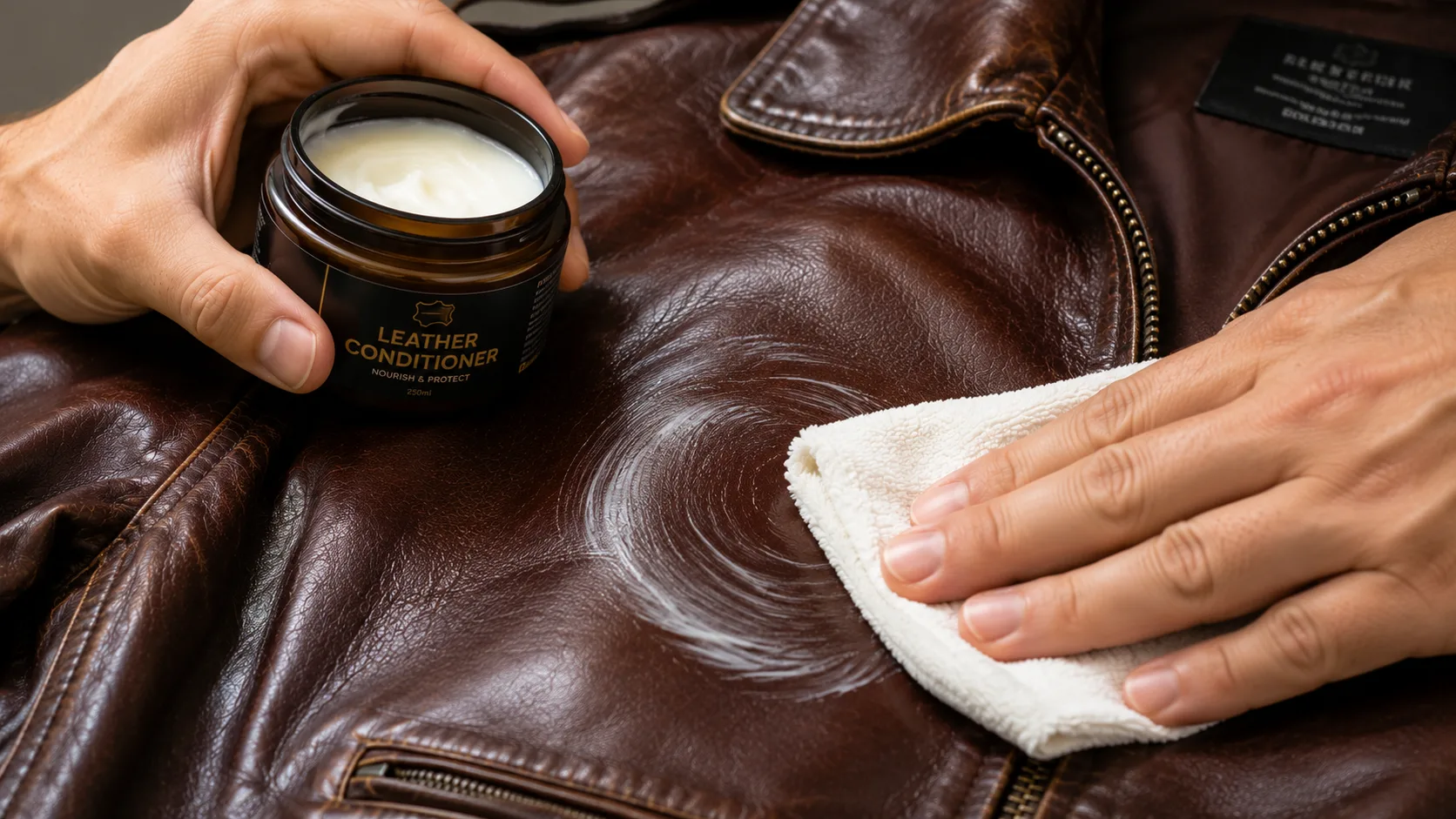
Once the jacket is completely dry, apply a quality leather conditioner. Use a soft cloth to rub it into the leather in circular motions. Pay attention to areas that were heavily cleaned.
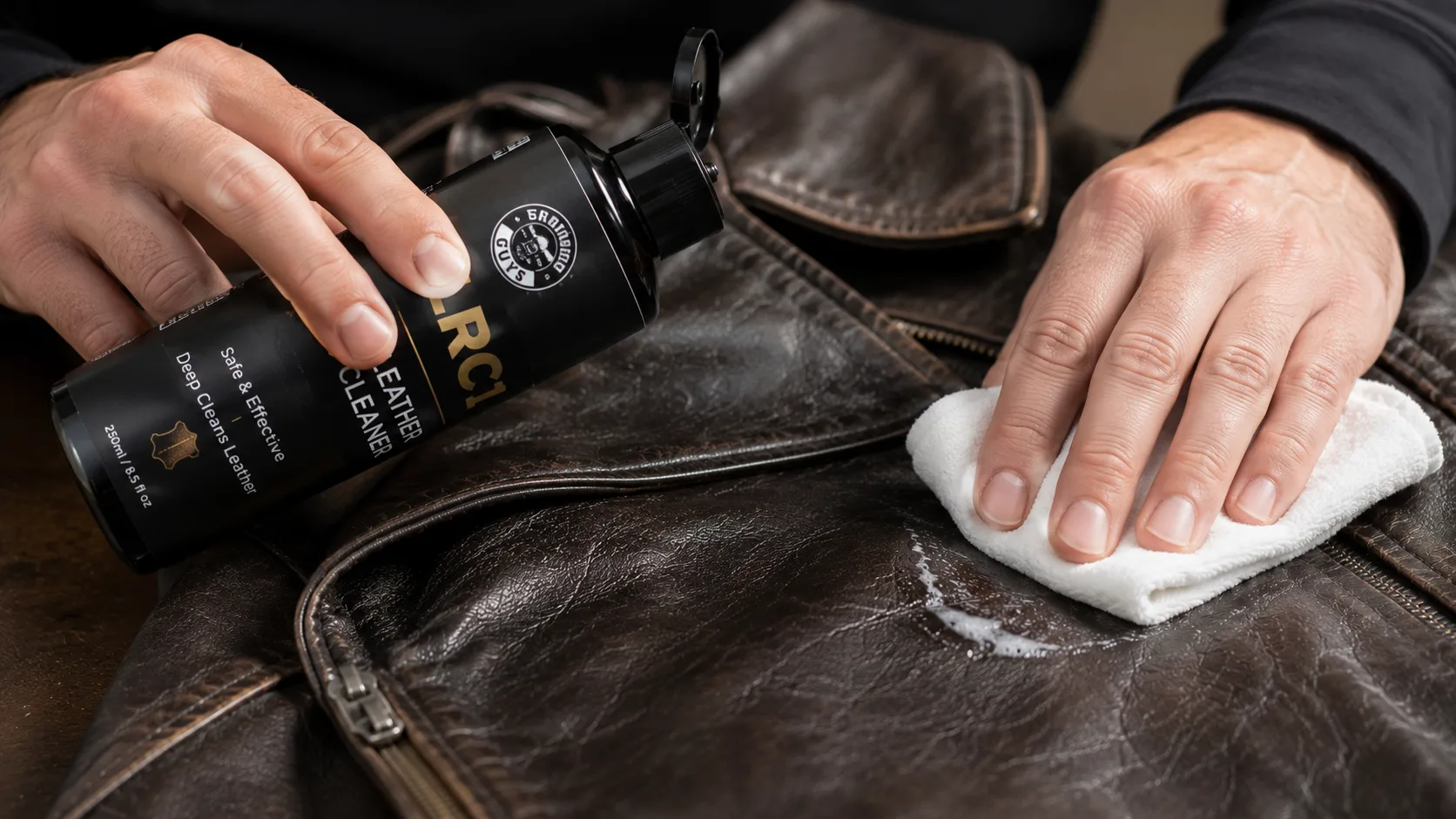
Let the conditioner absorb for a few hours (or overnight). Then buff the jacket gently with a clean, dry cloth. Conditioning restores natural oils, keeps the leather soft, and adds a layer of protection against future moisture.
For added protection, you can finish with a leather protectant spray designed to repel water and resist mold.
Common Questions About Mold Removal
Can I use steam to remove mold from a leather jacket?
No. Steam is one of the worst things you can apply to leather. The combination of intense heat and moisture permanently damages the material, causing it to shrink, stiffen, and crack. Always use a gentle vinegar or alcohol solution and let the jacket air dry naturally.
Do I need a special cleaner like LRC1?
Not necessarily. Vinegar or alcohol works for most surface mold. However, if you want a deeper clean or plan to treat valuable leather regularly, a dedicated leather cleaner (such as LRC1) can be a good investment. Apply it after the initial vinegar/alcohol wipe, allow it to dry fully, and then protect the leather with a conditioner or protectant spray.
Will the vinegar smell stay on my jacket?
No. Once the vinegar dries completely and you condition the leather, the smell dissipates. You can also wipe the jacket down with a water‑dampened cloth after cleaning to help remove any lingering odour.
How often should I condition my leather jacket?
At least once a year. If you wear the jacket frequently or live in a dry or humid climate, condition it every six months.
Is mold on a leather jacket dangerous to my health?
Mold spores can cause respiratory issues, allergies, and skin irritation for some people. Always handle moldy jackets outdoors or in a well‑ventilated area, and consider wearing a mask and gloves during cleaning.
How to Prevent Mold from Coming Back
Cleaning the mold is only half the battle. If you do not change your storage habits, it will likely return. Follow these prevention tips.
1. Let Leather Breathe
Never store a leather jacket in a tight plastic garment bag. Leather needs air circulation. Use a breathable cotton garment bag or simply hang the jacket freely in a closet.
2. Control Moisture
Keep your closet cool and dry. If you live in a humid area, place moisture‑absorbing silica gel packs or a small electric dehumidifier inside your wardrobe. This is one of the most effective ways to prevent mold.
3. Never Store a Damp Jacket
If your leather jacket gets wet from rain or snow, hang it up immediately and let it air dry completely before putting it away. Even slight residual moisture can encourage mold growth inside a dark closet.
4. Condition Regularly
Well‑conditioned leather is more resistant to moisture absorption and less inviting to mold spores. Make conditioning part of your seasonal wardrobe maintenance.
5. Inspect Your Jacket Seasonally
At the start of each season, take your jacket out and inspect it for any signs of mold, dryness, or damage. Catching a small spot early is much easier than dealing with widespread growth.
What If Mold Has Penetrated Deep into the Leather?
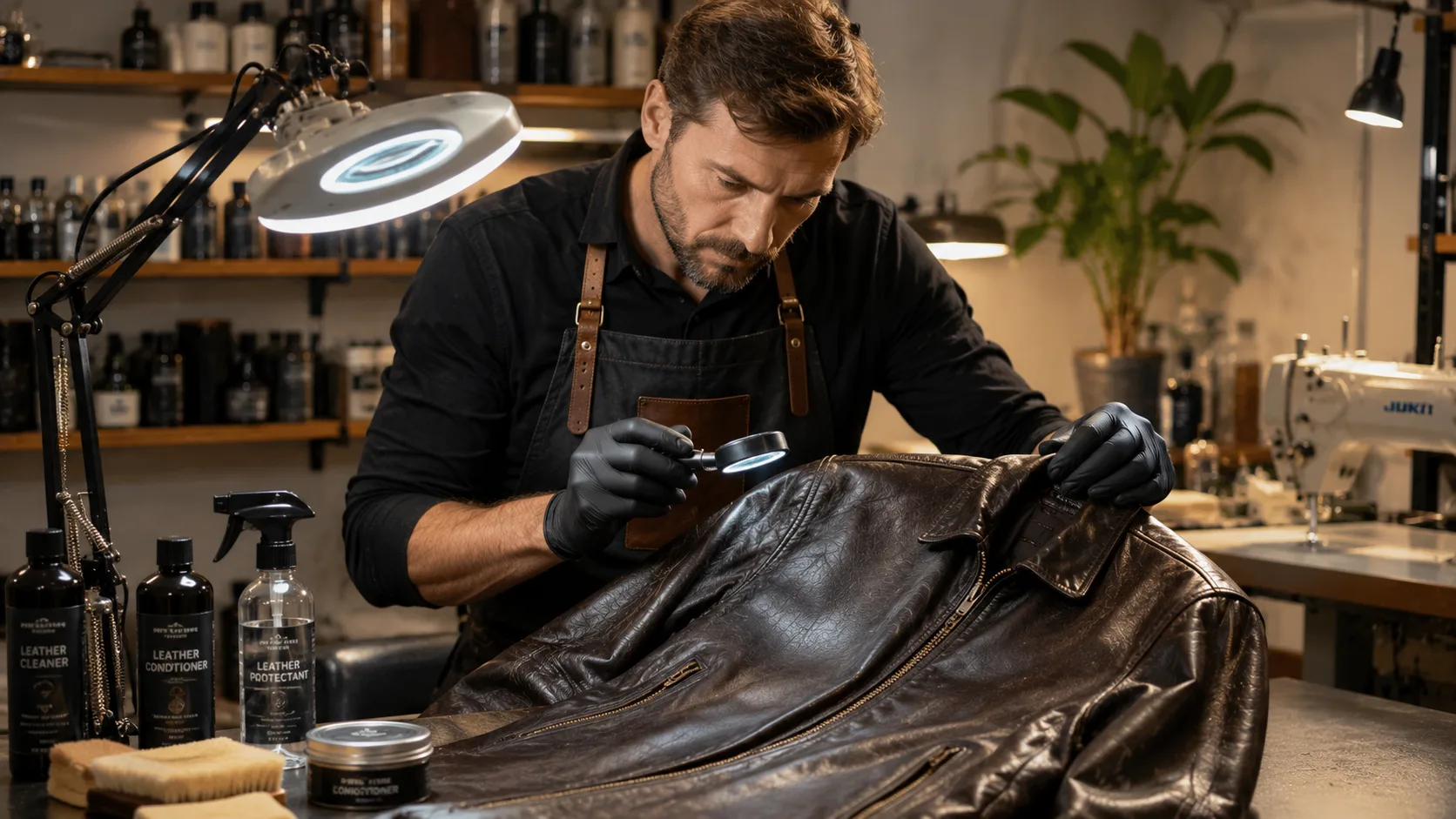
If you have already cleaned the surface but the jacket still smells musty, or if dark spots remain, mold may have penetrated deeper into the leather. At this point, home cleaning may not be enough. Consider taking the jacket to a professional leather cleaner who has specialised equipment and treatments.
Also, if the leather is beginning to rot, flake, or fall apart, it may be beyond repair. Prevention is always better than cure.
Final Thoughts
Discovering mold on a leather jacket does not mean the jacket is ruined. In most cases, a simple cleaning with vinegar or alcohol, followed by proper conditioning, will restore the leather to good condition. Avoid common mistakes like using steam or heat, and consider adding a dedicated leather cleaner for a more thorough treatment.
The real secret lies in prevention: keep your jacket dry, let it breathe, and condition it regularly. With the right care, your leather jacket can last for decades.
Ready for a New Leather Jacket?
If your jacket is beyond repair or you simply want to add a fresh, high‑quality piece to your wardrobe, explore our premium collections.
Related Articles
How to Wash a Suede Jacket Without Damaging It: Expert Cleaning Guide
Custom Leather Jacket vs Ready-Made – Which is Better?
A-2 Antique WWII Leather Flight Jacket – The Complete Guide
How to Remove Water Stains from Suede Jacket
How to Style a Leather Jacket for Every Occasion – 2026 Complete Guide
The 8 Ball Jacket Style Guide – Why It Still Hits in 2026
Is Leather Really the Best Jacket? What Reddit Users Actually Say
How to Make Leather from Animal Skins – 9 Simple Steps
Can Leather Jackets Get Wet? What Every Owner Should Know
PU Leather vs Genuine Leather – The Truth Most Sellers Won’t Tell You
10 Timeless Leather Jacket Outfit Ideas for Women
How to Get Rid of Mold on a Leather Jacket
Leather Clusters – The Engines of a Global Industry
How to Wash a Leather Jacket in a Washing Machine – Is It Safe?
5 Types of Leather Jackets You Should Know About
The Old History of Leather Jackets
Top 10 Leather Blazer Office Outfit Ideas for Women 2026
10 Best Leather Blazer Office Outfit Ideas for Men 2026
How to Remove Cigarette Smell & Mildew from a Leather Jacket
Do Police Officers Still Wear Leather Jackets?
How to Remove Wrinkles from a Leather Jacket at Home
How to Style a Leather Jacket for Men
The Professional’s Guide to Styling Leather Jackets 2026
Lightweight Packable Puffer Jackets
Embroluxe Avirex Leather Jacket Review
Top 10 Genuine Leather Jackets in USA
Petite Leather Jackets for Women – Complete Style & Fit Guide
The Best Jackets for Every Season
Top 10 Men’s Leather Coats and Trench Coats in 2026
Top Women’s Leather Coat Trends for 2026
How to Measure Yourself for a Leather Jacket
The Ultimate Leather Jacket Size Guide
How to Get Smell Out of Leather Jacket – The Ultimate Guide
Top Leather Jacket Trends for Men in 2025
Peacoat vs Trench Coat – Which One Makes You Look Better?
What is Bonded Leather? Complete Guide
Full-Grain vs Top-Grain Leather: Which Is Actually Better?
Real vs Fake Leather Jackets – How to Spot the Difference
The Art of Crafting a Leather Jacket
7 Easy Tips for Buying Your First Leather Jacket


































What Is Bison Leather? Durability, Uses & Cowhide Comparison
What Is Bovine Leather?