
A Leather Jacket can develop an unpleasant smell for several reasons. Sweat, cigarette smoke, moisture, perfume, food odors, and improper storage can all leave lingering smells in the leather or its lining.
The good news is that you usually don’t need harsh chemicals or expensive cleaning products to freshen up a leather jacket. In most cases, proper ventilation, gentle cleaning, and odor-absorbing materials can make a noticeable difference.
However, leather needs more care than ordinary fabric. Too much water, heat, or aggressive cleaning can dry out the leather, cause discoloration, or damage its finish.
Why Does a Leather Jacket Smell Bad?
Leather is a porous natural material, so it can absorb and retain odors from its surroundings. The jacket’s lining can also trap sweat, body oils, smoke, and other smells.
Some of the most common causes include:
- Sweat and body odor: Regular wear can leave sweat and body oils around the collar, cuffs, and underarms.
- Cigarette or smoke smell: Smoke can settle into both the leather and lining.
- Moisture and mildew: A jacket stored while damp or in a humid environment can develop a musty smell.
- New leather smell: A new jacket may have a strong natural leather or tanning-related smell that gradually becomes milder with ventilation.
- Perfume and other fragrances: Strong perfumes can remain in the lining and leather for quite some time.
- Poor storage: Keeping a leather jacket in a closed, poorly ventilated space can allow odors to build up.
Fortunately, learning how to remove the smell from a leather jacket doesn’t require expensive dry cleaning. With the right leather care products and techniques, you can restore a clean, fresh smell while preserving the leather’s natural finish.
Prepare Your Leather Jacket Before Removing Odors
The important thing is to identify the source of the smell before trying a treatment. Before trying any leather jacket odor removal method, spend a few minutes preparing the jacket properly. This helps cleaning solutions work more effectively while protecting the leather.
Inspect the Leather
Check the care label to identify whether your jacket is made from full-grain leather, top-grain leather, suede leather, or faux leather. Different materials require slightly different cleaning methods.
Remove Surface Dirt
Use a soft-bristle brush or microfiber cloth to wipe away dust and loose dirt. Dirt often traps odor-causing bacteria, making smells harder to eliminate.
Clean High-Contact Areas
Mix a small amount of leather soap with lukewarm water. Lightly dampen a soft cloth and gently clean areas that collect the most body oils and sweat, including:
- Underarms
- Collar
- Cuffs
- Jacket lining
- Interior pockets
Avoid soaking the leather. The goal is simply to remove surface grime before deodorizing.
Always Spot Test
Before applying any cleaner, white vinegar, or other solution, test it on a hidden section of the jacket to make sure the leather finish remains unaffected.
How to Get the Smell Out of a Leather Jacket Safely
Once your jacket is clean, you can begin removing odors using leather-safe methods. Start with the gentlest option before moving to stronger treatments.
1. Air Out the Leather Jacket First
The easiest and safest method is also the one you should try first: let the jacket breathe.
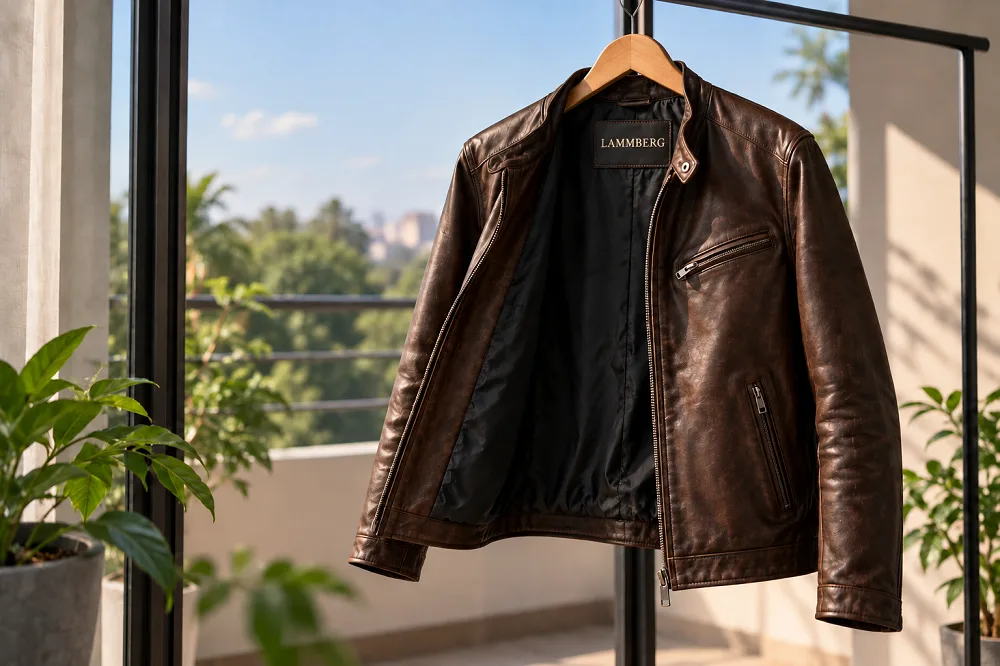
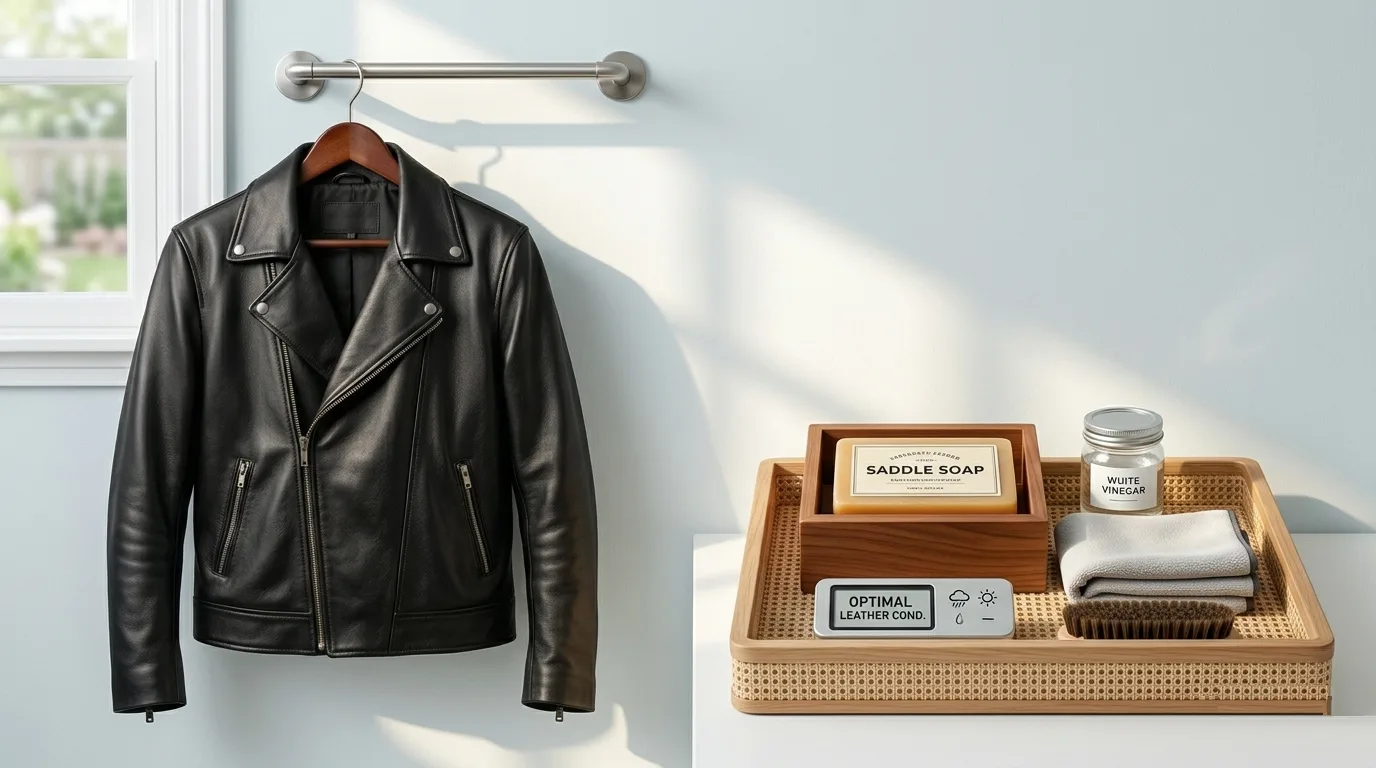
Hang your jacket on a broad, sturdy hanger and place it in a cool, well-ventilated area. If possible, expose it to fresh air in a shaded outdoor space or near an open window.
Leave it for 24 to 48 hours, depending on how strong the odor is. Avoid placing the jacket in direct sunlight for extended periods because excessive exposure can affect the leather’s color and condition.
Open the jacket fully so air can reach the lining. Also open the pockets and turn them outward if possible.
Why does this work?
Many mild odors are simply trapped in the jacket’s surface and lining. Good airflow allows these odors to dissipate naturally without exposing the leather to moisture or chemicals.
For a new leather jacket with a strong leather smell, ventilation should always be your first step.
2. Clean the Lining to Remove Sweat and Body Odor
Sometimes the leather itself isn’t the main source of the smell. The inner lining can hold sweat, body oils, and other odors, especially around the collar, underarms, and pockets.
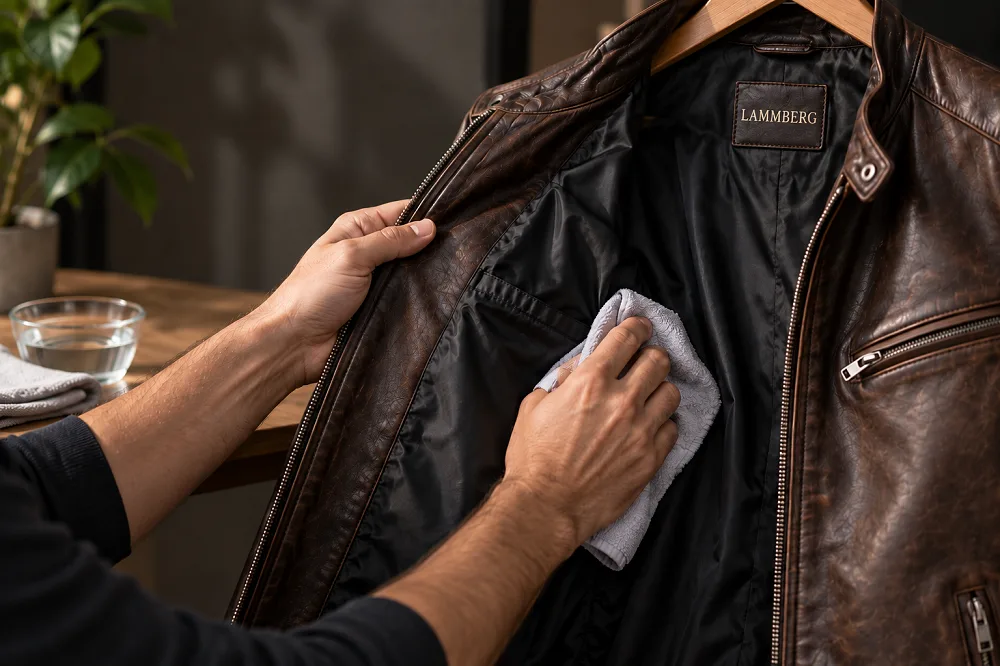
Turn the jacket inside out as much as the construction allows and inspect the lining.
For a light refresh:
- Use a soft, clean cloth.
- Slightly dampen it with water.
- Gently wipe the affected lining areas.
- Don’t soak the fabric.
- Hang the jacket in a well-ventilated area until completely dry.
The key is to use minimal moisture. Excess water can create problems for leather and may contribute to mildew if the jacket doesn’t dry properly.
If the lining is heavily soiled or the smell remains after cleaning, professional leather cleaning may be a better option.
3. Use Baking Soda to Absorb Odors
Baking soda can help absorb persistent odors, particularly when the smell is coming mainly from the lining.
However, there’s an important precaution: don’t rub or spread baking soda directly over the leather surface.
Instead, put some baking soda inside a breathable pouch, clean sock, or small fabric bag. Place it inside the jacket and leave it there overnight or for up to 24 hours.
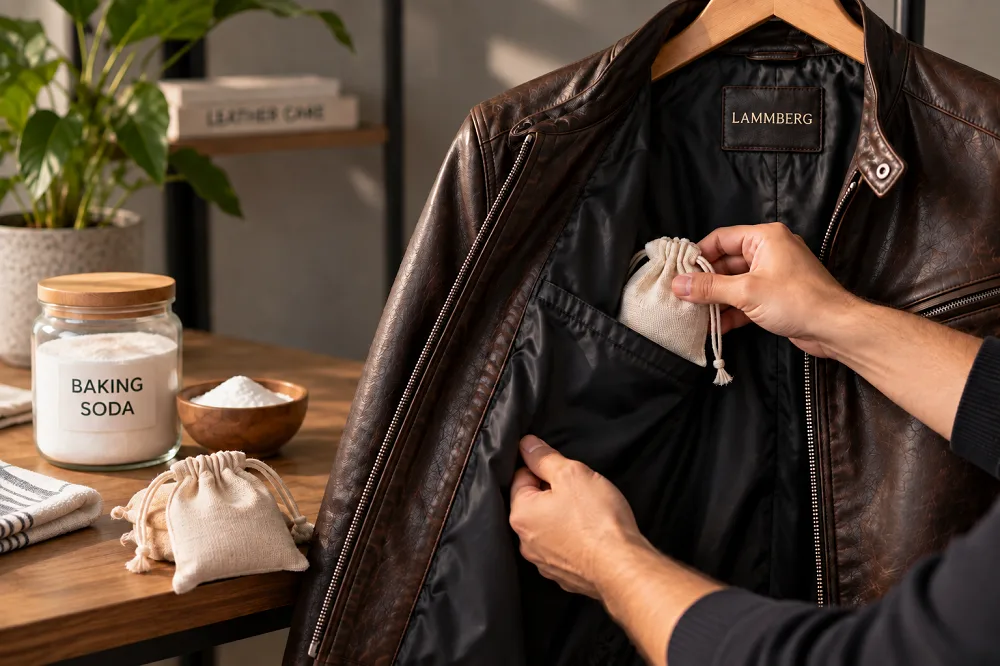
You can place the pouch near:
- The chest area
- Underarms
- Inside pockets
- Sleeves
Afterward, remove the baking soda and air out the jacket again.
This method is particularly useful for mild sweat, musty, and general stale odors.
4. Try Activated Charcoal for Stronger Smells
For stubborn odors, activated charcoal can be a useful alternative to baking soda.
Place an activated-charcoal odor absorber inside the jacket and leave it for 24 to 48 hours. Keep the jacket in a dry, ventilated area while the charcoal works.
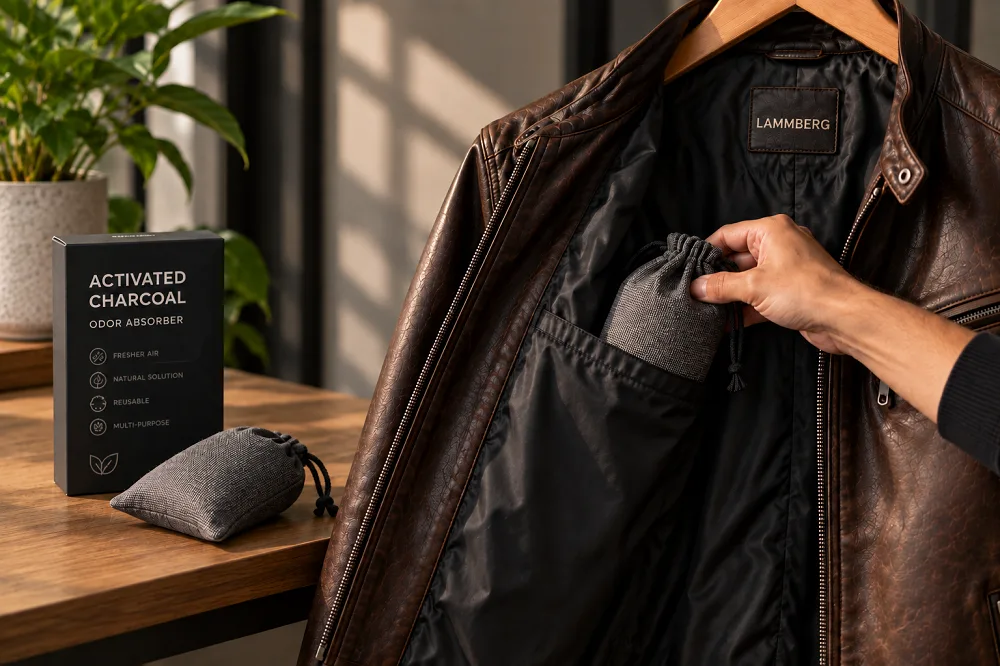
Activated charcoal is especially useful when dealing with odors such as:
- Cigarette smoke
- Strong food smells
- Mustiness
- Long-term storage odors
Like baking soda, the advantage is that the odor absorber doesn’t require you to soak or aggressively clean the leather.
5. How to Remove Smoke Smell From a Leather Jacket
Smoke from cigarettes, cigars, or fireplaces can be difficult to remove because the odor can settle into both the leather and the jacket’s lining.
Start by hanging the jacket in a cool, shaded, and well-ventilated area for 24–48 hours. Keep the jacket open and empty the pockets so fresh air can circulate through the lining.
If the smell persists, place activated charcoal bags inside or near the jacket. Keep the jacket in a breathable garment bag and leave the charcoal to absorb the odor for several days. Repeat the ventilation process afterward if necessary.
For light surface odors, you can gently wipe the leather with a suitable leather cleaner. Avoid applying vinegar or other household solutions directly to the leather unless the manufacturer’s care instructions specifically allow it, as different leather finishes can react differently to cleaning products.
Once any cleaning is complete, allow the jacket to dry naturally at room temperature. If the leather requires conditioning, apply a suitable leather conditioner according to the manufacturer’s instructions.
For heavily smoke-saturated, delicate, vintage, or expensive leather jackets, professional leather cleaning is the safest option.
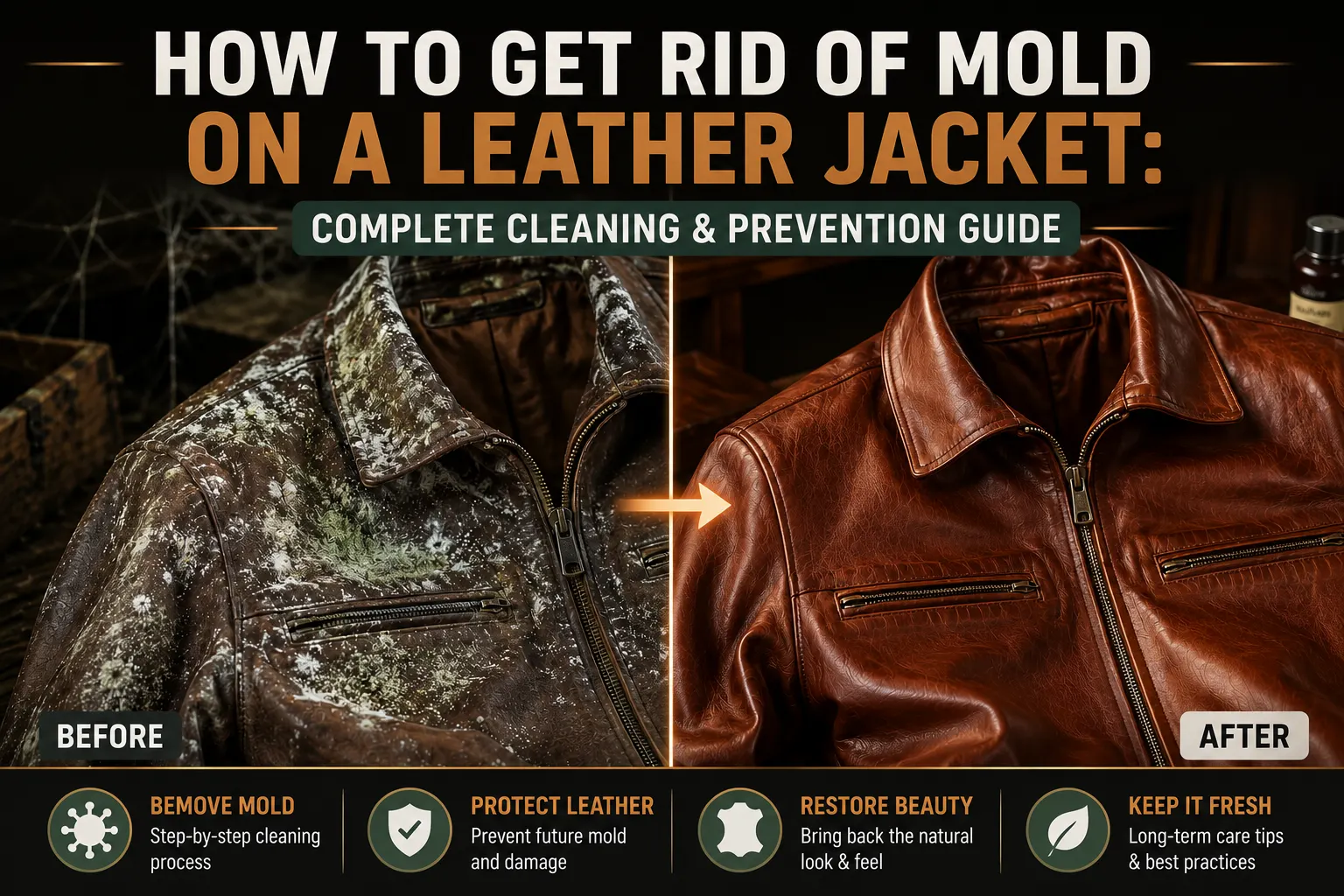
6. How to Remove Musty or Mildew Smell From a Leather Jacket
A musty smell often develops when a leather jacket is stored in a damp, humid, or poorly ventilated environment. If moisture remains trapped for too long, mold or mildew may also develop on the leather or lining.
To remove a musty or mildew smell from a leather jacket, follow these steps:
Inspect the jacket: Look for visible mold or mildew, damp areas, water marks, or discoloration.
Take it outdoors: If you notice visible mold or mildew, move the jacket outside to avoid spreading spores indoors.
Remove loose growth: Gently brush away surface mold or mildew using a soft-bristle brush. Avoid aggressive scrubbing.
Air it out: Hang the jacket in a dry, shaded, and well-ventilated area. Leave it open so air can circulate through the leather and lining.
For persistent odors: Use an activated charcoal odor absorber inside a breathable garment bag for several days. This can help absorb lingering musty smells.
Consider professional cleaning: If the mildew smell remains, the jacket has extensive mold growth, or you’re dealing with delicate leather, professional leather cleaning is the safest option.
Never place a leather jacket near a heater or expose it to prolonged direct sunlight to speed up drying. Rapid drying can remove the leather’s natural moisture and cause it to become stiff, dry, or cracked.
7. How to Remove Sweat Smell From a Leather Jacket
If your leather jacket smells like sweat, the odor is usually trapped in the leather lining, underarms, or collar where body oils accumulate after repeated wear. Sweat also encourages the growth of odor-causing bacteria, making the smell stronger over time.
To remove sweat smell from a leather jacket, start by wiping the interior with a slightly damp microfiber cloth and a small amount of leather soap mixed with lukewarm water. Once the lining is clean, allow the jacket to air dry naturally in a well-ventilated area.
For stronger odors, sprinkle a light layer of baking soda inside the lining and leave it overnight before vacuuming it away. This simple method absorbs moisture and neutralizes unpleasant smells without harming the leather.
Pro Tip: Allow your jacket to breathe after every wear instead of placing it immediately in a closet. Good ventilation is one of the easiest ways to prevent sweat odor from returning.
8. What About Vinegar?
You’ll often see vinegar recommended as a home remedy for leather odors.
While diluted vinegar solutions are sometimes used for odor treatment, we don’t recommend applying vinegar directly to valuable leather without checking the manufacturer’s care instructions and performing a hidden-area test first.
If the odor is primarily in the fabric lining, a very cautious, diluted treatment may be appropriate for some jackets. But different leather finishes react differently to moisture and cleaning solutions.
If you’re unsure about the leather finish, it’s better to stick with:
Air → gentle lining cleaning → odor absorber → professional cleaning if necessary.
This approach minimizes the risk of staining or damaging the leather.
9. Don’t Forget the Collar, Cuffs, and Pockets
If your jacket smells after regular wear, don’t focus only on the main leather panels.
High-contact areas often collect more sweat and body oils.
Pay particular attention to:
- Collar
- Underarms
- Cuffs
- Pocket interiors
- Inside seams
- Jacket lining
A gentle wipe of the lining and high-contact areas, followed by proper ventilation, can make a significant difference.
10. Condition the Leather After Cleaning
If you’ve used any cleaning method involving moisture, make sure the jacket is completely dry before applying conditioner.
Once dry, use a leather conditioner that is suitable for your particular type of leather. Apply only a small amount to a clean cloth and work it gently into the leather.
Conditioning helps maintain the leather’s softness after cleaning, but don’t automatically condition every jacket after every odor treatment. Some finished leathers need very little conditioning.
Always check the manufacturer’s care instructions first.
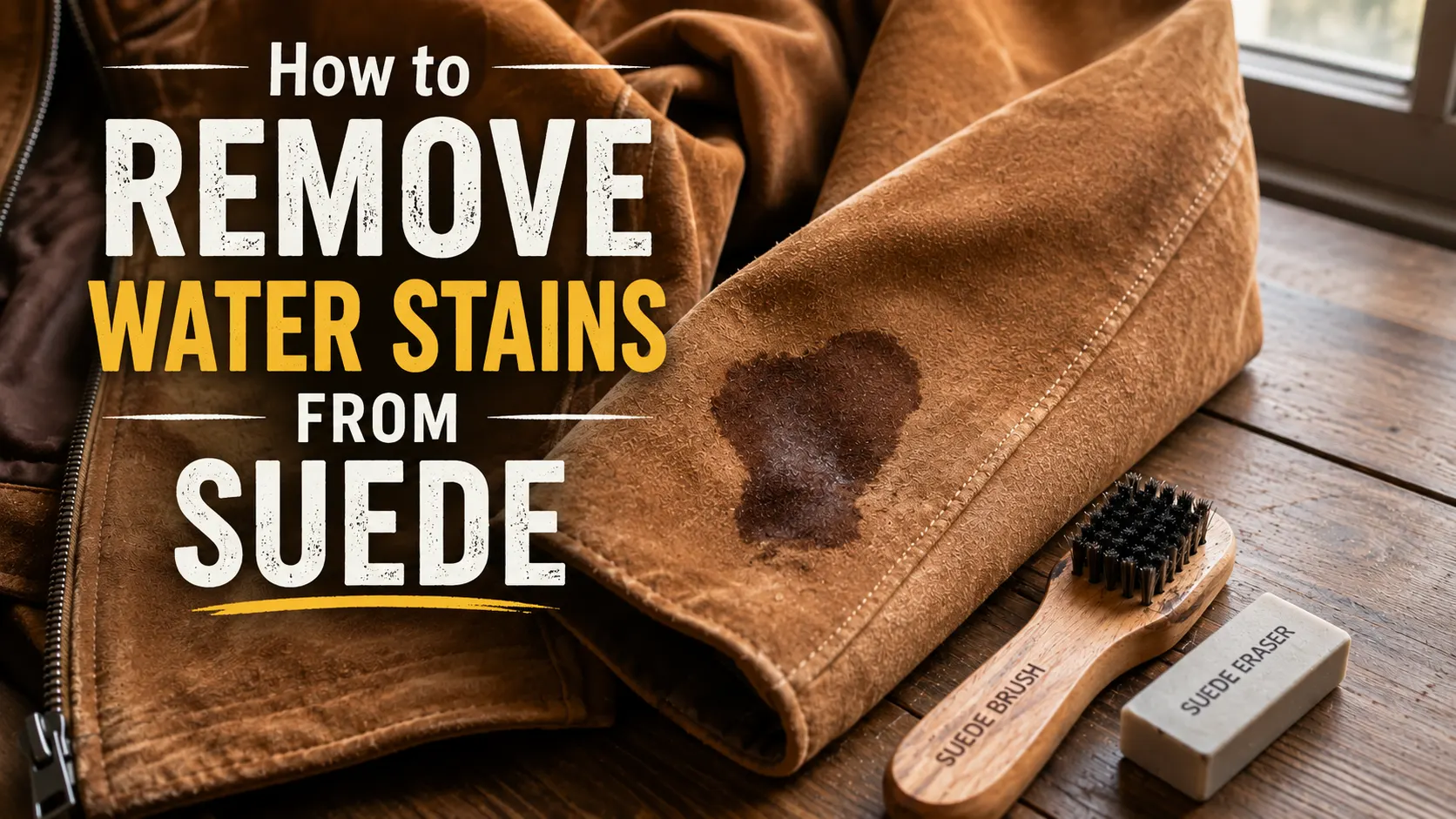
11. How to Deodorize a Suede Leather Jacket
A suede leather jacket requires extra care because suede absorbs moisture much more easily than smooth leather.
Avoid soaking suede or using harsh chemicals.
Instead:
- Brush the suede gently with a suede brush.
- Lightly dab stains using a barely damp microfiber cloth.
- Use a small amount of diluted white vinegar only if necessary.
- Allow the jacket to air dry naturally.
- Restore the suede’s texture with a suede brush once dry.
- Finish with a suede protector spray for added protection.
Proper suede care helps preserve the soft texture while preventing moisture damage and unpleasant odors.
12. Professional Leather Cleaning Methods
Sometimes home remedies are not enough, especially if the jacket has years of odor buildup or has been exposed to mold, smoke, or heavy moisture.
Professional leather cleaning services use specialized equipment and pH-balanced leather cleaning products that remove deep odors while protecting natural leather fibers.
Common professional treatments include:
- Deep leather cleaning
- Professional leather conditioning
- Steam cleaning
- Ozone odor removal
- Leather restoration treatments
- Specialized leather odor remover products
If you own an expensive full-grain leather or top-grain leather jacket, professional cleaning is often the safest choice.
DIY Leather Cleaning vs Professional Leather Cleaning
| DIY Cleaning | Professional Cleaning |
|---|---|
| Affordable | More expensive |
| Great for light odors | Best for severe odors |
| Uses baking soda, vinegar, charcoal | Uses specialized leather equipment |
| Easy to do at home | Ideal for luxury leather jackets |
| Regular maintenance | Deep restoration and preservation |
What You Should Never Do to Remove Leather Jacket Odor
Trying to remove an odor quickly can sometimes cause more damage than the smell itself. Avoid these common mistakes:
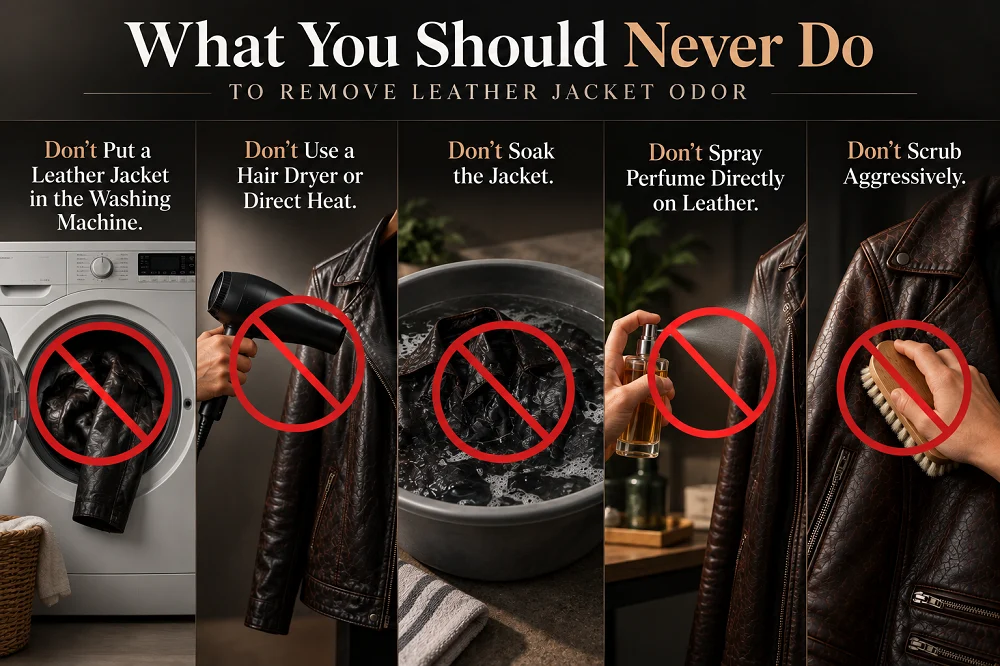
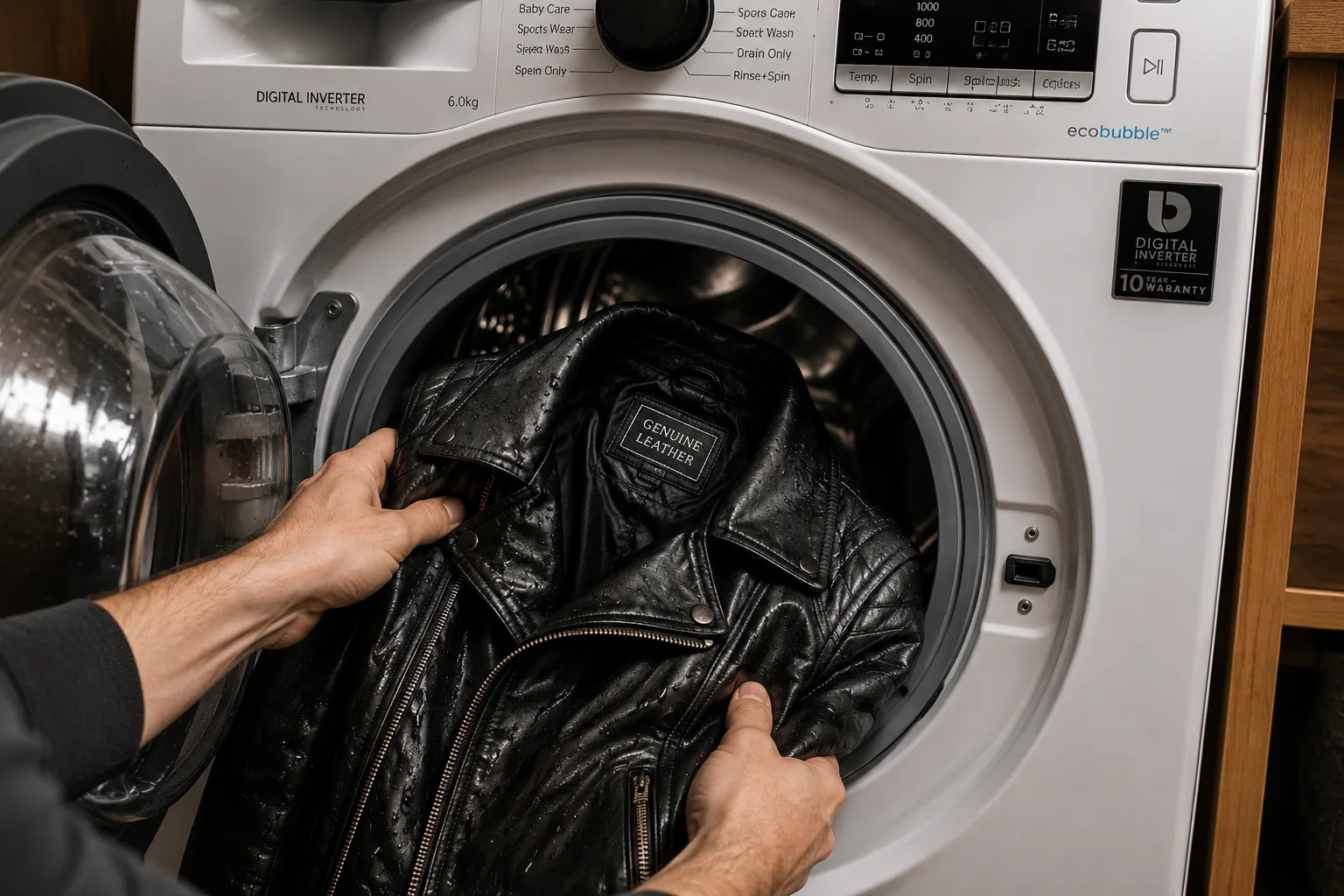
Don’t Put a Leather Jacket in the Washing Machine. Leather should not be treated like ordinary clothing. Submerging it in water can affect its structure, finish, and natural oils.
Don’t Use a Hair Dryer or Direct Heat. Never try to speed up drying with a hair dryer, radiator, heater, or other direct heat source. Rapid drying can cause leather to become dry and stiff.
Don’t Soak the Jacket. Leather doesn’t need to be saturated to remove an odor. Excess moisture can lead to water marks and may create additional problems if the jacket doesn’t dry properly.
Don’t Spray Perfume Directly on Leather. Perfume may temporarily mask an unpleasant smell, but it doesn’t remove the source. It can also leave residue or affect the leather’s appearance.
Don’t Scrub Aggressively. Rubbing hard can damage the finish, especially on softer leathers such as lambskin. eliminate.
How to Prevent Leather Jacket Odors – Care & Maintenance Tips
The best way to deal with leather jacket odors is to prevent them from developing in the first place. A few simple care and storage habits can keep your jacket fresh while also protecting the leather from premature wear.
Follow these simple habits:
- Air out your jacket after wearing it: Give it some time to breathe before putting it back in the wardrobe.
- Keep it dry: If the jacket gets damp from rain or sweat, let it dry naturally before storing it.
- Clean stains promptly: Gently clean spills and stains before they absorb into the leather or lining.
- Use the right leather cleaner: When deeper cleaning is needed, choose a product specifically formulated for leather garments.
- Condition when necessary: Apply a suitable leather conditioner according to the leather type and manufacturer’s care instructions to help maintain softness and flexibility.
- Store it properly: Keep your jacket in a cool, dry, well-ventilated place. Avoid airtight plastic covers.
- Use odor absorbers: Activated charcoal bags can help control odors inside your wardrobe without applying anything directly to the leather.
- Give suede extra care: If you own a suede jacket, use a suede brush regularly to remove surface dirt and maintain its texture.
Never store a leather jacket while it is damp, as trapped moisture can contribute to musty odors, mold, and mildew.
With consistent care and proper storage, your leather jacket can stay fresh, soft, and in excellent condition for years.
How to Store a Leather Jacket Properly
Proper leather storage is just as important as cleaning.
Poor storage conditions trap humidity, encourage mold growth, and cause unpleasant odors.
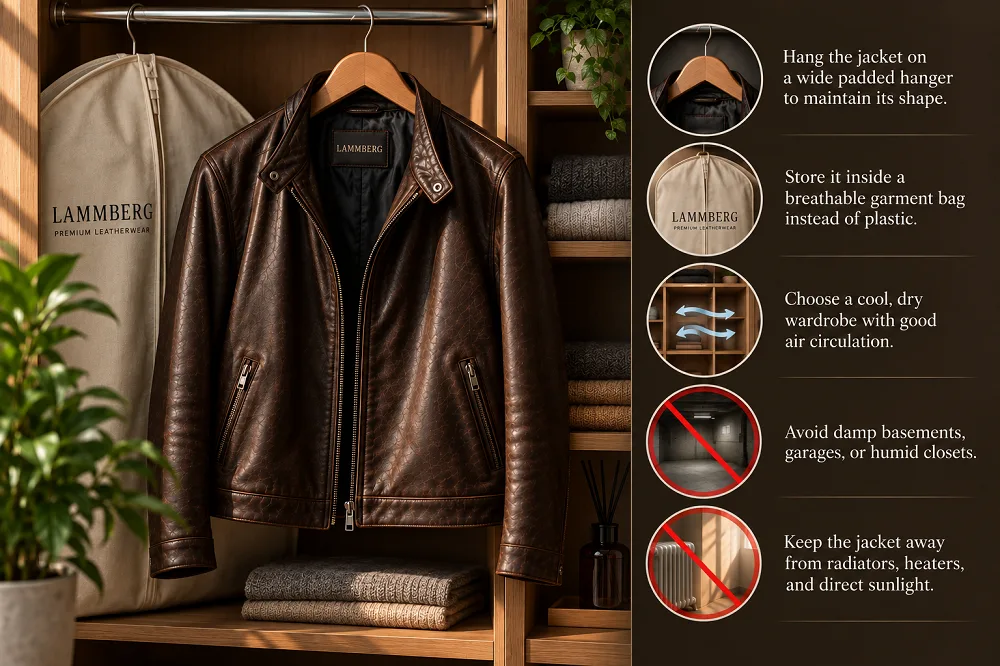
To protect your investment:
- Hang the jacket on a wide padded hanger to maintain its shape.
- Store it inside a breathable garment bag instead of plastic.
- Choose a cool, dry wardrobe with good air circulation.
- Avoid damp basements, garages, or humid closets.
- Keep the jacket away from radiators, heaters, and direct sunlight.
These simple storage habits help prevent musty leather, mildew, and odor buildup while extending the lifespan of your jacket.
Products to Avoid on Leather
Not every household cleaner is safe for leather.
Avoid using the following products because they may damage the leather finish or remove its natural oils:
- Bleach
- Ammonia-based cleaners
- Acetone
- Harsh detergents
- Baby wipes containing alcohol
- Furniture polish
- Strong disinfectant sprays
- Excessive rubbing alcohol
Instead, use only leather-safe cleaners, leather care products, or specialized leather cleaning products recommended for jackets.
If you’re unsure about a product, always test it on a hidden area before treating the entire jacket.
Signs It’s Time for Professional Leather Cleaning
Although most odors can be removed at home, some situations require professional leather cleaning.
Consider taking your jacket to a leather specialist if you notice:
- Strong mildew or mold odors that won’t disappear.
- Smoke smells after repeated cleaning attempts.
- Deep stains combined with unpleasant odors.
- Cracked or extremely dry leather.
- Visible mold growth.
- Water damage.
- Valuable designer or vintage leather jackets needing leather restoration.
Professional cleaners use specialized leather odor remover systems, deep cleaning techniques, and conditioning treatments that safely remove stubborn odors while preserving the leather.
Frequently Asked Questions
What is the best way to remove odor from a leather jacket?
The best way to remove odor from a leather jacket is to air it out in a cool, shaded, and well-ventilated area. Leave the jacket open for 24–48 hours to allow trapped odors to naturally dissipate. If the smell persists, clean the lining gently or consider professional leather cleaning.
How do I deodorize a leather jacket at home?
You can deodorize a leather jacket at home by airing it out, keeping the jacket open to improve airflow, and making sure it is completely dry before storing it. For persistent odors, an activated charcoal odor absorber can help without applying harsh products directly to the leather.
Can baking soda damage leather?
No. When used correctly, baking soda for leather jacket smell is generally safe. Avoid rubbing it directly into smooth leather or leaving it on the surface for several days.
Can vinegar clean leather safely?
Yes. A properly diluted white vinegar solution is safe for most leather jackets and helps remove bacteria, mildew smells, and smoke odors. Always perform a spot test first and avoid soaking the leather.
How often should I clean my leather jacket?
For regular wear, inspect and lightly clean your jacket every few months. Deep cleaning is only necessary when noticeable dirt, stains, or odors develop.
How do professionals clean leather jackets?
Professional cleaners use specialized leather cleaners, conditioning treatments, steam cleaning, ozone technology, and advanced deodorizing methods to safely remove deep odors without damaging the leather.
Can sweat permanently damage a leather jacket?
Over time, sweat can weaken leather fibers, dry out the material, and leave behind persistent odors if not cleaned properly. Regular leather maintenance helps prevent long-term damage.
Final Thoughts
Learning how to get the smell out of a leather jacket doesn’t have to be complicated. Whether you’re dealing with sweat odor, smoke smell, musty leather, or everyday wear, simple techniques like fresh air, baking soda, white vinegar, and proper leather care can restore your jacket’s freshness without damaging the material.
The key is to clean your jacket gently, condition it regularly, and store it correctly to prevent future odor buildup. For stubborn smells or valuable leather garments, professional leather cleaning remains the safest option.
If you’re looking for expertly crafted genuine leather jackets, timeless outerwear, or premium suede styles, explore Lammberg’s collection. With proper care and maintenance, a high-quality leather jacket can stay stylish, comfortable, and fresh for many years.



































Global Leather Industry: What Each Country Does Best
What Is Bison Leather? Durability, Uses & Cowhide Comparison