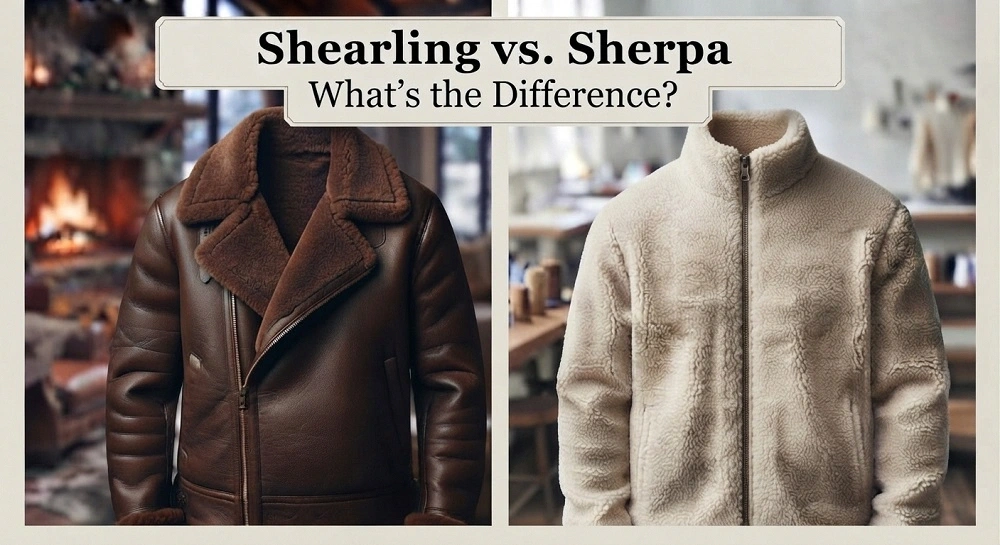
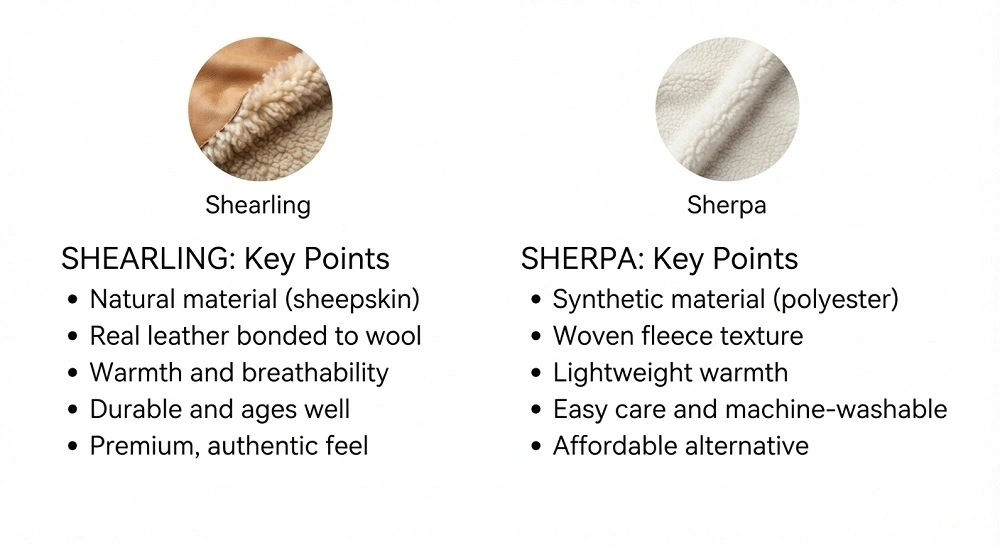
Short Answer: Shearling is genuine sheepskin with the wool still attached. It delivers serious warmth, real durability, and that distinctive leather finish you can feel. Sherpa is a synthetic or cotton-blend fabric made to imitate shearling’s soft, fluffy texture. Sherpa wins on price, weight, and easy care. Shearling wins on warmth, longevity, and that natural character that only improves with age.
Two Materials. One Looks Like the Other. Only One Lasts.
Run your hand across a sherpa-lined jacket, then do the same on a shearling coat. Your fingers will tell you they feel almost identical.
Your wallet, however, will notice the massive price gap. And your wardrobe will feel the difference after a few winters.
Here’s why: shearling and sherpa might look like twins on a store rack, but they come from completely different worlds.
One is a tanned animal hide with wool still attached. The other is a synthetic textile engineered in a factory. One gets better with age. The other slowly breaks down. One breathes with your body. The other traps heat and moisture together.
So when you’re standing in that jacket aisle, which one actually deserves your money?
The answer depends on how you’ll wear it, how long you want it to last, and what tradeoffs matter most to you. This guide breaks down everything the labels don’t tell you.
What Is Shearling?
Shearling starts with sheepskin or lambskin that tanners process with the wool still attached to the hide. You get two materials fused into one: a finished leather or suede surface on one side, natural wool fleece on the other.
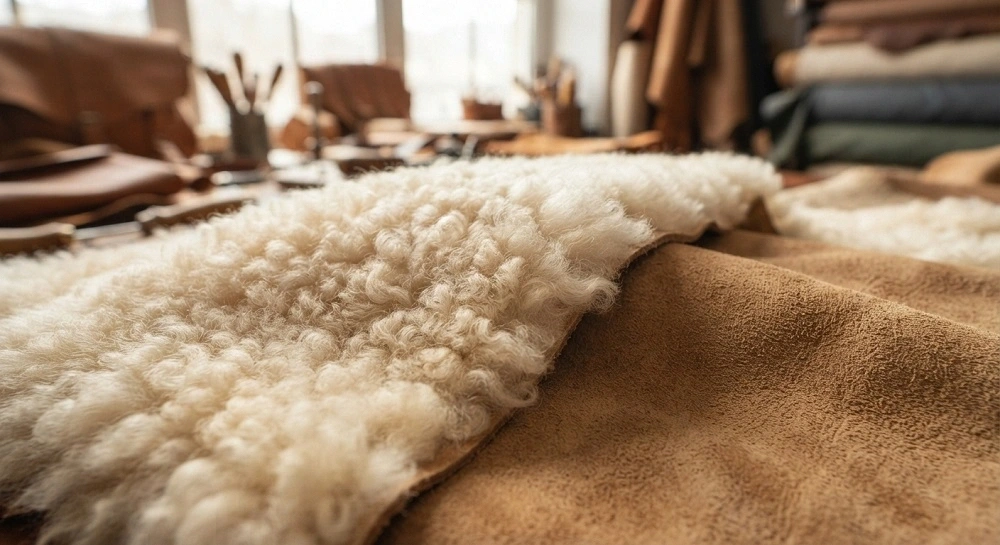
This construction gives shearling its defining advantage. The hide becomes your outer shell. The wool becomes your insulation. No separate lining needed. No glue holding layers together. Just one tanned piece of skin doing both jobs at once.
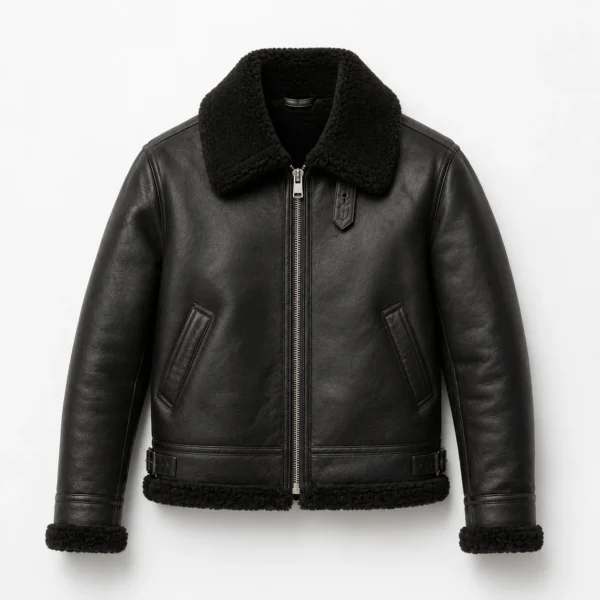

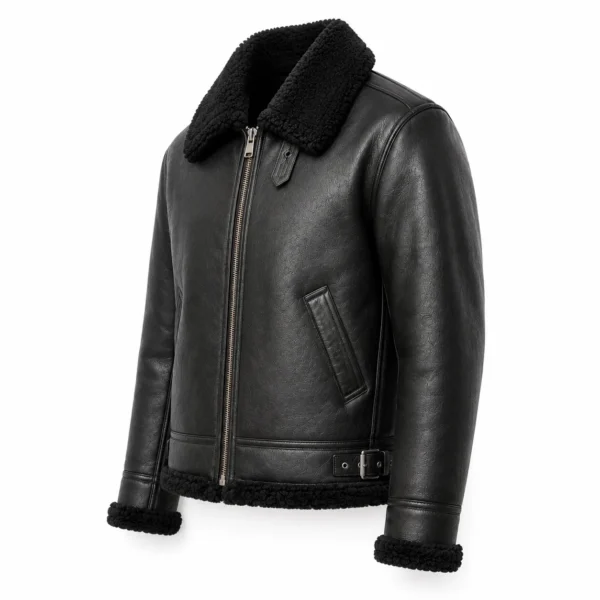
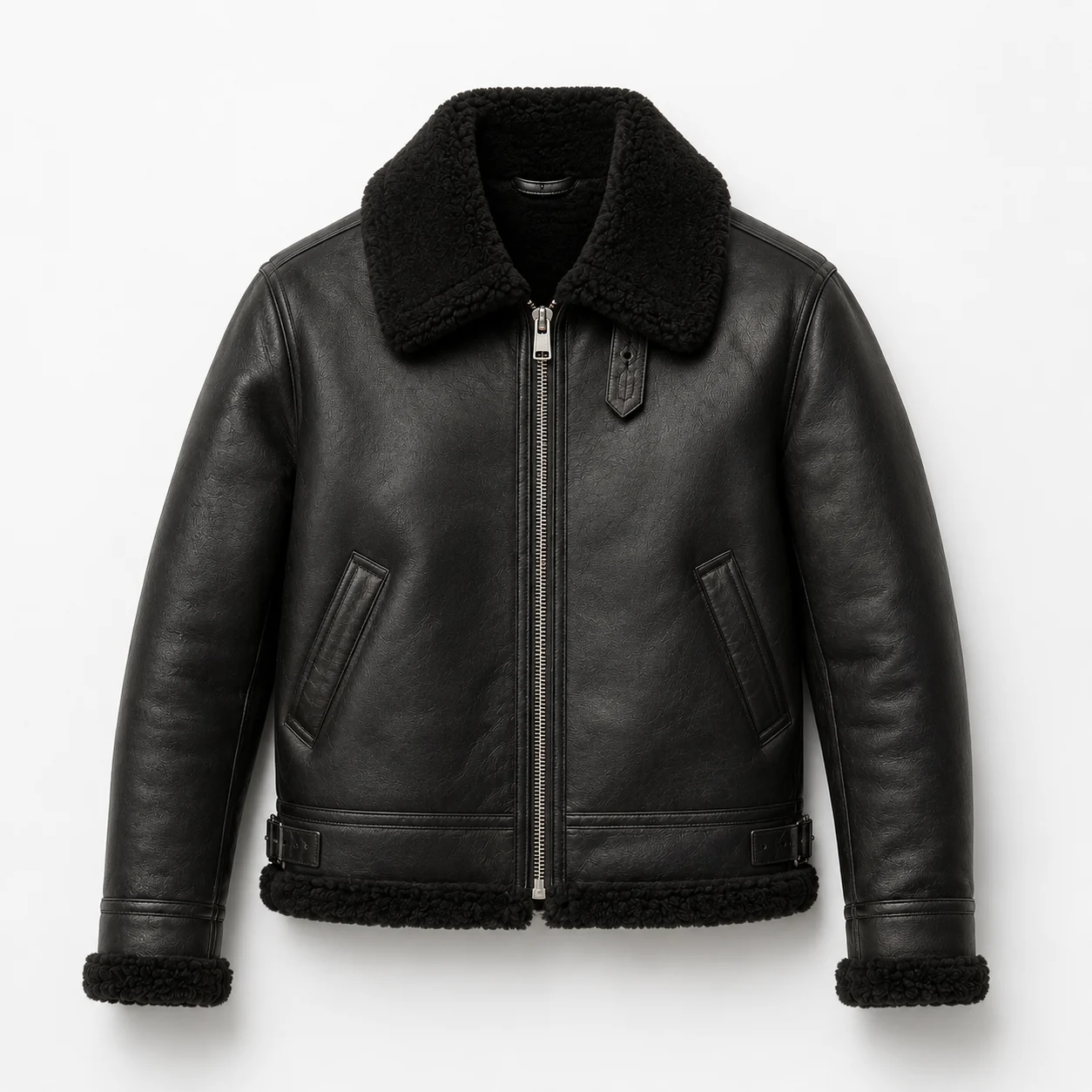
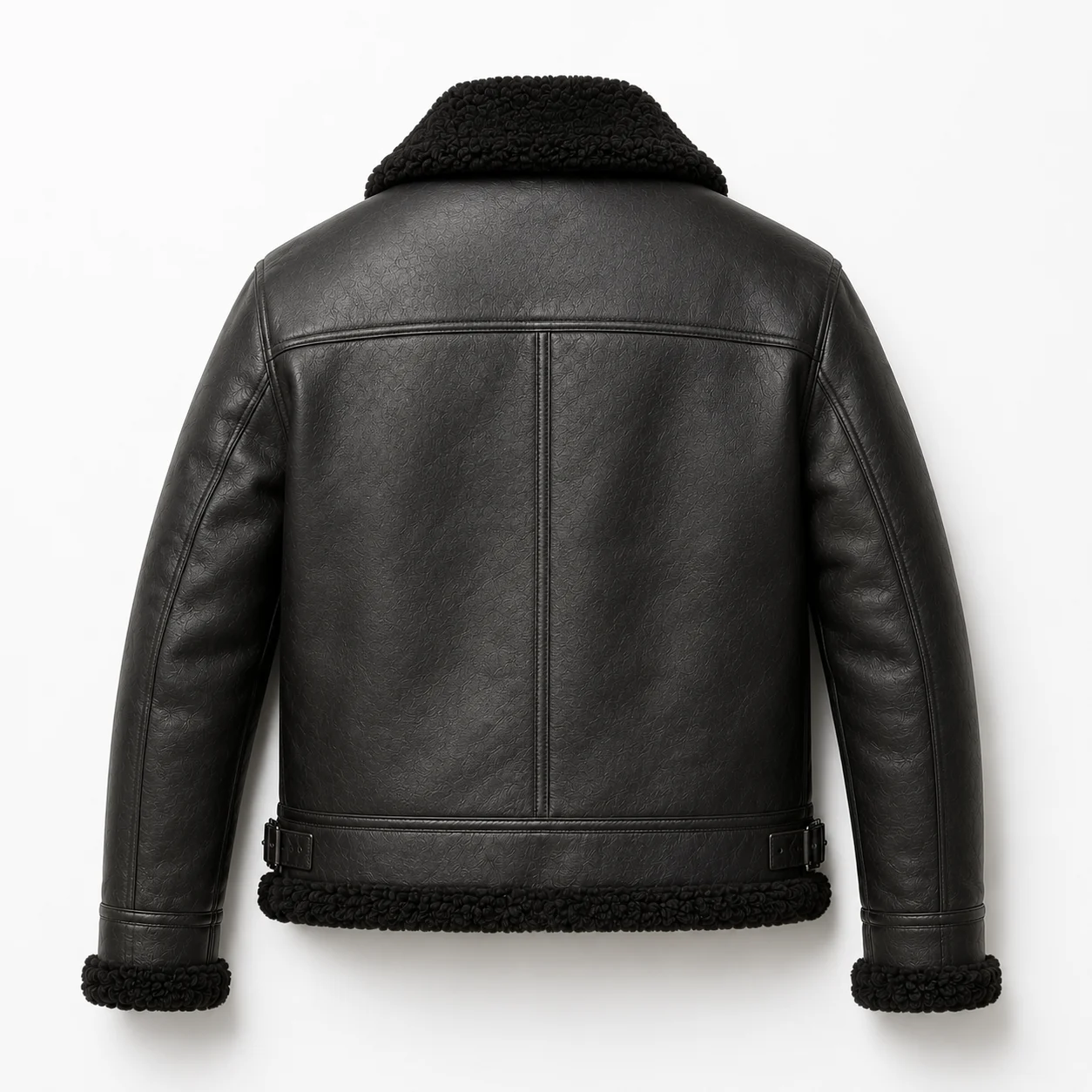
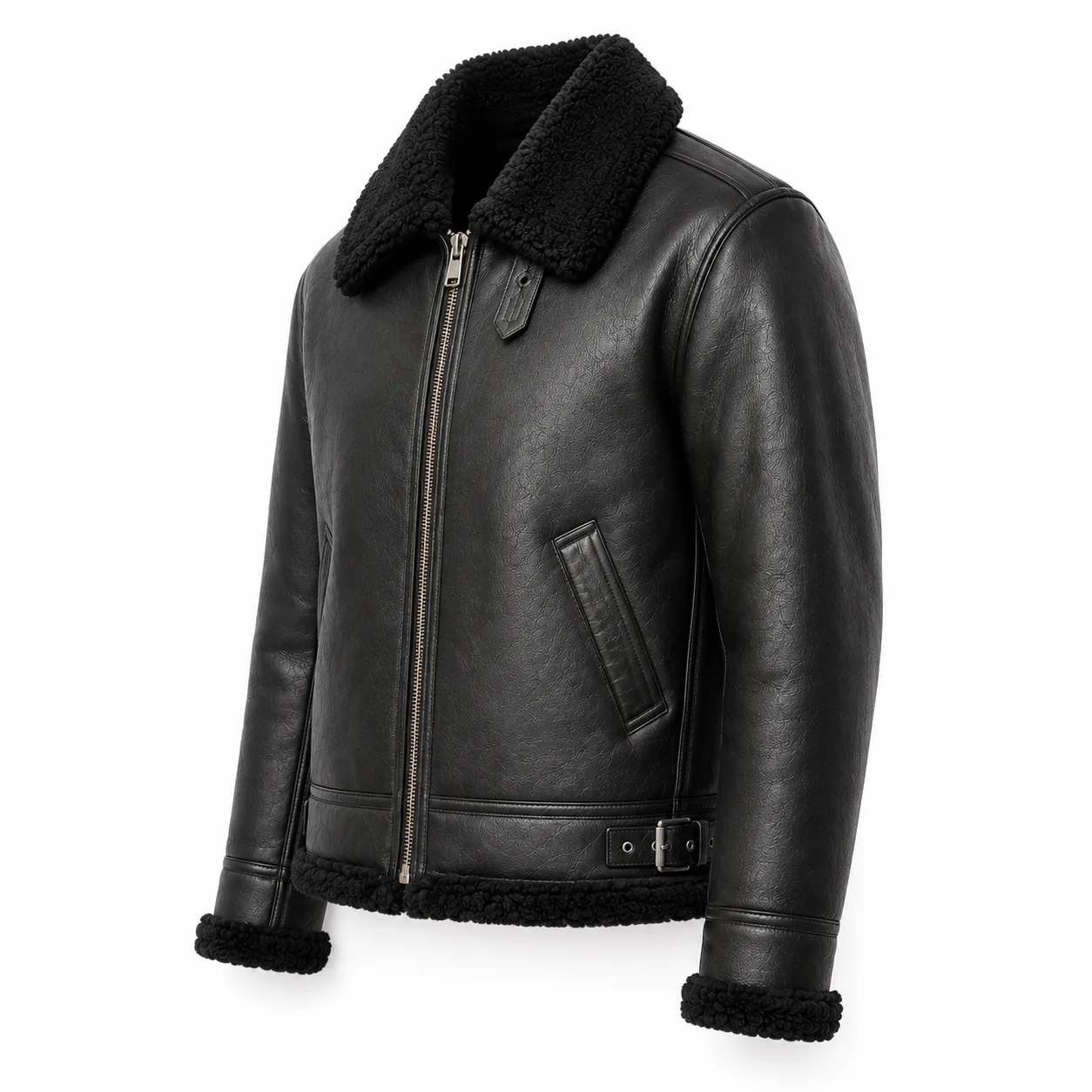
Classic B3 Black Sheepskin Shearling Aviator Jacket
Price: $299.00
The “Shorn Once” Myth (And Why It Matters)
Search for shearling explanations online and you’ll hit the same claim repeatedly: “Shearling comes from a lamb shorn once.”
That’s wrong. And it reveals which writers actually understand the material versus which ones copy each other.
Shearling refers to the hide, not the animal’s grooming history. A sheep can undergo shearing many times across its life and still produce a shearling hide when tanned correctly. The defining factor is simple: wool stays attached to the skin after tanning. Nothing else qualifies.
How Aviators Made Shearling Famous
Shearling earned its reputation through necessity, not fashion.
During World War II, bomber pilots flew at altitudes where temperatures dropped well below freezing. Synthetic insulation didn’t exist yet. So they wore B-3 jackets lined with shearling, natural wool that trapped heat even in open cockpits at 30,000 feet.
That practical heritage explains why shearling still carries weight today. It didn’t become popular because marketers pushed it. It became popular because it worked when nothing else could.
Does Shearling Actually Keep You Warm?
Yes, and it does more than trap heat.
Wool fibers create tiny air pockets that hold warmth close to your body. But unlike synthetic fill, shearling regulates temperature and manages moisture. It breathes when you move. It wicks sweat away from your skin. It keeps you warm without turning you into a sweaty mess.
One caveat: shearling handles light moisture fine, but don’t wear it in heavy rain. Saturation damages both the leather and the wool. Professional cleaning keeps quality pieces in shape for years.
Why People Choose Shearling
- Natural insulation that breathes and regulates temperature
- Leather or suede exterior that develops character as it ages
- Decade-long lifespan with proper care
- Biodegradable and made from a natural byproduct
- Genuine craftsmanship you can feel
What Is Sherpa?
Sherpa is a manufactured pile fabric that imitates shearling’s soft, lofty texture. It doesn’t come from any animal.
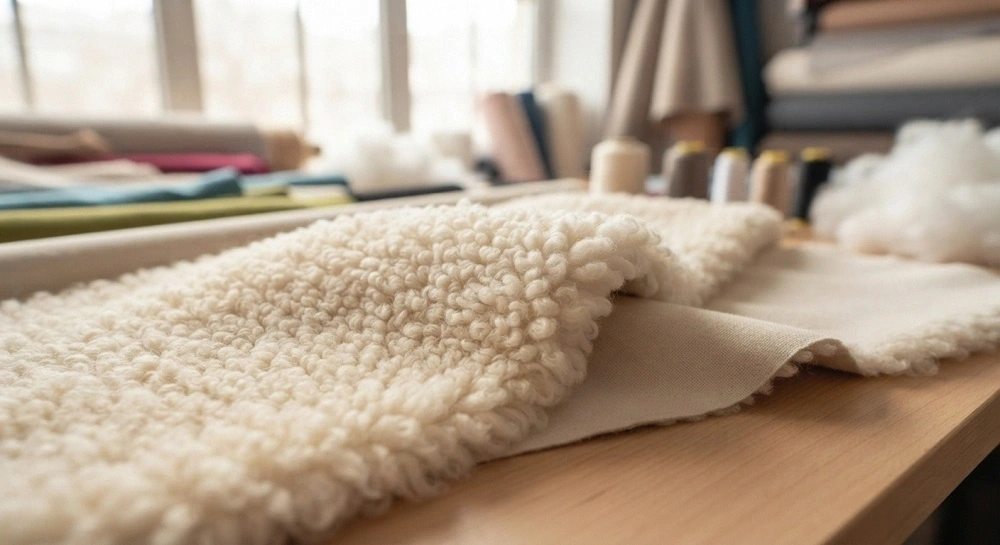
Manufacturers typically produce sherpa from polyester or acrylic fibers, though cotton blends exist. They knit or weave the fabric, then finish it with a high-pile surface designed to mimic natural wool’s appearance and feel.
Another Technical Error Most Articles Repeat
Some sources describe sherpa as “a lamb shorn once.” That’s not just misleading. It’s factually wrong.
Sherpa is a textile, not a hide. It has no leather attached. It comes from factories, not farms. The confusion probably stems from sherpa’s visual similarity to shearling, but confusing the two materials leads to bad purchasing decisions.
Where the Name Comes From (And Why It’s Changing)
The term “sherpa” references the Sherpa people of the Himalayas, who traditionally wore wool garments for warmth in extreme mountain conditions.
In 2022, The North Face stopped using the term, renaming its fleece products “high-pile fleece” to respect Sherpa heritage. Other brands followed. Despite this shift, “sherpa” remains common across the industry. You’ll still see it on product labels everywhere.
Is Sherpa Actually Warm?
Yes, but understand the limitation.
Sherpa provides warmth primarily as a lining, not as a standalone outer layer. Wind cuts through its pile easily. Rain soaks it. On its own, it works for mild to moderate cold, think fall evenings or mild winters.
Bond sherpa to denim, leather, canvas, or nylon, and it becomes an effective cold-weather garment. The outer shell blocks wind and moisture while the sherpa lining traps heat. That combination works.
Sherpa also dries faster than natural shearling when damp. But it lacks wool’s moisture-wicking properties, so it can feel clammy during activity. For commuting and errands, that rarely matters. For hiking or temperature swings, it does.
Why People Choose Sherpa
- Lightweight warmth without bulk
- Soft texture that feels cozy against skin
- Significantly cheaper than genuine shearling
- Often machine-washable (check care labels)
- Available in countless colors and patterns
- Animal-free when made from synthetics
- Excellent as jacket and coat lining
Where Sherpa Falls Short (The Honest Comparison)
Most comparison articles gloss over these differences. Here’s what actually matters when you’re spending money.
It’s Not a Hide, And That Changes Everything
Sherpa is fabric, not leather. It has no structural integrity of its own. That’s why every sherpa garment needs a separate outer shell, whether denim, leather, suede, or synthetic.
Shearling combines both functions in a single material. The hide provides durability. The wool provides warmth. You can’t separate them because they’re the same tanned skin.
Durability: The Truth Nobody Wants to Admit
Sherpa pills, mats, and flattens over time. High-friction areas suffer first, like cuffs, collars, underarms, and elbows. Once synthetic fibers compress and tangle, no conditioning process brings them back.
Genuine shearling does the opposite. It improves with age. Leather softens. Wool maintains loft. With occasional conditioning, a quality jacket stays wearable for decades.
Moisture Management: The Silent Difference
Wool is naturally moisture-wicking. It pulls sweat from your skin and releases it into the air. Sheepskin breathes.
Synthetic sherpa doesn’t. It traps moisture and heat together, which feels clammy during activity and uncomfortable during temperature swings. For casual wear, this rarely matters. For active use, it’s a dealbreaker.
Environmental Tradeoffs (Both Sides)
Neither material is perfectly green, but they fail differently.
Shearling comes from the meat and wool industry as a byproduct. The animal isn’t raised solely for its hide. Shearling biodegrades at end of life. And because it lasts decades, the production impact spreads across years of wear.
Sherpa is petroleum-based. Polyester and acrylic don’t biodegrade. They shed microplastics with every wash. Some brands use recycled polyester now, which helps, but the material still persists in landfills for centuries.
There’s no guilt-free option here. The real question is which tradeoff matches your values.
How to Decide: A Practical Framework
Stop asking “which is better” and start asking “which fits how I’ll actually wear it.”
Choose Sherpa If You Want:
- Lightweight warmth for mild to moderate winters
- An affordable option you can replace every few seasons
- Machine-washable convenience
- A cozy lining for casual jackets and vests
- An animal-free alternative
Choose Shearling If You Want:
- Genuine cold-weather performance
- Natural insulation that breathes and regulates
- A jacket that develops character and lasts decades
- Real leather or suede combined with actual wool
- A heritage material with proven track record
The Real Answer
Sherpa and shearling both keep you warm, but they solve different problems.
Sherpa mimics shearling’s feel at a fraction of the cost and weight. It works for casual wear, budget-conscious shoppers, and anyone who prefers easy care over long-term investment.
Genuine shearling delivers what synthetics can’t: natural breathability, moisture management, and the patina of a real hide. It’s an investment, not a seasonal purchase.
If your winters bite hard and you want a jacket that serves you for years, shearling justifies its price. If you want lightweight warmth for errands and don’t mind replacing it in a few seasons, sherpa makes practical sense.
Many people own both. A shearling jacket handles the coldest days. A sherpa-lined denim or suede piece covers everything else.
Shearling vs. Sherpa: Quick Comparison Table
| Feature | Shearling | Sherpa |
|---|---|---|
| Material | Tanned sheepskin with wool attached | Synthetic pile fabric (polyester/acrylic) |
| Construction | Single piece, hide and wool fused | Lining material only |
| Warmth | Exceptional natural insulation | Good as a lining |
| Breathability | Excellent | Limited |
| Moisture-wicking | Yes | No |
| Durability | Decades with care | Few seasons, pills and mats |
| Care | Professional cleaning recommended | Often machine-washable |
| Price | High (investment piece) | Affordable |
| Aging | Develops character | Degrades over time |
| Animal product? | Yes | No (if fully synthetic) |
| Biodegradable? | Yes | No |
Frequently Asked Questions
Is sherpa the same as shearling?
No, and confusing them leads to bad purchases. Sherpa is a synthetic pile fabric made from polyester or acrylic. Shearling is a natural hide with wool still attached. They look similar but share nothing in construction, durability, or performance.
Is shearling fake fur?
No. Shearling is the opposite of fake. It’s genuine animal hide with real wool attached. Fake fur is synthetic fiber designed to mimic animal fur. Shearling comes from real sheepskin, tanned with the wool intact.
Which is warmer, fleece or shearling?
Shearling wins for serious cold. Natural wool traps heat more effectively and regulates temperature better than synthetic fleece. Fleece works fine for mild conditions or as a mid-layer. For genuine winter performance, shearling outperforms fleece every time.
Are sheep killed for shearling coats?
This is a fair question with a nuanced answer. Shearling typically comes from lambs raised in the meat industry. The hide is a byproduct, not the primary product. That said, the animal is slaughtered for meat, and the skin is used afterward. If you want to avoid animal products entirely, choose synthetic sherpa instead.
Is sherpa just fake shearling?
Essentially, yes. Manufacturers developed sherpa as a synthetic alternative that mimics shearling’s appearance and softness at a lower cost. It serves the same visual purpose but lacks the natural properties of real hide and wool.
Can I wash a shearling jacket?
No. Shearling requires specialized leather care. Machine washing damages both the hide and the wool. Professional cleaning is the safest option for quality garments.
Why does shearling cost so much?
The price reflects raw material sourcing, specialized tanning processes, and skilled labor required to finish a natural hide. Because a quality shearling jacket lasts decades, the cost-per-wear often beats cheaper alternatives.
Does sherpa keep you warm in extreme cold?
Sherpa works as a lining, not a standalone outer layer. It handles mild to moderate cold well, especially when bonded to a wind-resistant shell. For extreme conditions, you need proper insulation beyond sherpa alone.
What’s the difference between sherpa and regular fleece?
Sherpa is a type of high-pile fleece with a more textured, wool-like surface. Standard fleece is typically smoother, thinner, and less plush.
Can sherpa be repaired once it pills?
No. Once synthetic fibers compress and tangle, they don’t recover. You can shave off pills with a fabric shaver, but the pile never returns to its original loft.



























What Is Corinthian Leather? History, Meaning, Uses, and Care
Different Types of Lining Materials Used for Jackets