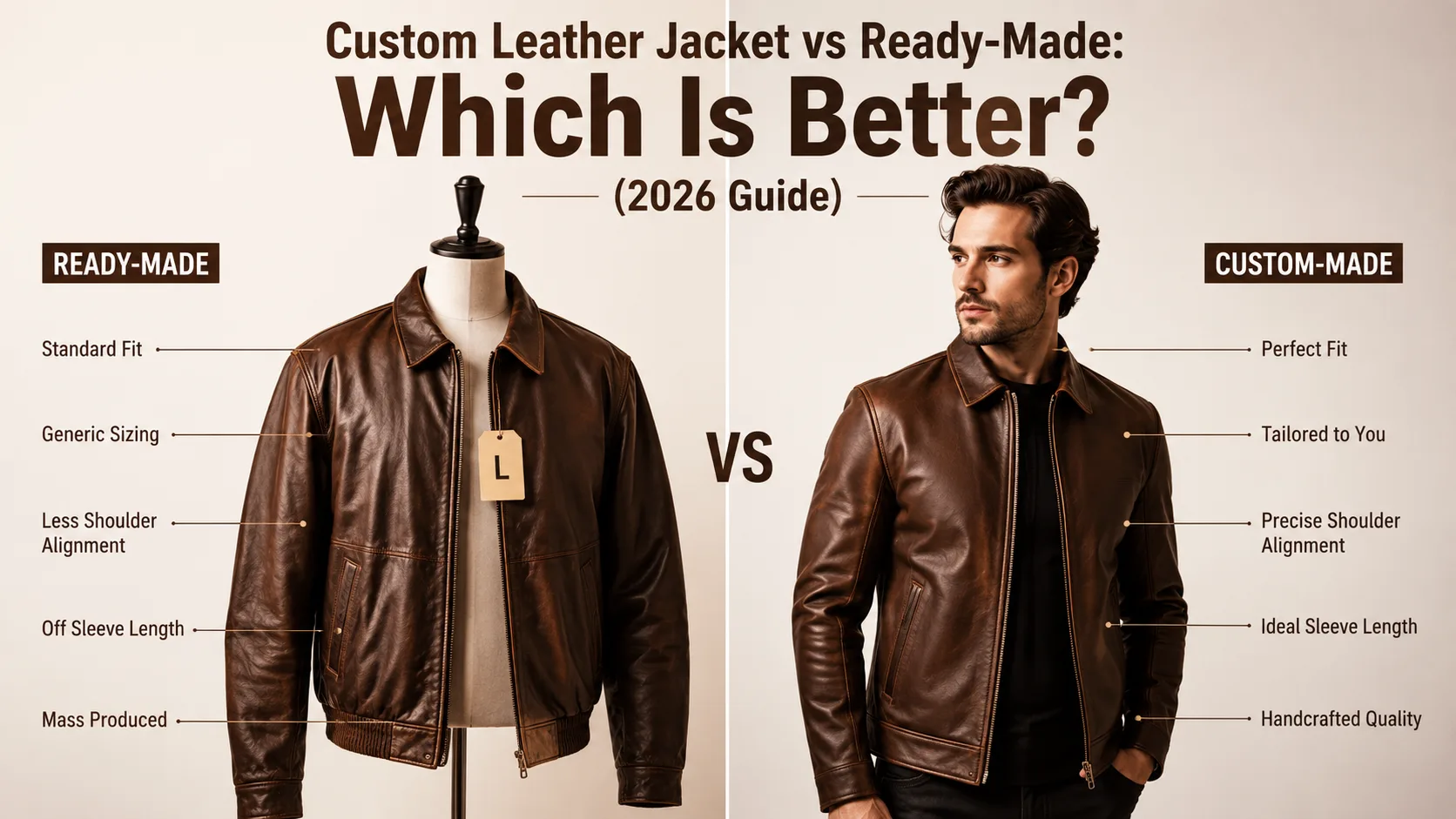
If you have ever shopped for a leather jacket whether you are from the USA, UK, Canada, Germany, Australia, Austria, Switzerland, New Zealand, any European country, an Asian country, or anywhere with a cold climate you have probably experienced the frustration that comes with finding the perfect jacket.
You see a jacket online that looks flawless in the photos. You place your order, excitedly wait for it to arrive, and when it finally does, the reality is disappointing. The shoulders are too wide, the sleeves are too long, or the entire jacket feels like you are wearing your father’s old jacket.
If you have faced this situation, that is probably why you searched for “custom leather jacket vs ready-made leather jacket” and landed here. Don’t worry this guide will help clear your confusion and provide everything you need to know before making your decision.
We would like to introduce you to Lammberg, where we create both ready-made and custom leather jackets. We have helped customers achieve the perfect fit, from 34-inch chest sizes to 52-inch chest sizes. This is not just a concept for us it is something we work with every day.
In this guide, we will explain the exact differences between ready-made and custom (made-to-measure) leather jackets in terms of:
- Fit and sizing
- Cost
- Material options
- Durability
- Production and delivery time
This will help you confidently decide whether a ready-made leather jacket or a custom leather jacket is the right choice for you.
A ready-made leather jacket can be a great option because it fits approximately 50% of customers perfectly without any modifications. However, if you want a 100% personalized fit with absolutely no compromise on sizing, then a custom leather jacket is the best choice.
With a custom leather jacket, you can choose your preferred design, measurements, leather type, colors, details, and other specifications. The jacket is created according to your exact requirements, giving you a fit that is truly made for your body.
For a custom jacket, you need to provide accurate measurements and sizing details. If you visit our Lammberg Bespoke page, you can design and create your own customized leather jacket according to your personal style and preferences.
Quick Answer
If you have a standard body type and want a jacket fast, a ready-made leather jacket in the closest available size will usually work fine. If you have a non-standard build (broad shoulders, long arms, petite frame, plus size, or you’re buying for a specific purpose like riding or a wedding), a custom leather jacket built to your exact measurements will fit better, last longer, and actually feel like it was made for you because it was.
What Is a Ready-Made Leather Jacket?
A ready-made (or off-the-rack) leather jacket is manufactured in bulk using standard sizing charts small, medium, large, and so on. The pattern is cut once and repeated hundreds or thousands of times. This is how most leather jackets you see in stores and on major fashion sites are produced.
Advantages of ready-made jackets:
Available immediately, no waiting period. Generally cheaper because production costs are spread across large batches. Easy to try before you buy if bought in-store. Good option if you fall neatly into standard size charts.
Where ready-made jackets fall short:
Standard sizing assumes an “average” body shoulder width, arm length, torso length, and back width rarely line up perfectly for real people. Limited say over leather type, lining, stitching color, or hardware. Popular styles get mass-produced, so you’ll likely see the exact same jacket on other people. Alterations after purchase are limited a leather tailor can adjust sleeve length slightly, but reshaping shoulders or narrowing a torso on genuine leather is difficult and expensive.
What Is a Custom (Made-to-Measure) Leather Jacket?
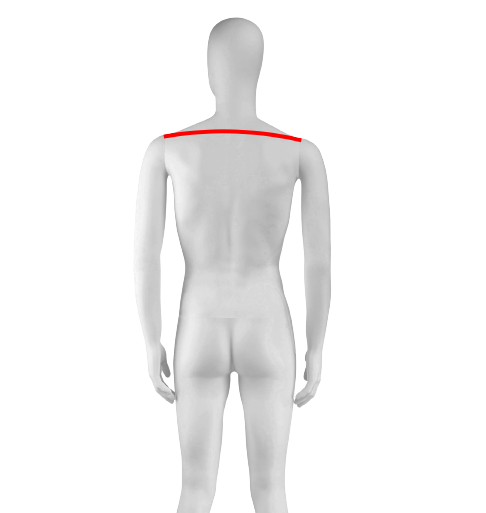
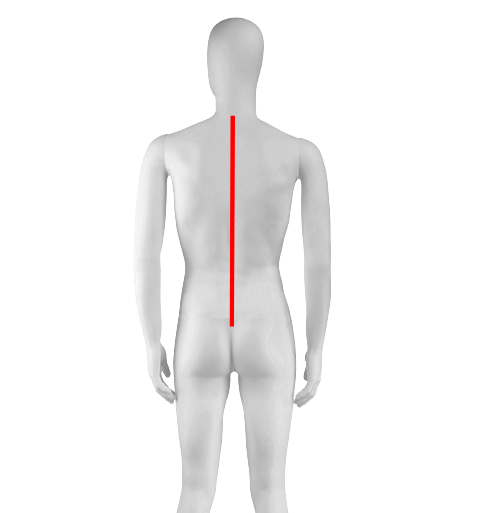
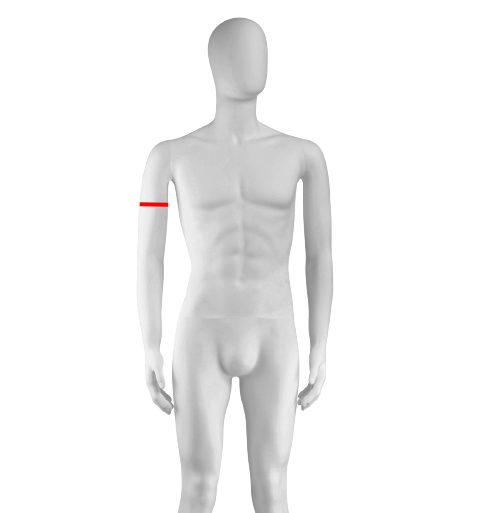
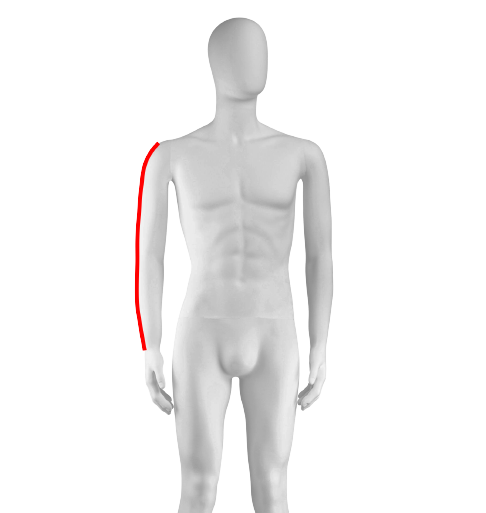
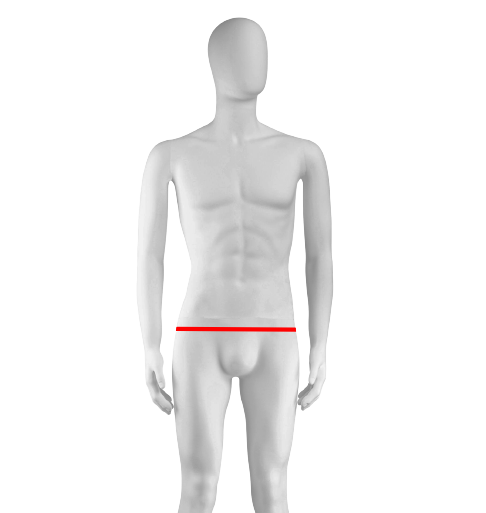
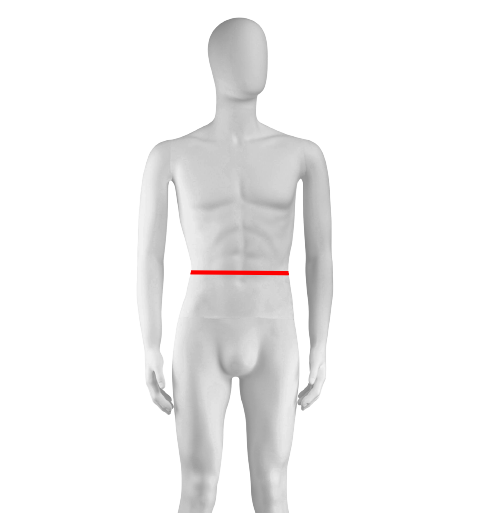
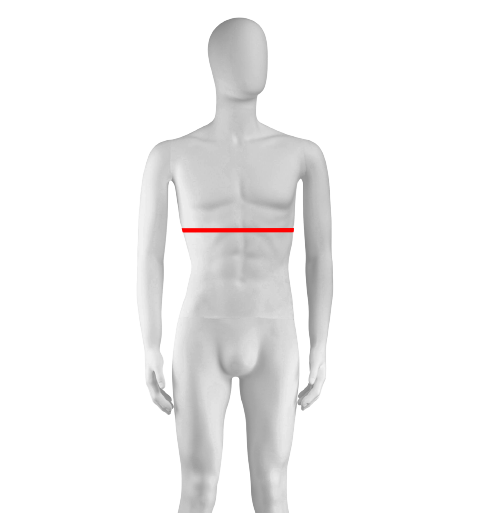
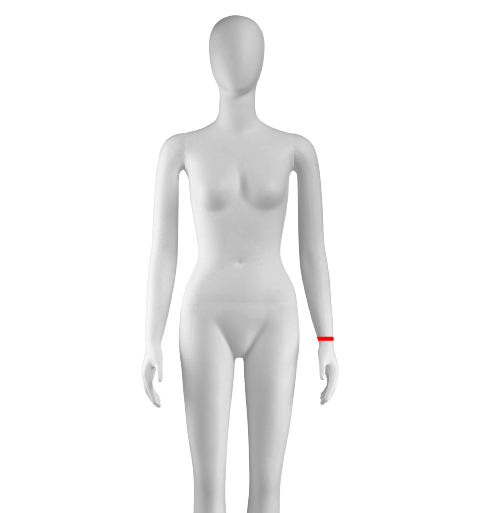
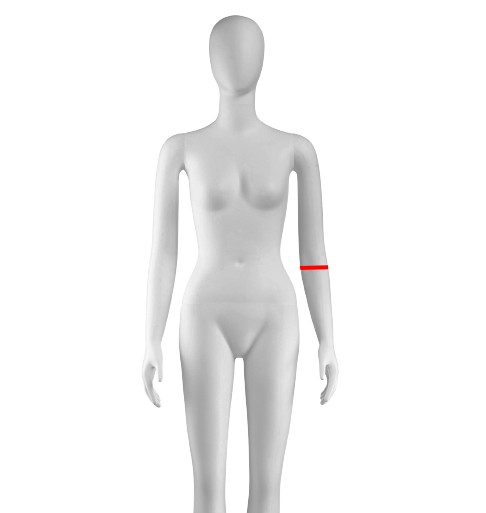
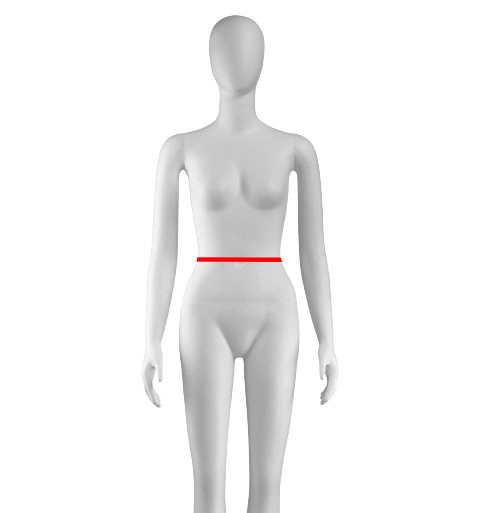
A custom leather jacket is cut and stitched to your individual body measurements chest, shoulder width, sleeve length, torso length, and sometimes even wrist and bicep circumference. You also typically choose the leather type, lining, hardware color, pocket style, and zipper brand before the jacket is made.
This is different from “customization” in the loose sense (just picking a color from a dropdown). True made-to-measure means the pattern itself is drafted or adjusted around your body, not the other way around.
Advantages of custom leather jackets:
Fit is built around your actual body, not an averaged size chart. Full control over leather type (lambskin, cowhide, goat, sheep nappa), color, lining, and hardware. Ideal for non-standard body types, tall or petite frames, and plus-size customers who struggle with generic sizing. No two jackets are identical unless you want them to be. Generally built with more attention per unit since each order is handled individually rather than run through a mass-production line.
Trade-offs to expect:
Longer turnaround time expect anywhere from 2 to 4 weeks depending on the workshop and shipping destination. Usually priced higher than an equivalent ready-made jacket, since it’s made-to-order rather than mass-produced. You can’t try it on before it’s finished, so accurate measurement-taking matters.
Custom vs Ready-Made: Side-by-Side Comparison
| Factor | Ready-Made | Custom / Made-to-Measure |
|---|---|---|
| Fit | Standard S–XXL sizing; average fit | Built to your exact body measurements |
| Cost | Generally lower | Generally higher (pay for precision, not mass production) |
| Turnaround time | Instant to a few days | 2–3 weeks typically |
| Leather choice | Fixed by manufacturer | You choose lambskin, cowhide, goat, or sheep nappa |
| Design control | Little to none | Full control over lining, hardware, pockets, stitching |
| Uniqueness | Same jacket sold to many buyers | One-of-a-kind or limited to your spec |
| Best for | Standard body types, quick purchases | Non-standard builds, plus size, tall/petite, gifting, special occasions |
| Alteration flexibility | Limited once purchased | Built right the first time |
| Try before buying | Possible in physical stores | Not possible; relies on accurate measurements |
Why Ready-Made Leather Jacket Sizes Don’t Fit Every Body Shape?
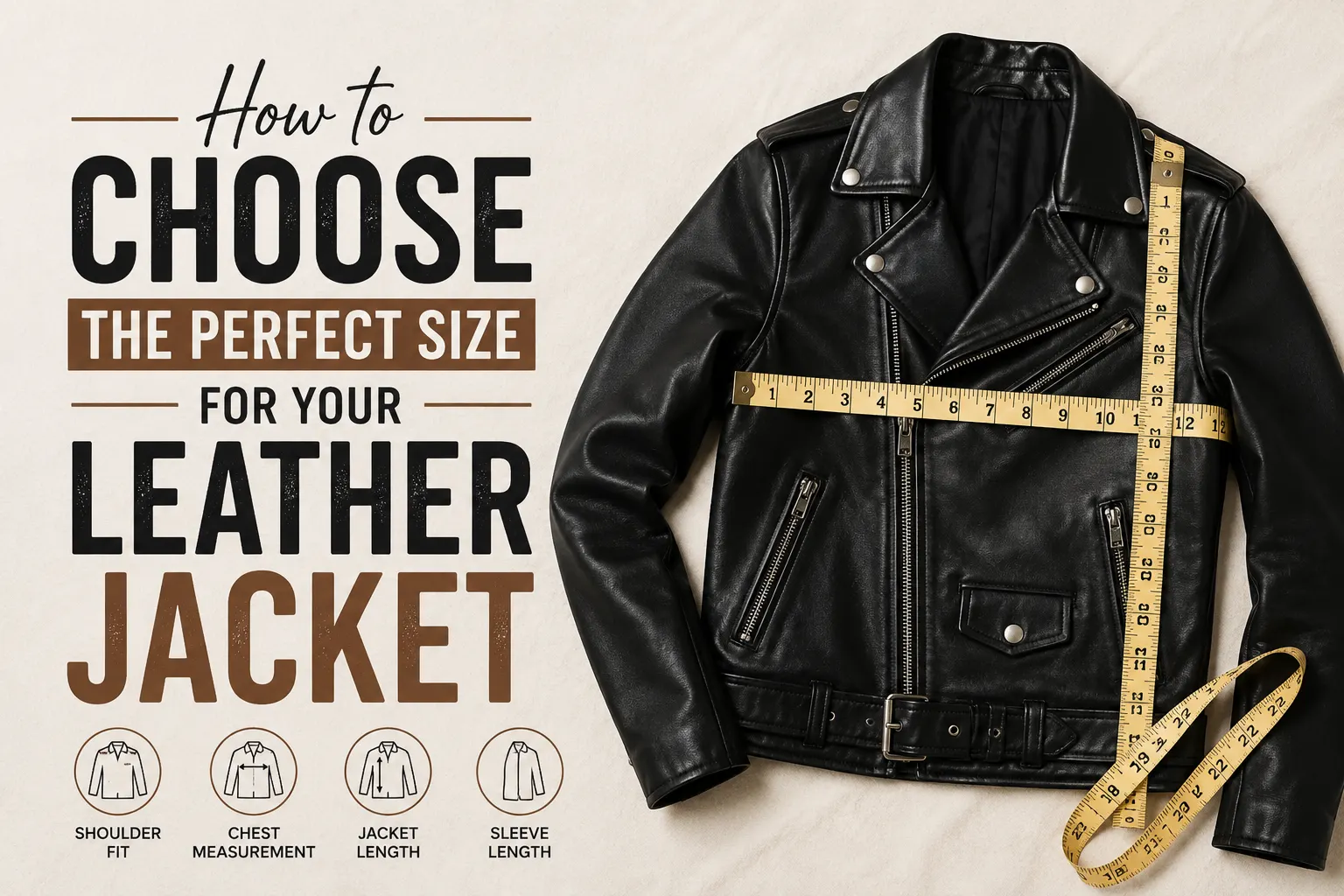
Standard size charts are built around averages. A “size Large” is designed to fit a range of chest measurements, but it makes assumptions about shoulder width, torso length, and arm length that don’t hold true for every body inside that range. Two people can both wear a size Large and have completely different fit experiences one gets a clean fit, the other gets a jacket that pulls across the back or leaves two extra inches of sleeve past the wrist.
With a custom leather jacket, the pattern accounts for your actual shoulder slope, chest depth, and arm length individually. This matters even more for leather specifically, because unlike a cotton hoodie, leather doesn’t stretch to compensate for a slightly-off fit what you cut is close to what you wear for the life of the jacket (leather does relax and mold to your body slightly with wear, but it won’t fix a fundamentally wrong pattern).
Who benefits most from custom fit:
Broad-shouldered or athletic builds that don’t fit standard cuts. Tall or petite frames where torso and sleeve length are usually off. Plus-size customers, since most standard charts stop scaling proportionally past a certain size. For motorcycle riders, where a perfect jacket fit and proper positioning of protective body armor are essential for both safety and comfort. Anyone buying a jacket for a specific event (wedding, anniversary gift) where fit has to be right the first time, with no second try.
What Actually Affects the Cost
A lot of buyers assume “custom” automatically means “expensive,” but the price gap is usually smaller than expected, and it’s driven by specific factors rather than the word “custom” itself:
Leather type lambskin and sheep nappa are typically priced differently than heavier cowhide or goat leather, based on sourcing and processing cost, not fit.
Hardware YKK or branded zippers, real metal snaps, and reinforced stitching cost more than generic hardware.
Lining A quilted or satin inner lining adds cost versus a basic poly lining.
Pattern complexity A simple biker jacket pattern is cheaper to draft than a multi-panel racer or a jacket with quilting and panelling.
Labor per unit This is the real reason custom costs more. A ready-made jacket’s labor cost is divided across a large production run; a custom jacket’s labor is dedicated to one person’s order.
If you compare a custom jacket and a ready-made jacket using the same leather grade and hardware, the price difference is often smaller than people expect you’re mainly paying for individual attention and a guaranteed fit, not a luxury markup.
Craftsmanship and Quality Control
Ready-made jackets are produced on assembly lines where speed and consistency across thousands of units matter more than individual inspection. Quality control usually happens at a batch level.
Custom jackets are typically handled by a smaller team or individual artisan from cutting to final stitching, which means each piece gets checked as it’s built rather than sampled after the fact. This doesn’t automatically mean custom is “better made” a well-run ready-made factory can absolutely produce a high-quality jacket but it does mean defects are caught earlier and finishing details (stitch density, seam alignment, edge finishing) tend to get more individual attention.
Choosing the Right Leather Type (This Matters for Both Options)
Whether you go custom or ready-made, the leather type you choose changes how the jacket fits, feels, and ages:
Lambskin / sheep nappa soft, lightweight, drapes naturally, breaks in almost immediately. Best for fashion jackets, blazers, and everyday wear in mild climates. Less abrasion-resistant than heavier hides.
Cowhide Thick, structured, holds its shape well. Best for biker jackets, motorcycle wear, and pieces that need to hold a tailored silhouette over years of wear. Takes longer to break in.
Goat leather A middle ground: more durable than lambskin, lighter than cowhide, naturally water-resistant due to its lanolin content.
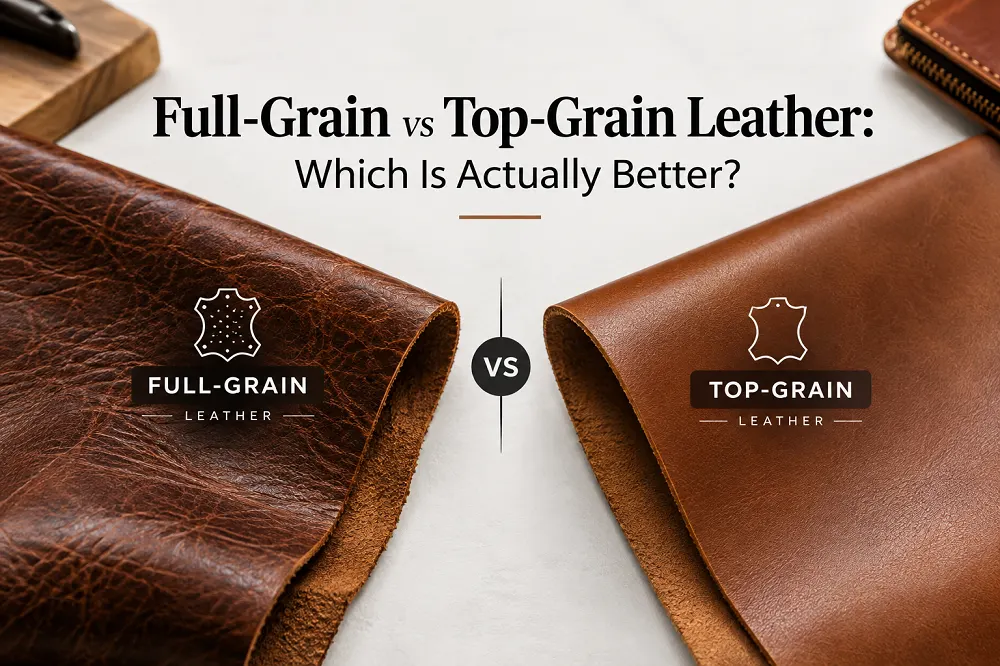
Full-grain vs top-grain Full-grain keeps the natural surface and develops a patina (a natural sheen and character) over years of wear; top-grain is sanded smooth for a more uniform, scar-free finish.
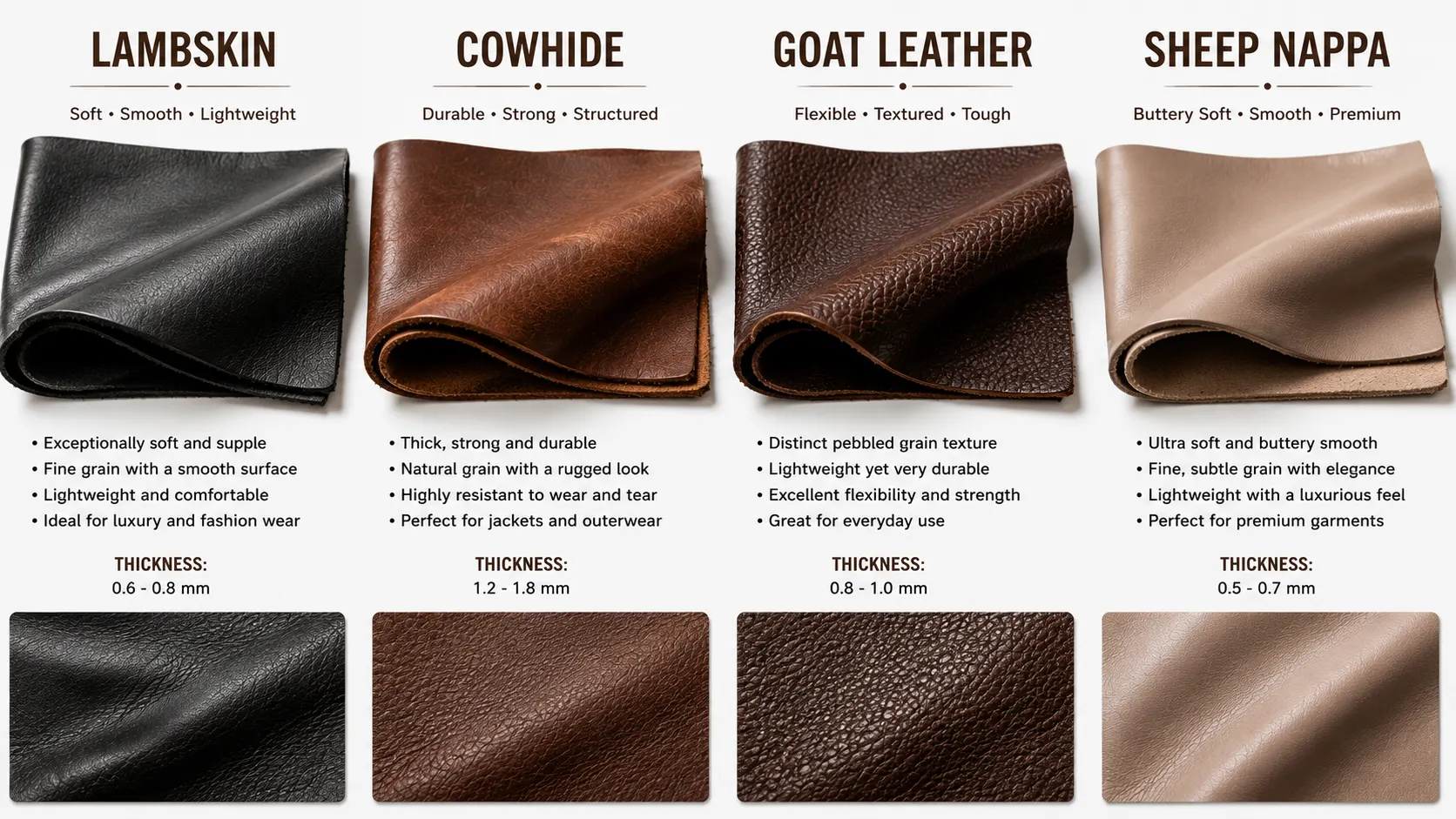
If durability and shape retention matter most to you, lean toward cowhide or goat leather. If softness and an immediate, no-break-in-needed feel matter more, lambskin is usually the better call. This decision matters more on a custom leather jacket, since you’re choosing it upfront rather than accepting whatever the manufacturer used.
Durability and Long-Term Value
Genuine leather, custom or ready-made, is a durable material by nature and can last well over a decade with basic care (conditioning every few months, keeping it away from prolonged direct sunlight and heavy rain, and storing it on a proper hanger rather than folded).
The durability difference between custom and ready-made isn’t really about the leather it’s about fit-related wear. A ready-made jacket that’s slightly too tight across the shoulders will show stress lines and premature creasing at the seams faster than one that fits correctly, simply because the leather and stitching are under constant tension in the wrong places.A well-fitted custom leather jacket moves naturally with your body and spreads pressure evenly across the leather. Because of this, it tends to age better than a poorly fitted jacket, even if both are made from the same leather quality. The right fit helps the jacket keep its shape and last longer.
Personalization and Style Control
This is where custom jackets have a clear, uncontested advantage. Beyond fit, made-to-measure ordering typically lets you choose:
Collar style (stand collar, notch lapel, hooded). Pocket placement and count. Lining color and material (quilted, satin, fleece for added warmth). Hardware finish (antique brass, gunmetal, silver). Stitching color and pattern. Monogramming or subtle branding details. Zipper brand and placement (asymmetric biker zip vs center zip).
Ready-made jackets offer none of this you’re buying what’s already been decided by the manufacturer. If personal style and having something genuinely your own matters to you, this is a meaningful point in custom’s favor, separate from fit.
Turnaround Time and the Ordering Process
This is the honest trade-off of going custom, and it’s worth being upfront about it:
Ready-made: Order today, wear it in days (or immediately, if bought in-store).
Custom: Typically 2–4 weeks from confirmed measurements to delivery, depending on design complexity and shipping destination.
A typical custom leather jacket process looks like this:
Choose your base style (biker, bomber, blazer, trucker, etc.). Select leather type, color, lining, and hardware. Submit measurements (chest, shoulder, sleeve length, torso length most brands provide a measurement guide or video walkthrough). Pattern is drafted and cut. Jacket is stitched, finished, and quality-checked. Shipped to you, usually with tracking.
If you need a jacket for an event next week, ready-made is the realistic option. If you’re planning ahead even a few weeks out custom is worth the wait for the fit alone.
Common Mistakes People Make When Choosing
Buying “one size up” on a ready-made jacket to compensate for broad shoulders this usually fixes the shoulders but makes the torso and sleeves too loose, creating a new fit problem instead of solving the original one.
Guessing measurements instead of using a tape measure and a fit guide for custom orders this is the single biggest cause of custom-fit disappointment, and it’s entirely avoidable.
Assuming custom always means more expensive as covered above, the gap is often smaller than people expect once you compare equivalent leather and hardware.
Not accounting for lining thickness a jacket with a quilted winter lining needs slightly different sizing than one with a thin poly lining, especially if you plan to wear layers underneath.
Who Should Choose Ready-Made vs Custom?
Go with ready-made if:
Your measurements fall close to standard size charts. You need the jacket within a few days. You’re testing whether a style suits you before investing in a custom piece. Budget is the primary constraint.
Go with custom if:
You have a non-standard body type (broad shoulders, tall, petite, plus size). You’ve been disappointed by ill-fitting ready-made jackets before. You want specific leather, lining, or hardware choices. You’re buying for a special occasion, gift, or long-term investment piece. You ride and need the jacket to fit correctly over armor or layers.
Can We Customise a Ready-Made Leather Jacket?
Yes, technically you can customize a ready-made leather jacket, but we usually do not recommend it.
The main reason is that modifying a ready-made jacket can often become more expensive than expected. When you take a jacket to a tailor for alterations, several problems can occur. The tailor may not have the exact same leather available, and even if matching leather is available, it may come with an additional cost. There can also be noticeable differences in stitching, finishing, and overall appearance after the modification.
You may end up spending extra money and time, only to get results that do not match your expectations.
The reason is simple: a ready-made jacket is designed according to a fixed standard-size pattern. Every detail including the cut, proportions, panels, stitching, and structure is created to work together as one complete design. When you change one part of the jacket, it can affect the overall balance and appearance of the original pattern.
As a result, the jacket may not look or feel the way you imagined when wearing it.
A fully customized leather jacket, on the other hand, is created from the beginning according to your exact measurements, body shape, and personal preferences. This ensures better comfort, a cleaner fit, and a wearing experience that a modified ready-made jacket usually cannot achieve.
Can a Custom Leather Jacket Be Customised Further?
This is another common question: if you already have a custom leather jacket made, can it be customised again later?
The answer is yes, but it depends on what type of customization you want to make.
Our first recommendation is to carefully choose your design, details, and measurements before the jacket is created. Take your time when selecting features such as the style, pockets, zippers, length, and overall fit.
When it comes to fitting, avoid making the jacket too tight or choosing incorrect measurements. A jacket that is overly fitted may restrict movement and leave little room for future adjustments. Similarly, if the original measurements are incorrect, some changes may not be possible without affecting the jacket’s structure and appearance.
A well-planned custom leather jacket should already be designed around your body, style preferences, and comfort requirements. This ensures that you get the perfect fit and look from the beginning, with fewer chances of needing major alterations later.
Frequently Asked Questions
Is a custom leather jacket worth the extra cost?
For anyone outside standard sizing, yes the fit difference alone usually justifies it, since an ill-fitting ready-made jacket often gets worn less or altered at extra cost anyway. For someone who fits standard sizes well, ready-made can be the more practical choice.
How long does it take to get a custom leather jacket made?
Most made-to-measure workshops, including Lammberg, take roughly 2 to 4 weeks from confirmed measurements to delivery, depending on design complexity and shipping destination.
Can I return or exchange a custom leather jacket if it doesn’t fit?
This depends entirely on the seller’s policy, since custom pieces are made specifically for your measurements. Always confirm the return, exchange, and alteration policy before ordering, and double-check your measurements against the provided sizing guide before submitting.
What’s the best leather type for a first custom jacket?
Lambskin or sheep nappa is the easiest starting point for most people it’s soft, requires little to no break-in period, and works well across casual and semi-formal styles. If you want a structured biker or motorcycle jacket, cowhide is the better fit.
Does a custom leather jacket last longer than a ready-made one?
The leather itself doesn’t inherently last longer just because it’s custom. What extends a jacket’s lifespan is a correct fit, since properly fitted leather experiences less stress at the seams and shoulders over years of wear.
Final Verdict
There’s no universal “better” here it depends on your body type, timeline, and how much you value personalization. If you fit standard sizing comfortably and need something quickly, a good ready-made jacket will serve you well. But if you’ve ever bought a leather jacket that almost fit close enough to keep, never quite right enough to love that’s usually the clearest sign that a custom, made-to-measure jacket is the better investment for you.
At Lammberg, we build both, but most of our returning customers eventually move to custom once they feel the difference a properly fitted jacket makes. If you’re ready to get measured and start designing yours, explore our custom leather jacket options and choose your leather, lining, and fit from scratch.
Related Articles
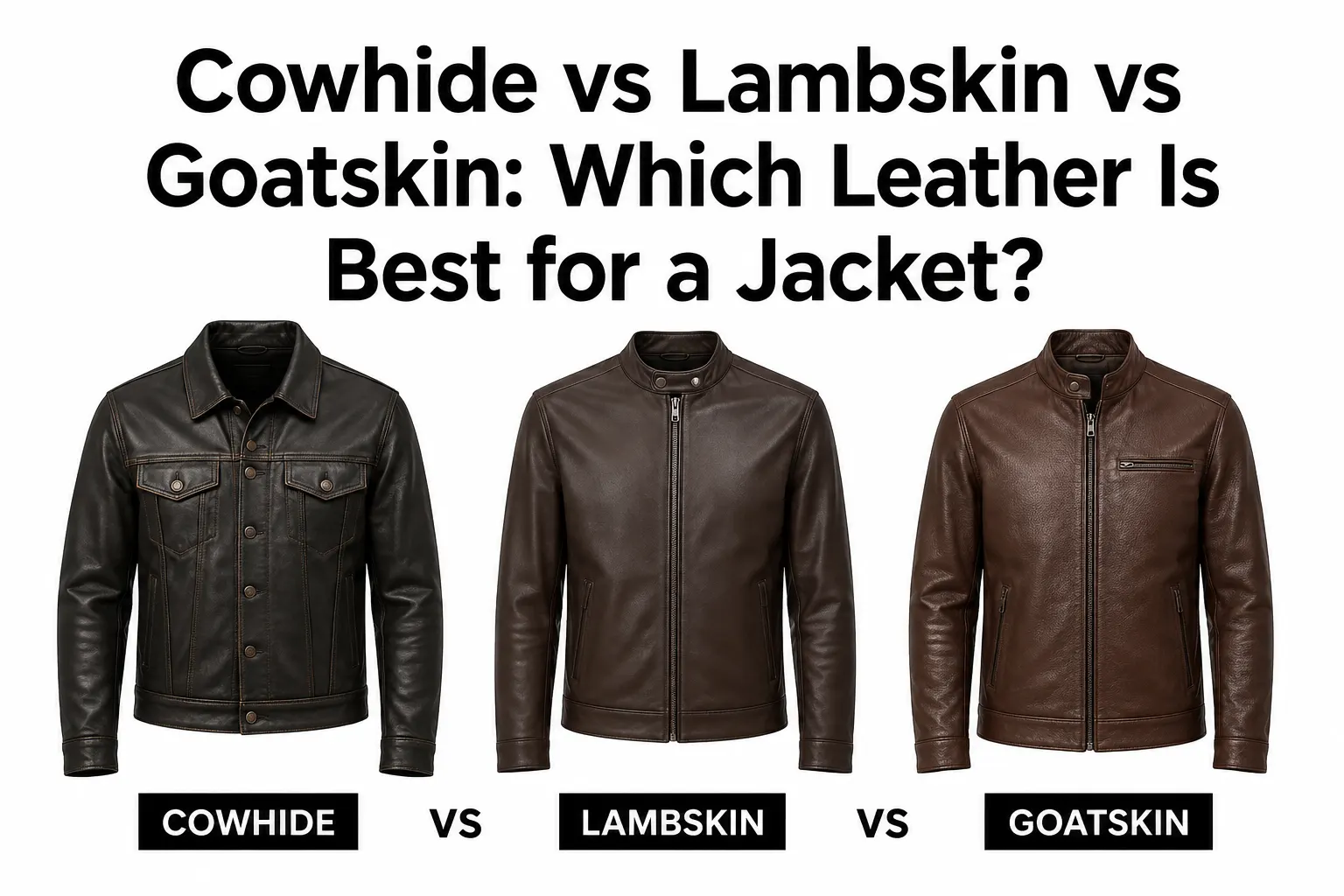
- Cowhide vs Lambskin vs Goatskin: Which Leather Is Best for a Jacket?
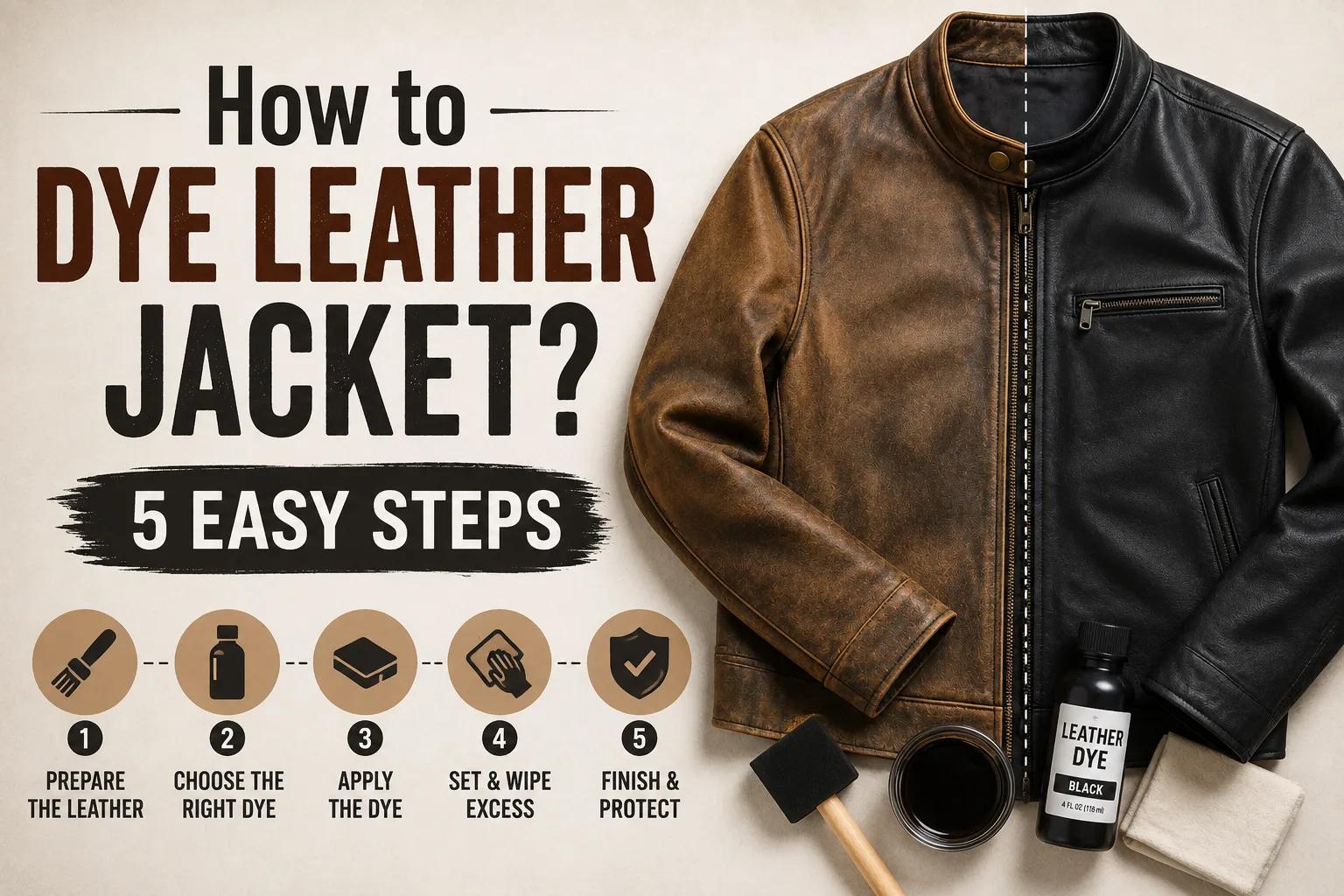
- How to Dye Leather Jacket? 5 Easy Steps
- What Makes a Good Leather Jacket? 10 Things to Check
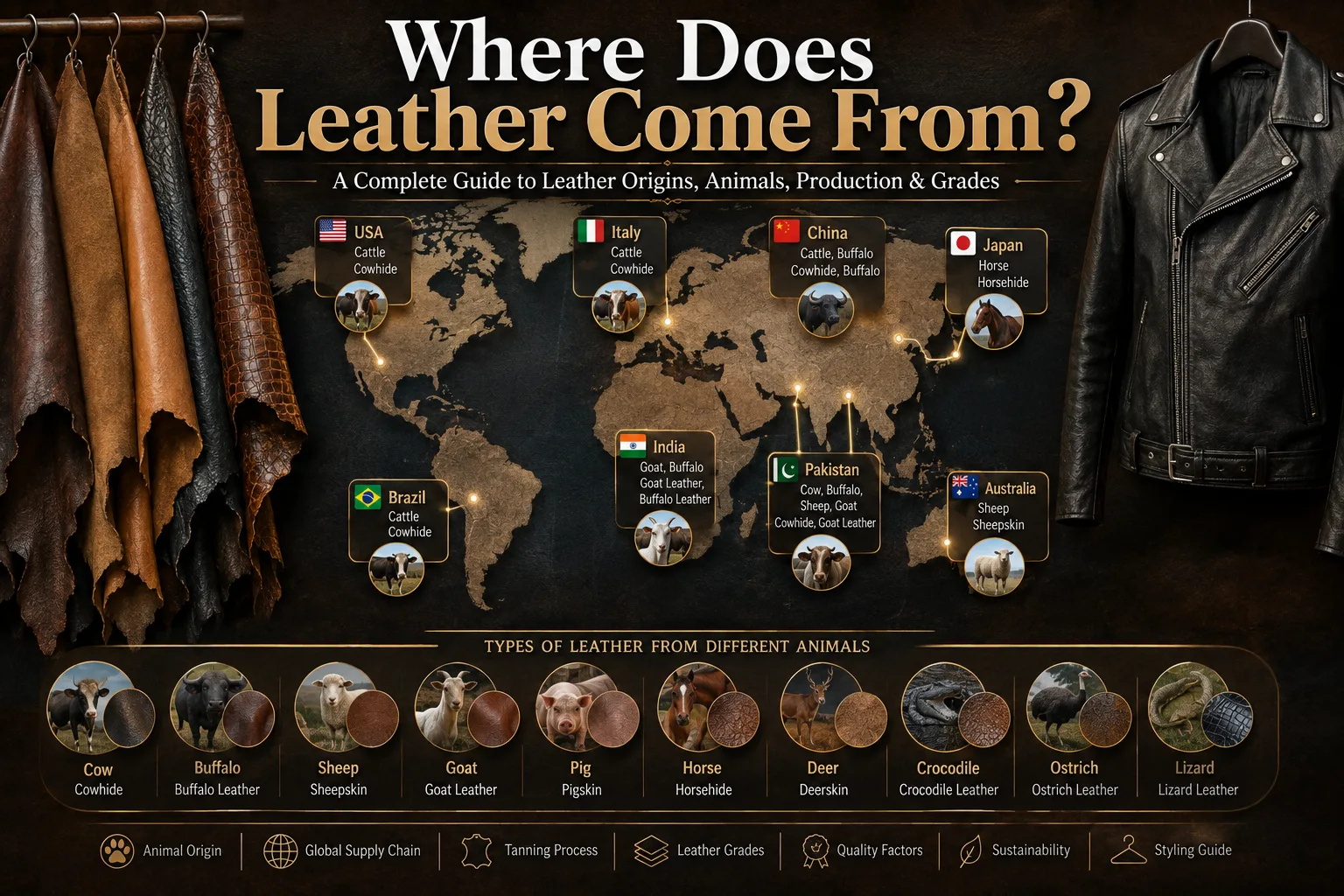
- Where Does Leather Come From? A Complete Guide to Leather Origins, Animals, Production & Grades
- The Leather Jacket Styles Actually Worth Wearing in 2026
- Vintage Brown Leather Jackets Are Trending in 2026
- Leather Jacket Too Tight? Here’s Exactly What to Do (2026 Complete Guide)
- How to Wash a Suede Jacket Without Damaging It: Expert Cleaning Guide
- Best Leather Jackets Under $300 in 2026: 8 Genuine Picks That Don’t Feel Like a Compromise
- 14 Black Leather Jacket Outfits for Men – 2026 Style Guide
- A-2 Antique WWII Leather Flight Jacket For Men – The Complete Guide
- How to Remove Water Stains from Suede Jacket – 5 Easy Home Methods
- Is Leather Really the Best Jacket? What Reddit Users Actually Say
- The Ultimate Leather Jacket Size Guide
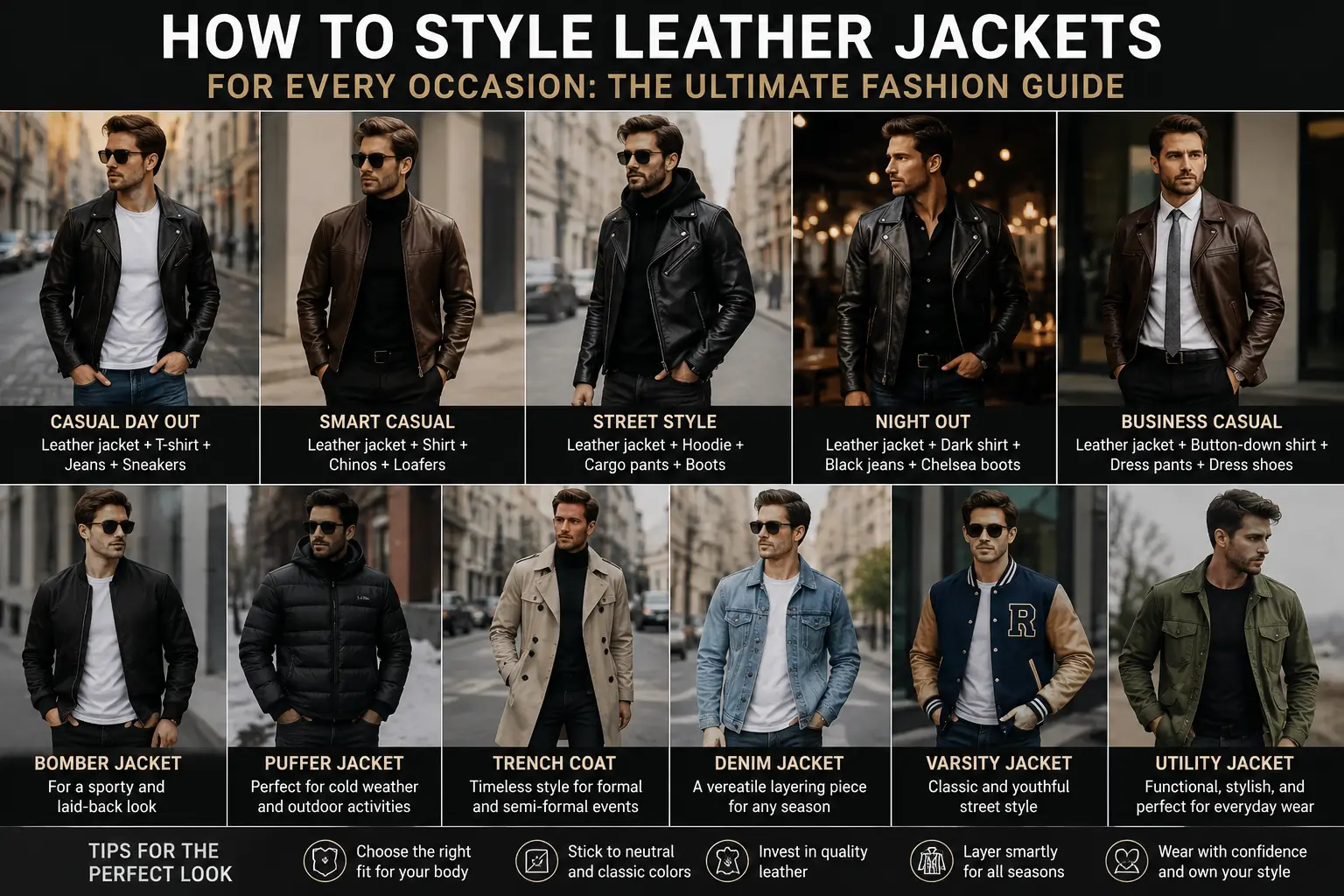
- How to Style a Leather Jacket for Men
- Full Grain vs Genuine Leather – What’s the Difference?
- PU Leather vs Genuine Leather – The Truth
- How to Spot Real vs Fake Leather
- What Makes a Leather Jacket Premium?
- How to Remove Wrinkles from a Leather Jacket





What Is Bison Leather? Durability, Uses & Cowhide Comparison
What Is Bovine Leather?