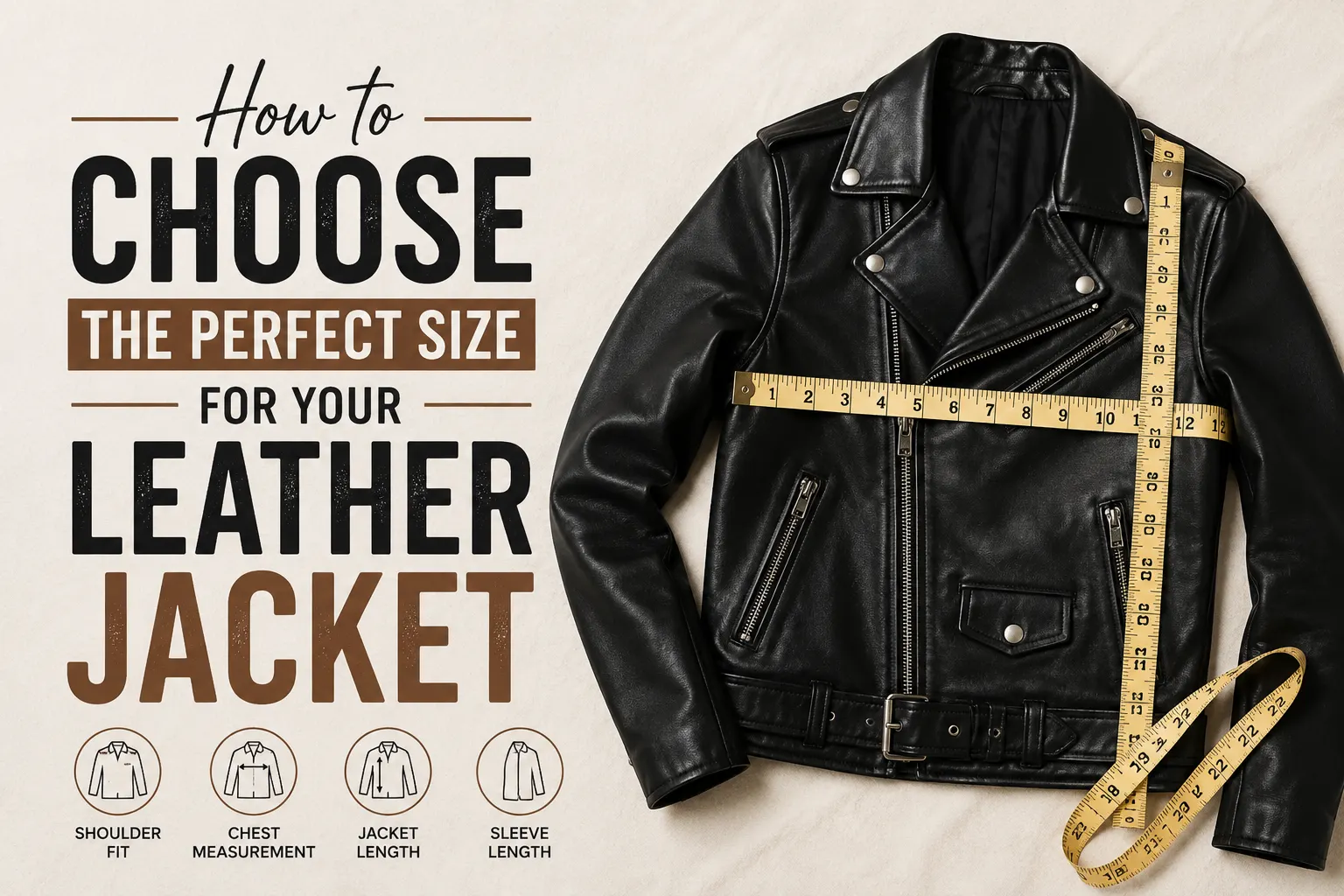
How to Choose the Perfect Size for Your Leather Jacket
Buying a leather jacket online can be tricky, especially when you’re unsure which size to select. Simply choosing your usual T-shirt or shirt size doesn’t always guarantee the right fit because sizing can vary between brands, styles, and manufacturers.
The best way to choose the right leather jacket size is to use the size chart and compare its measurements with a jacket that already fits you well.
In this guide, we’ll explain exactly how to read a leather jacket size chart, which measurements matter most, and how to decide between two sizes.
Why You Should Always Check the Size Chart
Clothing sizes such as Small, Medium, Large, and XL are not universal.
A Medium leather jacket from one brand may fit differently from a Medium jacket from another. Even two different leather jacket styles from the same manufacturer can have different proportions.
That’s why your usual clothing size should only be used as a starting point.
Before ordering, always check the specific size chart for the jacket you’re buying.
The most important thing is not the letter or number assigned to the size, but the actual measurements listed for that size.
Body Measurements vs. Jacket Measurements
Before using a size chart, you need to understand what type of measurements it provides.
There are two common types:
Body Measurements These are measurements taken directly from your body.
These numbers describe the actual dimensions of the jacket, not your body.
This distinction is extremely important when choosing a size online. Before comparing any measurements, always confirm with the brand or retailer whether its size chart is based on body measurements or garment/final jacket measurements. Different brands may use different sizing methods, and assuming the wrong one can result in choosing the wrong size.
If the chart provides garment measurements, your body measurements should not be expected to match the jacket measurements exactly. The finished jacket needs additional room for comfort, movement, and layering.
When in doubt, contact the brand and ask exactly what the measurements in its size chart represent before placing your order.
How to Choose Your Size Using a Jacket You Already Own
If the size chart shows finished jacket measurements, one of the most reliable methods is to compare it with a jacket you already own.
Find a jacket that:
Fits you comfortably Has a similar style Is comfortable when fully closed Has a similar thickness and intended use
Lay the jacket flat and measure it.
You can then compare those measurements with the online size chart.
This method is often much more accurate than guessing based on your usual clothing size.
Which Measurements Should You Compare?
Not every measurement has the same importance.
When selecting a leather jacket size, pay particular attention to the following.
1. Chest Measurement
The chest is usually the most important measurement when choosing a jacket size.
If the size chart lists the jacket’s chest circumference, compare it with the chest measurement of a jacket that already fits you well.
For example:
Size
Jacket Chest
S
40″
M
42″
L
44″
XL
46″
If your well-fitting jacket measures approximately 43–44 inches around the chest, an L may be closer to the fit you already prefer.
Don’t automatically choose a size based on your body chest measurement alone if the chart shows finished garment measurements.
2. Shoulder Measurement
Shoulders are extremely important because they strongly affect the overall fit.
Compare the shoulder measurement of your existing jacket with the size chart.
For example, if your current jacket has an 18-inch shoulder measurement and the available sizes are:
M: 17.5″
L: 18″
XL: 18.5″
The L would be the closest match.
A jacket with shoulders that are too narrow can feel restrictive even if the chest measurement is suitable.
3. Sleeve Length
Compare the sleeve length with a jacket that already fits you properly.
Usually, sleeve length is measured from the shoulder’s ending point (where the shoulder seam meets the sleeve) down to the end of the cuff. However, measurement methods can vary between manufacturers, so always check how the brand measures sleeve length before comparing measurements.
4. Jacket Length
Jacket length is important for overall appearance, but it shouldn’t usually be the first measurement you use to select a size.
A jacket can have the right length but still be too tight across the chest or shoulders.
First make sure the key measurements are suitable, then check the jacket length to ensure it matches your preferred style.
The Best Way to Select a Size From a Size Chart
Use this simple process:
Step 1: Find a Jacket That Fits You Well
Choose a jacket from your wardrobe that feels comfortable and has a similar style to the one you’re buying.
Step 2: Measure the Jacket
Measure the chest, shoulders, sleeve length, and jacket length according to the retailer’s measurement instructions.
Step 3: Open the Size Chart
Find the size chart for the exact leather jacket you’re interested in.
Step 4: Compare the Measurements
Compare your existing jacket’s measurements with each available size.
Don’t focus on just one measurement. Look at the overall fit.
Step 5: Choose the Closest Overall Match
Select the size that most closely matches the measurements of your well-fitting jacket while considering how you want the new jacket to fit.
Example: How to Choose Between Medium and Large
Suppose you have a jacket that fits you perfectly and its measurements are:
Chest: 43″
Shoulders: 18″
Sleeve: 25″
Length: 26″
The new jacket’s size chart shows:
Measurement
M
L
Chest
42″
44″
Shoulders
17.5″
18″
Sleeve
24.5″
25″
Length
25″
26″
The Large is the closer overall match.
Although the Medium may have a similar length, its chest and shoulder measurements are smaller than your existing jacket.
This is why comparing the complete set of measurements is better than selecting a size based on just one number.
What If Your Measurements Fall Between Two Sizes?
Sometimes no size will match your measurements exactly.
For example, you may find that:
Medium has the right shoulders but a smaller chest
Large has the right chest but slightly longer sleeves
In this situation, consider which measurements are most important for your body and the jacket’s design.
For most leather jackets, chest and shoulders should receive particular attention because a jacket that is too tight in these areas can restrict movement and be difficult to alter.
If you prefer a fitted look and the smaller size still allows comfortable movement, the smaller option may work.
If you plan to wear sweaters or heavier layers underneath, the larger size may be more suitable.
Should You Choose the Smaller or Larger Size?
If you’re between two sizes, ask yourself how you intend to wear the jacket.
Choose the Smaller Size When:
You prefer a more fitted appearance
You mainly wear a T-shirt or thin shirt underneath
The smaller size provides comfortable movement
The larger size looks noticeably loose
Choose the Larger Size When:
You prefer a relaxed fit
You plan to wear sweaters underneath
You want additional room for movement
The smaller size feels tight across the chest or shoulders
The goal isn’t to find the smallest size you can physically wear. The goal is to find the size that provides the best combination of fit, comfort, and appearance.
Don’t Assume Your Usual Size Is the Correct Size
If you normally wear a Large shirt, that doesn’t necessarily mean you should order a Large leather jacket.
Shirts, T-shirts, sweaters, and jackets can all use different sizing standards.
Your usual size can be a useful starting point, but the size chart should make the final decision.
What If the Size Chart Uses Body Measurements?
Some retailers provide body measurement charts instead of finished garment measurements.
In that case, measure your body according to the instructions provided.
For example, if the chart says:
Size
Chest
S
36–38″
M
38–40″
L
40–42″
XL
42–44″
If your body chest measurement is 41 inches, L would generally be the appropriate starting size according to that chart.
However, always follow the retailer’s specific instructions because sizing methods can differ.
How to Measure Your Body for a Leather Jacket
If the size chart requires body measurements, use a soft measuring tape and avoid pulling it too tightly.
Chest
Wrap the tape around the fullest part of your chest, keeping it level and comfortably snug.
Waist
Measure around your natural waist without pulling the tape tightly.
Shoulders
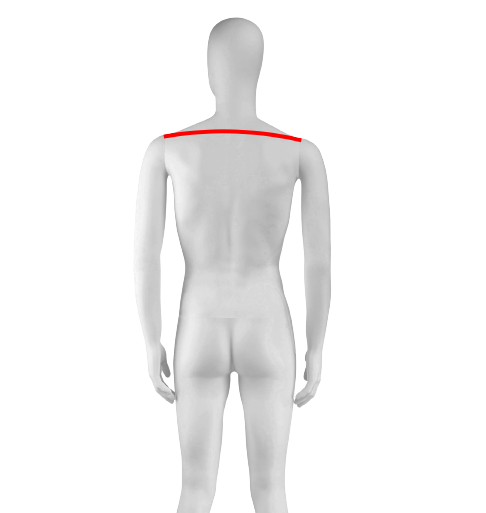
Depending on the retailer’s instructions, measure across the back from one shoulder point to the other.
Sleeve/Arm
Follow the retailer’s specified starting and ending points because sleeve measurement methods vary.
Take your measurements while wearing the type of clothing you would normally wear underneath the jacket if the instructions recommend doing so.
How Should a Correctly Sized Leather Jacket Feel?
Once you’ve selected your size, the jacket should feel comfortable but not excessively loose.
When fully closed:
The zipper or buttons should close without excessive pulling.
Your shoulders should feel natural.
You should be able to move your arms comfortably.
You should be able to sit down without significant restriction.
You should have enough room for your intended layer underneath.
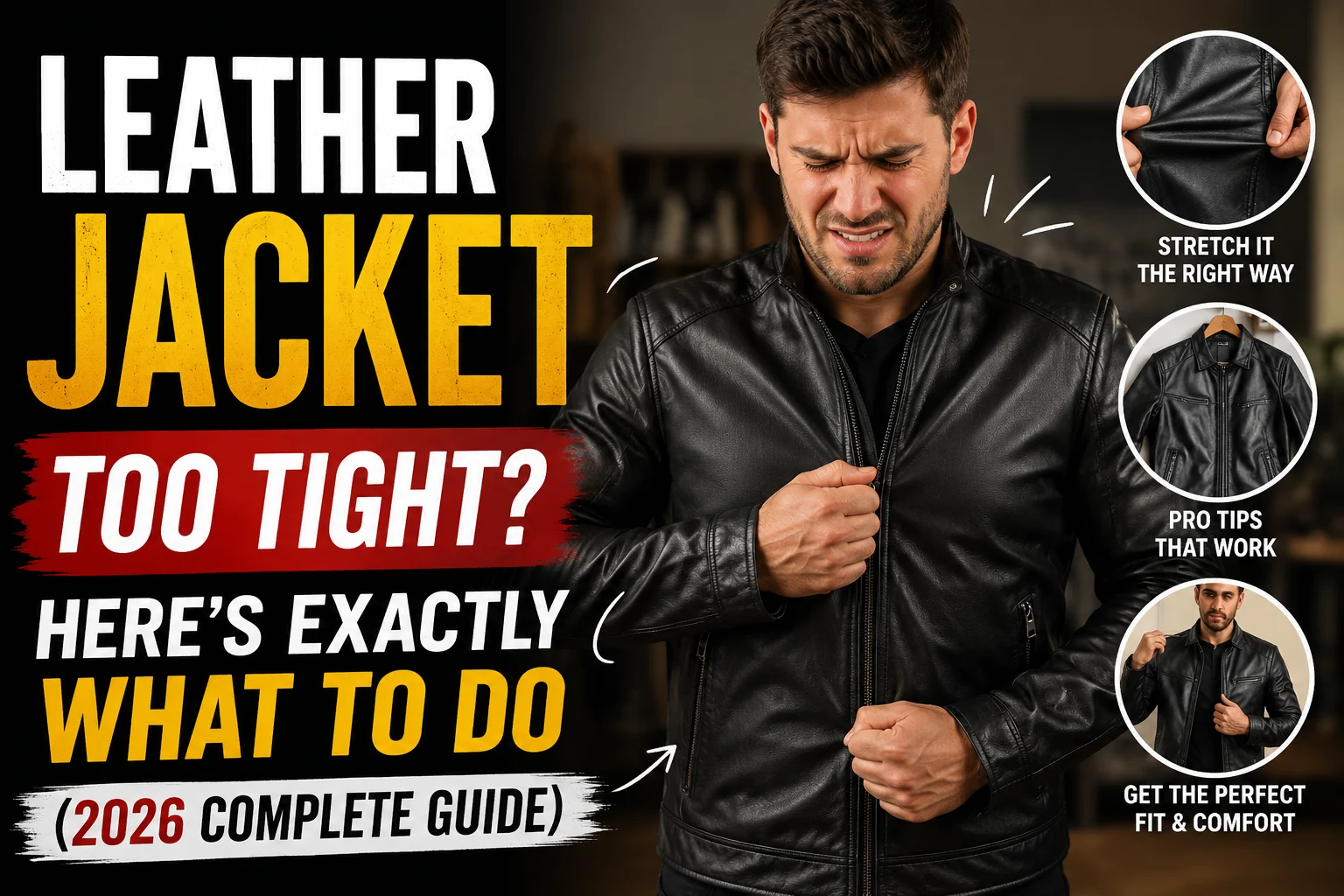
A new leather jacket may initially feel somewhat firm, especially when made from thicker leather. However, it shouldn’t be painfully tight.
Don’t Buy a Jacket That’s Too Small Expecting It to Stretch
Leather can soften and become more comfortable with use, but it shouldn’t be treated like a highly stretchable fabric.
A slightly snug jacket may become more comfortable as the leather breaks in. However, a jacket that is significantly too small—particularly across the shoulders—will not simply stretch enough to become a completely different size.
If you’re already experiencing severe restriction when trying it on, choosing a larger size is usually the better option.
What If One Measurement Doesn’t Match?
It’s normal for your measurements not to match one size perfectly.
For example, you might find:
Size M has the ideal shoulders
Size L has the ideal chest
Size M has the ideal sleeve length
Don’t panic if the numbers aren’t identical.
Instead, look at the overall fit and identify which measurements are most important for the jacket style and your body.
If the jacket is otherwise suitable but one measurement is significantly different, check whether the manufacturer offers alterations or custom sizing.
Size Chart Tips for Online Leather Jacket Shopping
Before placing an order, always:
1. Check the exact product’s size chart.
Don’t assume every jacket on the website uses identical measurements.
2. Check whether the chart shows body or garment measurements.
This determines how you should compare the numbers.
3. Measure a jacket you already own.
This is particularly useful when the chart shows finished jacket measurements.
4. Compare multiple measurements.
Don’t select your size based only on chest or length.
5. Consider layering.
Think about whether you’ll wear a T-shirt, shirt, sweater, or hoodie underneath.
6. Check the jacket style.
A fitted biker jacket and a relaxed bomber jacket may have very different intended fits.
7. Contact the seller if you’re still unsure.
A good retailer should be able to help you interpret its size chart.
Quick Size Selection Formula
If you’re using a garment measurement chart, the easiest approach is:
Your best-fitting jacket → Measure it → Compare with size chart → Select the closest overall match
If you’re using a body measurement chart:
Measure your body → Find your measurement range → Select the corresponding size
The key is knowing which type of chart you’re looking at before making your decision.
Final Leather Jacket Size Checklist
Before selecting your size, ask yourself:
Does this size chart use body or garment measurements?
Have I checked the measurements for this specific jacket?
Have I measured a jacket that already fits me well?
Does the chest measurement work for me?
Do the shoulders fit?
Is the sleeve length appropriate?
Is the jacket length suitable for the style?
Will I wear layers underneath?
If I’m between sizes, which option provides better comfort?
Am I choosing based on actual measurements rather than just S, M, L, or XL?
If you can answer these questions, you’ll have a much better chance of selecting the right size.
Final Thoughts
Choosing the perfect leather jacket size doesn’t have to be complicated. The most reliable approach is to use the size chart correctly rather than relying only on your usual clothing size.
First determine whether the chart provides body measurements or finished garment measurements. If it provides garment measurements, measure a jacket you already own and compare its chest, shoulders, sleeves, and length with the chart.
If you’re between two sizes, consider your preferred fit, the jacket’s style, and whether you’ll be wearing layers underneath.
Most importantly, don’t focus only on the size label. The actual measurements are what determine how the jacket will fit.
Take a few minutes to compare measurements before ordering, and you’ll be far more likely to receive a leather jacket that looks right, feels comfortable, and fits the way you expect.
Crazy Horse leather is a type of real leather known…
How to Measure Your Weight
Place the weighing scale on a flat, hard floor (not on carpet) and step on it to measure your weight. Wear your everyday light clothing and don’t forget to remove your shoes while weighing.
At lammberg, your privacy is of paramount importance to us. When you provide your measurements and upload pictures while ordering our made-to-measure items, rest assured that this information is collected solely for internal purposes related to pattern making and determining the appropriate size for your order. We understand the sensitivity of the data you share with us, and we want to assure you that your pictures will be treated with the utmost confidentiality. They will never be disclosed or shared with any third party. Instead, they will be securely stored with industry-standard encryption, and access will be restricted to authorized personnel directly involved in the pattern making and sizing process. We are committed to using this information solely for the purpose it was provided and will not retain it longer than necessary.
Thank You!
We are truly excited that you’ve chosen us for crafting your custom jacket!
Your dream jacket is our mission, and we can’t wait to bring it to life.
Our dedicated support agent will be in touch via email to have a conversation about all the intricate details and options you have mentioned, ensuring a stress-free experience for you.
To ensure our messages reach you promptly and smoothly, kindly add customized@lammberg.com to your address book.
We can’t wait to start working on your perfect jacket!
Thank You!
We are truly excited that you’ve chosen us for crafting your bespoke jacket!
Your dream jacket is our mission, and we can’t wait to bring it to life.
Our dedicated support agent will reach out to you via email to have a conversation about tailoring a bespoke jacket based on your preferences, ensuring a stress-free experience for you.
To ensure our messages reach you promptly and smoothly, kindly add bespoke@lammberg.com to your address book.
We can’t wait to start working on your perfect jacket!
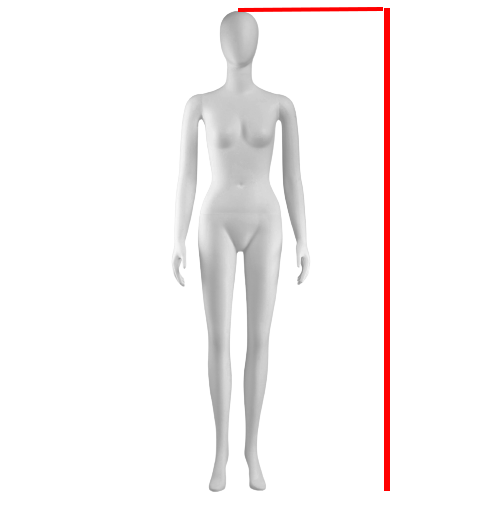
How to Measure Your Height
Stand against a wall without shoes. Place a straight object such as a book or ruler on your head and mark where it meets the wall. And then measure from the floor to the mark for an accurate height reading.
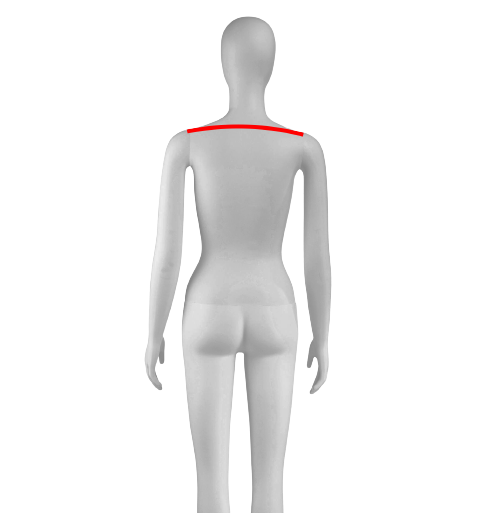
How to Measure Your Shoulder
Measure the distance from the bony end of one shoulder, straight across the back of the neck, continuing to the bony end of the other shoulder.
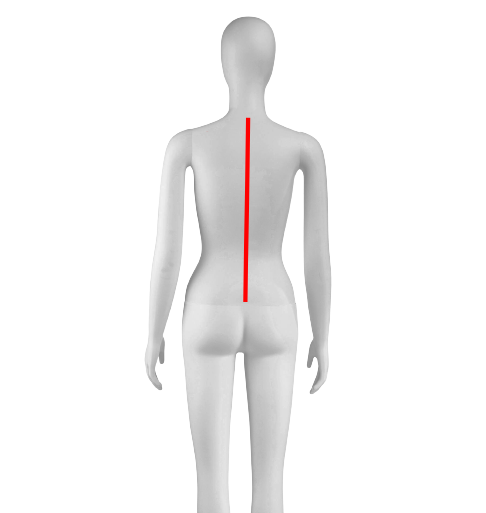
How to Measure The Required Length
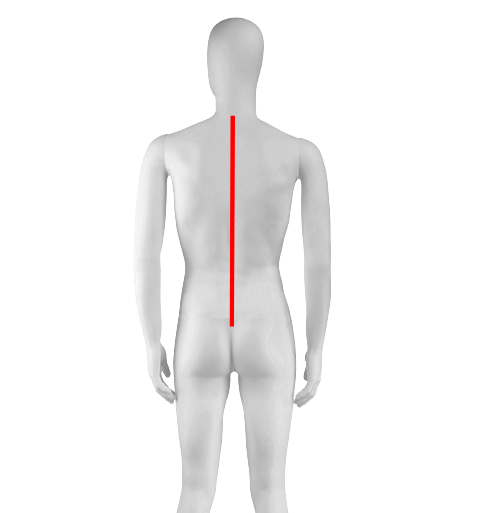
Facing backwards, measure vertically down, from the bone at the base of your neck, to your required length. If you are unsure of the perfect length, this will vary depending on the style of the jacket and your personal preference, but typically falls somewhere where your arms end.
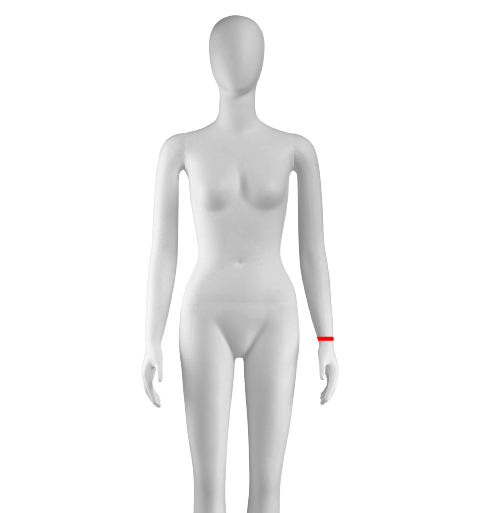
How to Measure Your Wrist
Measure around the fullest part of your wrist, that is exactly above your wrist bone and you will get your wrist measurement.
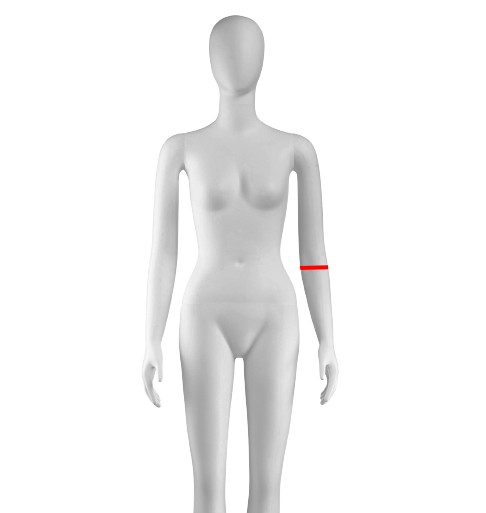
How to Measure Your Forearm
Wrap the tape measure around the widest part of your forearm, which is usually 2 inches below the elbow.
How to Measure Your Bicep
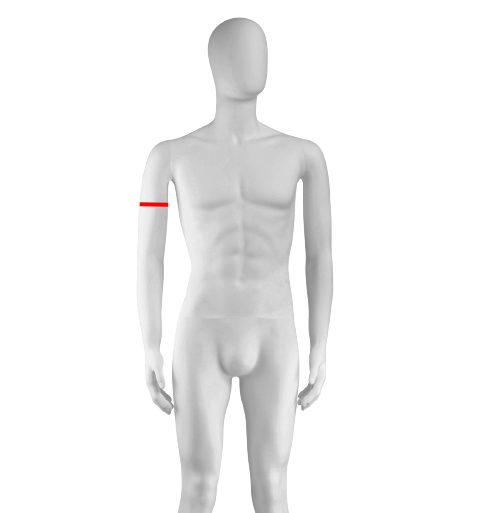
To know your bicep measurement, measure around the fullest part of your bicep with your arms relaxed.
How to Measure Your Armhole
To measure your armhole, wrap the tape measure around your arm and shoulder, drawing it up from behind your shoulder until it meets the starting end.
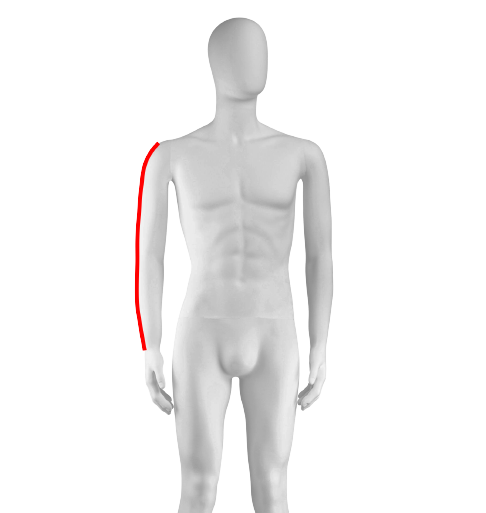
How to Measure Your Sleeve Length
Place the tape measure at the edge of your shoulder. Guide it down alongside your arm straight to the point where you would like your sleeve to end.
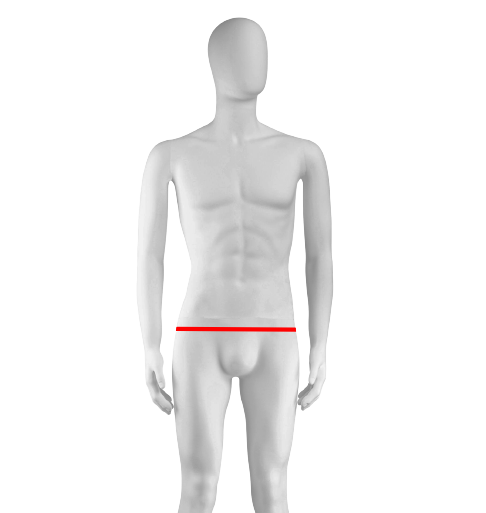
How to Measure your Hip
Measure around the fullest part of your hips. Start at one hip, then bring the tape measure around the back and over the other hip, and back to where you started. Stand straight and make sure the tape is leveled all the way around.
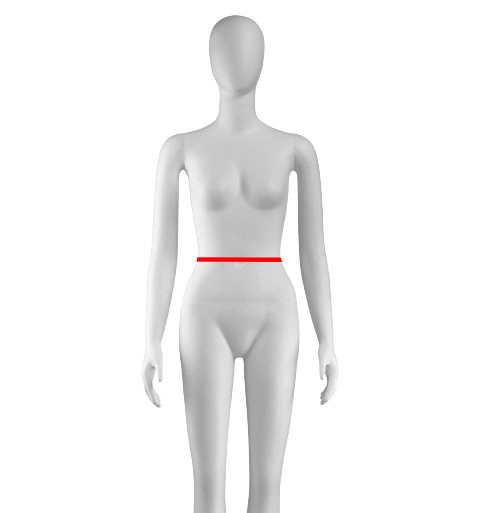
How to Measure Your Waist
To know your waist measurement, measure the circumference of your waist. Use the tape to circle your waist (sort of like a belt would) at your natural waistline across the belly button. Breathe normally while taking the measurement and make sure the tape is leveled all the way around.
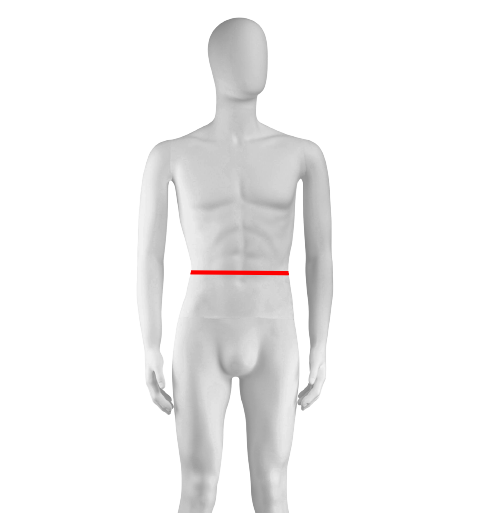
How to Measure Your Midriff
Your midriff is part of the body between your chest and the waist. Measure around the circumference of your body, above your belly button and below your rib cage. Relax and breathe normally.
Make sure the tape is leveled all the way around.
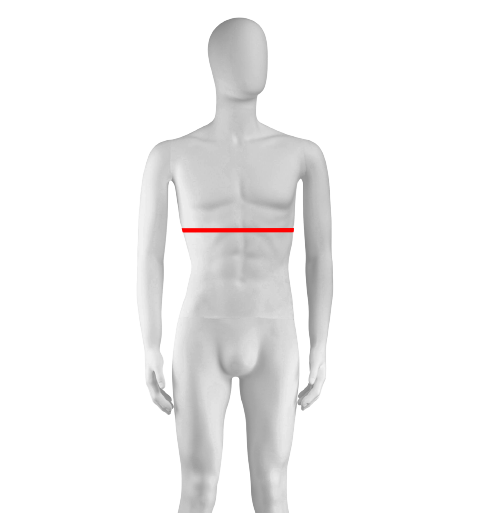
How to Measure Your Chest
To measure your chest, raise your arms, wrap the measuring tape an inch below the armhole.
Now lower your arms and measure around the circumference of the body, covering the broadest part of the chest and across the shoulder blades. Relax and breathe normally.
Make sure the tape is leveled all the way around.
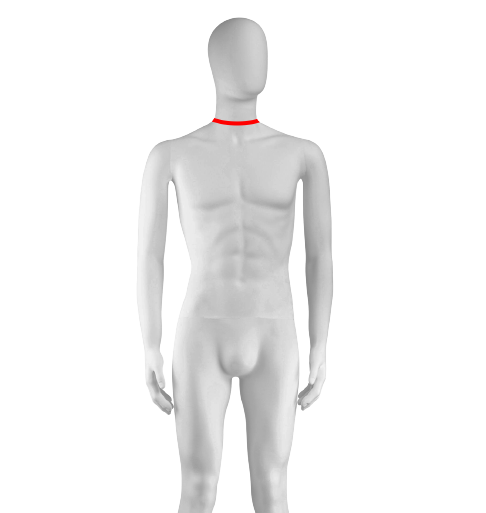
How to Measure Your Neck
Wrap the measuring tape around your neck and measure around the thickest part of your neck just above your collar bone. The thickest part of your neck is typically just below your Adam’s apple. Be careful not to pull too tightly.
You should be able to comfortably fit two fingers between your neck and the measuring tape.
How to Measure Your Height
Stand against a wall without shoes. Place a straight object such as a book or ruler on your head and mark where it meets the wall. And then measure from the floor to the mark for an accurate height reading.
Unit of Measurement
Select your preferred unit of measurement. We will follow this throughout your measurements.
How to Measure Your Shoulder
Measure the distance from the bony end of one shoulder, straight across the back of the neck, continuing to the bony end of the other shoulder.
How to Measure The Required Length
Facing backwards, measure vertically down, from the bone at the base of your neck, to your required length. If you are unsure of the perfect length, this will vary depending on the style of the jacket and your personal preference, but typically falls somewhere where your arms end.
How to Measure Your Wrist
Measure around the fullest part of your wrist, that is exactly above your wrist bone and you will get your wrist measurement.
How to Measure Your Forearm
Wrap the tape measure around the widest part of your forearm, which is usually 2 inches below the elbow.
How to Measure Your Bicep
To know your bicep measurement, measure around the fullest part of your bicep with your arms relaxed.
How to Measure Your Armhole
To measure your armhole, wrap the tape measure around your arm and shoulder, drawing it up from behind your shoulder until it meets the starting end.
How to Measure Your Sleeve Length
Place the tape measure at the edge of your shoulder. Guide it down alongside your arm straight to the point where you would like your sleeve to end.
How to Measure your Hip
Measure around the fullest part of your hips. Start at one hip, then bring the tape measure around the back and over the other hip, and back to where you started. Stand straight and make sure the tape is leveled all the way around.
How to Measure Your Waist
To know your waist measurement, measure the circumference of your waist. Use the tape to circle your waist (sort of like a belt would) at your natural waistline across the belly button. Breathe normally while taking the measurement and make sure the tape is leveled all the way around.
How to Measure Your Midriff
Your midriff is part of the body between your chest and the waist. Measure around the circumference of your body, above your belly button and below your rib cage. Relax and breathe normally.
Make sure the tape is leveled all the way around.
How to Measure Your Bust
To measure your bust, raise your arms, wrap the measuring tape around the fullest part of your chest.
Now lower your arms and measure around the circumference of the body, covering the broadest part of the chest and across the shoulder blades. Relax and breathe normally.
Make sure the tape is leveled all the way around.
How to Measure Your Neck
Wrap the measuring tape around your neck and measure around the thickest part of your neck just above your collar bone. The thickest part of your neck is typically just below your Adam’s apple. Be careful not to pull too tightly.
You should be able to comfortably fit two fingers between your neck and the measuring tape.
Measurement Instructions
You will need a fabric tape measure and a helping hand. You may also do the measurements yourself, but for the most accurate results, we suggest getting a friend or a relative to do it for you. It’s more fun as well.
You must provide full, accurate and legible measurements on this form.
Please make sure you have precisely followed the demonstration pictures to obtain measurements.
We guarantee that your item will fit you perfectly if you provide us the correct measurements. There will be no returns or exchanges related to fit when pertaining to wrongly submitted measurements.
Once you have given us the measurements, we will process your order immediately, so any changes at later stage may not be possible.
When taking measurements, the tape should be held flat against the body; hold it snugly enough to prevent drooping, but not so tight as to feel restrictive.
Wear what you would normally wear under a jacket while taking measurements.
Make sure to measure without any bulky clothing or layers that might affect the accuracy of the measurement.
Stand as you normally would stand in your day to day stance.
If you wish to, please send 3 full length photos of yourself (Front, Back and Side pose) wearing a t-shirt and a trouser for a better perception for our production team.
Should you need further clarification or assistance, we are always available to you, please write to tailorsupport@lammberg.com