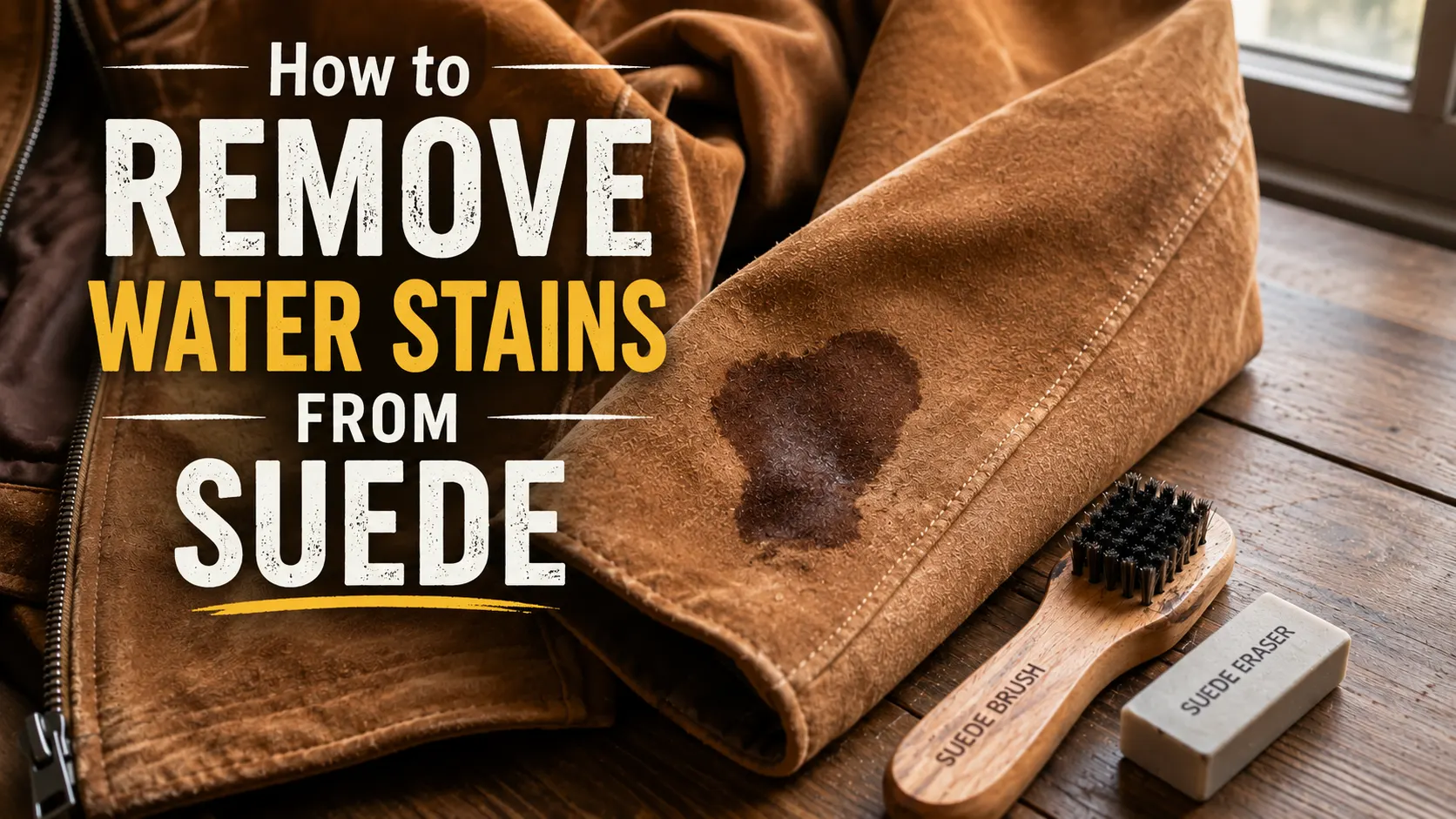
You bought that beautiful suede jacket, those stylish boots, or that elegant bag. You wore it out, felt great, and then, disaster struck. A few raindrops fell, a drink spilled, or a puddle splashed up onto the surface. Now you are staring at an ugly water stain, wondering if your favourite piece is ruined forever.
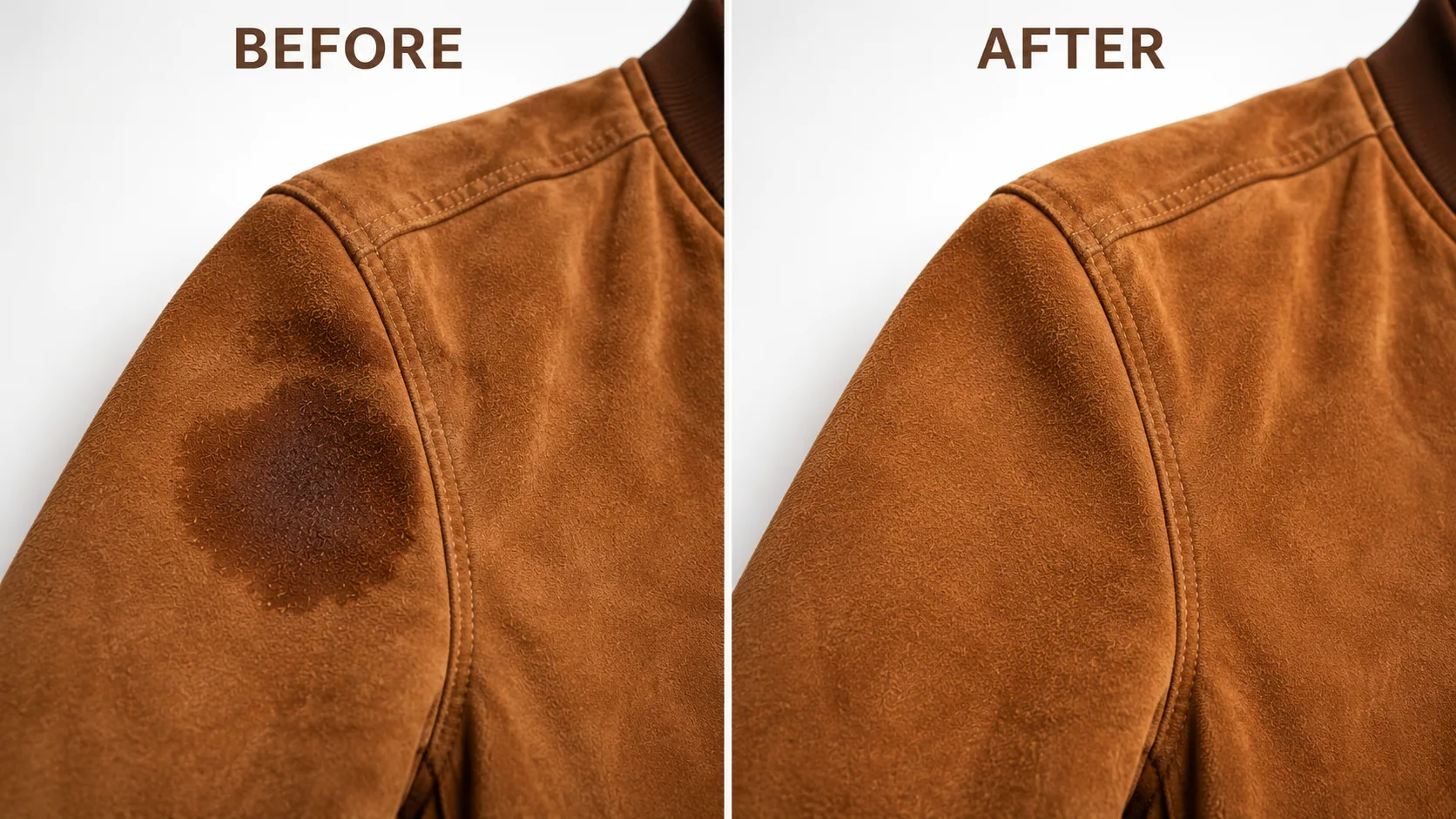
Take a deep breath. Your suede is not ruined. Water stains on suede look alarming, but they are almost always fixable once you know the right approach. The key is understanding what actually works, and just as importantly, what to avoid completely.
In this guide, we will walk through exactly how to remove water stains from suede, step by step, using methods that are trusted by suede care professionals and everyday suede owners alike. We will also answer the most common questions people ask about suede stains, cover mistakes that make things worse, and share simple habits that prevent future damage.
Why Does Suede Stain So Easily?
Suede is made from the underside of animal hide, split and buffed to create a raised, fuzzy surface known as the nap. This soft, velvety texture is exactly what makes suede so appealing, but it is also what makes it so vulnerable to marks and moisture.
The raised fibers behave almost like tiny sponges. The moment water touches suede, it gets absorbed quickly into these fibers. As the water evaporates, it can leave behind minerals and residues that show up as dark spots, rings, or discolored patches. The fibers themselves can also become matted, flattened, or stiff as they dry, which changes both the look and feel of the material.
The reassuring part is that most water stains sit on the surface or in the outer layer of fibers rather than deep within the hide. With patience and the correct technique, you can usually lift the stain and bring the nap back to life without causing any lasting damage.
What NOT to Do First
Before getting into the fixes, it helps to know the mistakes that make water stains worse or even permanent.
Do not rub the stain. Rubbing pushes moisture deeper into the fibers, spreads the mark further, and flattens the delicate nap.
Do not use heat. A hairdryer, radiator, iron, or any direct heat source will cause the fibers to shrink and harden, and it can lock the stain in permanently.
Do not soak the item. Submerging suede in water risks discoloration, warping, and long-term damage to the nap structure.
Do not use regular soap or laundry detergent. Harsh household chemicals strip suede of its natural oils and often leave behind residues that attract even more dirt.
Do not put it away while it’s still damp. Storing suede before it is completely dry invites mold, mildew, and musty odors.
With those mistakes out of the way, here is what actually works.
Method 1: The Suede Brush and Eraser (The Safest First Step)
This is the first thing to try on any fresh water stain, because sometimes what looks like a water mark is really just flattened, matted fibers rather than an actual stain.
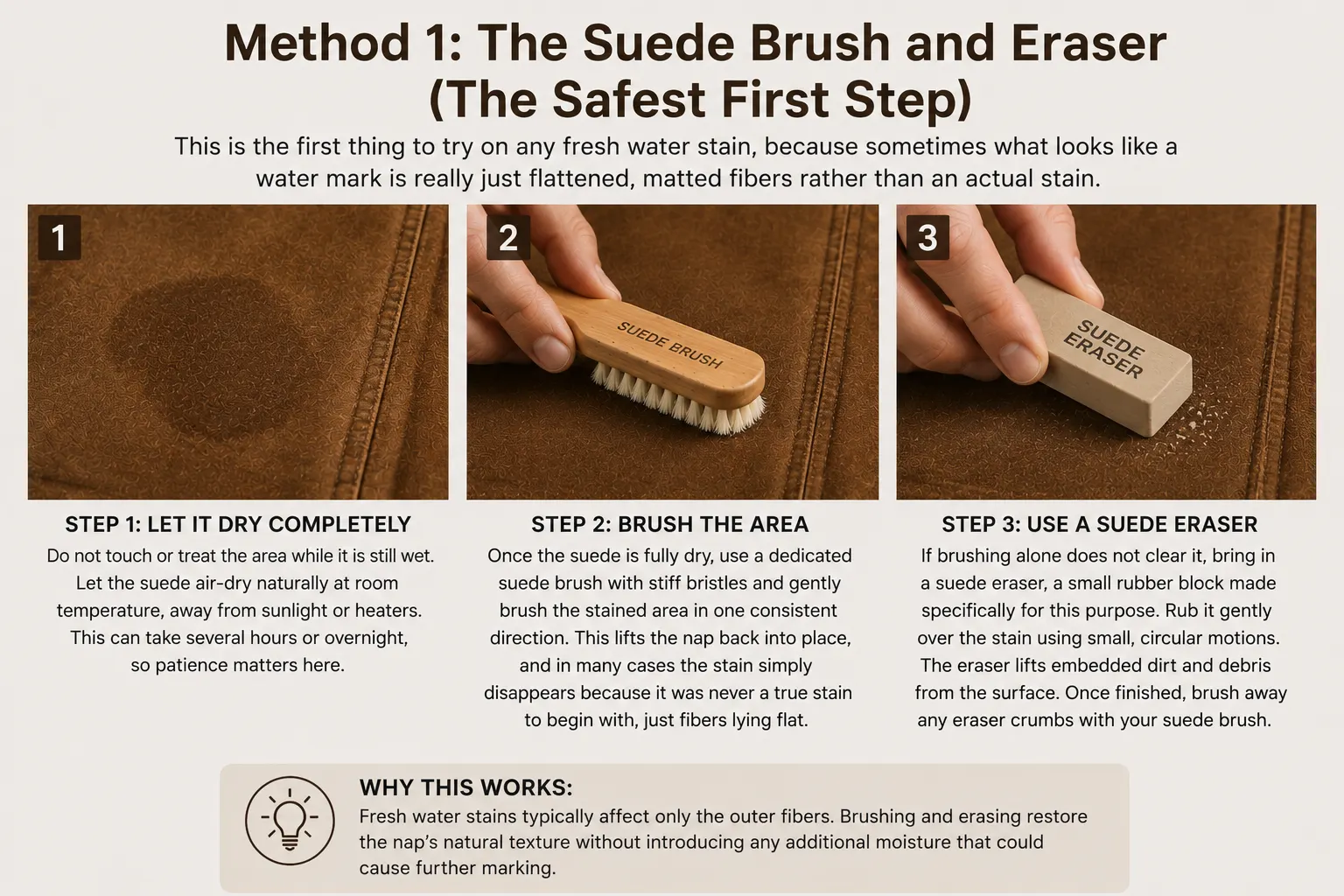
Step 1: Let it dry completely. Do not touch or treat the area while it is still wet. Let the suede air-dry naturally at room temperature, away from sunlight or heaters. This can take several hours or overnight, so patience matters here.
Step 2: Brush the area. Once the suede is fully dry, use a dedicated suede brush with stiff bristles and gently brush the stained area in one consistent direction. This lifts the nap back into place, and in many cases the stain simply disappears because it was never a true stain to begin with, just fibers lying flat.
Step 3: Use a suede eraser. If brushing alone does not clear it, bring in a suede eraser, a small rubber block made specifically for this purpose. Rub it gently over the stain using small, circular motions. The eraser lifts embedded dirt and debris from the surface. Once finished, brush away any eraser crumbs with your suede brush.
Why this works: Fresh water stains typically affect only the outer fibers. Brushing and erasing restore the nap’s natural texture without introducing any additional moisture that could cause further marking.
Method 2: The Damp Cloth Technique (Counterintuitive but Effective)
It sounds backwards, but sometimes the best way to deal with a water stain is to add a little more water, strategically.
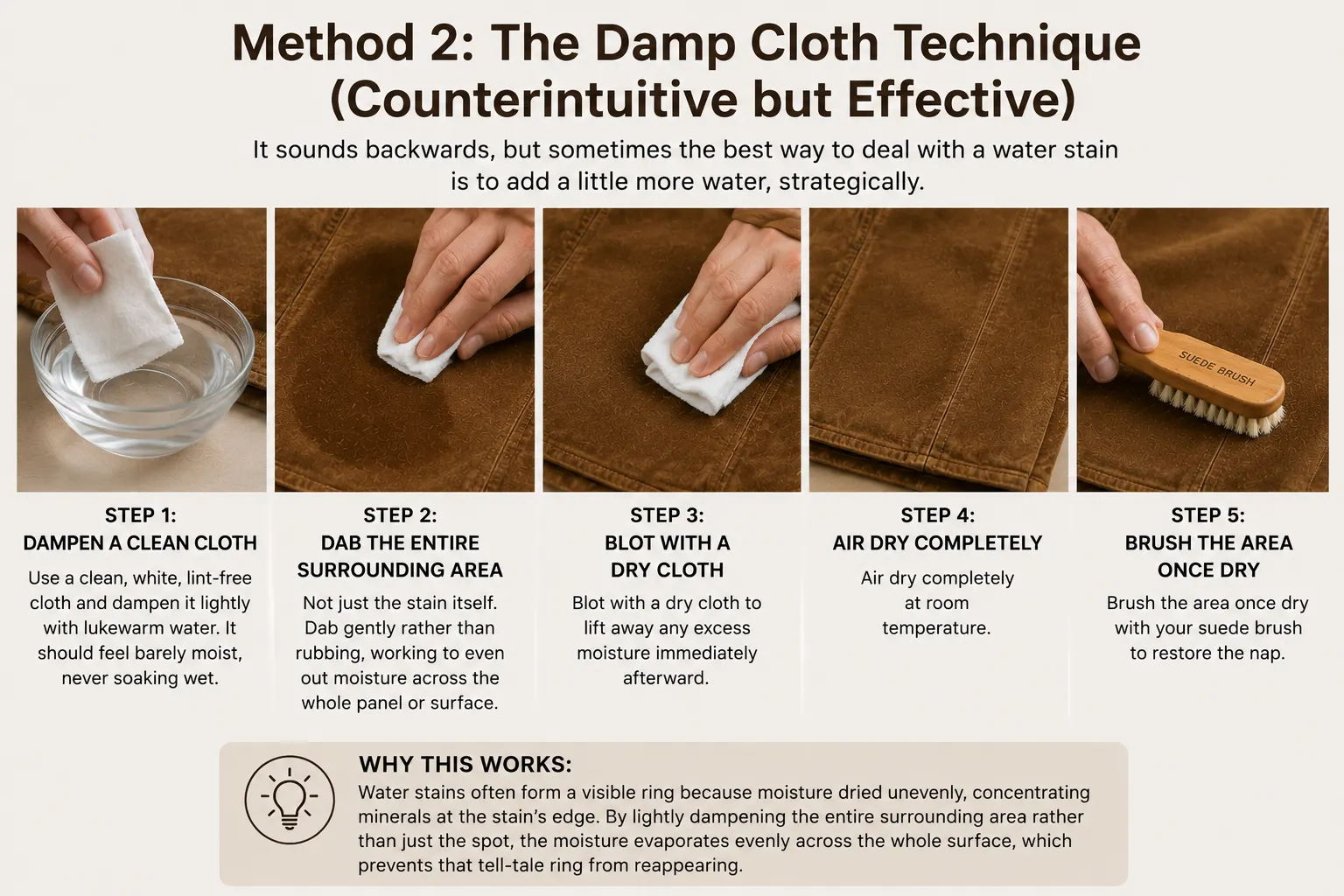
Step 1: Dampen a clean cloth. Use a clean, white, lint-free cloth and dampen it lightly with lukewarm water. It should feel barely moist, never soaking wet.
Step 2: Dab the entire surrounding area, not just the stain itself. Dab gently rather than rubbing, working to even out moisture across the whole panel or surface.
Step 3: Blot with a dry cloth to lift away any excess moisture immediately afterward.
Step 4: Air dry completely at room temperature.
Step 5: Brush the area once dry with your suede brush to restore the nap.
Why this works: Water stains often form a visible ring because moisture dried unevenly, concentrating minerals at the stain’s edge. By lightly dampening the entire surrounding area rather than just the spot, the moisture evaporates evenly across the whole surface, which prevents that tell-tale ring from reappearing.
Method 3: White Vinegar or Apple Cider Vinegar (For Stubborn Stains)
For water stains that resist the gentler methods, vinegar is a reliable next step. Both white vinegar and apple cider vinegar are effective, though apple cider vinegar is the gentler choice thanks to its milder acidity.
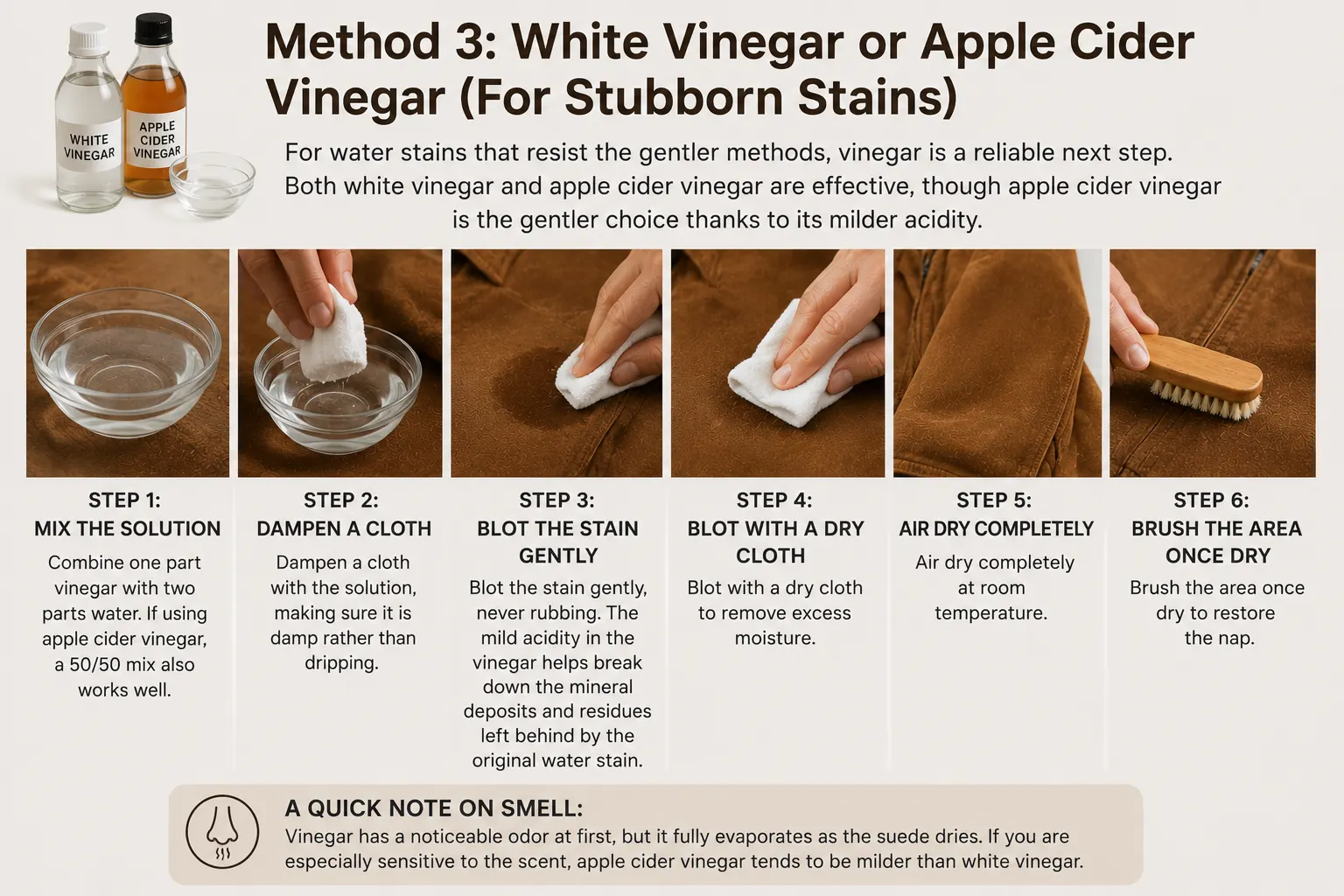
Step 1: Mix the solution. Combine one part vinegar with two parts water. If using apple cider vinegar, a 50/50 mix also works well.
Step 2: Dampen a cloth with the solution, making sure it is damp rather than dripping.
Step 3: Blot the stain gently, never rubbing. The mild acidity in the vinegar helps break down the mineral deposits and residues left behind by the original water stain.
Step 4: Blot with a dry cloth to remove excess moisture.
Step 5: Air dry completely at room temperature.
Step 6: Brush the area once dry to restore the nap.
A quick note on smell: vinegar has a noticeable odor at first, but it fully evaporates as the suede dries. If you are especially sensitive to the scent, apple cider vinegar tends to be milder than white vinegar.
Method 4: Baking Soda or Cornstarch (For Absorbing Fresh Moisture)
If you catch a water stain while it is still damp, an absorbent powder can draw the moisture out before it ever has the chance to set.
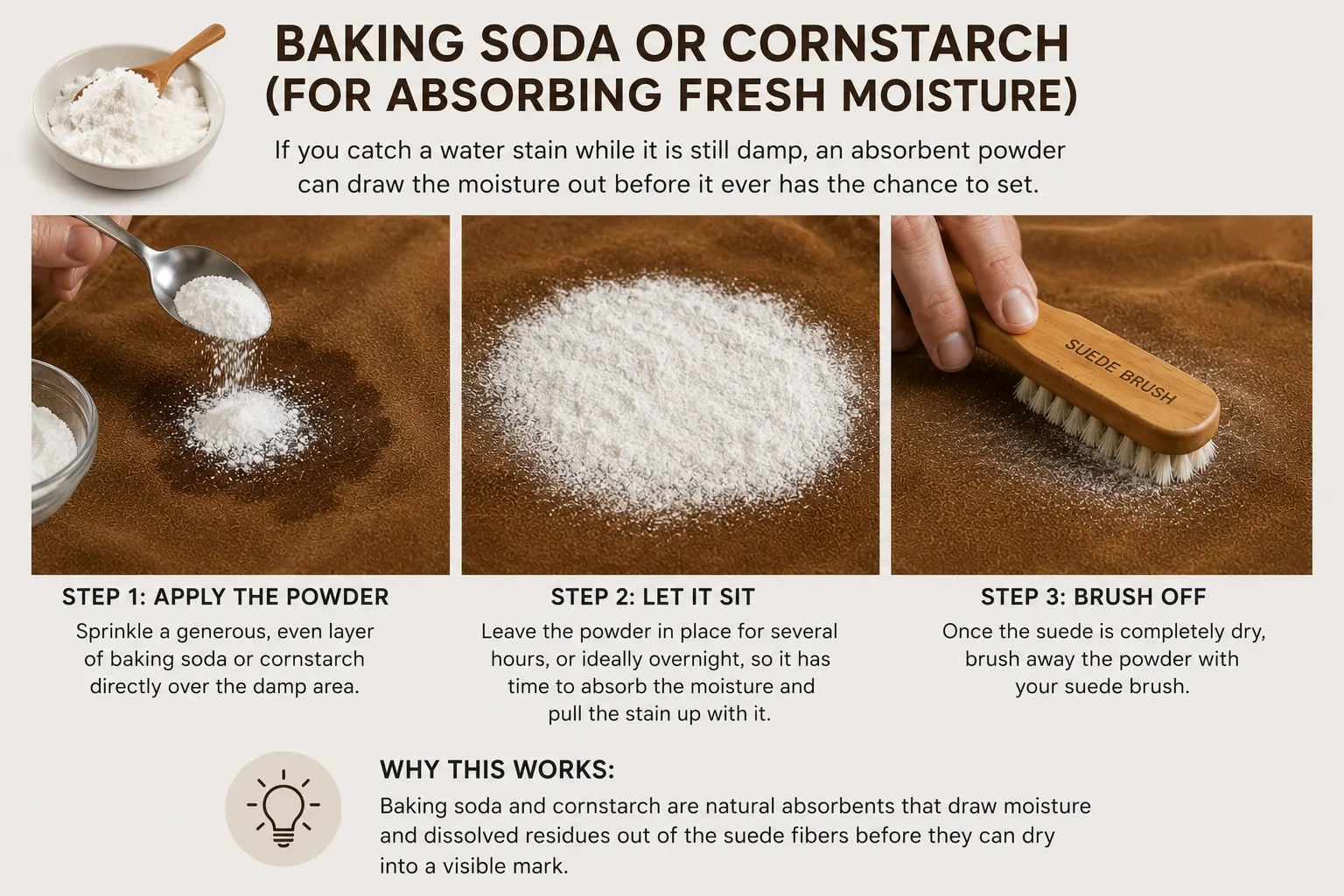
Step 1: Apply the powder. Sprinkle a generous, even layer of baking soda or cornstarch directly over the damp area.
Step 2: Let it sit. Leave the powder in place for several hours, or ideally overnight, so it has time to absorb the moisture and pull the stain up with it.
Step 3: Brush off. Once the suede is completely dry, brush away the powder with your suede brush.
Why this works: Baking soda and cornstarch are natural absorbents that draw moisture and dissolved residues out of the suede fibers before they can dry into a visible mark.
Method 5: Steaming (For Restoring a Flattened Nap)
After a stain has been treated, the suede may still look a little flat, dull, or matted in that spot. Steaming is the final touch that brings the texture back to life.
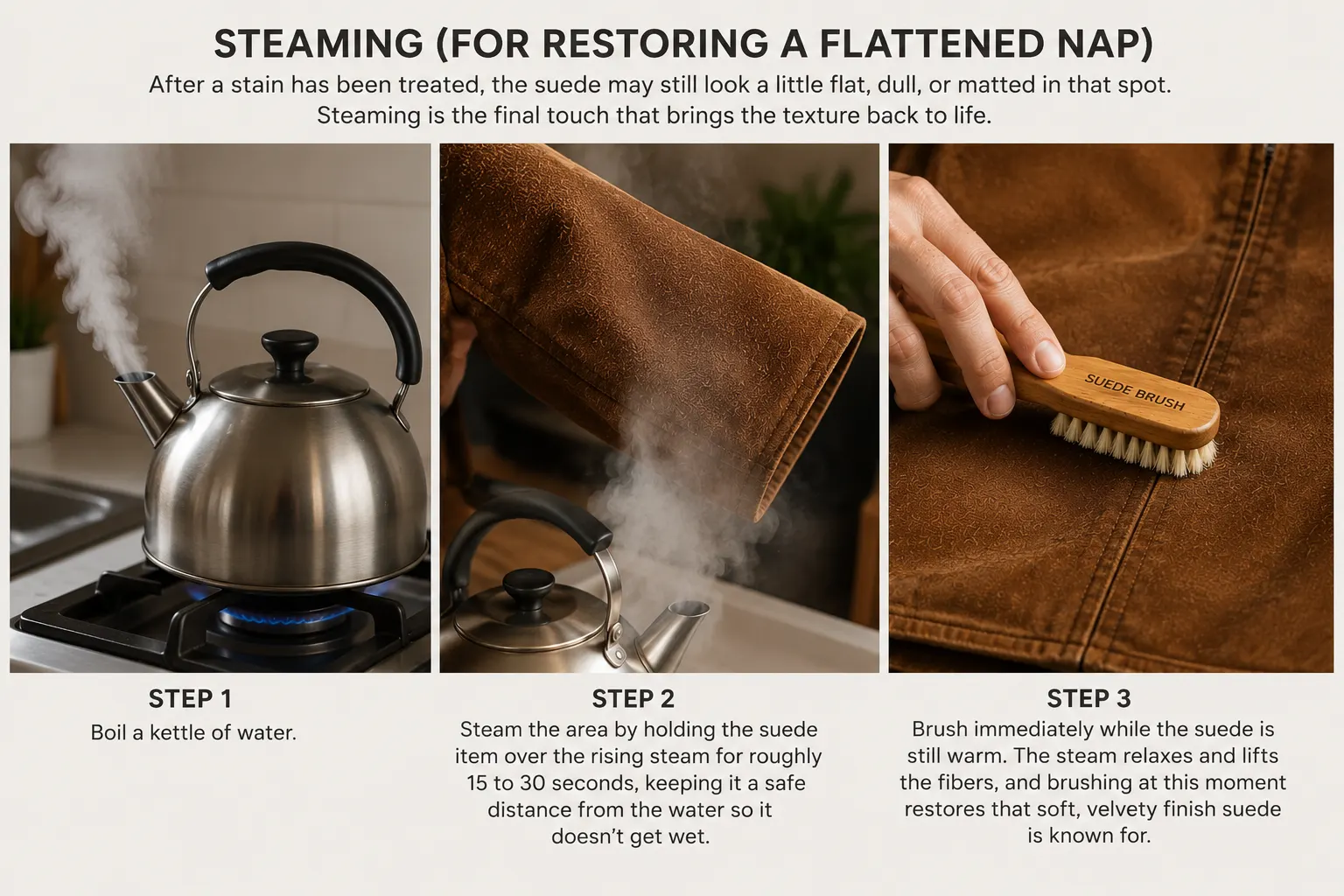
Step 1: Boil a kettle of water.
Step 2: Steam the area by holding the suede item over the rising steam for roughly 15 to 30 seconds, keeping it a safe distance from the water so it doesn’t get wet.
Step 3: Brush immediately while the suede is still warm. The steam relaxes and lifts the fibers, and brushing at this moment restores that soft, velvety finish suede is known for.
Frequently Asked Questions
Can I use a hairdryer to dry suede faster?
No. Never apply heat of any kind to suede. Heat causes the fibers to shrink and stiffen, and it can lock a stain in permanently. Always let suede air dry at room temperature, no matter how long it takes.
Will vinegar damage the color of my suede?
Vinegar is generally safe on suede, but it is always worth testing on a small, hidden patch first, such as an inner seam. Apple cider vinegar is the gentler of the two options and is a safer starting point for lighter or more delicate colors.
What if the water stain is on a light-colored suede item, like a pale bag or pastel skirt?
Light-colored suede tends to show every mark more clearly, so start with the gentlest option: brushing and the suede eraser. If the stain persists, try the damp cloth method next. Hold off on vinegar until you have tested it on a hidden area, since some light shades can be sensitive to acidity.
I have an oil-based stain, like cooking oil or motor oil, not water. Does the same process work?
Not quite. Oil stains behave differently from water stains because oil does not simply evaporate. For fresh oil marks, cover the area generously with cornstarch or talcum powder and leave it for several hours to overnight so the powder can absorb the oil, then brush it away. Avoid water or vinegar on an oil stain, as it will not lift oil and may spread it further. Stubborn or older oil stains are best handled by a professional suede cleaner.
I spilled something with sugar or salt in it, like a food or drink spill, and now there’s a hardened, discolored patch. What should I do?
Sugar and salt residues respond well to the vinegar method described above, since the mild acidity helps dissolve these mineral deposits. Blot with the vinegar solution, let it dry fully, then follow up with the suede eraser and brush to restore the texture.
The dye on my suede is bleeding or transferring when it gets wet. What should I do?
This is a sign the item may not be color-fast, and it needs extra caution. Stop applying any liquid immediately and let the item dry completely without touching or blotting further. Once dry, gently brush the area. If the color continues to transfer or fade with any moisture, it is best to take the item to a professional leather and suede specialist rather than attempting further home treatment, since additional liquid could cause more dye loss.
Can I remove paint from suede?
Dried paint is very difficult to remove from suede without damaging the nap, and most home methods will not fully lift it. For a valuable or sentimental item, a professional suede or leather cleaner is the safer route.
Does this process work on faux suede or microsuede?
Faux suede is a synthetic material and is generally more water-resistant and forgiving than genuine suede. Many faux suede items can be spot cleaned with a small amount of mild soap and water, then air dried. Always check the manufacturer’s care label first, since synthetic suede varies by brand.
What if the stain is still there after trying all of these methods?
If a stain persists after brushing, erasing, and the vinegar treatment, a specialized suede cleaner is the next option. For stubborn, older, or particularly valuable items, it is worth taking the piece to a professional leather and suede cleaner who has the tools and experience to treat it safely.
Can I use rubbing alcohol on suede?
Rubbing alcohol can help lift stubborn marks in small amounts. Dampen a cloth lightly with it and blot the stain gently. Because alcohol can dry out the fibers, use it sparingly and always test on a hidden area first.
How do I prevent water stains in the first place?
The single best prevention step is a suede protector spray. Apply a waterproofing spray made specifically for suede before you wear a new item, and reapply it every few months or after any deep cleaning. This creates an invisible barrier that helps water bead up and roll off rather than soaking in.
Can I wash suede in a washing machine?
No. Machine washing exposes suede to prolonged water exposure and agitation, both of which will damage the nap and can cause shrinkage or permanent discoloration. Suede should only ever be spot cleaned or professionally cleaned.
What is the difference between a suede brush and a regular brush?
A suede brush is designed with stiff brass or nylon bristles specifically to lift and separate the nap without tearing or scratching the fibers. A regular clothes or shoe brush is usually too harsh and can damage suede rather than clean it.
My suede got caught in the rain. What should I do right away?
Let it air dry naturally at room temperature away from any heat source. Once it is fully dry, brush it with a suede brush to lift the nap back into place. If any water stains remain visible after drying, follow the step-by-step methods above.
Should I clean the whole item or just the stained spot?
In almost every case, spot cleaning the affected area is the safer choice. Treating an entire jacket or pair of boots at once increases the risk of uneven color or texture changes. If the whole item genuinely needs a deep clean, for example a thrifted or vintage piece, a professional suede cleaning service is the more reliable option than a full at-home wash.
I have a white or pale mark on my suede that looks like pressure marks from packaging or storage, not a stain. Is this fixable?
Yes, this is usually just flattened or creased nap rather than an actual stain, and it typically responds very well to steaming followed by brushing. Try Method 5 above before assuming the item is permanently marked.
Can I remove old, set-in water stains, not just fresh ones?
Yes, though older stains are naturally more stubborn and may take a few rounds of treatment. Start with the suede brush and eraser, move on to the vinegar method if needed, and be prepared to repeat the process. Patience makes a real difference with older marks.
How to Prevent Water Stains on Suede
Prevention will always save you more time and worry than treatment. A few simple habits go a long way:
Use a suede protector spray. Apply a waterproofing spray made for suede before the first wear, and reapply every few months or after cleaning. This creates a light, invisible barrier that helps repel both water and stains.
Avoid heavy rain. Suede can usually tolerate light drizzle, but a genuine downpour is risky. Check the forecast before heading out in a suede jacket or shoes.
Carry an umbrella. If there is any real chance of rain and you are wearing suede, an umbrella is the simplest form of insurance.
Store it properly. Keep suede items in a cool, dry space away from direct sunlight, ideally in a breathable garment bag rather than sealed plastic, which can trap moisture and encourage mildew.
Choosing a Suede Jacket That Is Easier to Care For
Stain removal is much easier when you start with a well-made suede jacket in the first place. Not all suede is created equal, and the quality of the hide, the tanning process, and the finish all affect how easily an item stains and how well it holds up to cleaning over time.
If you are shopping for one of the best suede jackets for men, look for full-grain or top-grain suede with an even, consistent nap, since this type of hide resists water absorption better than lower-quality splits. Classic styles like suede bomber jackets and suede biker jackets remain some of the most popular choices for men because they pair timeless silhouettes with the rugged texture suede is known for, and both styles tend to be finished with a slightly denser nap that stands up well to everyday wear.
For women, the best suede jackets for women usually fall into two categories: fitted, tailored designs for a polished look, and relaxed, oversized styles for a more casual feel. A black suede jacket for women is one of the most versatile investments you can make, since it pairs easily with almost any outfit and hides light surface marks better than lighter shades.
Brown suede jackets for men remain a wardrobe staple as well, offering a warmer, richer tone that works well for both casual and semi-formal looks. Brown suede tends to be slightly more forgiving with water spots than very light or very dark shades, since minor discoloration blends more naturally into the existing tone.
Whatever style you choose, whether it is a suede bomber jacket, a suede biker jacket, or a tailored blazer-style suede coat, applying a suede protector spray from day one and following the stain-removal methods above will keep it looking sharp for years.
Final Thoughts
Water stains on suede look worse than they usually are. In almost every case, they can be treated at home with a little patience and the right technique. Start with the gentlest option first, brushing and the suede eraser, and only move on to the damp cloth or vinegar method if the stain does not lift on its own. Always let the suede dry completely at room temperature before brushing, and never use heat, rubbing, or soaking as a shortcut.
With the right care, your suede jacket, boots, or bag can stay looking beautiful for years to come. A water stain is a minor, temporary setback, not a life sentence for your favorite piece.
If you are looking for the best suede jackets for men or the best suede jackets for women, Lammberg offers a premium collection crafted from high-quality materials. Their range includes the best suede bomber jackets and best suede biker jackets that combine timeless style with durability. Whether you prefer brown suede jackets for men or black suede jackets for women, investing in quality suede ensures your jacket remains a wardrobe staple for years.
Looking for premium leather and suede care products? Explore our collection at Lammberg.com.
Related Articles
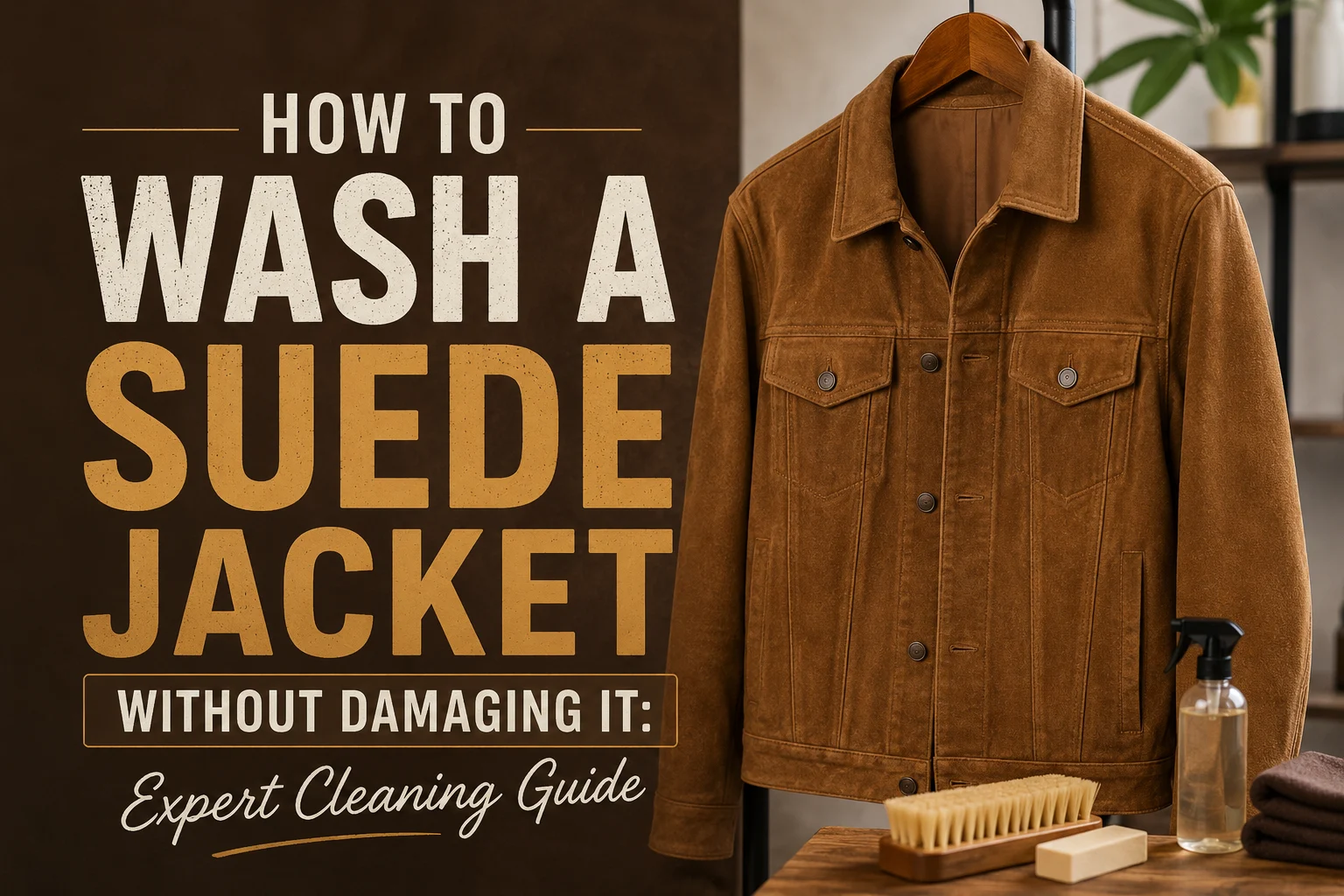
- How to Wash a Suede Jacket Without Damaging It: Expert Cleaning Guide
- How to Remove Wrinkles from a Leather Jacket
- How to Remove Cigarette Smell from a Leather Jacket
- The Ultimate Leather Jacket Size Guide
- How to Style a Leather Jacket for Men
- Real vs Fake Leather Jackets: How to Spot the Difference
- What Makes a Leather Jacket Premium?
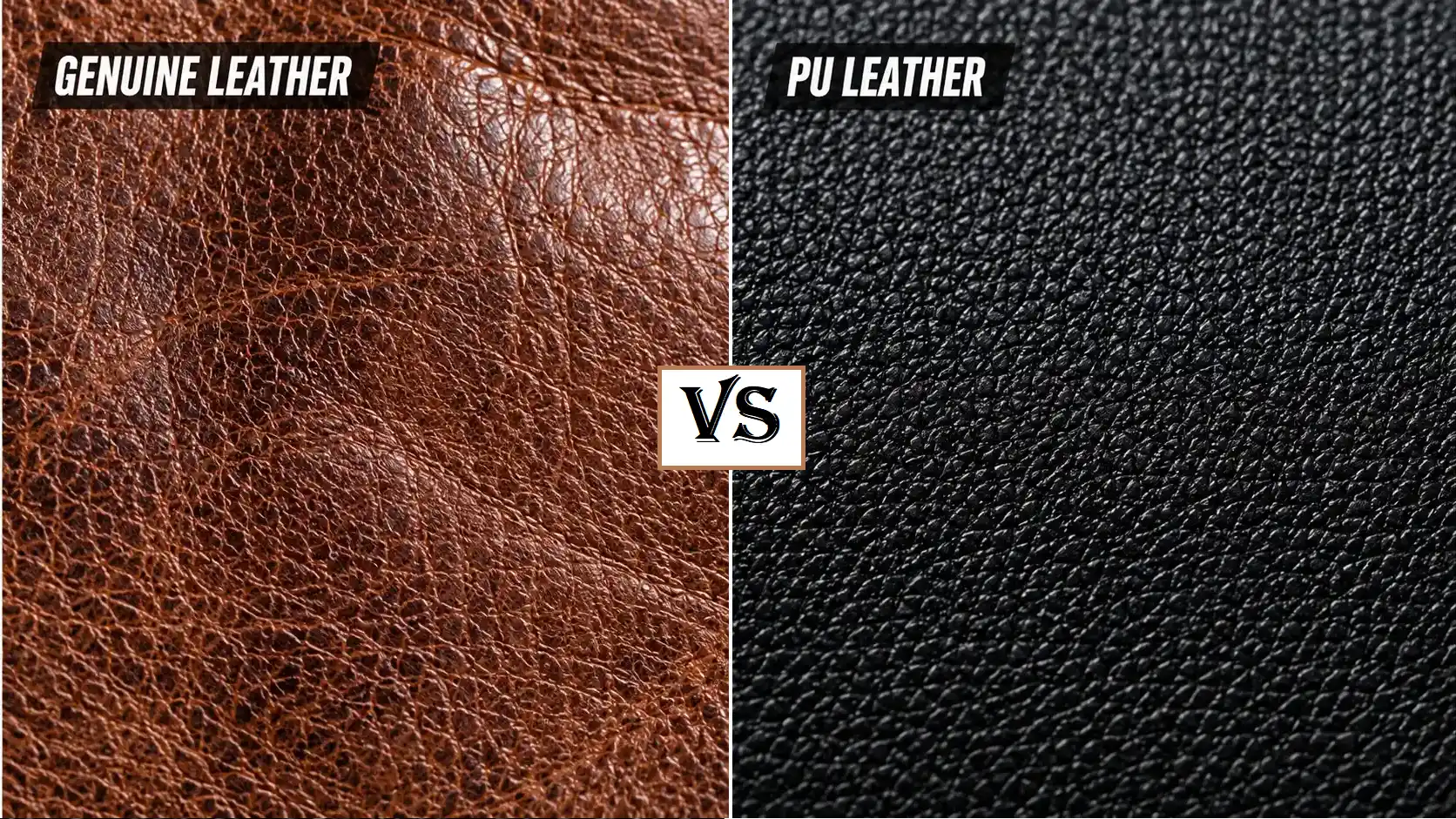
- PU Leather vs Genuine Leather: The Truth Most Sellers Won’t Tell You














































What Is Bison Leather? Durability, Uses & Cowhide Comparison

What Is Bovine Leather?