What Is Split Leather?
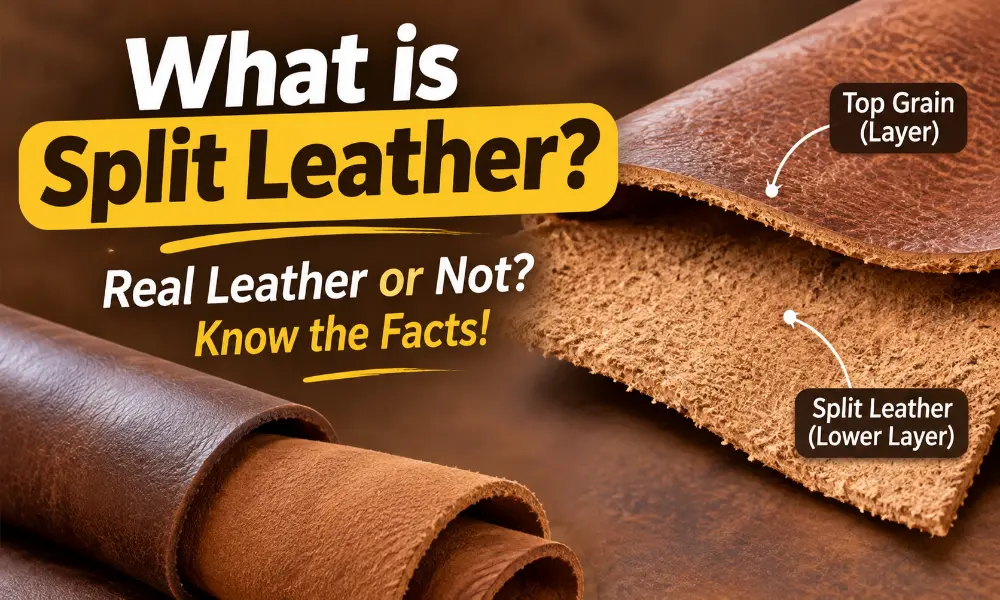
Split leather is real animal leather made from the lower layers of a hide after the upper grain layer has been separated. During leather production, a thick hide is divided horizontally into different layers to achieve the required thickness. The upper section retains the natural grain, while the lower sections are used to produce split leather.
Unlike full-grain leather, split leather does not have the original outer grain surface. Its exposed fibres usually create a softer, more fibrous texture. Depending on how it is processed, it can have a fuzzy suede-like finish or a smooth surface created through coating, embossing or other finishing techniques.
Split leather is commonly used for jackets, shoes, gloves, bags, upholstery and other leather goods. Its appearance and performance can vary considerably, so understanding its construction is important before choosing a product.
How Is Split Leather Made?
Split leather is produced by dividing a tanned animal hide into thinner layers using a specialised splitting machine. This process allows manufacturers to use different parts of the same hide for different leather products.
A typical hide contains several structural layers:
- Grain layer: The outer surface of the hide. It has a naturally dense fibre structure and contains the original grain pattern.
- Grain and corium junction: The transitional area beneath the grain, where the fibre structure gradually becomes more open.
- Corium layer: The thicker fibrous section beneath the grain. Much of the material used for split leather comes from this area.
- Flesh side: The inner side of the hide, where the fibres are generally more open and less compact.
When the grain layer is separated, the remaining lower section is commonly called the drop split. Depending on the thickness of the original hide, it may be divided further into a middle split and a flesh split.
The position of the cut matters. A split taken from a section closer to the grain may have a different fibre density and performance from one taken deeper into the hide. This is one reason why not all split leather has the same quality.
Is Split Leather Real Leather?
Yes. Split leather is genuine animal leather because it is made from a real hide that has undergone tanning. It is not made entirely from plastic or synthetic fabric.
However, the term needs some explanation. Split leather does not retain the original grain layer found in full-grain and top-grain leather. It is made from the lower portion of the hide, which has a different fibre structure and usually offers different performance characteristics.
Another point worth understanding is that the words genuine leather do not automatically mean full-grain or premium-quality leather. Genuine leather is a broad description, and products carrying this label can be made from different types of leather, including split leather.
For an accurate comparison, always check the specific leather description rather than relying on the word “genuine” alone.
Is Split Leather the Same as Suede?
Not exactly. Split leather describes the part of the hide used to make the material, while suede describes a particular type of leather surface with a soft, raised nap.
Many suede products are made from split leather. The surface is sanded or buffed to create an even, velvety texture. When you move your hand across suede, the fibres change direction, which can make the surface appear slightly lighter or darker.
However, not all split leather is suede. Some splits are finished with a smooth coating or embossed pattern to create a surface that resembles conventional grain leather.
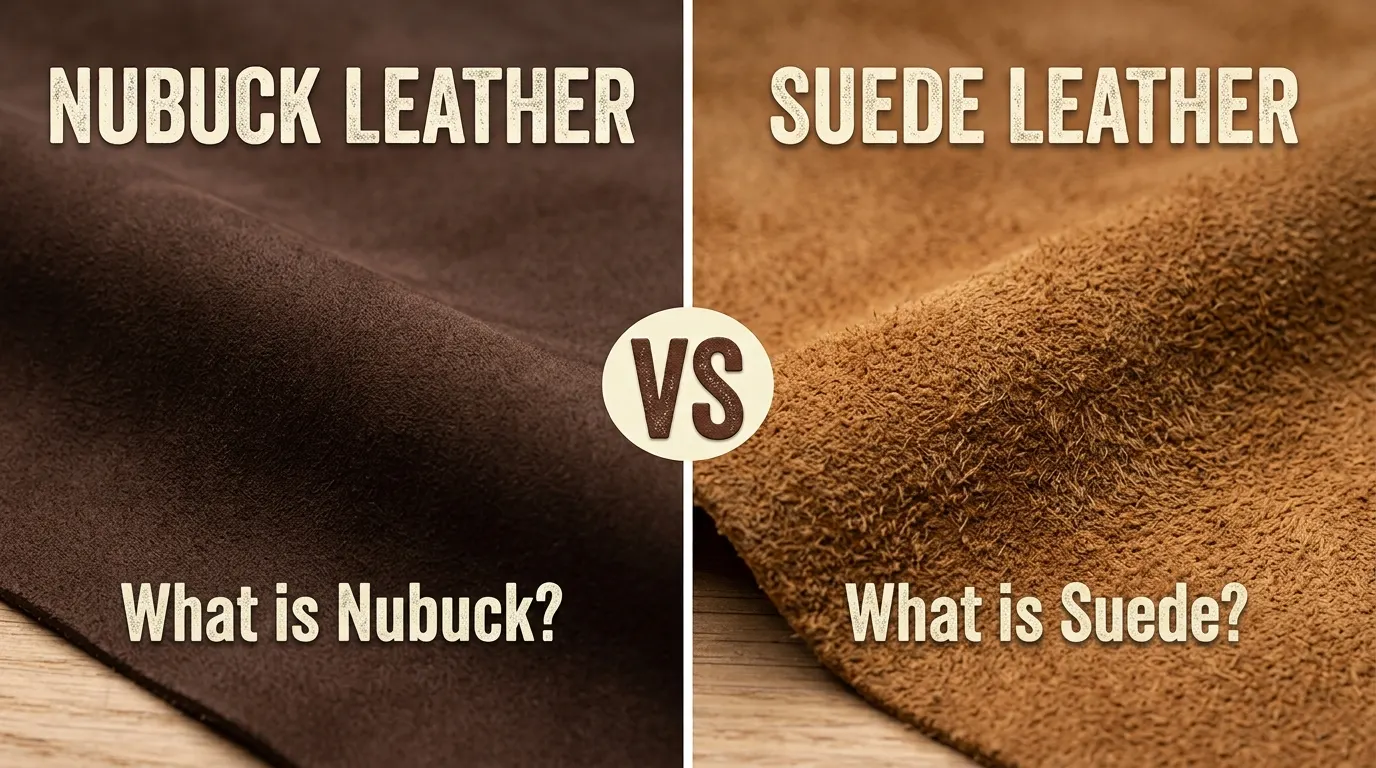
It is also useful to distinguish suede from nubuck. Suede is generally produced by finishing the flesh side of leather, while nubuck is created by lightly sanding the grain side. Both have a soft, velvety appearance, but their starting surfaces are different.
What Are the Different Types of Split Leather?
Split leather can be finished in several ways. The finishing method has a major influence on its appearance, texture, maintenance and overall performance.
1. Split Suede
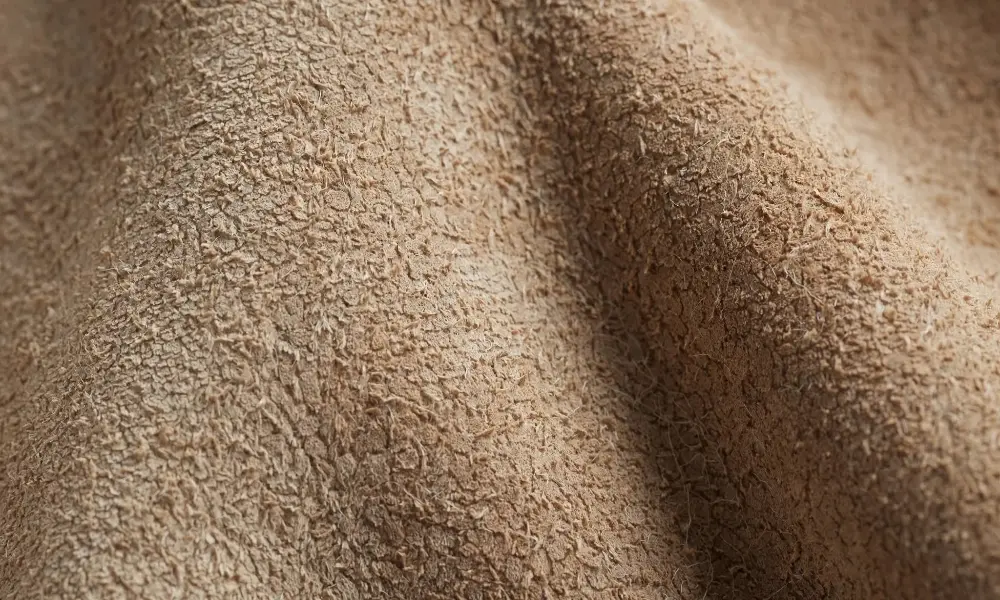
Split suede has a soft, brushed surface with visible fibres. It is commonly used in jackets, footwear, gloves and bags.
Its breathable, flexible feel makes it suitable for garments, but the open surface can attract dust and absorb moisture more easily than many smooth, coated leather finishes. It also needs specialised cleaning and protection.
2. Coated Split Leather
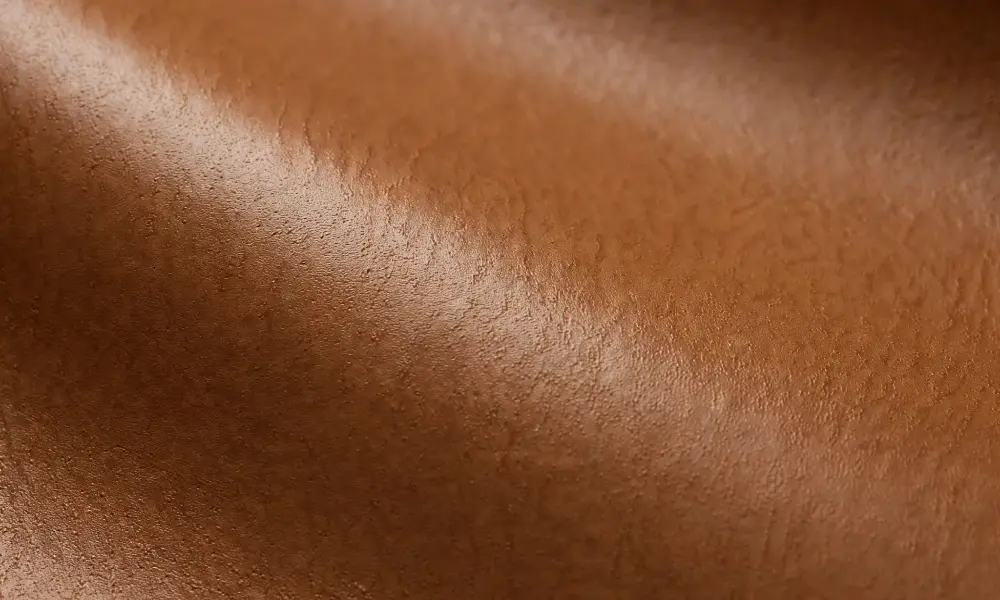
Coated split leather has a layer of finishing material applied to its surface. This coating can give the leather a smoother appearance and make it look more like traditional grain leather.
The quality depends on both the underlying leather and the finishing system. A well-made coated split can be suitable for particular products, but its surface performance depends heavily on the coating’s flexibility, adhesion and resistance to wear.
3. Embossed Split Leather
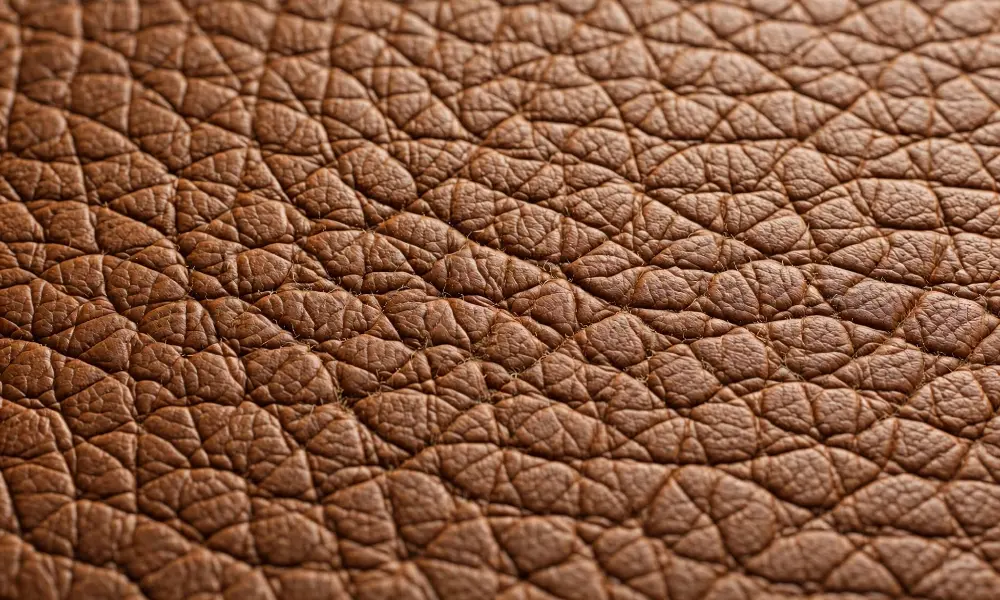
Embossed split leather has a pattern pressed into its surface. Manufacturers may use this process to create a grain-like appearance or a more uniform texture.
The pattern is manufactured rather than the original natural grain of the hide. This does not automatically make the material unsuitable, but buyers should understand that its appearance is produced through finishing.
4. Bycast Leather
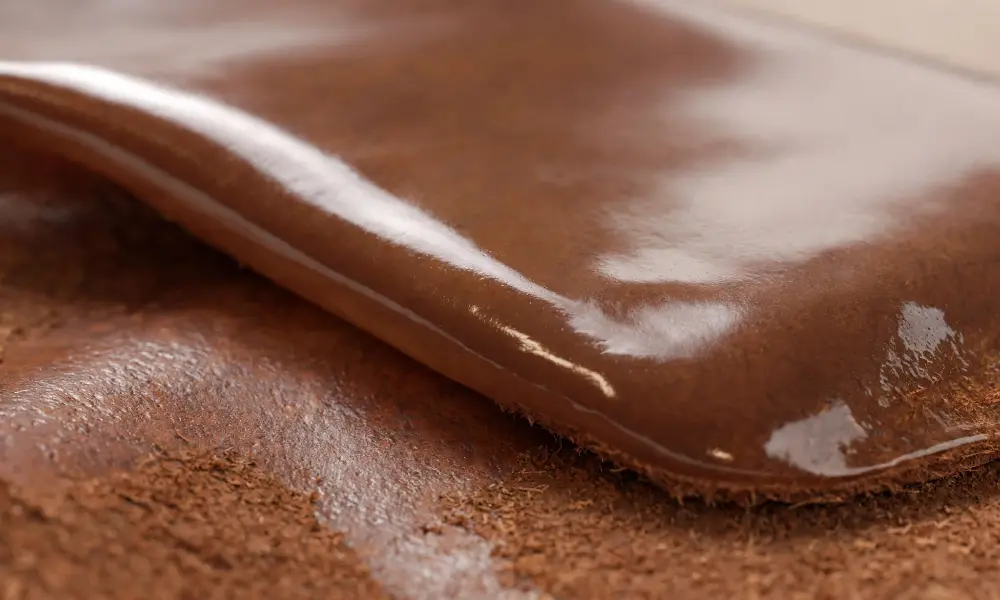
Bycast leather is generally made using a split leather base with a polyurethane or similar synthetic surface layer. The surface can be embossed to imitate the appearance of grain leather.
It may offer a consistent look at a lower price than many higher-grade natural leathers. However, the synthetic coating can wear, crack or peel over time. Once the coating is damaged, ordinary leather conditioner cannot restore it.
5. Patent Leather
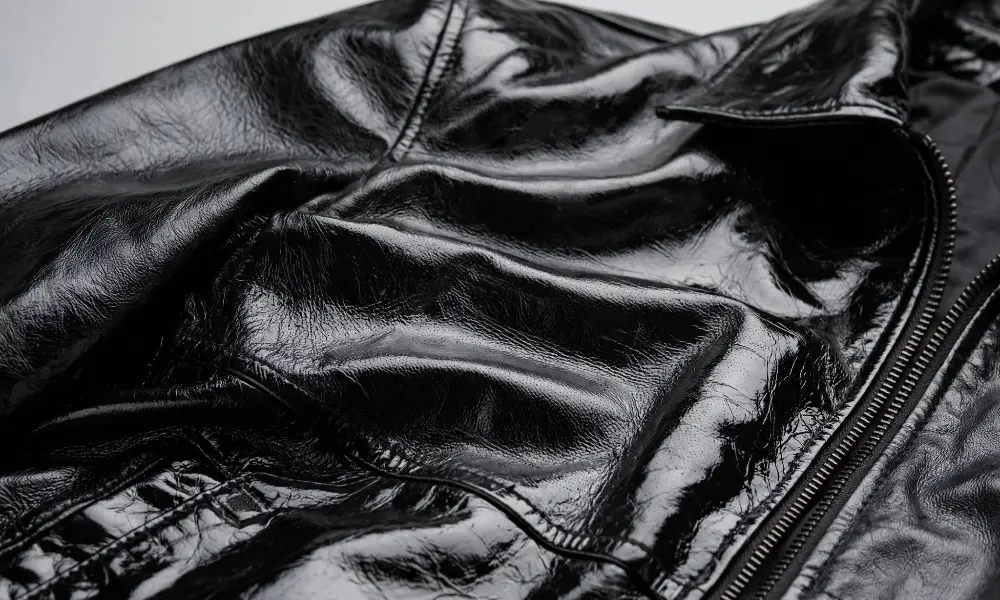
Patent leather is recognised by its smooth, glossy, highly reflective surface. It can be produced using different leather bases, including split leather, with a specialised high-gloss coating.
Therefore, patent leather describes a finish rather than one specific layer of the hide. Its care requirements are different from those of unfinished suede or ordinary smooth leather.
Is Split Leather Good Quality?
Split leather can be good quality for the right purpose, but it is generally not considered equal to full-grain leather in natural grain strength and durability.
The upper grain layer has a relatively dense fibre structure that contributes to the strength of the hide. Once that layer is removed, the remaining split has more exposed and generally less compact fibres.
However, quality cannot be judged by the word “split” alone. Several factors influence how well a finished product performs:
- Position of the split: Material taken from different depths of the hide can have different fibre densities.
- Animal hide: Cow, goat, pig and other hides have different natural fibre characteristics.
- Thickness: A suitable thickness can improve the material’s performance for its intended use.
- Tanning quality: Consistent tanning and proper processing contribute to the leather’s overall characteristics.
- Surface finishing: Coatings, embossing and other treatments affect appearance and resistance to everyday wear.
- Product construction: Stitching, lining, reinforcement and manufacturing quality also influence how long the finished product lasts.
A carefully manufactured split suede jacket can be a practical choice, even though it does not have the same structure as a full-grain leather jacket. The important thing is to match the material to the product’s intended use.
Is Split Leather Durable?
Split leather can be durable enough for many everyday products, but its durability depends on its thickness, fibre structure, finishing and how it is used.
Uncoated split leather has a more open surface than grain leather. This can make it more vulnerable to abrasion, staining and damage from unsuitable cleaning methods. It may also be more difficult to maintain in areas exposed to frequent friction.
Coated split leather has a different set of characteristics. Its surface layer can provide protection against certain types of everyday wear, but the coating itself may deteriorate if it is repeatedly stretched, scratched or exposed to unsuitable chemicals.
For a leather jacket, consider the material’s construction, thickness, stitching and intended use rather than assuming that every split leather garment will perform the same way.
Is Split Leather Cheap?
Split leather is generally more affordable than full-grain leather because it comes from the lower layers of the hide and is often used in products positioned at a lower price point.
However, not every split leather product has the same price. A basic unfinished split and a carefully processed suede can have very different production costs. The type of hide, tanning process, thickness, dyeing, surface treatment and manufacturing quality all influence the final value.
Coated and embossed splits can also vary in price depending on the quality of their finishing and construction.
In other words, split leather is often a cost-effective option, but a low price alone does not tell you whether a product is well made.
What Is the Difference Between Full-Grain, Top-Grain and Split Leather?
The main difference is the part of the animal hide used and how much of its original grain surface remains.
| Feature | Full-Grain Leather | Top-Grain Leather | Split Leather |
|---|---|---|---|
| Source | Upper grain layer | Upper grain layer | Lower layers beneath the grain |
| Natural grain | Retained | May be sanded or corrected | Not retained |
| Surface | Natural grain and markings | Often smoother or more uniform | Fuzzy, coated or embossed |
| Fibre structure | Generally dense | Generally dense, depending on processing | More open and fibrous |
| Durability | Generally very high | Generally good | Varies by thickness and finish |
| Price | Usually higher | Varies | Often more affordable |
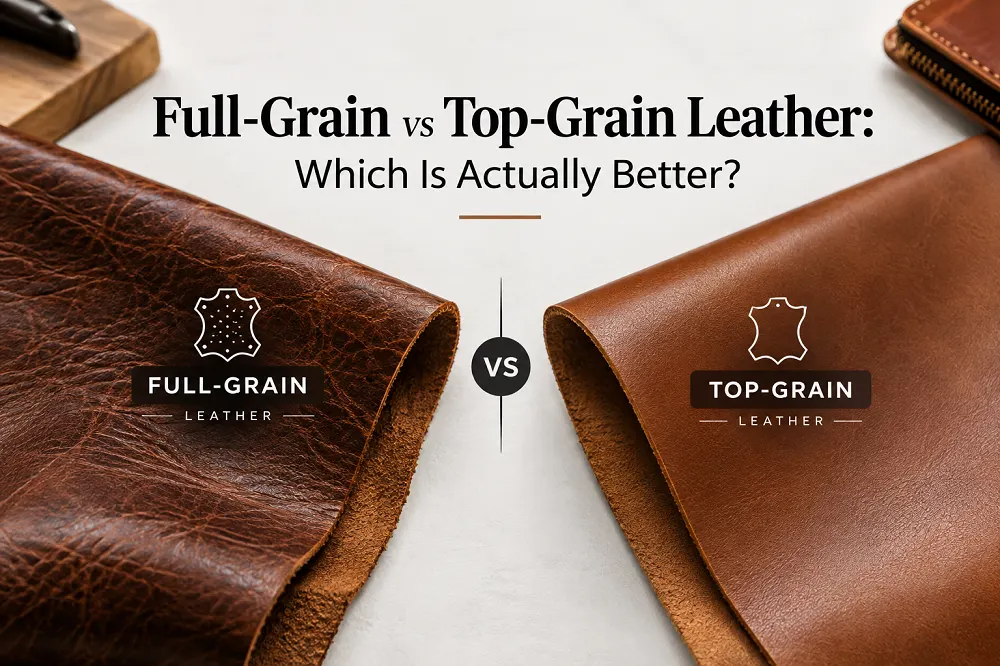
Full-grain leather keeps its original grain surface, which is valued for its natural character and dense structure. Top-grain leather also comes from the upper portion of the hide, but its surface may be sanded, corrected or finished to achieve a more uniform appearance.
Split leather comes from beneath that grain-bearing section. It can still be useful and attractive, but it has different characteristics and should not be marketed or understood as full-grain leather.
Is Split Leather Fake Leather?
No. Split leather is not fake leather. It is made from genuine animal hide and retains the natural fibrous structure of leather.
The confusion often comes from coated split leather and bycast leather. These materials may have a synthetic surface that gives them an artificial grain pattern or a smooth, plastic-like appearance.
It is important to distinguish between the leather base and the surface finish:
- Natural split leather: Made from the lower section of an animal hide.
- Coated split leather: Real split leather with an applied surface coating.
- Bycast leather: A split leather base finished with a synthetic surface layer.
- Faux leather: Made from synthetic or other non-animal materials rather than a natural hide.
- Bonded leather: Made by combining leather fibres or scraps with binding materials and a surface finish.
A coated split is not the same thing as fully synthetic faux leather. Its base is still real leather, even though its surface contains additional materials.
What Is Split Leather Used For?
Split leather is used in a wide range of products because it can be processed into different textures, thicknesses and finishes.
Common applications include:
- Leather jackets: Split suede is used for soft, casual and textured outerwear.
- Shoes and boots: Split leather can be used for suede footwear and other shoe components.
- Gloves: Its flexibility and soft feel can make it suitable for selected glove designs.
- Bags and accessories: It is used in handbags, pouches, luggage and other leather goods.
- Furniture: Finished split leather can be used in upholstery, including selected sofa panels and less exposed areas.
- Belts and small leather goods: Its suitability depends on the required strength, thickness and construction.
For furniture, split leather may be used on areas such as the sides or back of a sofa, depending on the product’s design and expected contact. High-contact seating areas need particular attention because friction and repeated use can affect the surface over time.
Does Split Leather Need Conditioner?
Yes, some types of split leather benefit from conditioning, but the correct product depends on the surface finish.
This is an important distinction because split leather is not always finished in the same way.
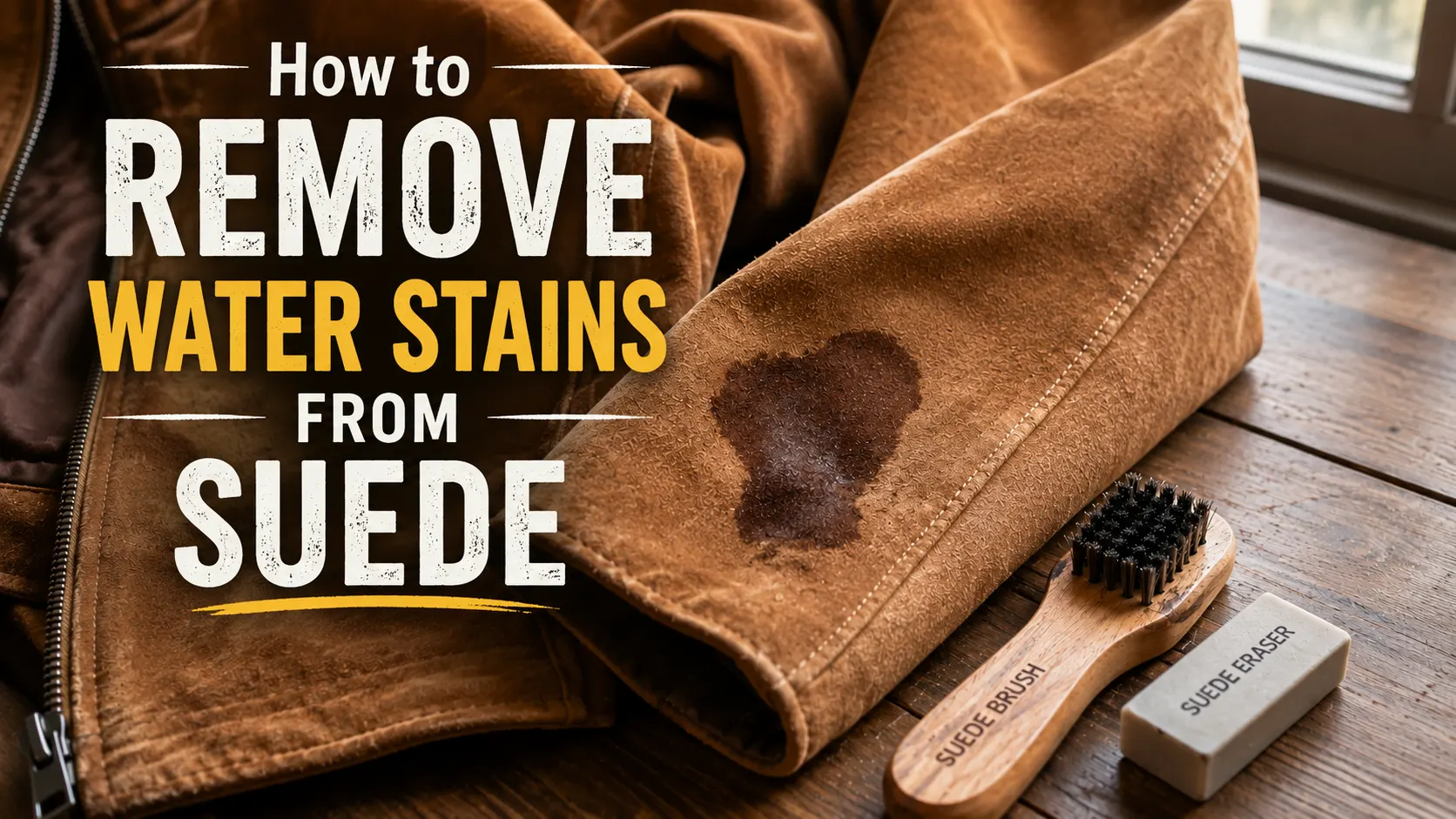
Uncoated split suede: Avoid ordinary smooth-leather creams, waxes and heavy oils. They can flatten the nap, darken the surface or leave marks. Use a conditioner or protector specifically formulated for suede, if the manufacturer recommends one.
Coated split leather: A compatible care product may help maintain the surface, but ordinary conditioners may not penetrate the coating. Always check the manufacturer’s care instructions before applying anything.
Bycast leather: Standard leather conditioner generally cannot repair or restore a damaged polyurethane surface. Use only products approved for the particular finish.
Before treating any split leather product, test the care product on a small, hidden area and allow it to dry. If the colour or texture changes, do not apply it to the entire item.
How to Care for Split Leather
Split leather needs care that matches its surface. A suede jacket, for example, should not be treated in the same way as a smooth coated leather jacket.
Follow these basic practices:
- Remove dust regularly: Use a soft brush suitable for the leather finish. For suede, brush gently in the direction of the nap.
- Clean stains carefully: Use a cleaner specifically designed for suede or the relevant coated leather finish. Avoid soaking the material.
- Protect suede: A suitable suede protector can help reduce the effect of moisture and staining. Follow the product instructions.
- Avoid excessive water: Water can leave marks or affect the texture of uncoated split leather. If the item gets wet, allow it to dry naturally.
- Keep it away from direct heat: Do not use a hair dryer, heater or direct sunlight to speed up drying.
- Store it properly: Keep leather garments in a cool, dry, ventilated place. Use a supportive hanger for jackets.
- Avoid unsuitable products: Household oils, harsh detergents, bleach and ordinary smooth-leather creams can damage or change the appearance of some split leather finishes.
Regular, suitable care helps maintain the material’s appearance, but it cannot turn split leather into full-grain leather or reverse damage to a deteriorating surface coating.
How Can You Identify Split Leather?
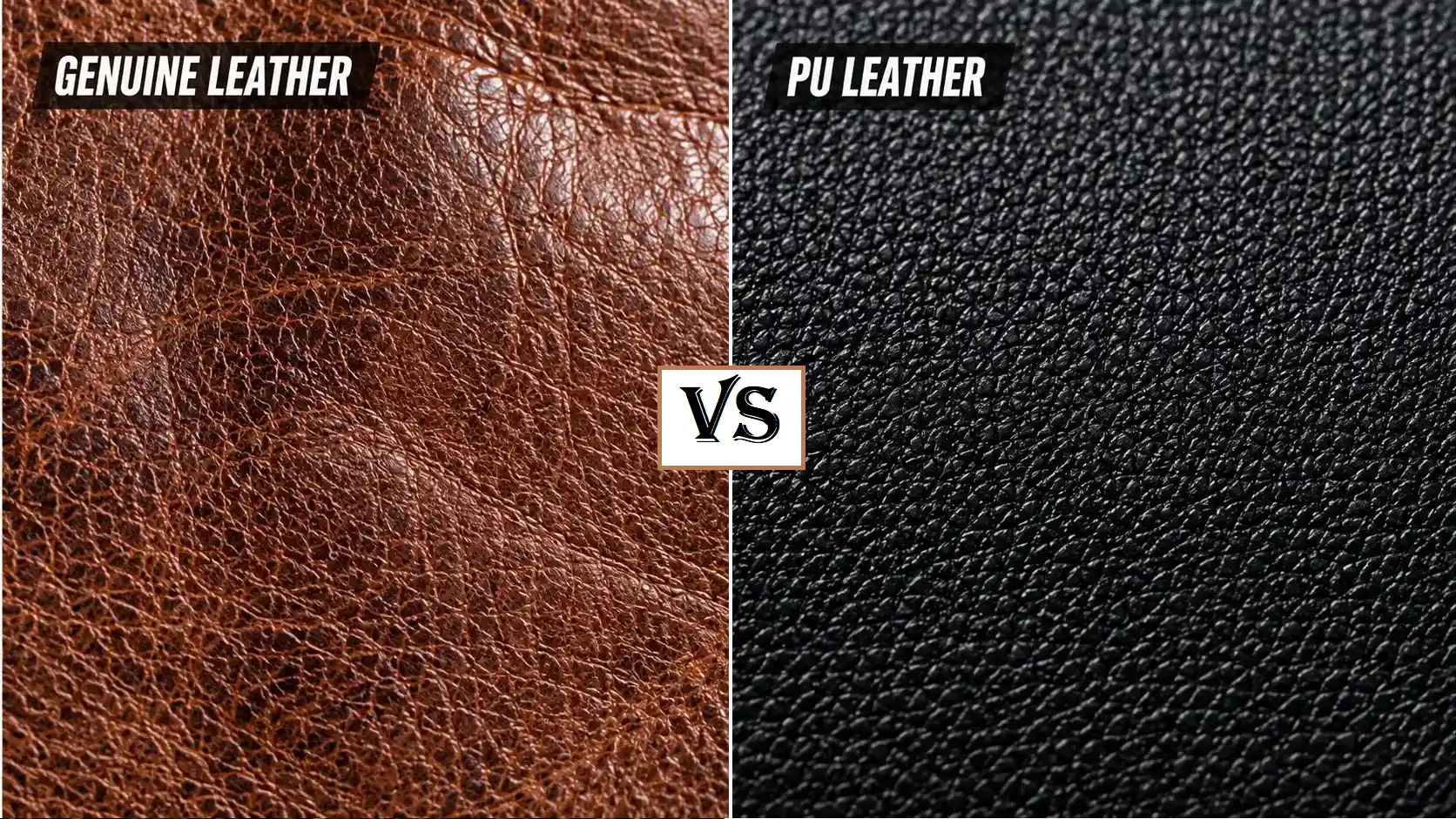
Identifying split leather can be difficult when the material has a thick coating or an embossed grain pattern. A smooth, uniform surface does not necessarily mean that a product is made from full-grain or top-grain leather.
Here are some useful things to examine:
1. Check the product description
Look for specific terms such as split leather, split suede, coated split or bycast leather. A detailed material description is more useful than a general label such as genuine leather.
2. Examine the underside
The underside may reveal a fibrous, suede-like structure. However, linings, backings and additional treatments can hide the original surface.
3. Look at the cut edge
A visible cut edge can help show the material’s internal fibre structure and any applied surface coating. A coated split may have a distinct finish layer over a fibrous base.
4. Observe the surface pattern
Natural grain leather usually has variations in its original grain pattern. An embossed split may show a more uniform manufactured pattern. However, appearance alone cannot confirm the material.
5. Consider professional assessment
If you need to verify an expensive leather product, a leather specialist can examine its construction, surface and cut edges more reliably than a visual inspection alone.
Avoid using burn tests, solvents or sharp tools to identify leather. These methods can damage the product and may create unnecessary safety risks.
Is Split Leather a Good Choice for a Leather Jacket?
Split leather can be a good choice if you want a soft texture, a suede appearance or a more affordable alternative to many grain-leather jackets.
Split suede is particularly popular in casual outerwear because of its brushed finish and flexible feel. It can create a different look from the smooth surface of a traditional leather jacket.
However, it is worth considering its maintenance requirements. Uncoated suede can be more sensitive to stains, moisture and friction than many smooth finished leathers. Coated splits have their own limitations, particularly if the surface layer begins to crack or peel.
Before buying a split leather jacket, check:
- Whether the material is natural split suede or coated split leather.
- The thickness and overall feel of the leather.
- The quality of the stitching, lining and construction.
- Whether the manufacturer provides clear care instructions.
- Whether the finish is suitable for your intended use and climate.
If you prefer a natural grain surface and generally stronger grain-layer construction, full-grain or top-grain leather may be more suitable. If you prefer a soft suede texture and understand its care requirements, split suede can be a practical option.
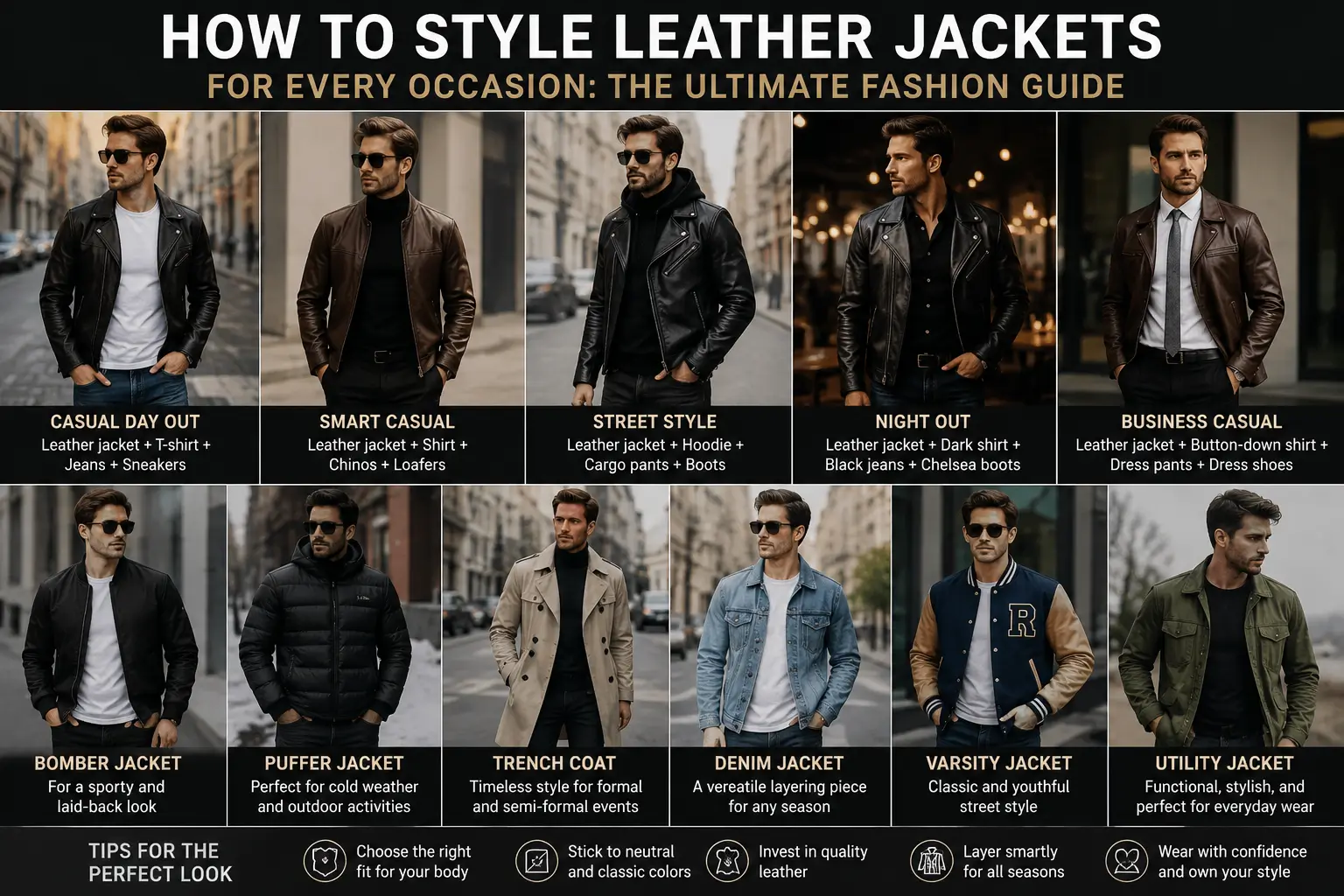
You can explore our men’s leather jackets and women’s leather jacket collection to compare different jacket styles and materials.
Frequently Asked Questions About Split Leather
1. Is split leather real leather?
Yes. Split leather is made from the lower layers of a real animal hide after the grain layer has been separated. It is genuine animal leather, although its structure differs from full-grain and top-grain leather.
2. Is split leather good quality?
Split leather can be good quality for specific uses, but its performance depends on the hide, thickness, tanning, finishing and construction. It generally does not have the same dense natural grain structure as full-grain leather.
3. Is split leather durable?
It can be durable enough for jackets, shoes, bags and upholstery when properly manufactured and used for the right purpose. However, uncoated splits may be more vulnerable to abrasion and staining, while coated versions depend heavily on the quality of their surface finish.
4. Is split leather cheap?
Split leather is usually more affordable than full-grain leather. However, the price varies according to the type of hide, tanning process, thickness, finishing and product construction.
5. Is split leather fake leather?
No. Split leather is made from natural animal hide. Coated split leather may contain a synthetic surface layer, but this does not make its underlying leather material fully synthetic.
6. Does split leather need conditioner?
It depends on the finish. Suede needs products specifically designed for suede, while coated split leather requires care products compatible with its surface. Ordinary smooth-leather conditioner should not be applied automatically to every type of split leather.
7. Is split leather the same as suede?
No. Split leather describes a layer of the hide, whereas suede describes a soft, napped surface finish. Much suede is made from split leather, but not all split leather is suede.
8. Can split leather be used for jackets?
Yes. Split suede is commonly used for jackets because it offers a soft texture and flexible feel. Its maintenance requirements and resistance to moisture and stains should be considered before buying.
9. Can split leather crack or peel?
Uncoated split leather can become worn or damaged, while coated split leather may crack or peel if its surface layer deteriorates. The type of damage depends on the material and finish. A leather conditioner cannot restore a coating that has already peeled away.
10. What is the difference between split leather and bonded leather?
Split leather is a continuous layer of natural hide separated during the splitting process. Bonded leather is made by combining leather fibres or scraps with binding materials and a surface finish. They are different materials and should not be treated as interchangeable terms.
Final Thoughts
Split leather is a genuine leather material with a wide range of uses, finishes and quality levels. It comes from the lower layers of an animal hide and can be processed into suede, coated leather and other finished materials.
Its main advantage is versatility and affordability. However, it does not retain the original grain surface, and its durability and care requirements depend on how it has been manufactured and finished.
The best way to judge split leather is to look beyond its name. Understand the type of split, examine its finish and consider how the material will be used. This makes it easier to choose a leather product that offers the right balance of appearance, maintenance and performance.



























What’s a Good Brand for Leather Jackets? 10 Brands to Explore
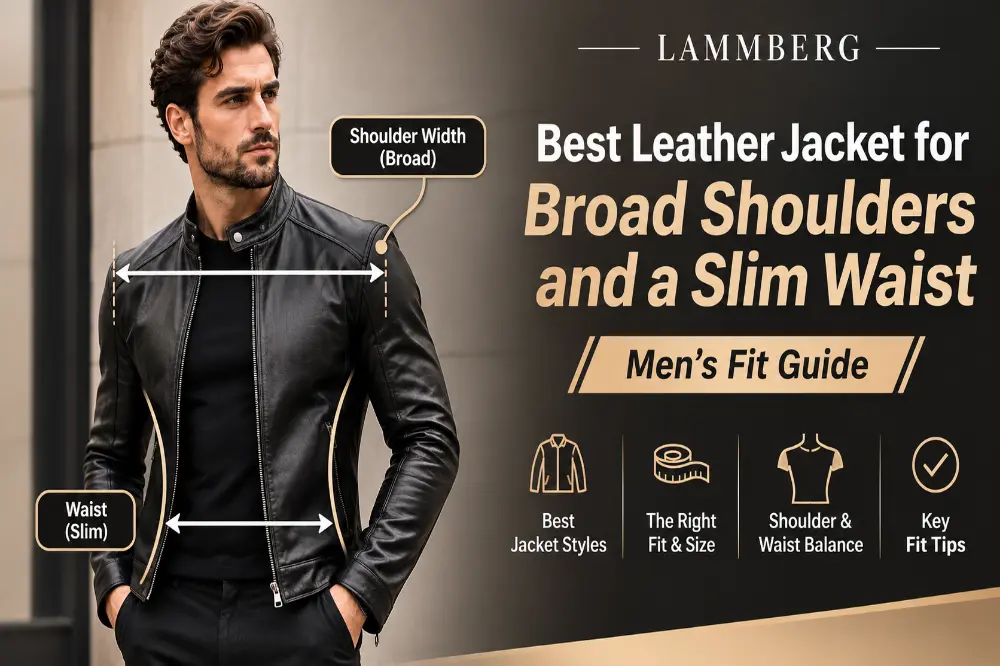
Best Leather Jacket for Broad Shoulders and a Slim Waist: Men’s Fit Guide