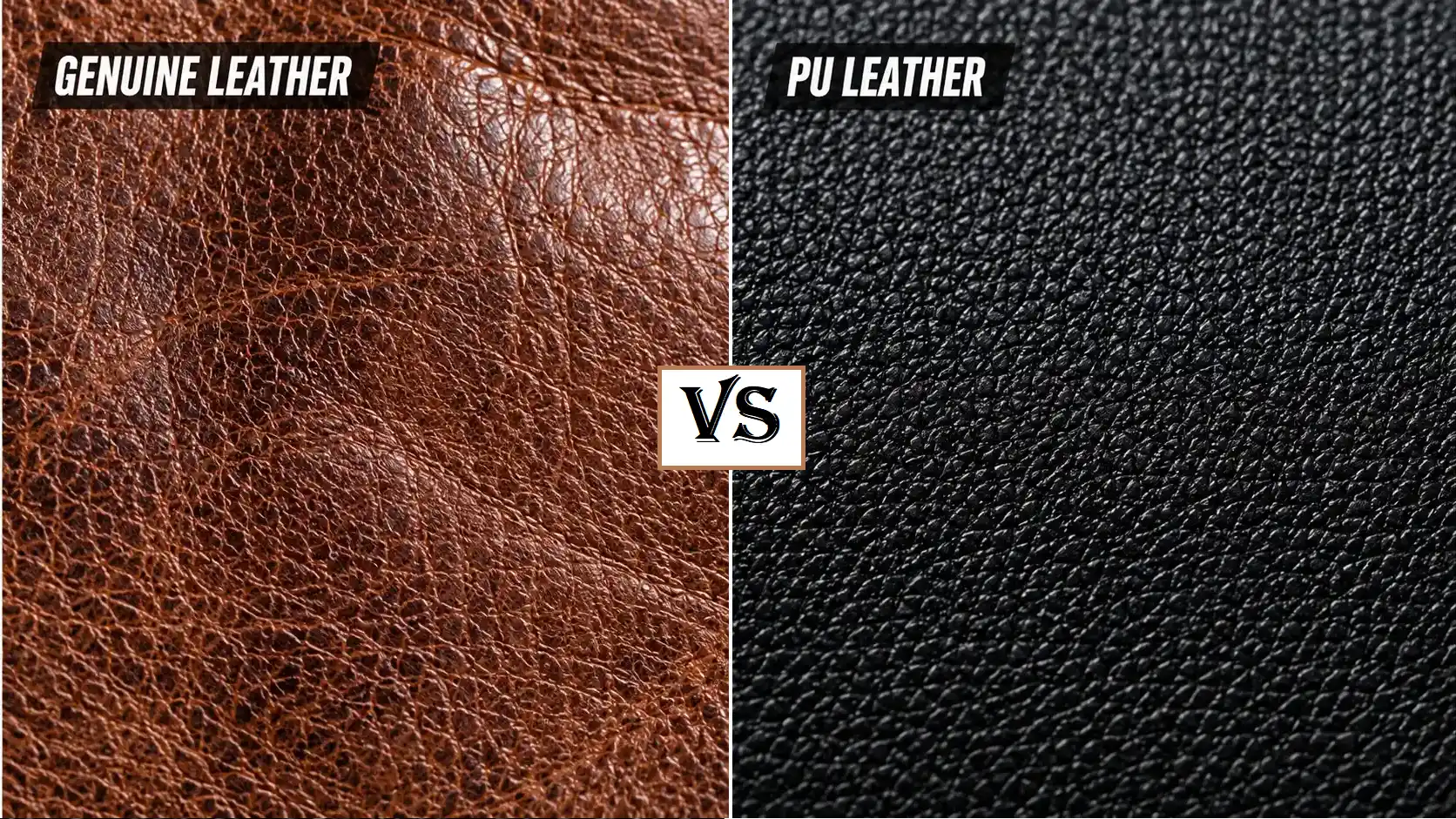
If you’re searching for PU leather vs genuine leather, genuine leather vs PU leather, a genuine leather vs PU leather comparison, polyurethane jacket vs genuine leather, or PU leather vs real leather, you’re in the right place. This guide gives you a complete comparison of both materials, including their construction, appearance, comfort, durability, maintenance, and long-term value, so you can make a confident buying decision.
Walk into almost any store selling jackets, bags, or belts and you’ll see the same labels everywhere: genuine leather, PU leather, vegan leather, synthetic leather. To most shoppers, these sound like minor variations on the same thing. To anyone who has actually worked with both materials, they could not be more different and the gap between them shows up exactly where it matters most: how the product looks, feels, and holds up after the first year of real use.
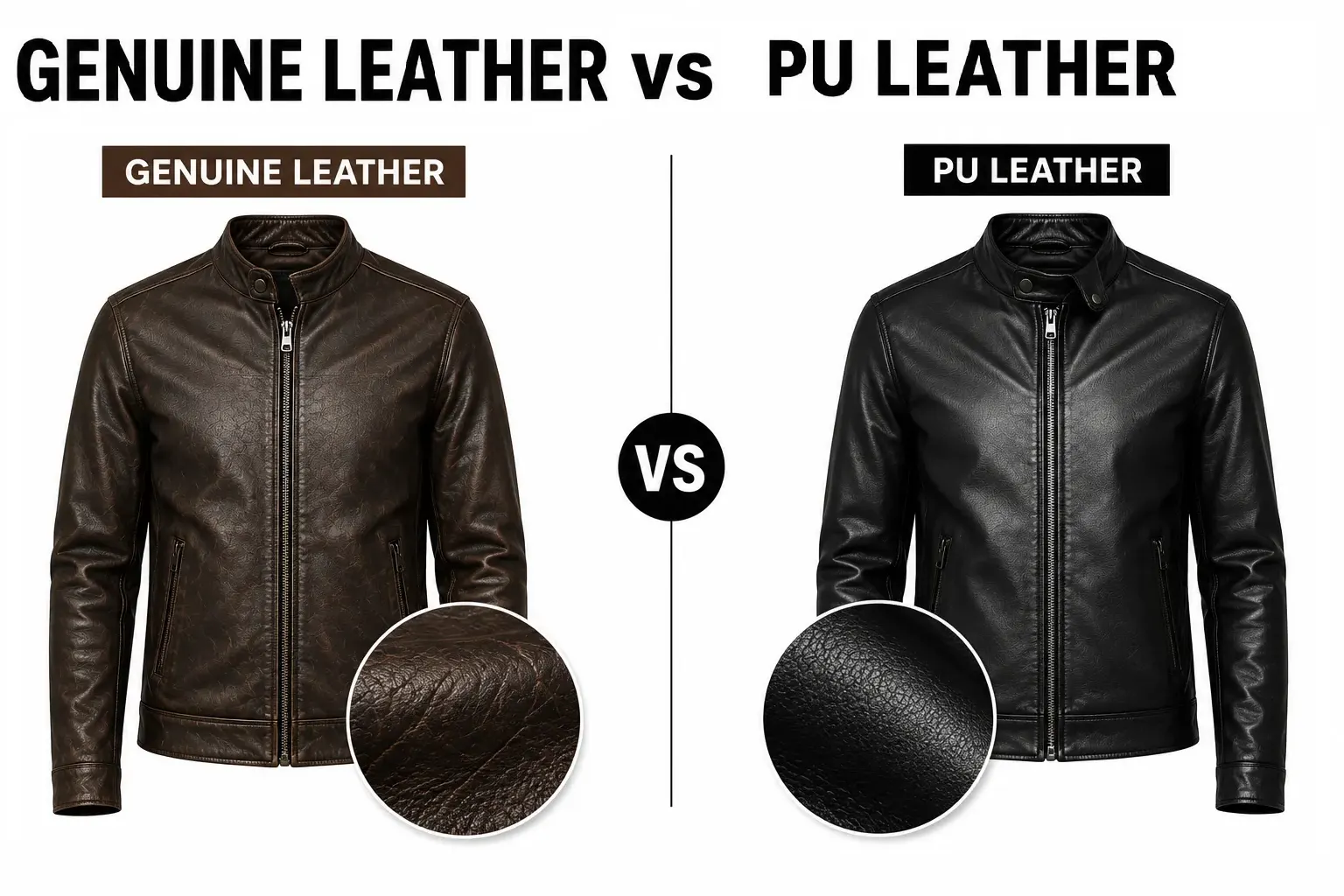
This isn’t just a cosmetic difference. It affects comfort, how the item ages, whether it can be repaired when damaged, and ultimately how much you’re really paying per year of use once you account for how long each material lasts. A jacket that looks premium in the store but starts cracking within eighteen months costs you more in the long run than one that costs more upfront and lasts a decade. This guide breaks down exactly what separates these two materials, how each is actually made, and how to verify what you’re buying before you hand over your money.
Quick answer: Genuine leather is real tanned animal hide with a natural fiber structure that softens and develops character over years of wear. PU leather is a synthetic material a plastic (polyurethane) coating applied over a fabric backing built to imitate leather’s look at a fraction of the cost, but without the breathability, repairability, or long-term durability of the real thing.
What Is Genuine Leather?
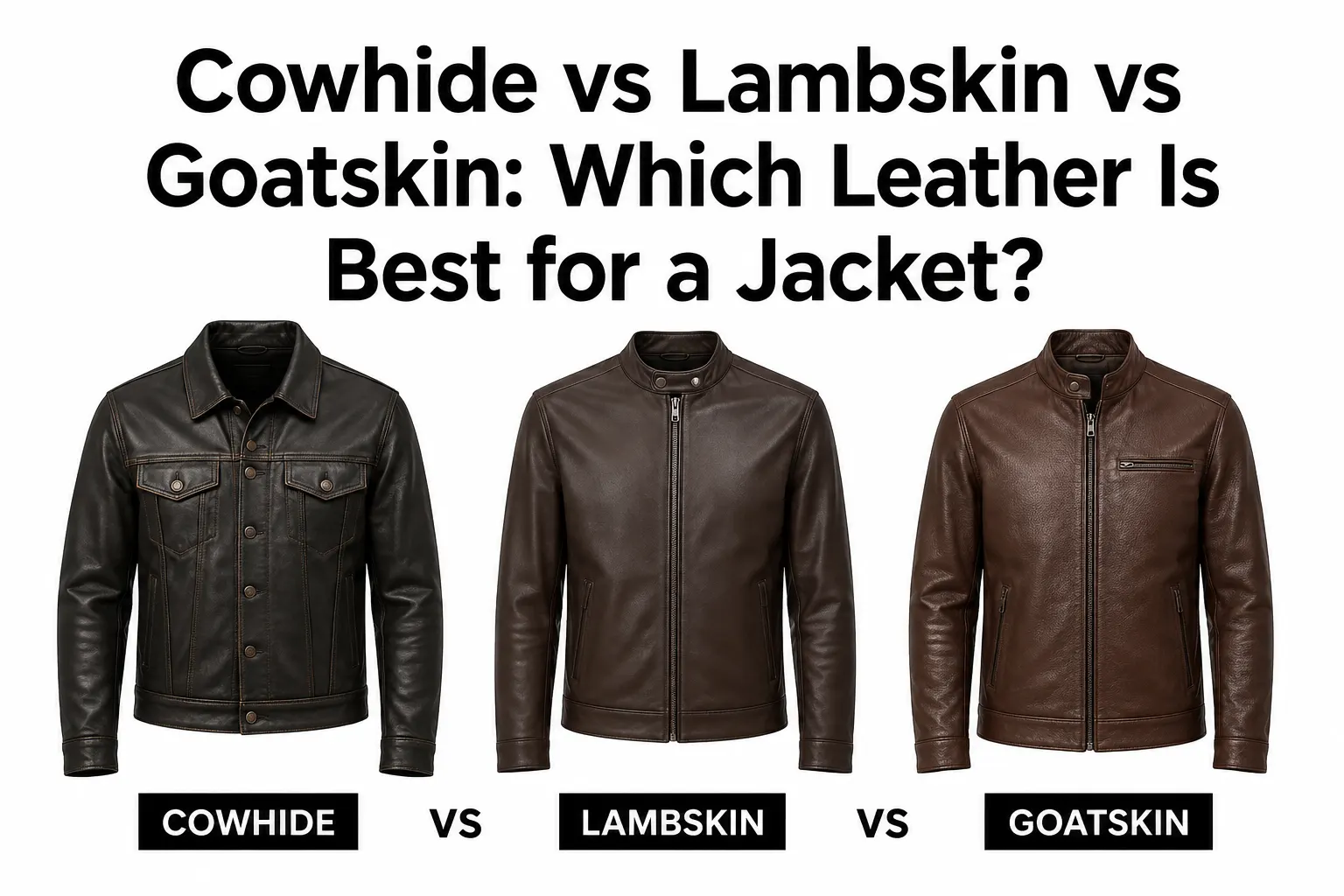
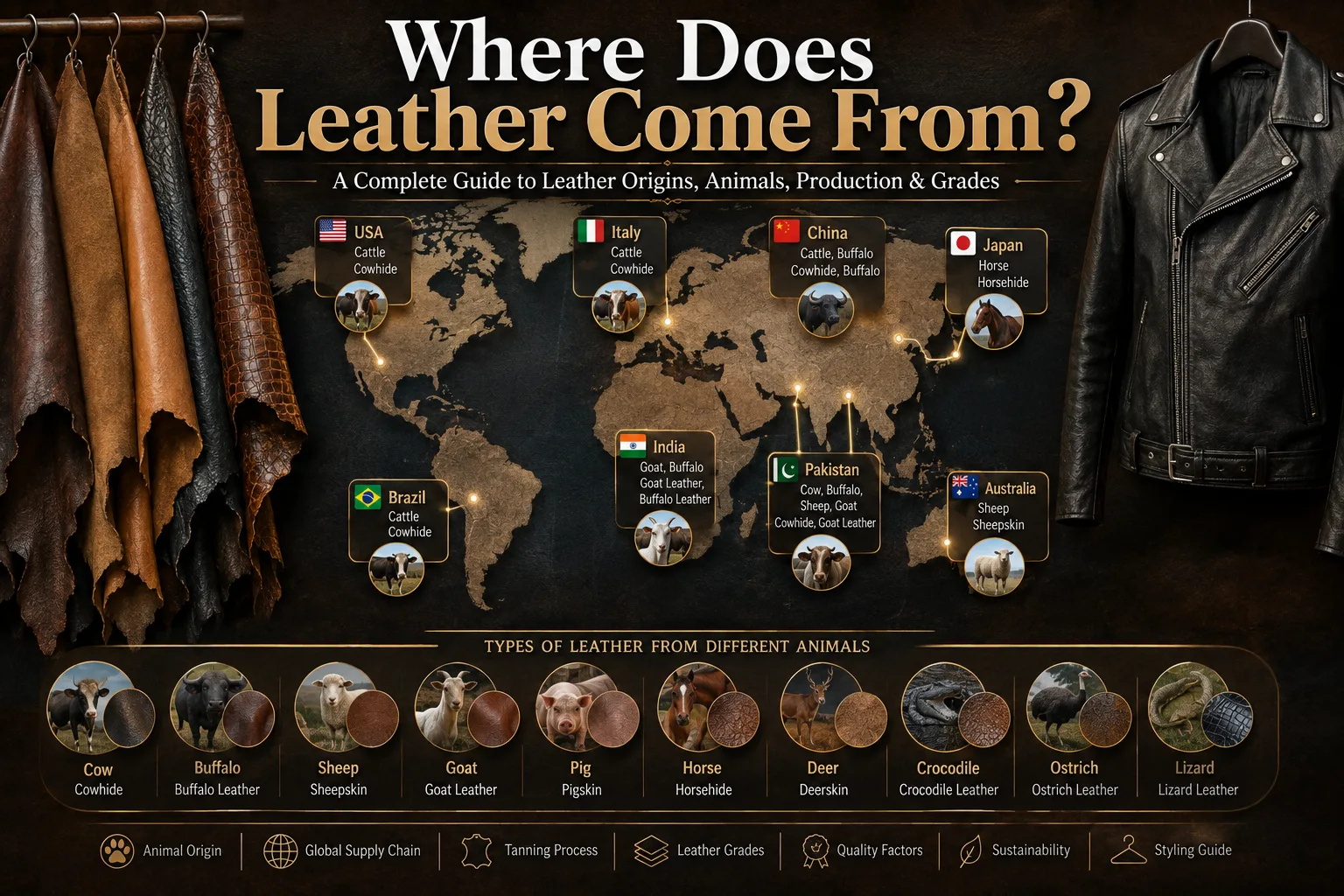
Genuine leather comes from real animal hide most commonly cowhide, chosen for its balance of strength, thickness, and cost, along with sheep, goat, and buffalo hides used when a brand wants a specific softness, grain, or weight. Unlike synthetic alternatives, genuine leather is defined by its internal structure rather than a surface effect: a dense network of collagen fibers woven in multiple directions, which is what gives real leather both strength and flexibility at the same time.
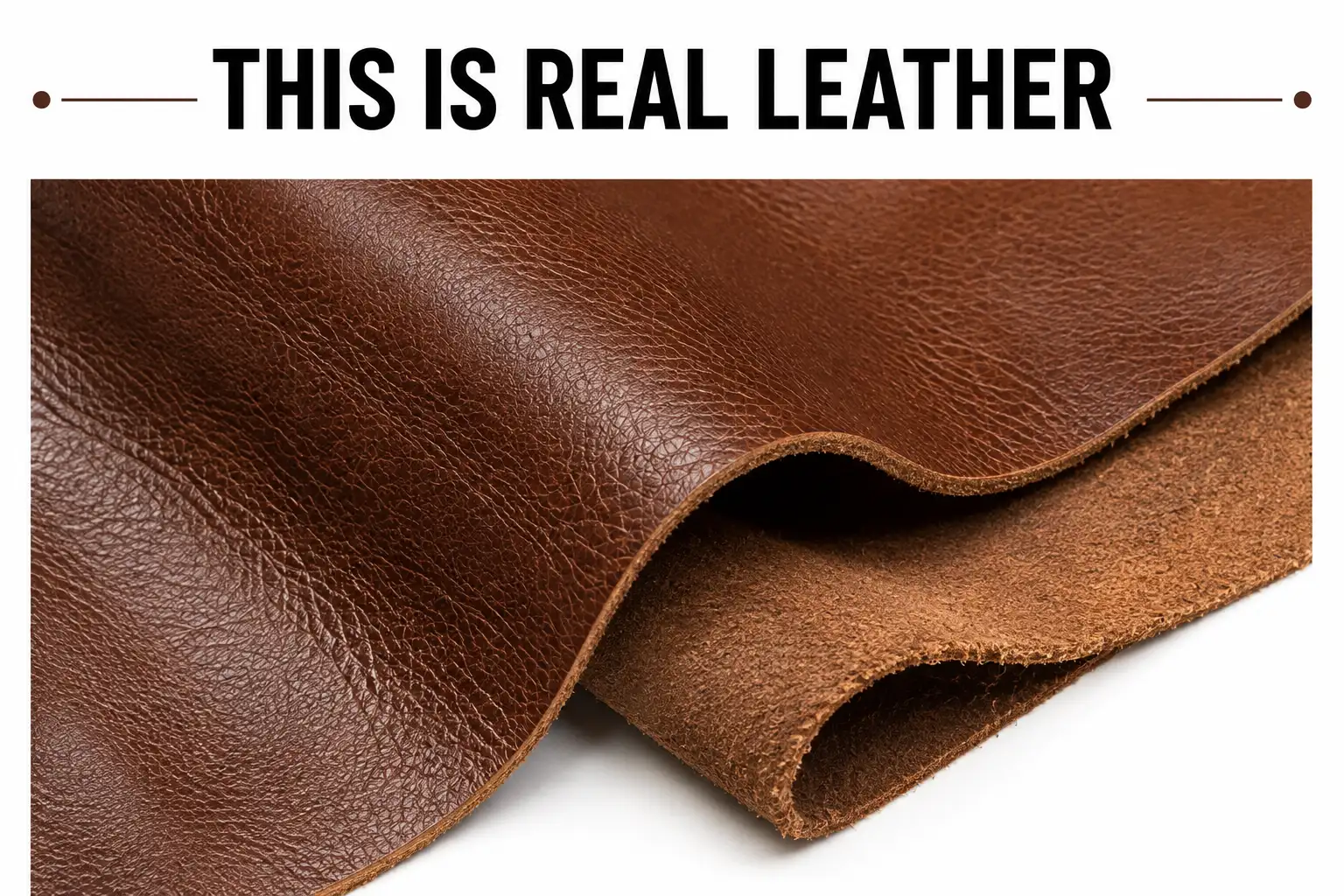
That fiber structure is also why no two hides are identical. Each animal hide has natural variation in thickness, grain pattern, and fiber density, which is why a high-quality genuine leather jacket carries small, natural imperfections rather than a perfectly uniform surface those marks are effectively a record of the animal the hide came from, not a manufacturing flaw.
How Genuine Leather Is Actually Made
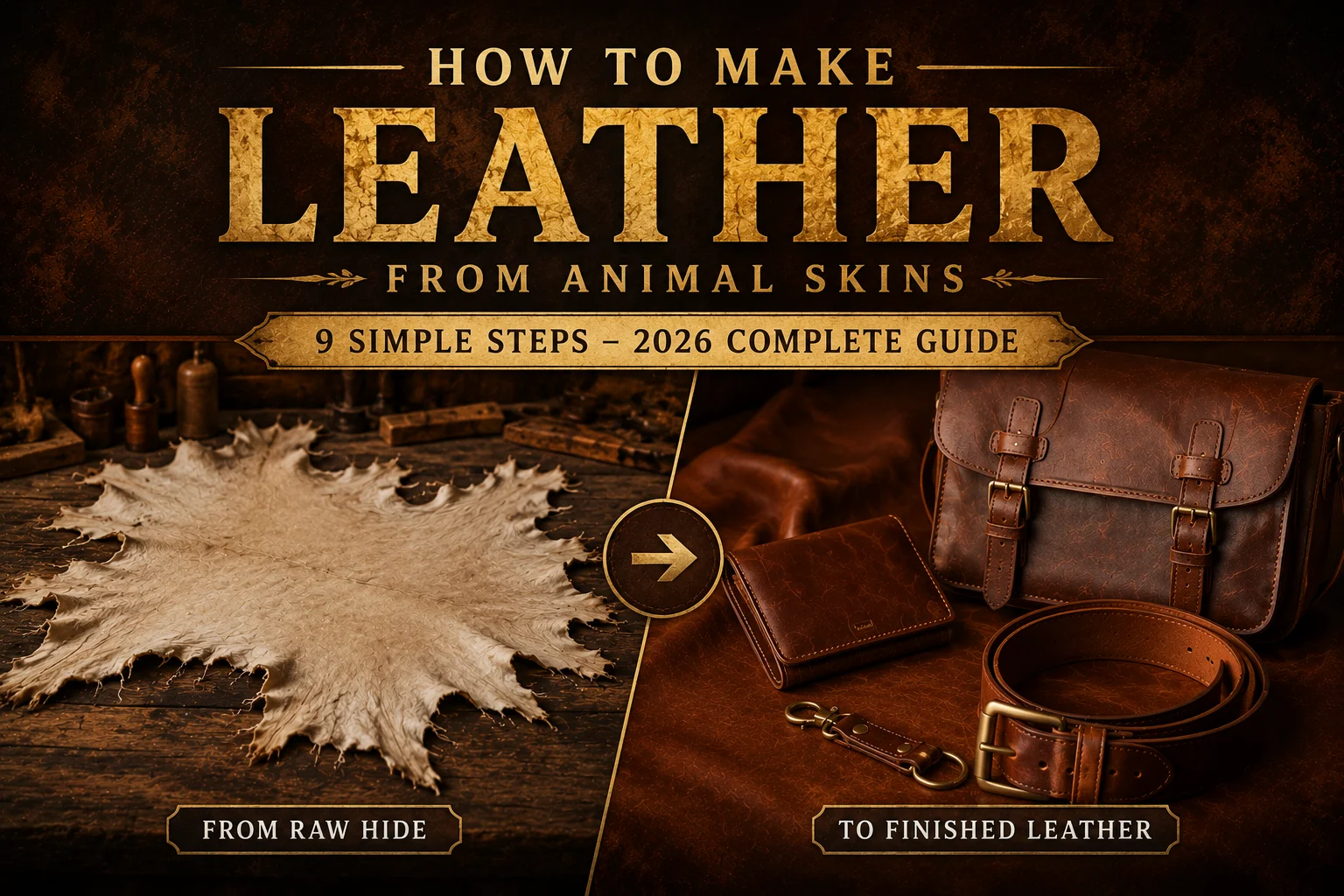
Raw hide can’t be used as-is left untreated, it would decompose. It first goes through tanning, a chemical and mechanical process that stabilizes the proteins in the skin so the material becomes durable and workable. Two methods dominate commercial leather production:
- Chrome tanning uses chromium salts and produces a softer, more flexible leather relatively quickly this is the method behind most bags, wallets, and fashion leather goods.
- Vegetable tanning uses plant-based tannins over a much longer process, producing a firmer, more structured leather often used for belts, boots, and heritage-style goods.
After tanning, the hide is split to the desired thickness, shaved for consistency, dyed, and finished. Finishing can be as light as a protective wax or as heavy as embossing and pigment coating to hide imperfections. Even heavily finished leather still retains its underlying fiber structure that’s the fundamental difference from PU leather, where everything that looks like leather exists only as a coating on the surface, with nothing structural underneath it.
The Grades Hiding Behind “Genuine Leather”
Here’s what most buyers don’t realize: “genuine leather” is not a quality guarantee. It’s simply a category confirming the material came from real hide, not plastic. Within that category, quality varies enormously:
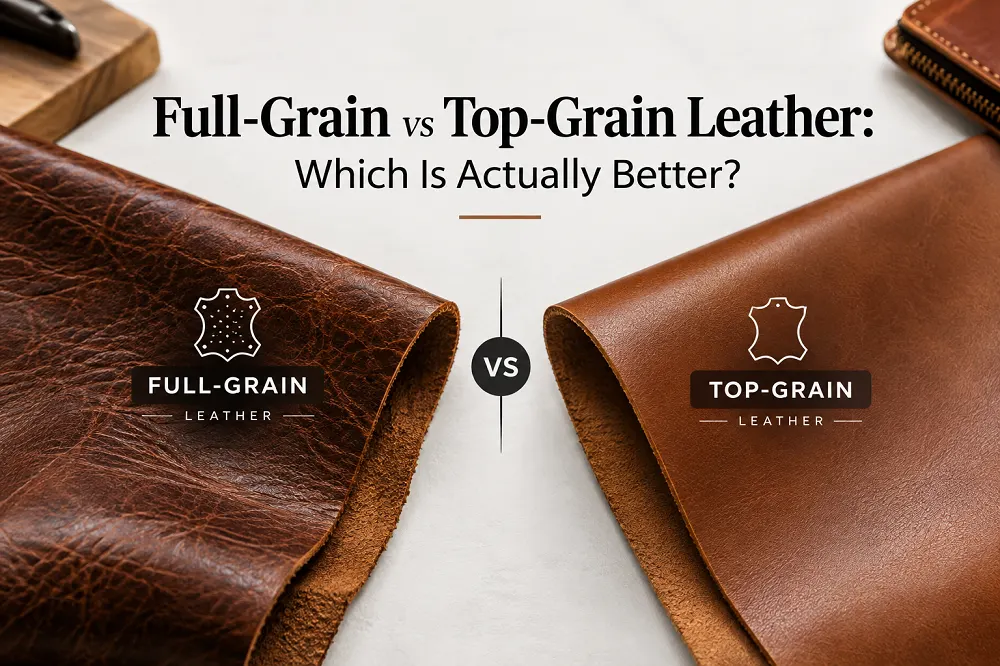
- Full-grain leather uses the complete, unsplit top layer of the hide, imperfections and all. It’s the strongest and most durable grade available, and it’s the only one that develops a genuine patina a gradual darkening and softening as the leather absorbs natural oils and flexes with wear over the years.
- Top-grain leather has had the outermost layer lightly sanded or split away to remove blemishes and create a more uniform surface. It’s thinner than full-grain and easier to work with, which is why it’s the most commonly used grade in mid-range leather goods.
- Split leather comes from the lower layers of the hide, left over once the top grain has been removed. Its fibers are looser and weaker, so it’s typically used in budget products, often with a heavy surface coating to compensate for the thinner structure.
All three are technically genuine leather which is exactly why two products carrying the identical “genuine leather” label on the tag can feel and age in completely different ways. For a closer look at how this plays out specifically in jackets, see full-grain vs genuine leather.
Why Premium Brands Still Choose Genuine Leather
Despite the higher cost, established brands keep coming back to genuine leather because it delivers something synthetics can’t fake: predictable long-term durability, an authentic feel customers recognize instantly, and aging characteristics that improve the product rather than degrade it. From a construction standpoint, genuine leather also allows techniques like edge finishing, skiving, and reinforced stitching that hold up under real structural stress which matters for anything load-bearing, from a jacket’s shoulder seams to a bag’s strap attachments.
What Is PU Leather?
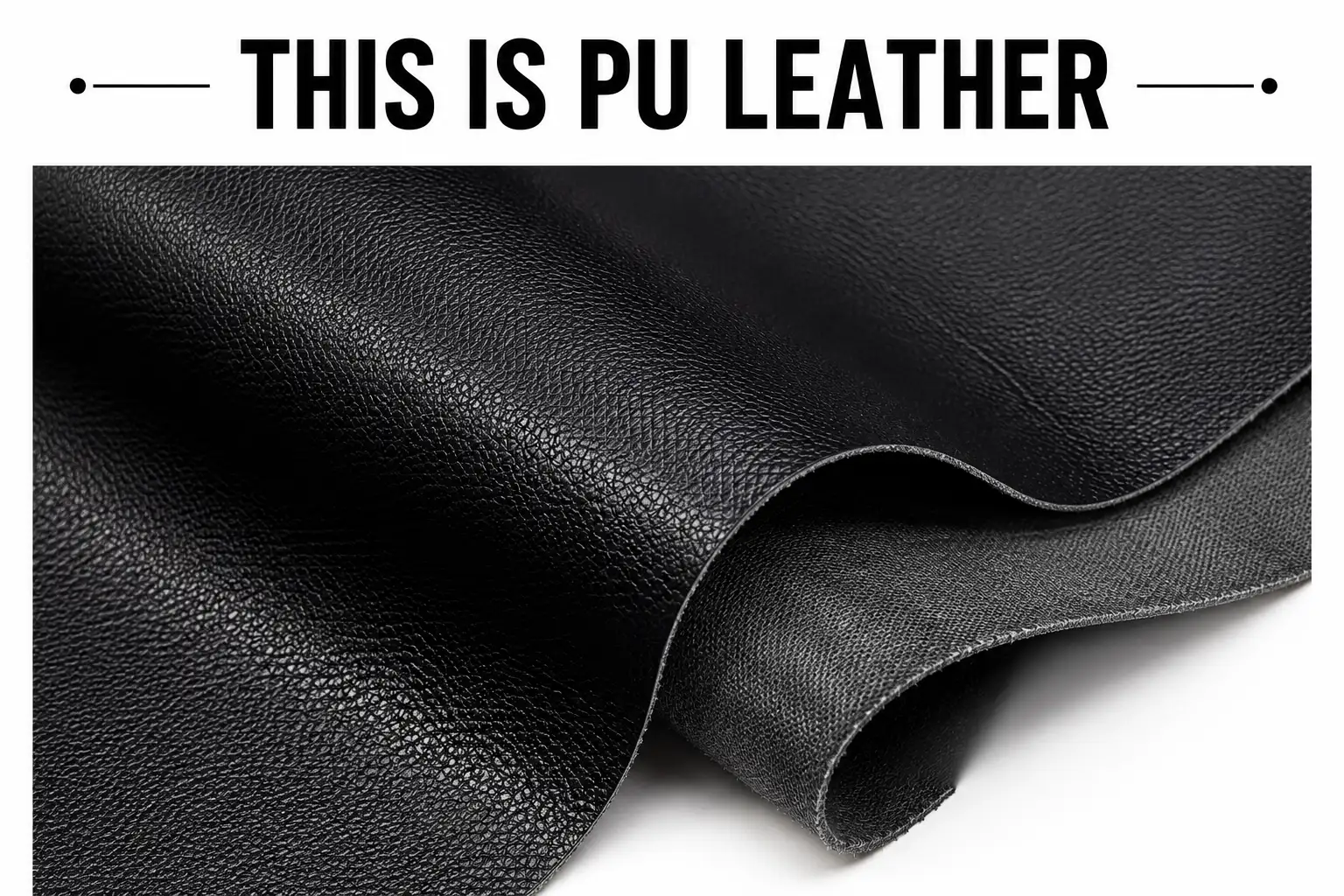
PU leather, short for polyurethane leather, is a synthetic material made by applying a polyurethane coating a type of plastic resin onto a fabric base, usually polyester, a cotton-poly blend, or microfiber. There is no animal hide involved in PU leather at any stage of production. It’s designed specifically to mimic the appearance of genuine leather at a much lower cost, and depending on the quality of the coating, it can do that convincingly, at least at first glance.
How PU Leather Is Manufactured
PU leather isn’t tanned it’s coated and cured. Liquid polyurethane is spread onto the fabric base using rollers or a casting process, then cured into a continuous plastic film. That surface is then embossed with a grain pattern to resemble natural leather texture, and finished with pigments and a protective topcoat for color and sheen.
This process gives manufacturers precise control over thickness, texture, and color consistency, and it allows for much faster production at a much larger volume than tanning ever could. But because the leather-like effect exists entirely on the surface, once that coating cracks or peels, there’s no way to restore it the material underneath is plain fabric with no leather-like properties of its own.
Is PU Leather “Vegan Leather”?
PU leather is sometimes marketed under softer, more appealing names vegan leather, synthetic leather, faux leather, eco leather. These terms describe how the material was made or its ethical positioning, not its actual composition. Whatever the label, if the base material is polyurethane over fabric, it’s the same plastic-coated textile underneath. When you see a jacket marketed as “vegan leather” at a notably low price point, it’s almost certainly standard PU leather rather than one of the newer plant-based alternatives discussed further down.
How PU Leather Performs in Real-World Use
In the first year, PU leather generally performs well it resists light moisture, keeps a uniform appearance, and feels reasonably soft when new. The problems tend to surface later. Heat, humidity, friction, and UV exposure gradually break down the polyurethane layer, and the most common failure points are surface cracking, peeling, and hardening usually starting exactly where the material flexes most: elbows, cuffs, fold lines, and strap attachments.
Most PU leather products show visible wear within 2 to 5 years under normal use, though lower-grade PU can fail in under a year. And unlike genuine leather, none of this can be repaired once it starts you’re looking at replacement, not restoration.
Why Brands Still Use PU Leather
PU leather isn’t inherently a bad material it serves a specific purpose well. Brands lean on it for fashion-driven, price-sensitive, or short-lifecycle products: seasonal collections, trend pieces, and items where visual impact matters more than ten-year durability. From a manufacturing standpoint, PU also offers faster sampling, more predictable output, and simpler quality control than working with natural hide, which makes it genuinely useful for brands prototyping new designs or launching budget-tier lines. Used transparently clearly labeled, priced appropriately PU leather has a legitimate place in the market. The issue only arises when it’s sold at genuine-leather prices without buyers realizing what they’re actually getting.
Key Differences That Actually Affect You as a Buyer
The differences between these two materials go well beyond price. They affect how a product feels against your skin on a warm day, whether it survives being caught in the rain, how it looks after five years of regular wear, and what happens when it eventually gets scuffed or scratched.
A genuine leather jacket develops character with wear small scuffs blend into the surface over time rather than staying visible, and the color and texture deepen the more it’s worn. A PU leather jacket, by contrast, doesn’t age so much as it deteriorates: once the coating starts cracking, it’s a visible, permanent flaw rather than character. That single difference is often the clearest way to think about the two materials one improves with time, the other has a countdown built in.
Pros and Cons at a Glance
Genuine Leather
Pros: A well-made genuine leather jacket can realistically last 15 to 20 years or more with basic care. It develops a rich patina that improves with age rather than degrading. It’s naturally breathable and comfortable against skin. It can be conditioned, cleaned, and even repaired when damaged. Its collagen fiber structure gives it real structural strength, and when sourced responsibly, it’s biodegradable at the end of its life.
Cons: Genuine leather carries a higher upfront cost full-grain leather typically runs $15–30 per square meter in raw material terms. It needs periodic conditioning to stay supple, it can be damaged by prolonged water exposure if left untreated, and the natural variation in grain means no two pieces look perfectly identical, which some buyers who prefer uniformity might see as a downside rather than a feature.
PU Leather
Pros: PU leather typically costs 50–70% less than genuine leather, often in the $2–6 per square meter range. It’s water-resistant and easy to wipe clean, offers consistent color and texture across a whole production run, contains no animal products, and resists fading from UV exposure better than untreated leather.
Cons: Its lifespan is short typically 2 to 5 years before visible wear. It doesn’t develop any kind of aging character; it just cracks and peels. It can’t be repaired once the coating fails. It’s poorly breathable, which makes it uncomfortable to wear for long stretches in warm weather. And because it’s made from petroleum-based plastic, it’s non-biodegradable and contributes to microplastic pollution as it breaks down.
Test It Yourself: 4 Ways to Tell Genuine Leather from PU Leather in 60 Seconds
Sellers don’t always volunteer which material you’re actually holding, and tags aren’t always reliable. These checks work in-store or at home before a return window closes:
- Smell it. Genuine leather has a warm, faintly earthy, natural scent. PU leather smells like plastic or chemical off-gassing, sometimes faint, sometimes strong this is usually the fastest and most reliable tell.
- Check the back. Flip an edge, cuff, or hem inside out. Genuine leather has a suede-like, fibrous underside all the way through the material. PU leather reveals a woven or knit fabric backing underneath the coating this is the single most conclusive physical test you can run.
- Press and bend it. Genuine leather creases naturally and unevenly, the way skin does, and the crease softens back out. PU leather tends to fold into sharper, more uniform creases and can show a faint plasticky sheen right at the fold line.
- Look for natural imperfections. Real hide has subtle variation across its surface faint marks, slightly uneven grain, small texture shifts across a large panel. PU leather’s embossed pattern repeats in a way that reads as too perfectly uniform once you know to look for it.
None of these tests require special tools, and running two or three of them together will tell you far more than any product label or price tag alone.
Side-by-Side Comparison
| Feature | Genuine Leather | PU Leather |
|---|---|---|
| Material | Real tanned animal hide | Polyurethane coating over fabric |
| Typical lifespan | 15–20+ years with care | 2–5 years |
| Aging | Softens, develops patina | Cracks and peels |
| Breathability | Natural, comfortable against skin | Poor – traps heat and moisture |
| Repairable? | Yes – conditioning, restoration | No – coating can’t be restored once damaged |
| Cost (raw material) | $15–30 per square meter | $2–6 per square meter |
| Water behavior | Absorbs moisture through natural pores; needs conditioning after wet exposure | Resists light water initially; degrades with prolonged exposure |
| Feel | Warm, supple, responds to body heat | Cooler, often slightly plasticky |
| Smell | Natural, earthy | Plastic or chemical |
| Cold-weather behavior | Stays flexible with conditioning | Becomes brittle, cracks more easily |
| Environmental profile | Biodegradable; tanning process has its own footprint | Petroleum-based; non-biodegradable, contributes to microplastic pollution |
| Best for | Long-term investment pieces worn regularly | Short-lifecycle, budget, or strictly animal-free needs |
Which One Should You Actually Choose?
The right answer depends on what you actually need from the product, not which material sounds more impressive on a tag.
- Choose genuine leather if you want something that lasts 10+ years, you’re willing to invest more upfront for long-term value, you want a product that improves with age instead of degrading, or you want something that can be repaired and restored rather than replaced.
- Choose PU leather if you’re working with a tight budget, you need a trend piece for a single season, you want a strictly animal-free product, or you prioritize easy wipe-clean maintenance and don’t mind replacing the item in a few years.
Frequency of use matters more than most buyers assume. A jacket worn several times a week deserves genuine leather the cost-per-wear works out far lower over its lifespan, even with the higher upfront price. A piece you’ll wear occasionally, or one tied to a specific trend that may not last a season anyway, is a more reasonable place for PU leather. And genuine leather doesn’t have to mean full-grain luxury pricing either solid top-grain genuine leather jackets exist at accessible price points and will still outlast several PU alternatives combined.
What About Plant-Based “Vegan Leather”?
Not all animal-free leather alternatives are PU. A newer category of plant-based materials made from cactus, mushroom mycelium, apple waste, or pineapple leaf fiber has emerged as a genuinely different approach to cruelty-free leather. These materials are chemically and structurally different from polyurethane-coated fabric, though the category is still maturing and durability varies significantly between brands and production methods. If ethical sourcing is a priority for you, it’s worth asking specifically whether a “vegan leather” product is PU-based or plant-based, since the two perform very differently in terms of both longevity and environmental footprint.
Common Myths, Corrected
Myth: “Good quality PU leather is basically the same as real leather.” Even premium-grade PU leather is still a coated fabric. It can look convincing in a showroom, but it can’t replicate leather’s breathability or its ability to age well the polyurethane coating will eventually crack regardless of how high-grade it was to start with.
Myth: “PU leather is the more eco-friendly option.” PU leather is made from petroleum-based plastic and takes centuries to break down, shedding microplastics as it degrades. Genuine leather, sourced and tanned responsibly, is biodegradable though it’s fair to note that conventional tanning does carry its own water usage and chemical considerations worth factoring in.
Myth: “Genuine leather is always expensive.” Full-grain leather commands a real premium, but entry-level genuine leather in top-grain finishes is far more accessible than most people assume, and even at that lower price tier it will still outlast PU leather several times over.
Myth: “PU leather lasts just as long if you take care of it.” Careful use slows the process, but nothing prevents the chemical breakdown of the polyurethane layer over time. Once cracking starts, no amount of conditioning or care reverses it the material itself is the limiting factor, not how it was treated.
Myth: “You can’t tell the difference without lab equipment.” As covered above, the smell test and the back-of-material check catch the difference in under a minute, with nothing more than your own hands and nose.
Frequently Asked Questions
Is PU leather real leather?
No. PU leather contains no animal hide at all it’s a plastic coating applied to a fabric base. It’s more accurately described as a leather-look synthetic than a type of leather, regardless of how convincing the surface texture looks.
Is PU leather 100% leather?
No, and it never is, regardless of how a listing describes it. Terms like “vegan leather” or “synthetic leather” describe PU’s appearance or ethical positioning, not its material composition.
What happens if PU leather gets wet?
PU leather resists light moisture well initially since the surface coating doesn’t absorb water the way natural hide does. But repeated or prolonged wet exposure can cause the polyurethane layer to separate from its fabric backing over time, which typically shows up as bubbling, discoloration, or peeling at the seams first.
How long does PU leather actually last?
Most PU leather products last 2 to 5 years under normal use before showing cracking or peeling at stress points. Lower-quality PU can fail within a year; genuine full-grain leather, by comparison, regularly lasts 15 to 20 years or longer with basic conditioning and care.
Does PU leather crack in cold weather?
Yes. Cold temperatures make the polyurethane coating more brittle and prone to cracking, especially at folds, seams, and high-movement areas like elbows and cuffs this is one of the more common ways PU leather items fail earlier than expected.
Which material is better for daily-use items like bags or jackets?
Genuine leather, for anything used or worn regularly. Its fiber structure handles repeated stress at fold points, straps, and seams far better than a surface coating can, which is exactly where PU leather items tend to fail first. PU leather can be a reasonable choice for occasional-use items where cost matters more than longevity.
Which is better for furniture, PU leather or genuine leather?
For long-term use, genuine leather wins clearly a well-made full-grain leather sofa can last 20+ years, while a good-quality PU faux leather sofa typically holds up for 3 to 5 years under moderate use, less under heavy daily use. PU leather furniture is more affordable and easier to wipe clean, which makes it a practical choice for households with pets or young children where budget and easy maintenance matter more than decades of use.
Is genuine leather bad for the environment?
Genuine leather is a natural material that biodegrades over time, though conventional tanning does involve water use and chemical processes worth being aware of responsibly run tanneries increasingly use lower-impact methods. PU leather, by contrast, is petroleum-based and effectively permanent in landfill terms, breaking down into microplastics rather than organic matter.
Final Verdict
The choice isn’t really “which material is objectively better” it’s “what do you actually need from this particular piece.” If you want something that ages into a better version of itself and can realistically go the distance for a decade or more, genuine leather is the only material that does that. If you want a low-cost, animal-free, easy-to-clean option for short-term or occasional use, PU leather does that job honestly, as long as you go in knowing exactly what you’re buying and what its limits are.
What you shouldn’t accept is a seller blurring the line between the two calling PU leather simply “leather” with no qualifier, or pricing it close to genuine hide. Knowing the real difference, and knowing how to verify it yourself in under a minute, puts that decision back in your hands rather than the seller’s.
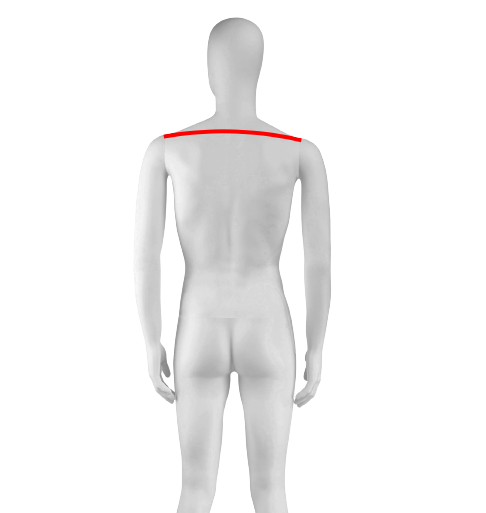
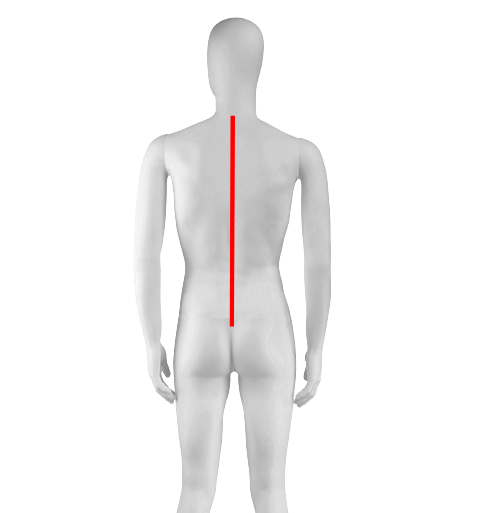
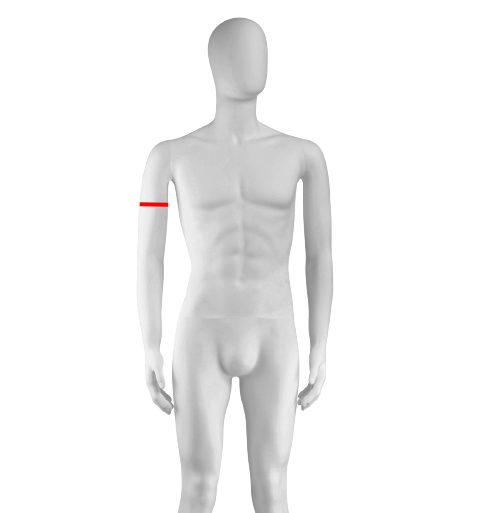
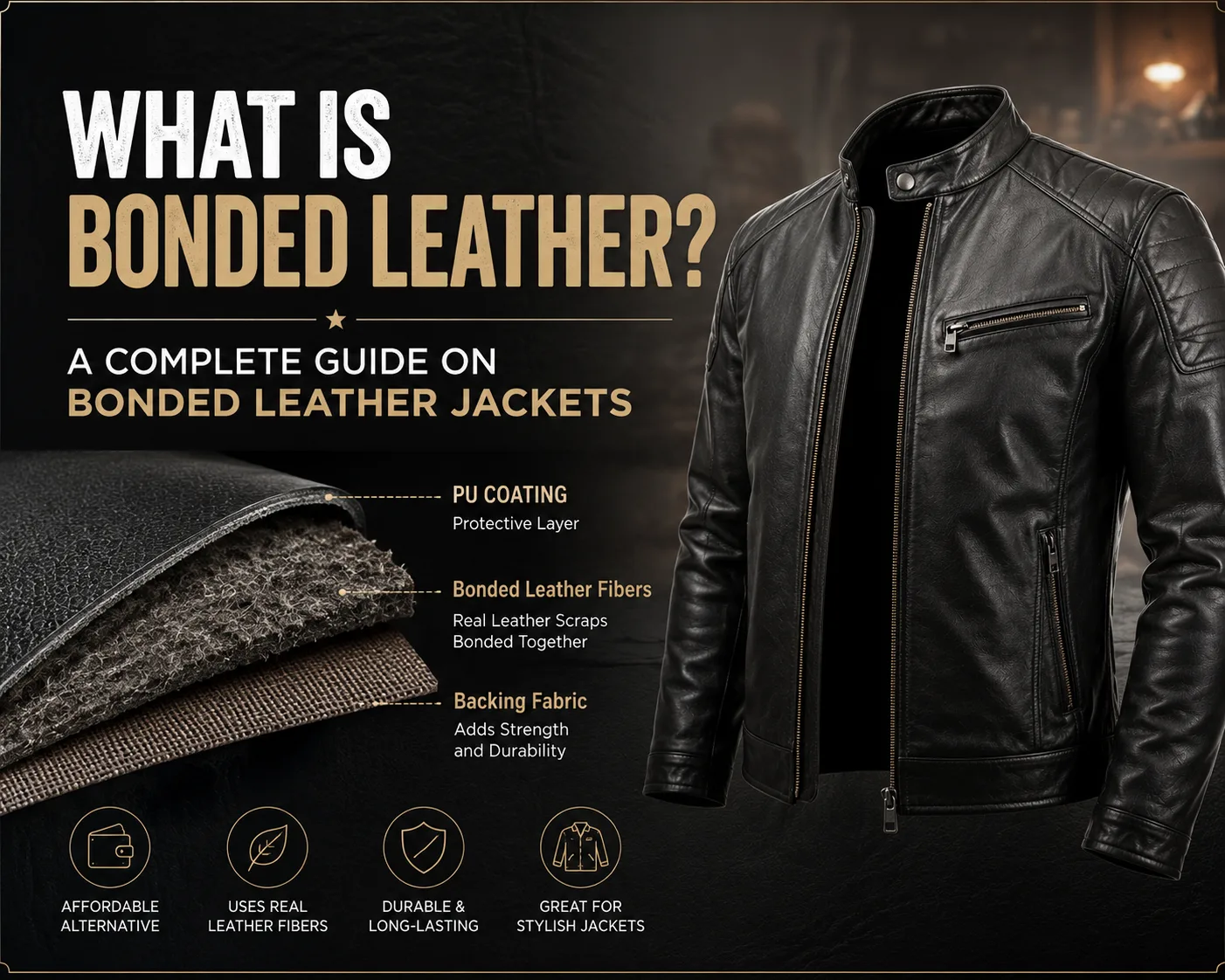
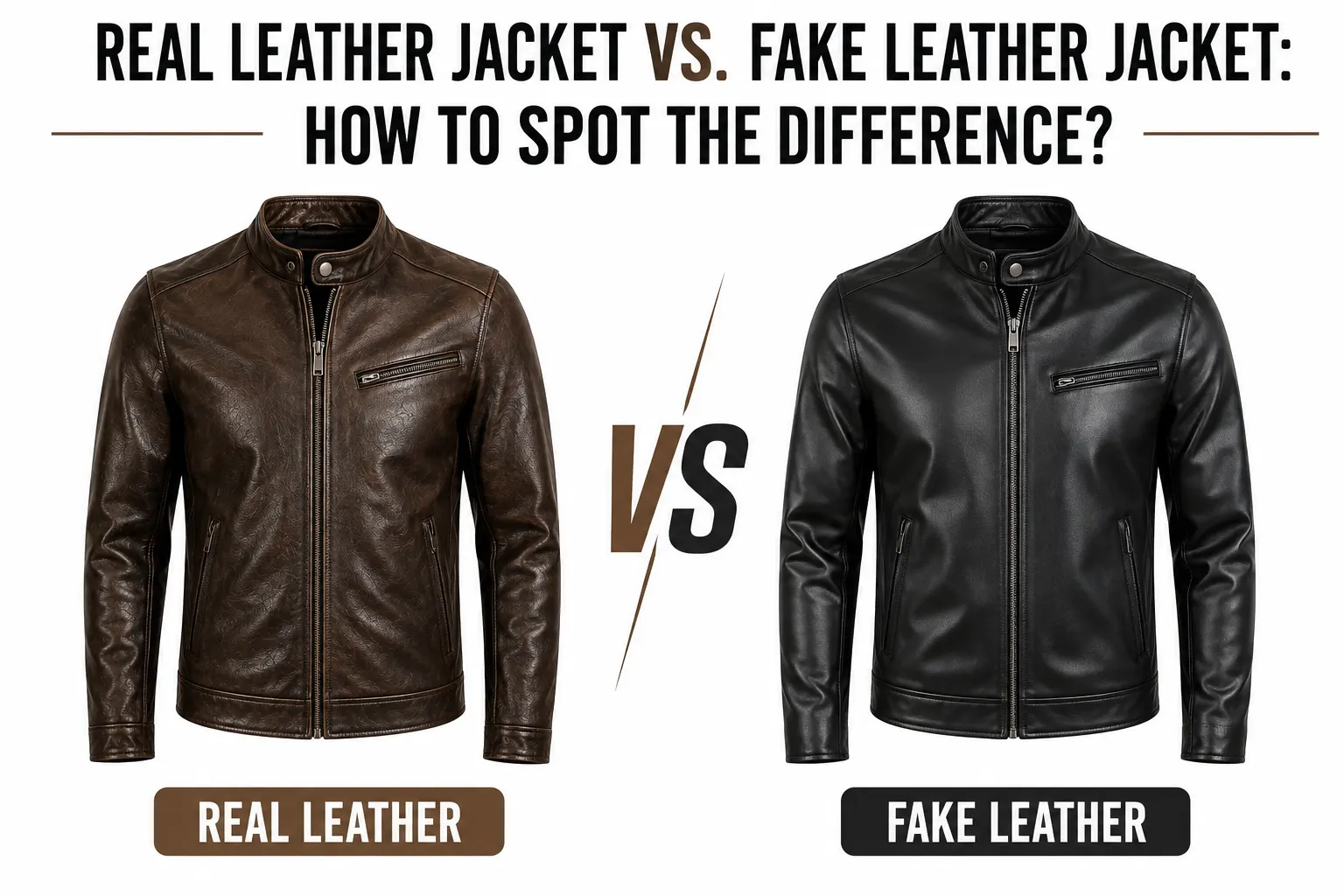
Browse Lammberg’s genuine leather jacket collection every piece is made from real hide, and our FAQ page lists exactly which leather types (cowhide, sheepskin, lambskin, and goatskin) go into each style, so there’s no guesswork involved. If you’d rather choose your exact hide and finish from scratch, Lammberg’s bespoke service lets you do that from the ground up rather than picking from ready-made stock. Before ordering, it’s also worth checking a sizing guide and measurement guide material quality only pays off in the long run if the fit is right from day one too. For more on spotting real leather versus convincing fakes, see real vs fake leather jackets, and if you’ve come across the separate term “bonded leather” while shopping around, our guide on bonded leather explains that distinct (and often misunderstood) category too. For the full picture of where leather itself originates before it ever reaches a tannery, where does leather come from covers that ground, and what makes a good leather jacket rounds out the broader buying picture beyond just material choice.
Related Articles:
- Full-Grain vs Top-Grain Leather: Which Is Actually Better?
- The Incredible Story of Leather: 7,000 Years of History That Changed Fashion Forever
- Don’t Buy a Leather Jacket Until You Read These 7 Expert Tips
- 15 Leather Jacket Myths That Are Costing You Money (Fact #7 Surprises Everyone)
- Real vs Fake Leather Jackets: 10 Easy Ways to Spot the Difference in Seconds
- What Makes a Premium Leather Jacket So Expensive? The Craftsmanship Explained
- Never Buy Bonded Leather Until You Read This Complete Guide
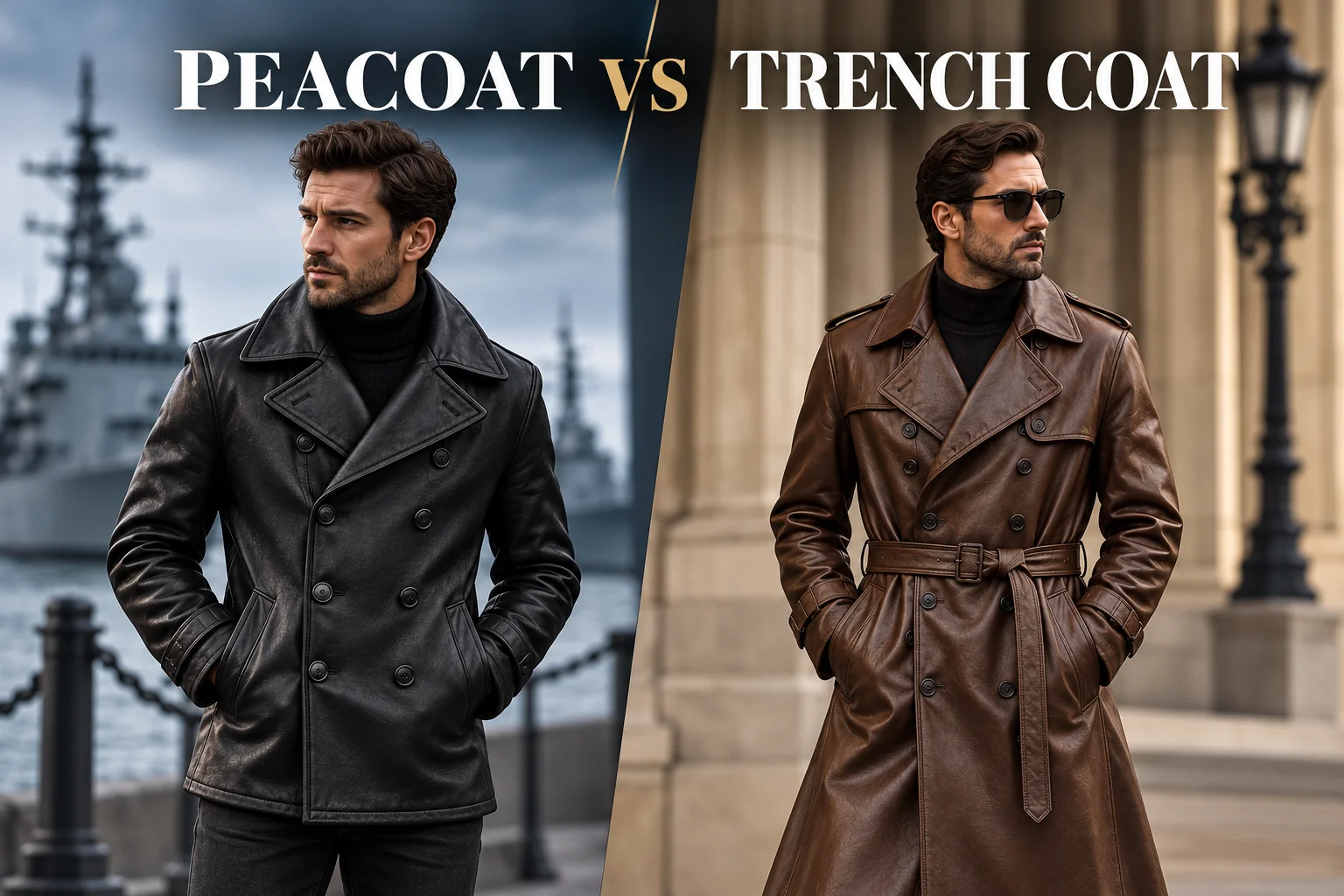
- Peacoat vs Trench Coat: Which One Makes You Look Better?
- 11 Men’s Leather Jacket Trends That Will Dominate Fashion in 2025
- How to Remove Bad Smells from a Leather Jacket (Without Damaging It)
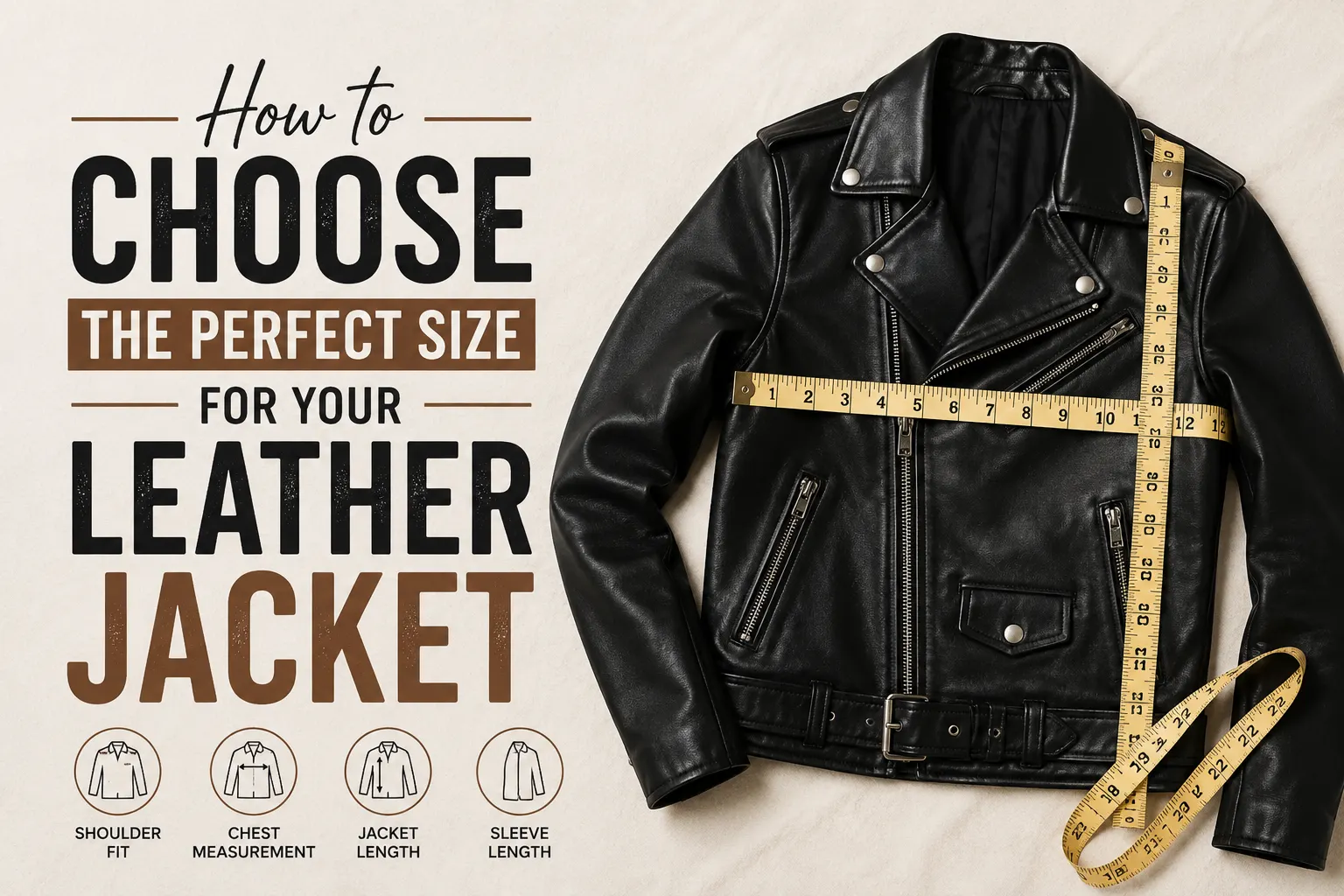
- The Ultimate Leather Jacket Size Guide: Get the Perfect Fit Every Time
- How to Measure Yourself Correctly Before Buying a Leather Jacket Online
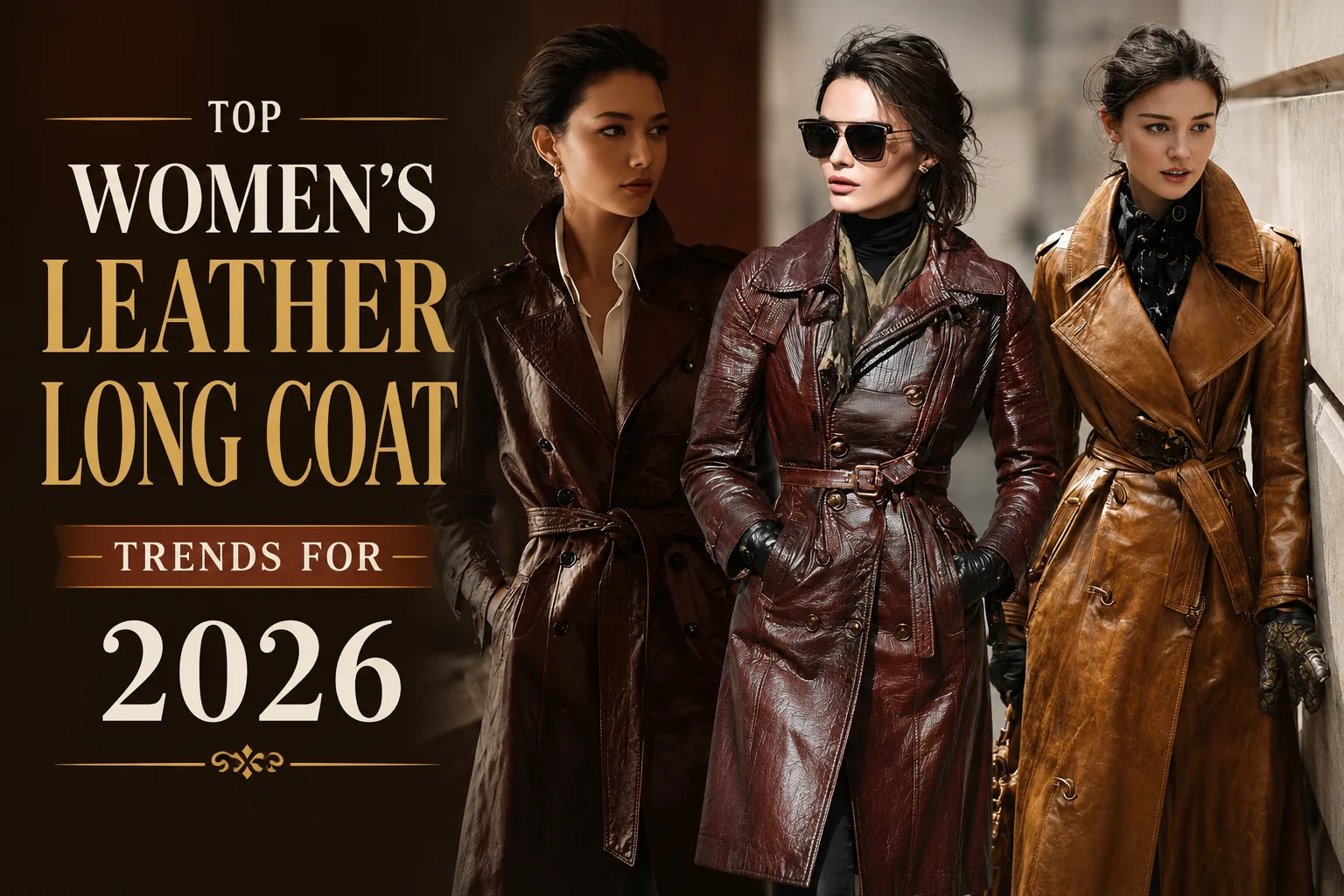
- Top Women’s Leather Coat Trends Everyone Will Be Wearing in 2026
- 10 Men’s Leather Coats That Make You Look Rich in 2026
- The Only Jacket Guide You’ll Ever Need for Every Season
- Top 10 Genuine Leather Jackets in the USA (Ranked by Experts)
- Best Lightweight Packable Puffer Jackets That Travelers Swear By
- How Fashion Experts Style Leather Jackets in 2026 (Copy These Looks)
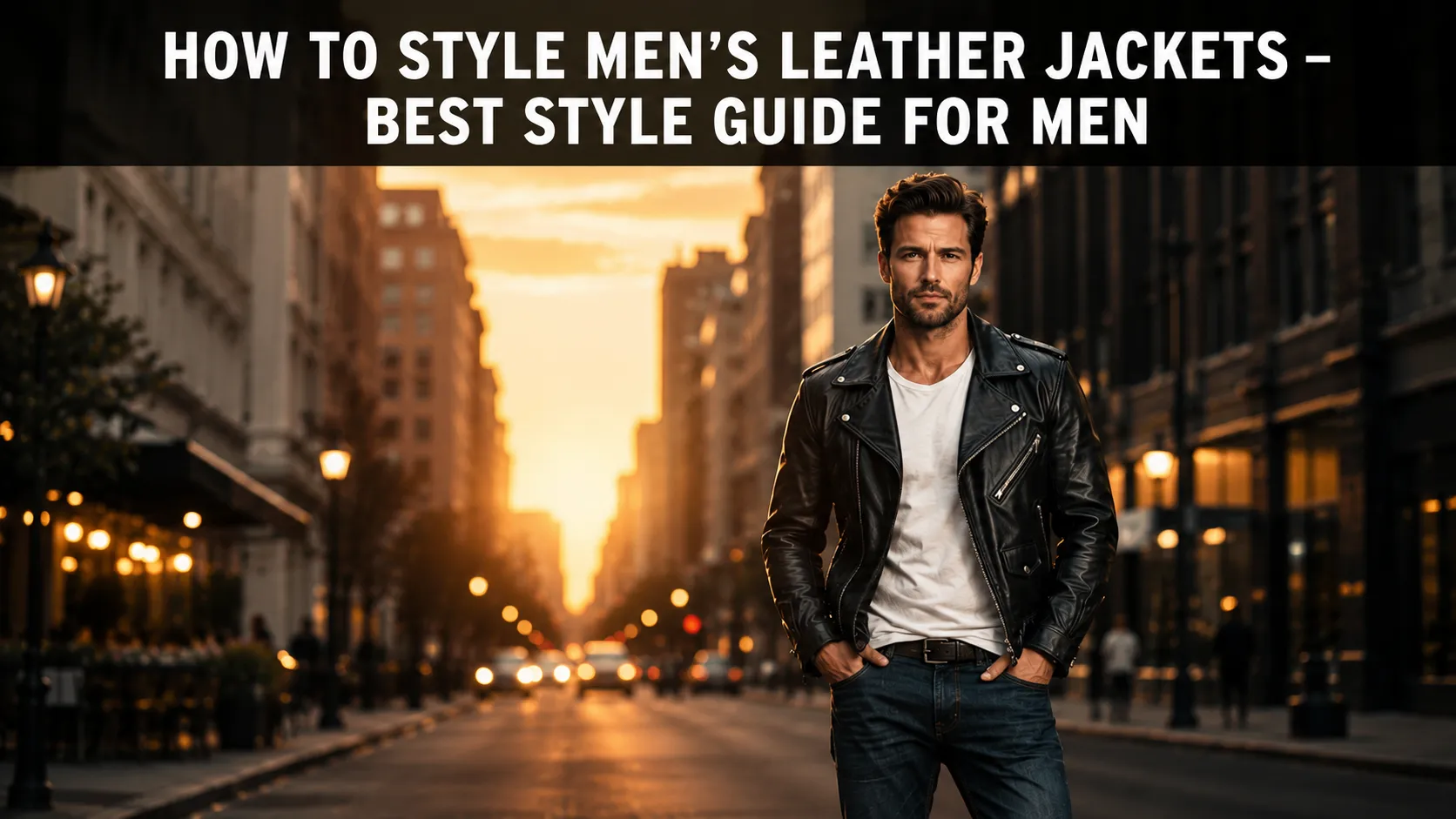
- How to Wear a Men’s Leather Jacket Without Looking Outdated
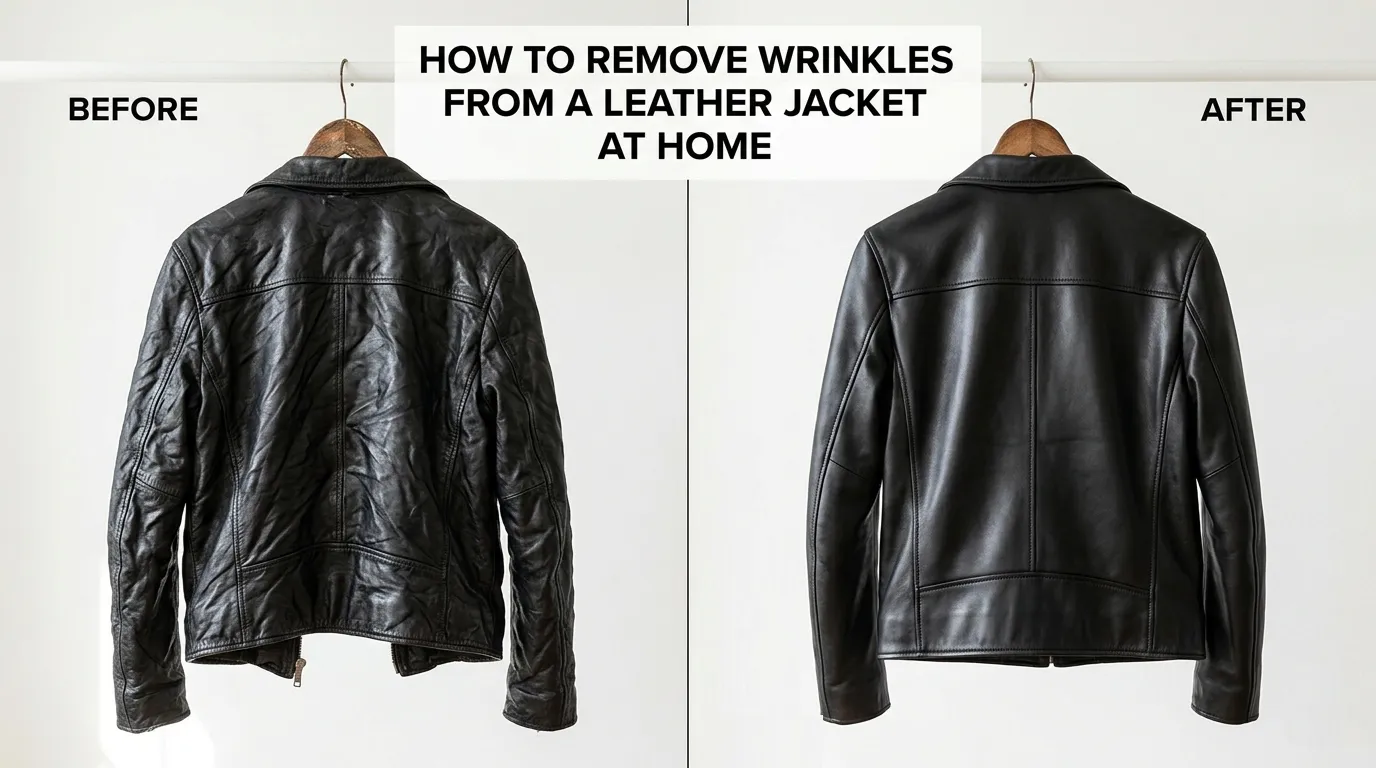
- How to Remove Wrinkles from a Leather Jacket Without Ruining It
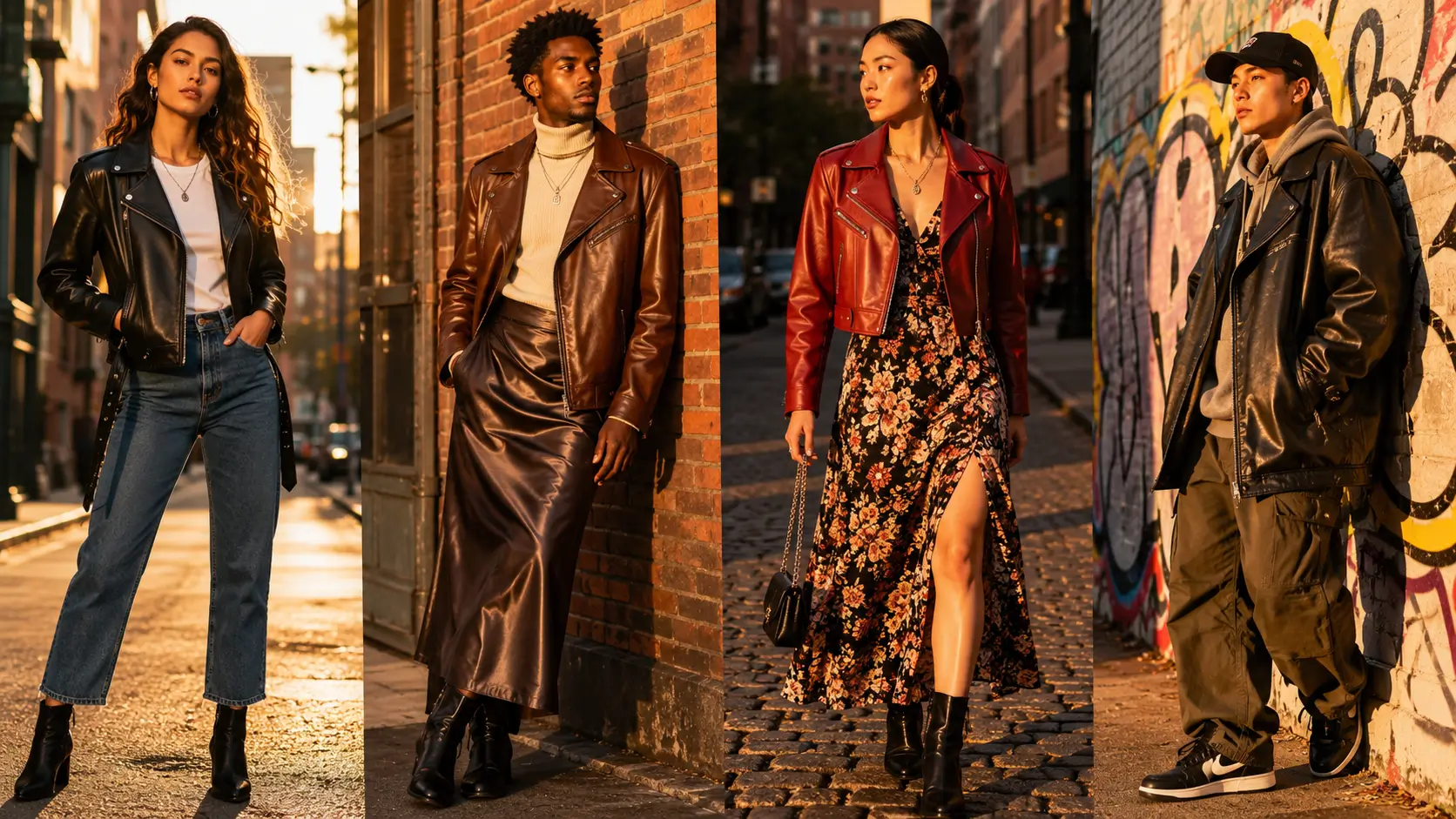
- 10 Leather Jacket Outfit Ideas That Make Every Woman Look Stylish Instantly
- How to Remove Mold from a Leather Jacket Before It Gets Worse
- The Hidden World of Leather Clusters: How the Global Leather Industry Really Works
- Can You Wash a Leather Jacket in a Washing Machine? The Answer May Surprise You
- 25 Best Leather Coats to Buy in 2026 (Expert Picks)
- The 25 Best Leather Jackets of 2026 You Won’t Regret Buying
- 5 Types of Leather Jackets Every Stylish Man & Woman Should Own
- The Untold History of Leather Jackets: From War Heroes to Hollywood Legends
- 10 Leather Blazer Office Outfits Every Working Woman Should Copy in 2026
- 10 Leather Blazer Office Looks That Instantly Upgrade Your Style
- How to Remove Cigarette Smell & Mildew from Leather Jackets Fast (Pro Methods)
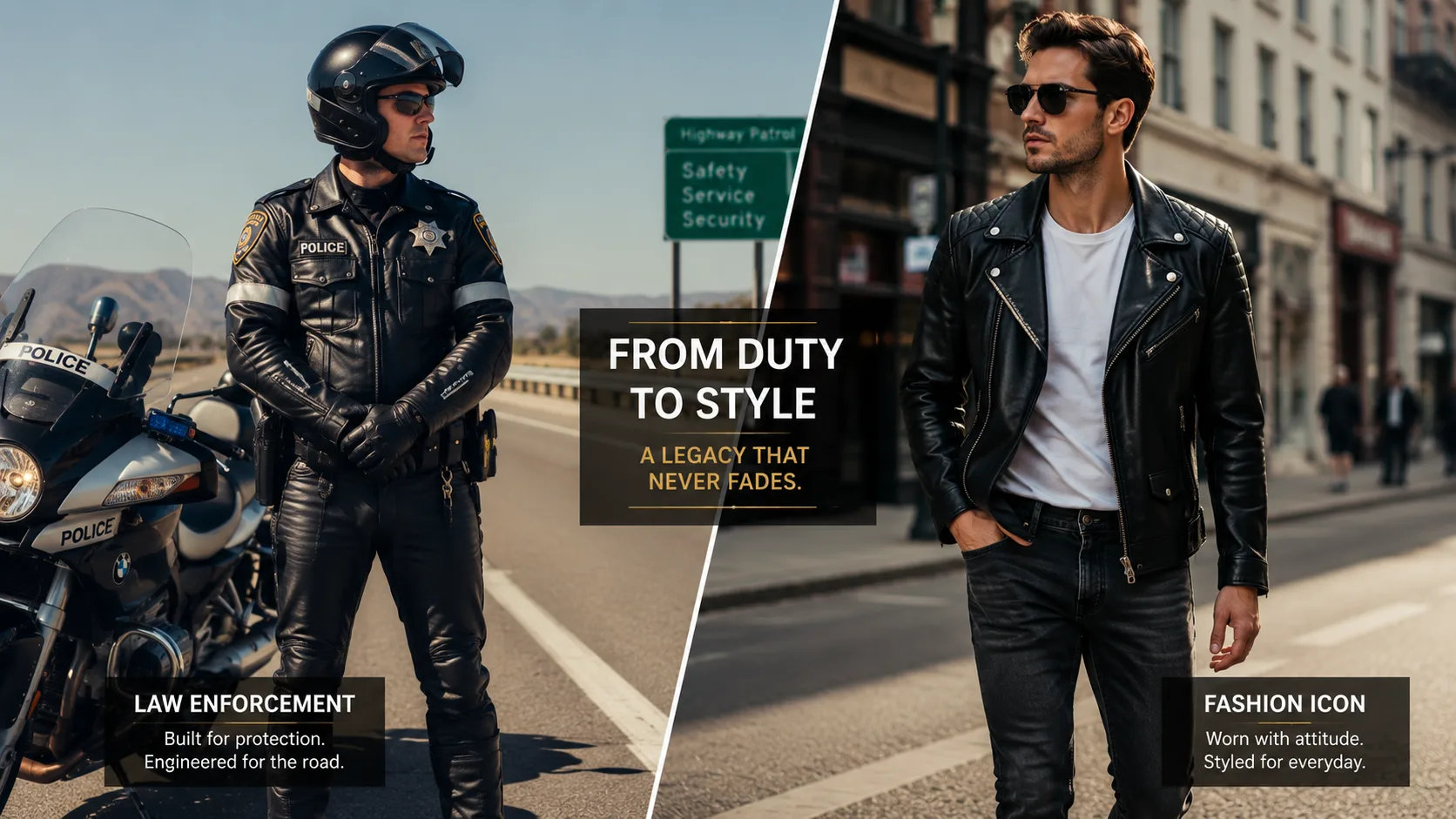
- Do Police Officers Still Wear Leather Jackets? The Truth Will Surprise You











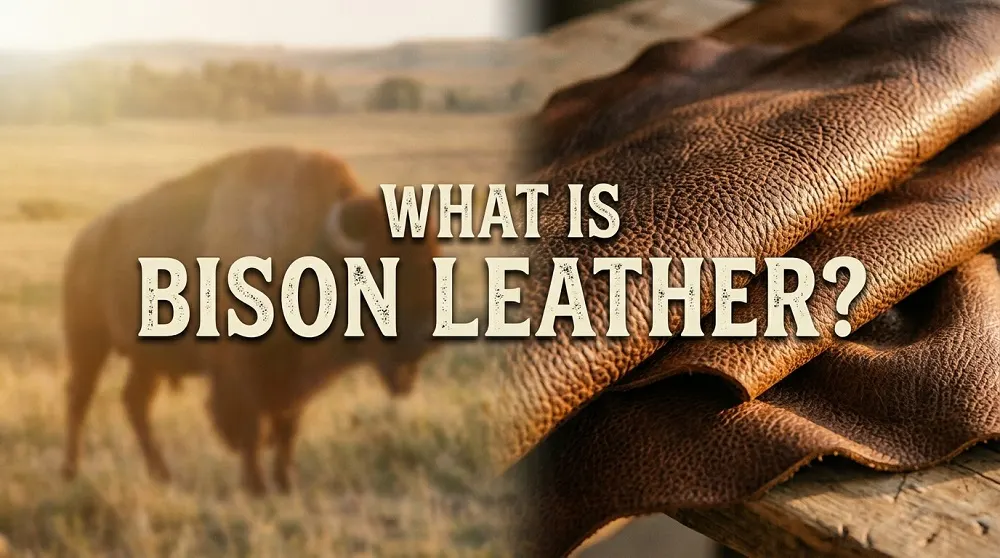
What Is Bison Leather? Durability, Uses & Cowhide Comparison
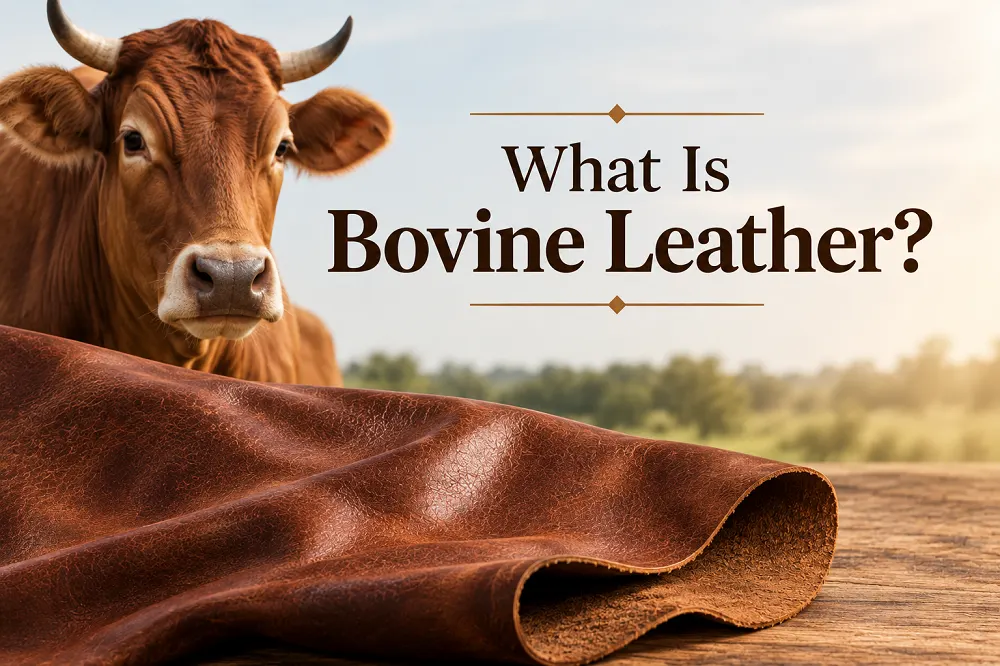
What Is Bovine Leather?