Introduction
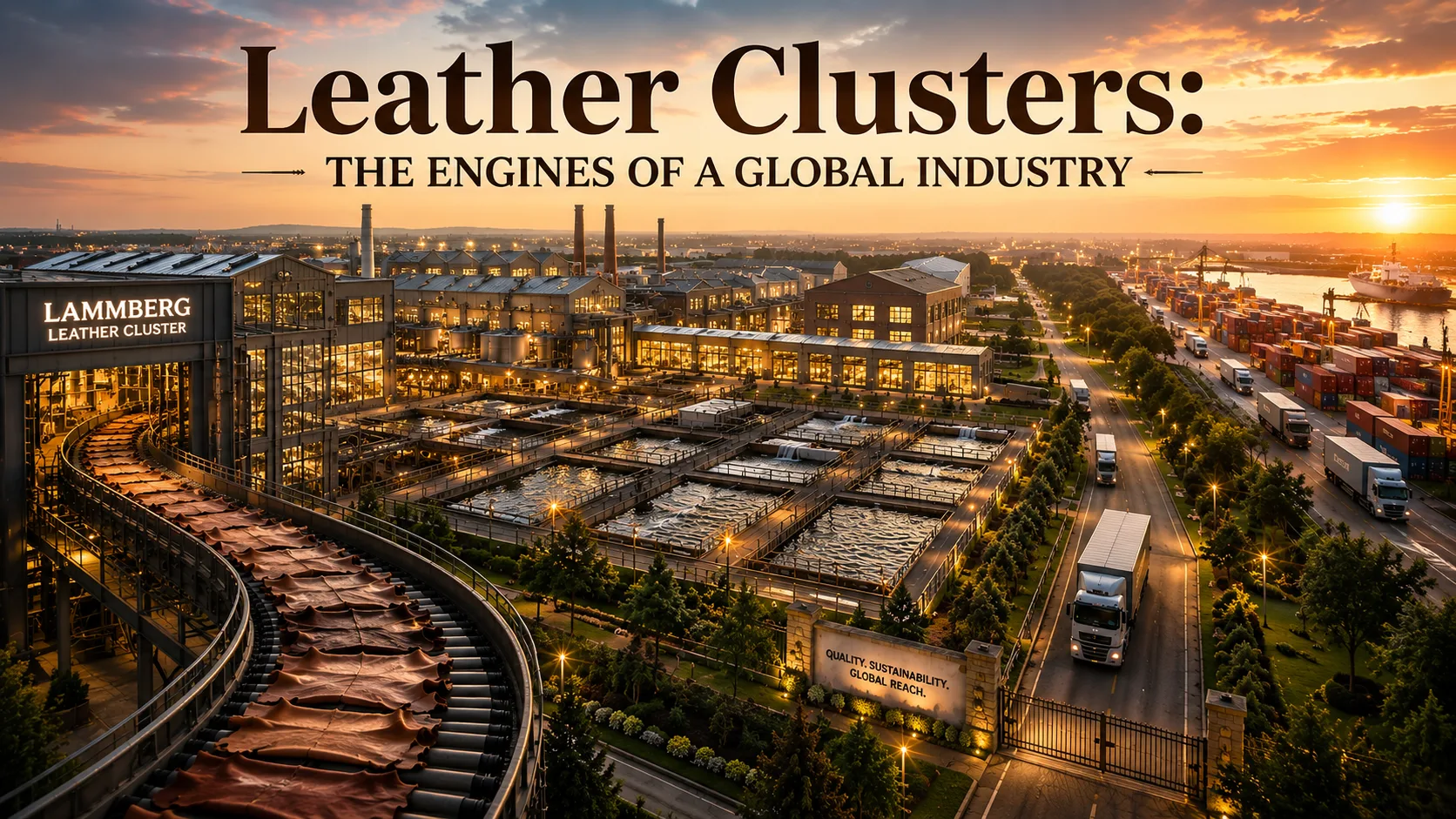
The leather industry is one of the world’s oldest and most enduring trades, transforming raw animal hides into products known for their durability, craftsmanship, and timeless appeal. Behind every premium leather jacket, handbag, pair of shoes, or football is a vast network of manufacturers, tanneries, suppliers, designers, and skilled artisans working together. Leather Clusters: The Engines of a Global Industry explores these powerful ecosystems and explains how they have become the foundation of modern leather production around the world.
These interconnected ecosystems, known as leather clusters, are geographical concentrations of leather businesses, suppliers, research institutions, and supporting industries that collaborate to improve efficiency, innovation, and product quality. Rather than operating independently, companies within a leather cluster benefit from shared expertise, specialized infrastructure, skilled labor, and strong supply chains, making them more competitive in both local and international markets.
From the renowned tanning districts of Italy and the luxury leather workshops of Spain to the large-scale manufacturing hubs of South Asia, leather clusters continue to shape the future of the global leather industry. This guide explores what leather clusters are, why they matter, and how the world’s leading leather-producing regions have become global centers of craftsmanship, innovation, and economic growth.
What is a Leather Cluster?
A leather cluster is a geographical concentration of businesses and institutions involved in all stages of the leather value chain from raw hide processing to finished goods. It brings together tanneries, chemical suppliers, designers, manufacturers, exporters, research institutions, and support services within a defined geographic area.
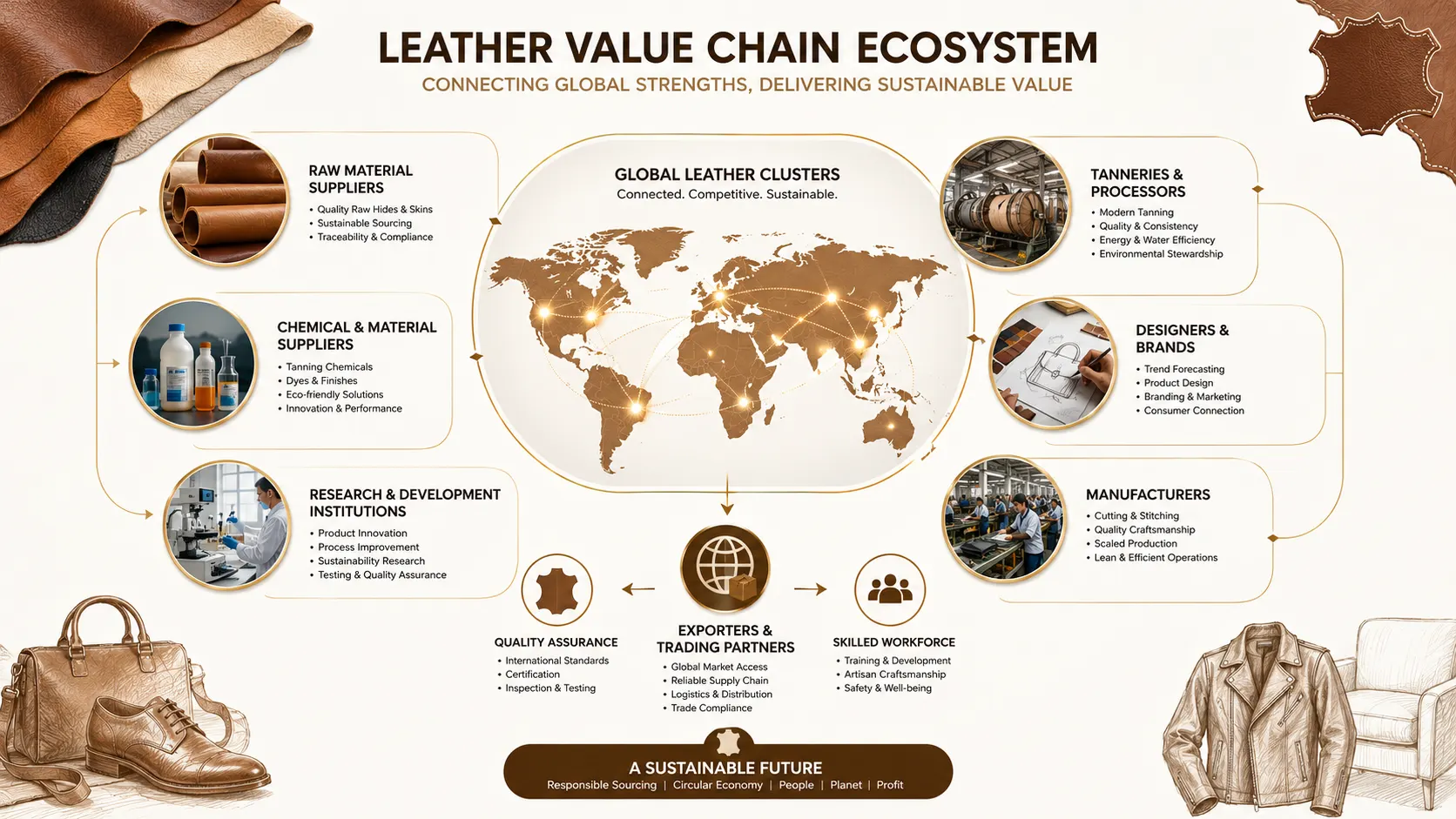
The concept of an industrial cluster, first popularized by economist Michael Porter, is that a large number of small and medium manufacturing units located in one place can collectively produce a final product more efficiently than they could in isolation. Each unit may be involved in only one or a few steps in a complex production chain, but together they create a complete ecosystem.
This model serves as a substitute for large-scale corporate production systems, allowing smaller enterprises to achieve economies of scale, share resources, and compete in global markets.
Lammberg New Collection
-

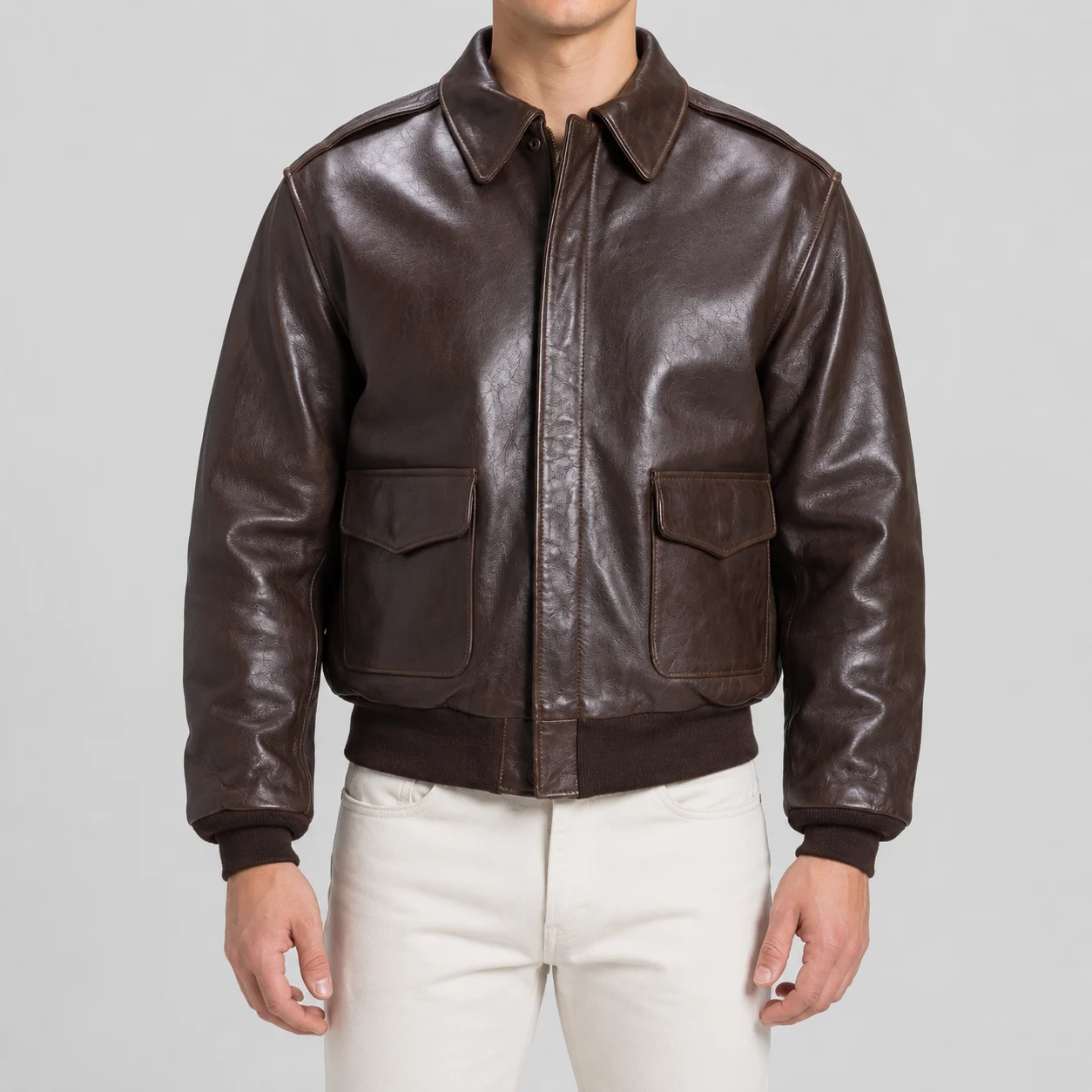
A-2 Antique WWII Leather Flight Jacket For Men
Price range: $299.00 through $329.00 -

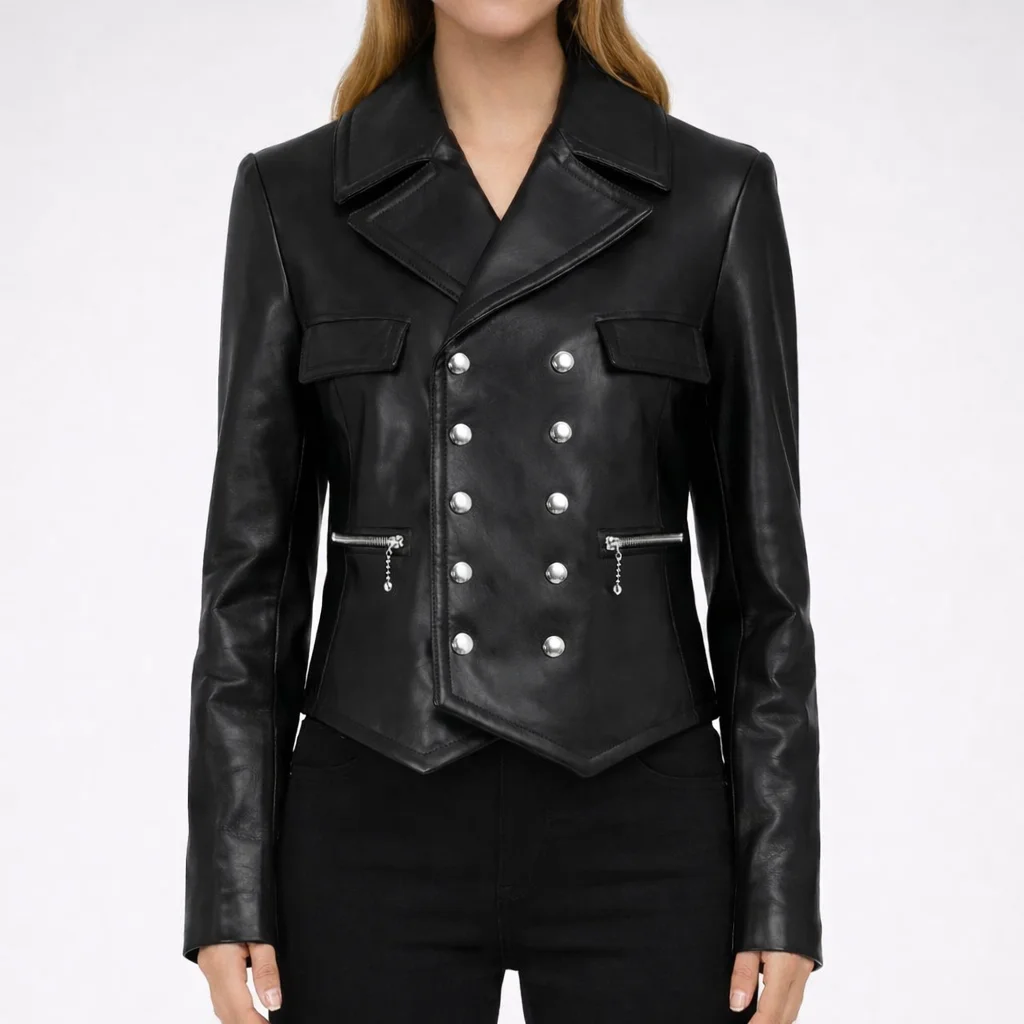
ALICE Black Leather Jacket For Women
Price range: $299.00 through $329.00 -
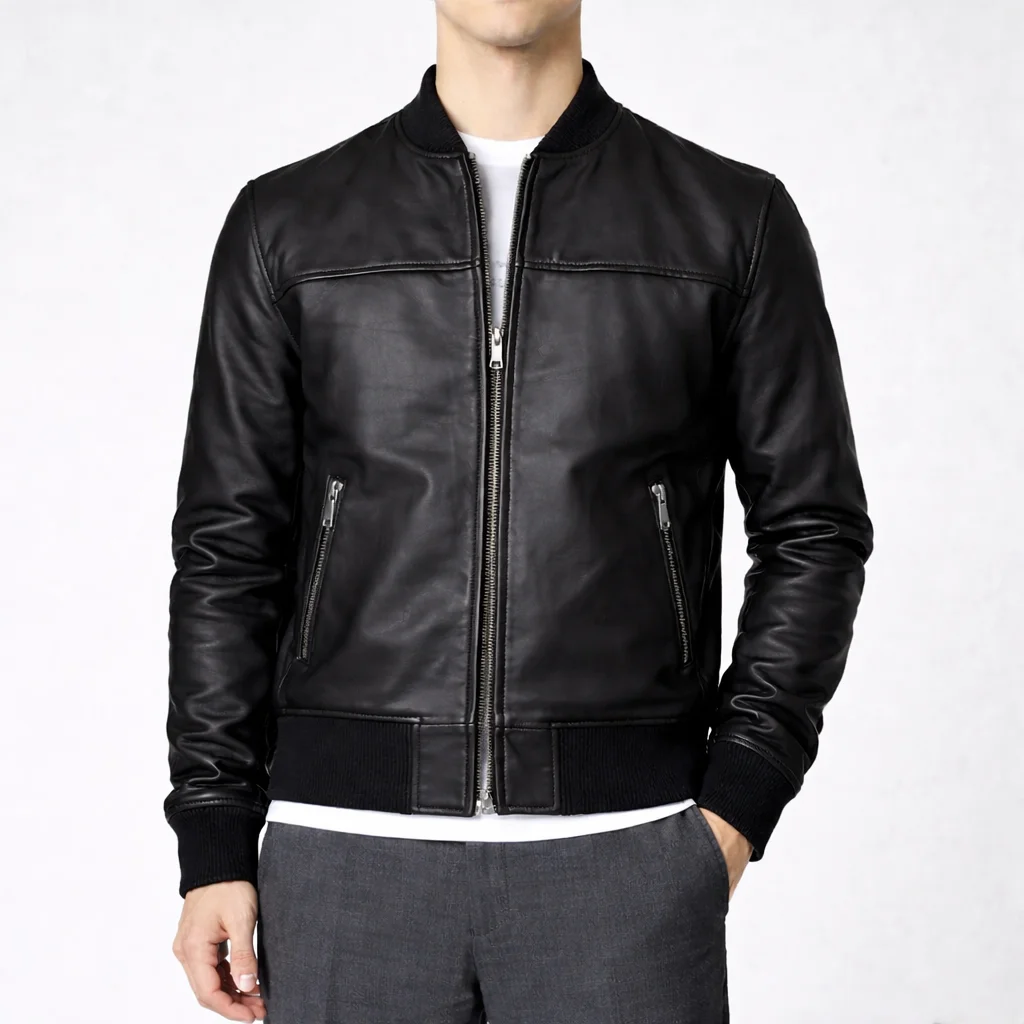
ALVIN Black Leather Bomber Jacket For Men
Price range: $299.00 through $329.00 -
ALVIN Burgundy Leather Jacket For Men
Price range: $299.00 through $329.00
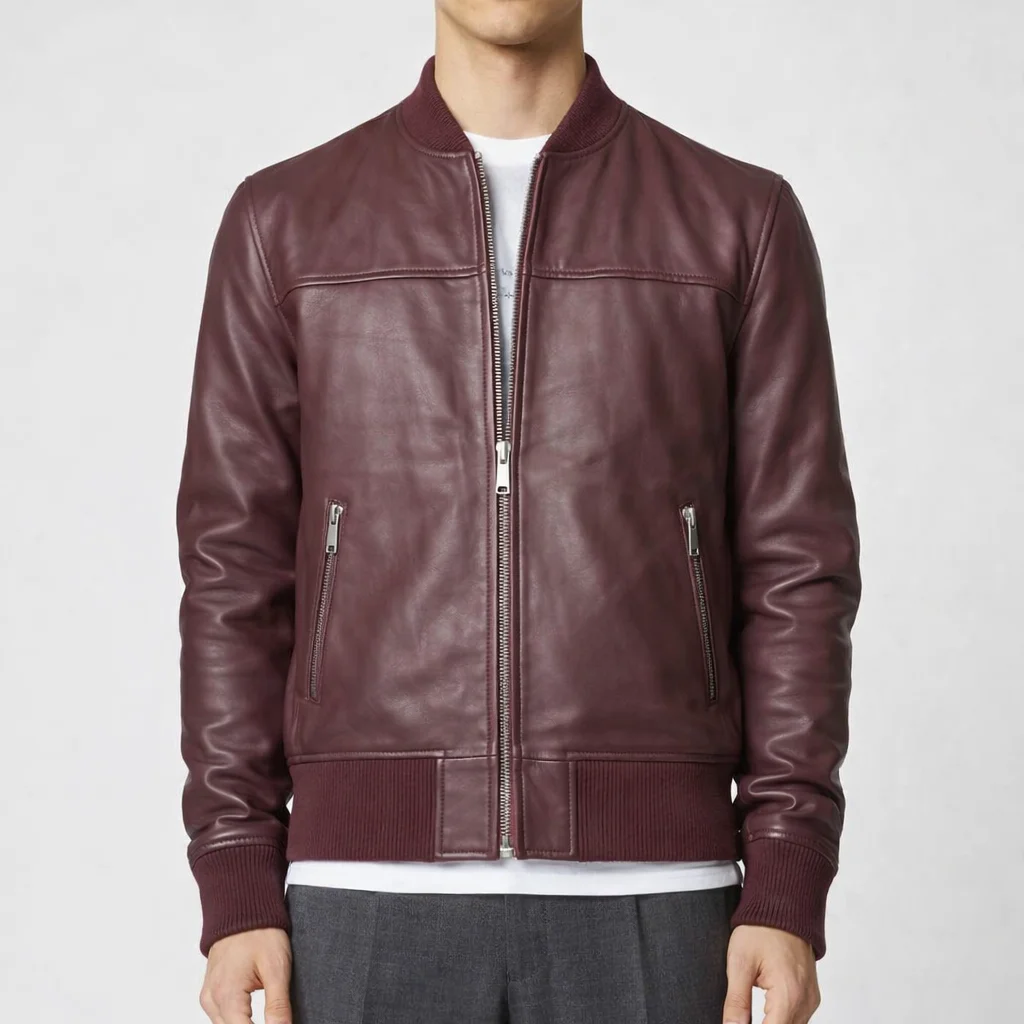
Why Leather Clusters Exist
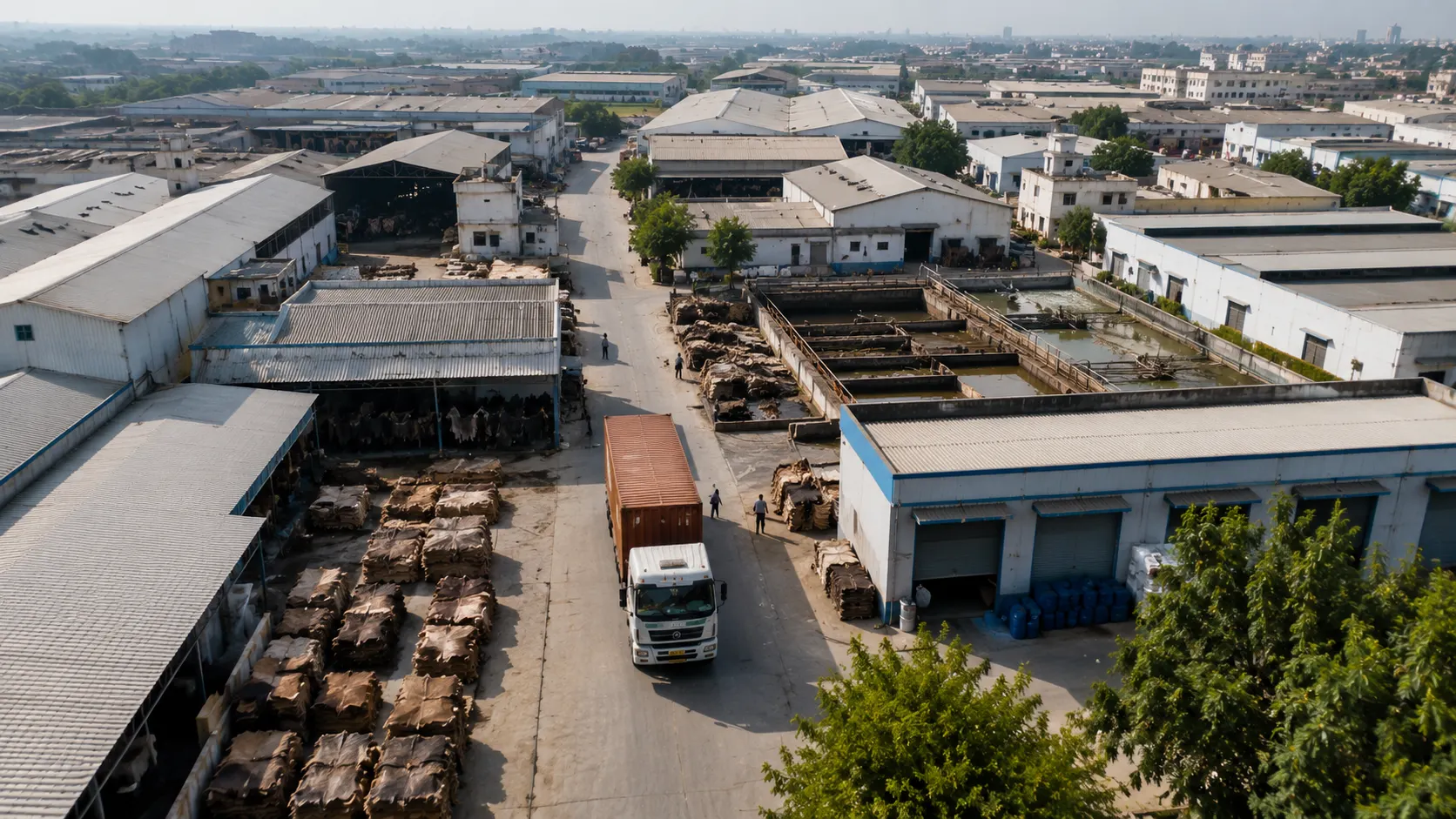
1. Supply Chain Proximity
Bringing tanneries, chemical suppliers, designers, and manufacturers together cuts transportation costs, reduces lead times, and enables just-in-time production. When every link in the supply chain is located within a few kilometers, efficiency improves dramatically.
2. Shared Infrastructure
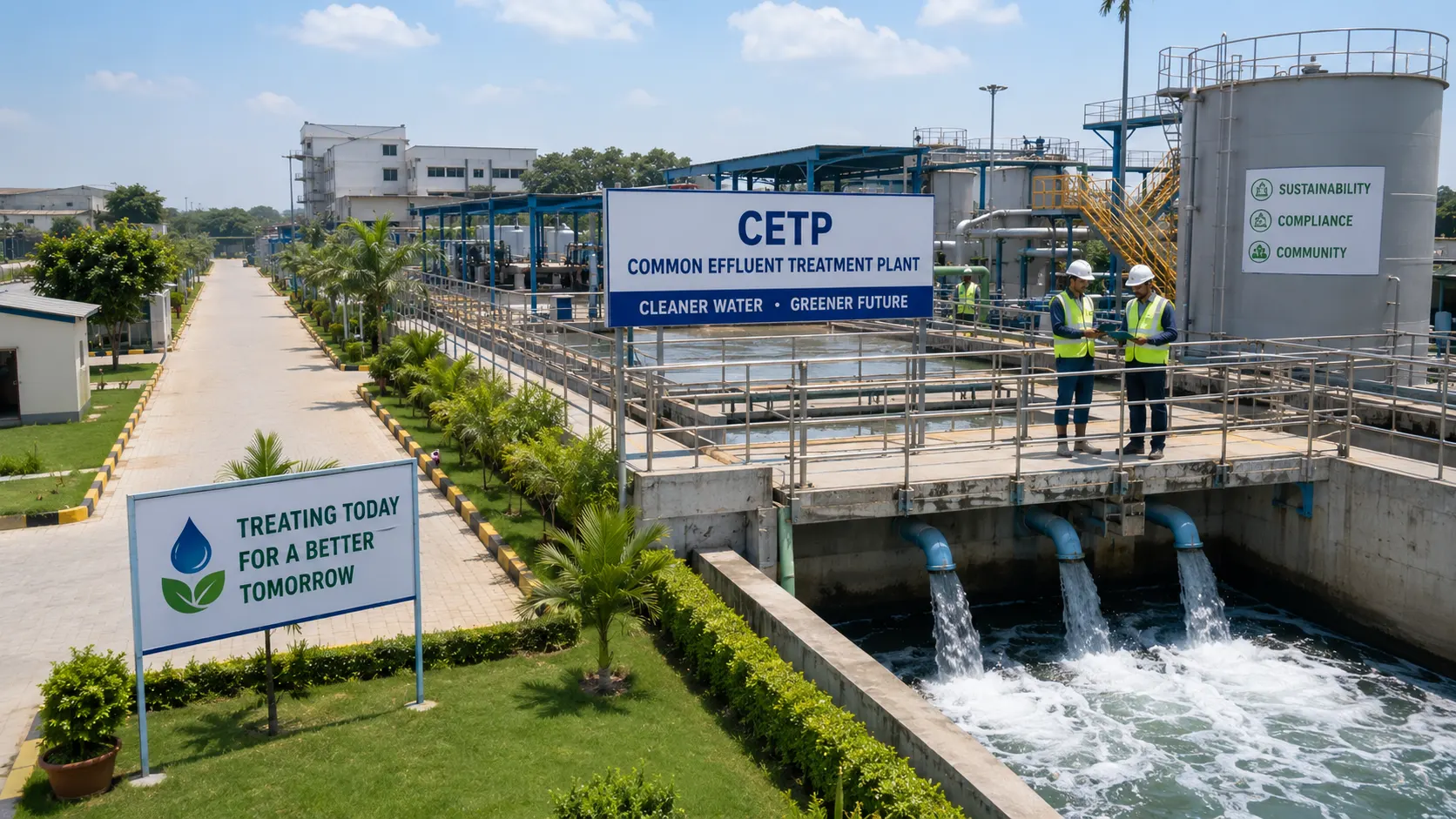
Clusters often share specialized facilities that would be too expensive for individual businesses to build and maintain. The most notable example is Common Effluent Treatment Plants (CETPs) , which manage the environmental waste from multiple tanneries collectively. This concept has been widely adopted in developing countries to address the significant environmental challenges of tanning operations.
3. Knowledge Sharing and Innovation
Businesses within a cluster can easily share best practices, technological advancements, and craftsmanship skills. Research institutions and training centers often locate within or near clusters, providing a steady stream of skilled workers and innovative ideas. This proximity fosters what economists call “knowledge spillovers” the informal exchange of ideas that drives continuous improvement.
4. Market Awareness and Access
Clustering allows companies to serve existing markets better and respond to future market changes through closer links with local clients and markets. Companies in a cluster can also act cooperatively in sourcing market data and identifying export opportunities.
5. Competitive Advantage
Firms operating in a cluster typically show competitive advantage in four key areas: increased productivity through economies of scale, innovation through knowledge sharing, effective knowledge transfer, and enhanced market awareness.
Notable Leather Clusters Around the World
Kolkata Leather Cluster, India
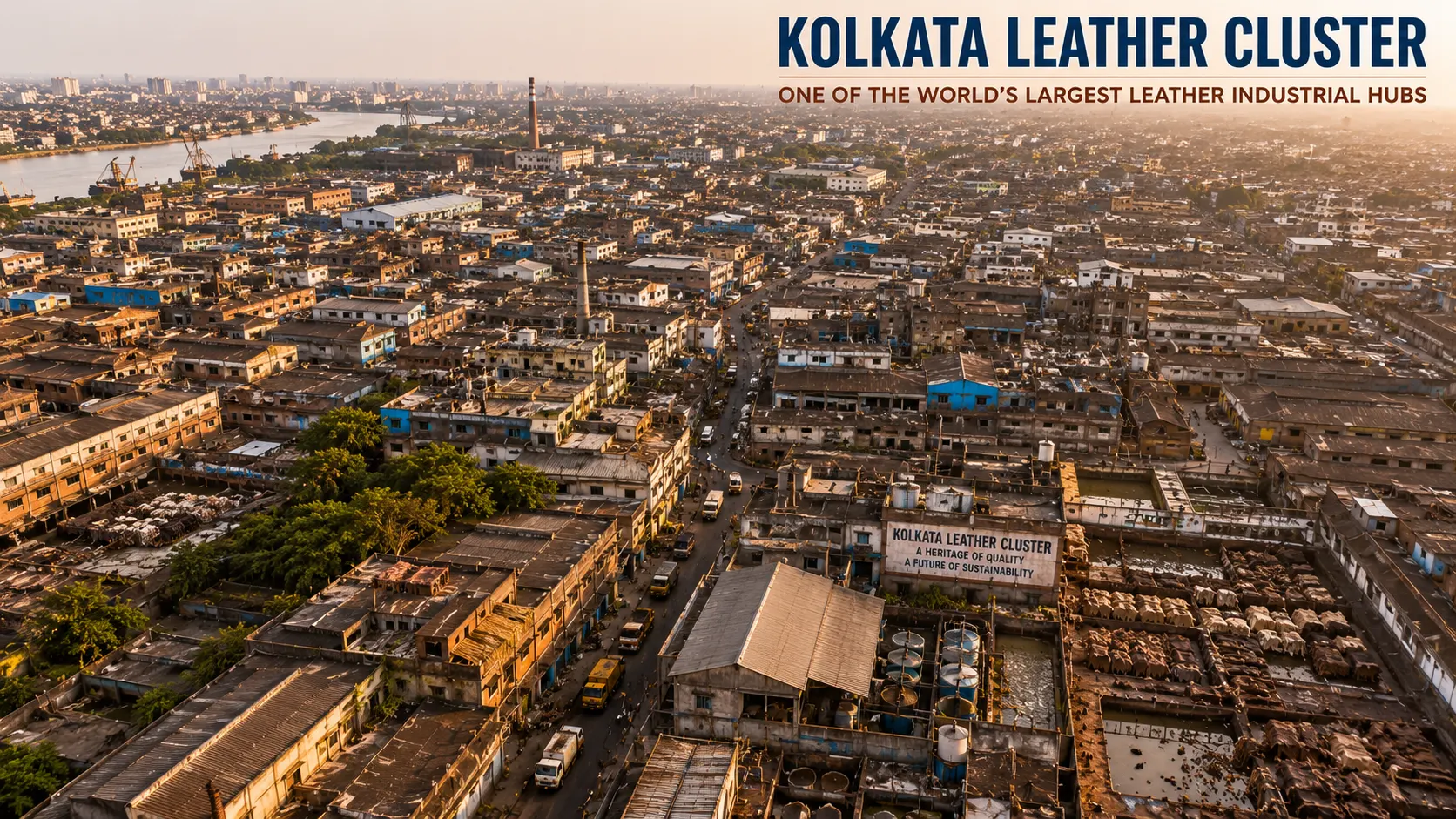
Location: West Bengal, India
Key Fact: Accounts for 50% of India’s total leather exports
The Kolkata leather cluster is one of India’s most significant leather hubs, with roots dating back to the pre-independence era. Today, the city hosts approximately 538 operational tanneries, distributed across three major clusters: Tangra, Tiljala, and Topsia.
Tangra is the largest, with 267 tanneries primarily processing hides. It has an estimated annual leather production capacity of 31 million square meters, handling approximately 565 tonnes of hides per day.
Tiljala follows with 223 tanneries, with an estimated annual capacity of 7 million square meters of leather.
Topsia, the smallest of the three with 48 tanneries, specializes in processing skins and produces 14 million square meters of leather annually.
Combined, these clusters have a total estimated production capacity of 52 million square meters of leather per year, processing around 850 tonnes of hides daily.
The cluster encompasses the geographical boundaries of Kolkata as well as the Calcutta Leather Complex situated in Bantala, a 4.5 square kilometer industrial zone that houses hundreds of tanneries and leather goods units. The complex, popularly known as “Karmadiganta,” already has fully operational 500 tanneries and leather goods manufacturing units on 1,150 acres of land, employing approximately 500,000 people.
The cluster contributes around 60% of India’s exports of leather goods and 90% of exports of leather gloves. With an aggregate turnover of ₹45 billion (approximately $540 million USD), it remains a powerhouse of the Indian leather industry.
The cluster’s value chain covers the entire spectrum from raw hides to finished products, including tanneries, manufacturer-cum-exporters, merchant exporters, and goods manufacturing units. Products range from finished leather and footwear to industrial gloves and leather goods.
Kanpur Leather Cluster, India
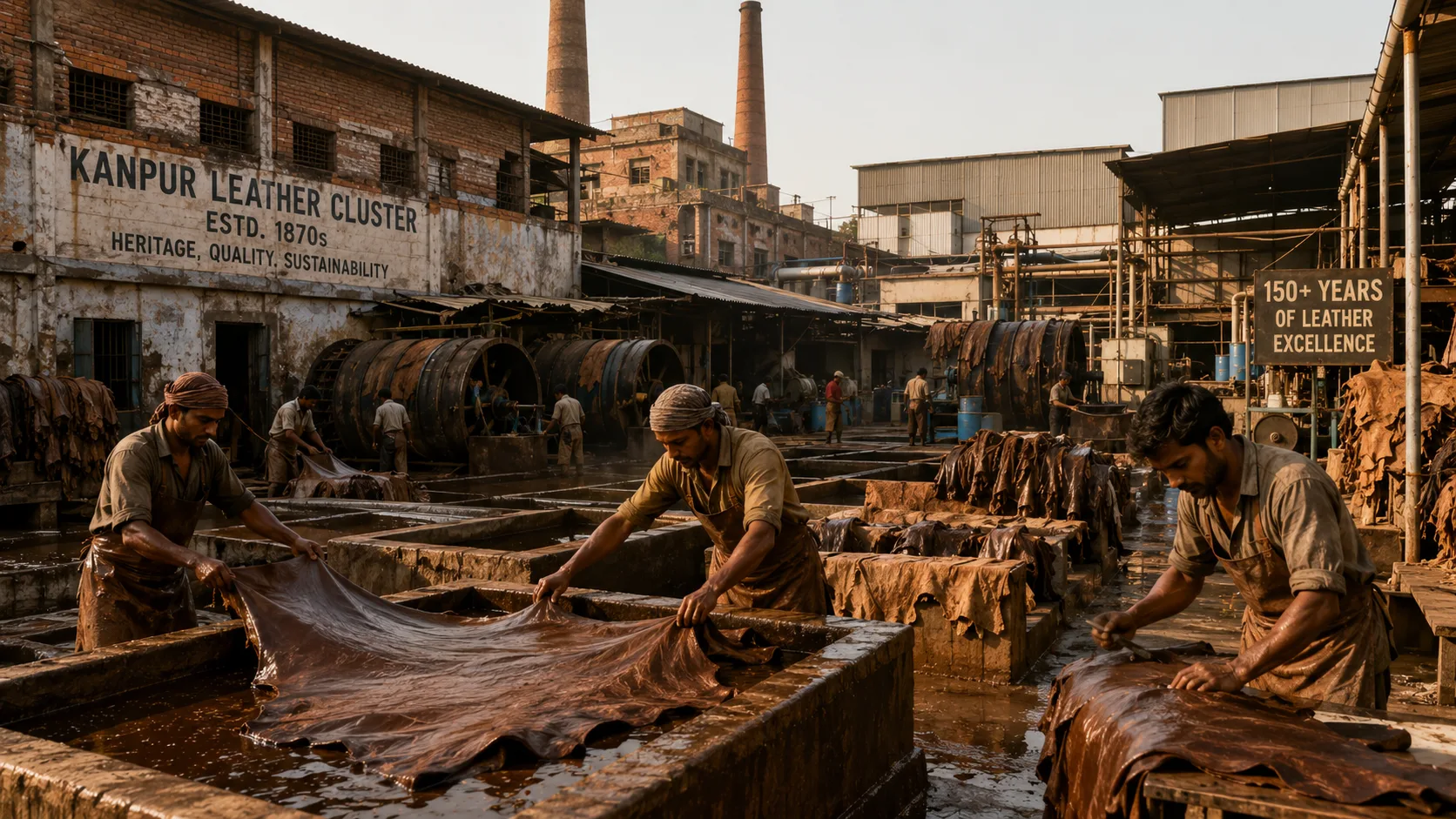
Location: Uttar Pradesh, India
Key Fact: 150-year history dating back to British colonial rule
Kanpur is another well-known global hub of the leather industry. The cluster includes saddler and equestrian goods exporters, shoe and shoe components manufacturers, producers of finished leather, leather garments, and leather accessories.
The history of this cluster dates back 150 years, when the British established factories for the production of shoes and saddlery items to meet military requirements. During World War I, existing capacity proved inadequate to meet increasing demands, and local entrepreneurs were encouraged to set up manufacturing facilities. World War II further motivated the growth of these industries, and in due course, Kanpur became a prominent center for leather and leather products.
Today, Kanpur’s leather units are renowned for high-quality leather products and realistic pricing. The cluster benefits from institutions such as the Central Leather Research Institute of India (CLRI), the Footwear Design and Development Institute (FDDI), and the Council of Leather Exports.
Sialkot Leather Cluster, Pakistan
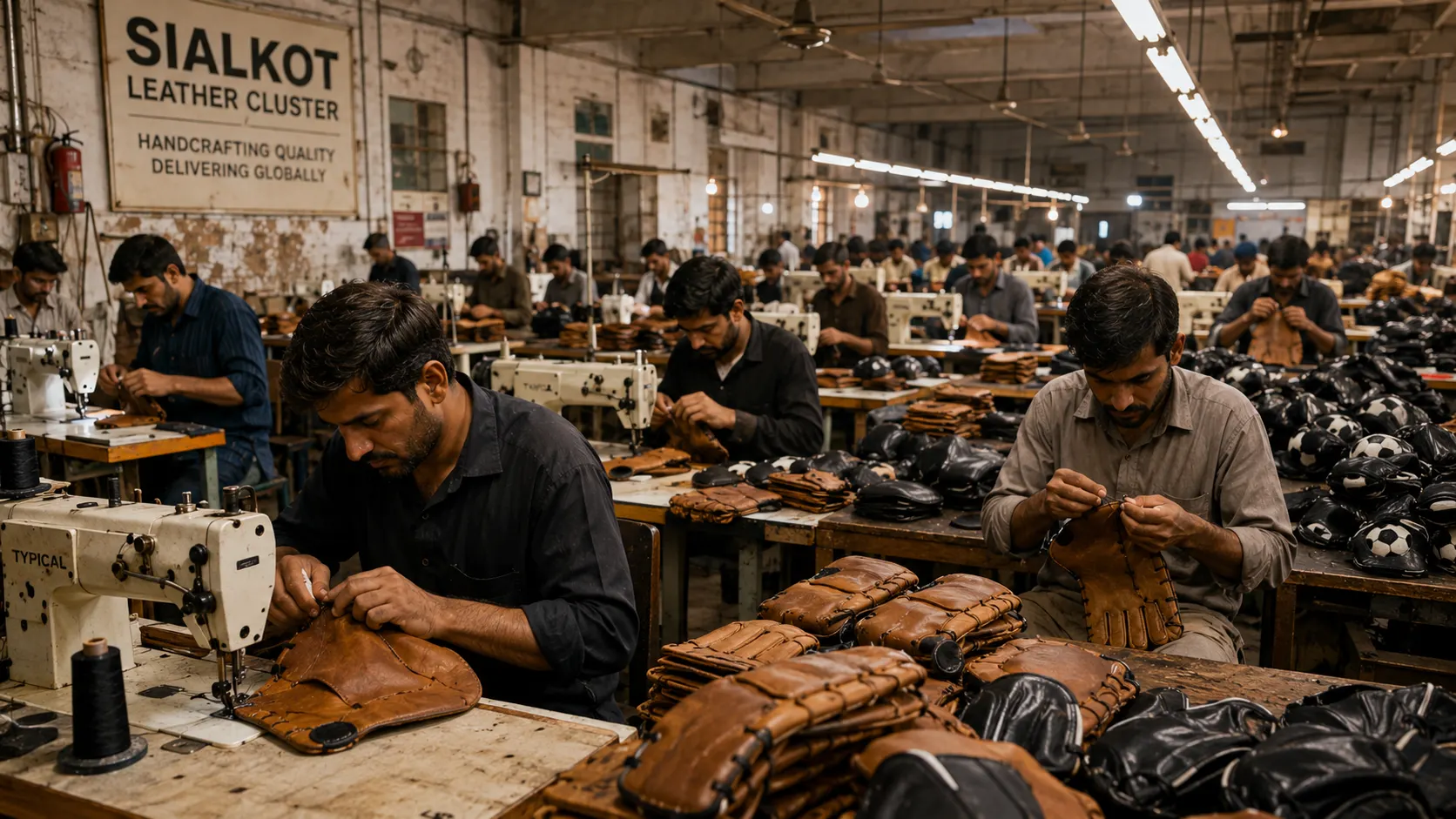
Location: Punjab, Pakistan
Key Fact: 65% of Pakistan’s leather garment exports, 90% of leather glove exports
Sialkot is internationally recognized as a producer of quality products in sports goods, surgical instruments, and leather goods. More than 200,000 people are engaged directly or indirectly with export activities, while the city’s export earnings hover around US$2.2 billion annually.
The leather industry in Sialkot began with the production of leather for footballs some 100 years ago. In the early 1970s, production of leather gloves started, soon followed by leather garments. In the 1980s, artificial leather replaced natural leather in football production, prompting tanners to switch to leather for gloves, garments, and other leather accessories-leading to the emergence of a leather products manufacturing industry in Sialkot.
Today, Sialkot’s share in Pakistan’s exports of leather garments, gloves, and club wear is approximately 65%, 90%, and 70% respectively. The cluster’s flagship products are leather gloves and leather sportswear, with additional products including fashion garments, motorbike garments, and various accessories.
Sialkot’s success story is deeply intertwined with its sports goods industry. In 1889, a British sergeant went to a local saddle-maker to have his football repaired. The local craftsman decided to make a new one based on the pattern of the original, and the sergeant was delighted, he did not have to wait eight months for a new ball to arrive from England. This marked the beginning of football manufacturing in Sialkot. Today, Sialkot caters to approximately 70% of the world’s demand for hand-stitched inflatable balls.
Sialkoti businessmen have been the official makers of match balls since the 1982 FIFA World Cup, and for three consecutive FIFA World Cups, Pakistani firm Forward Sports has manufactured the match balls. International brands such as Adidas, Nike, and Puma source their sports equipment and related supplies from Pakistan.
Leather Cluster Barcelona, Spain
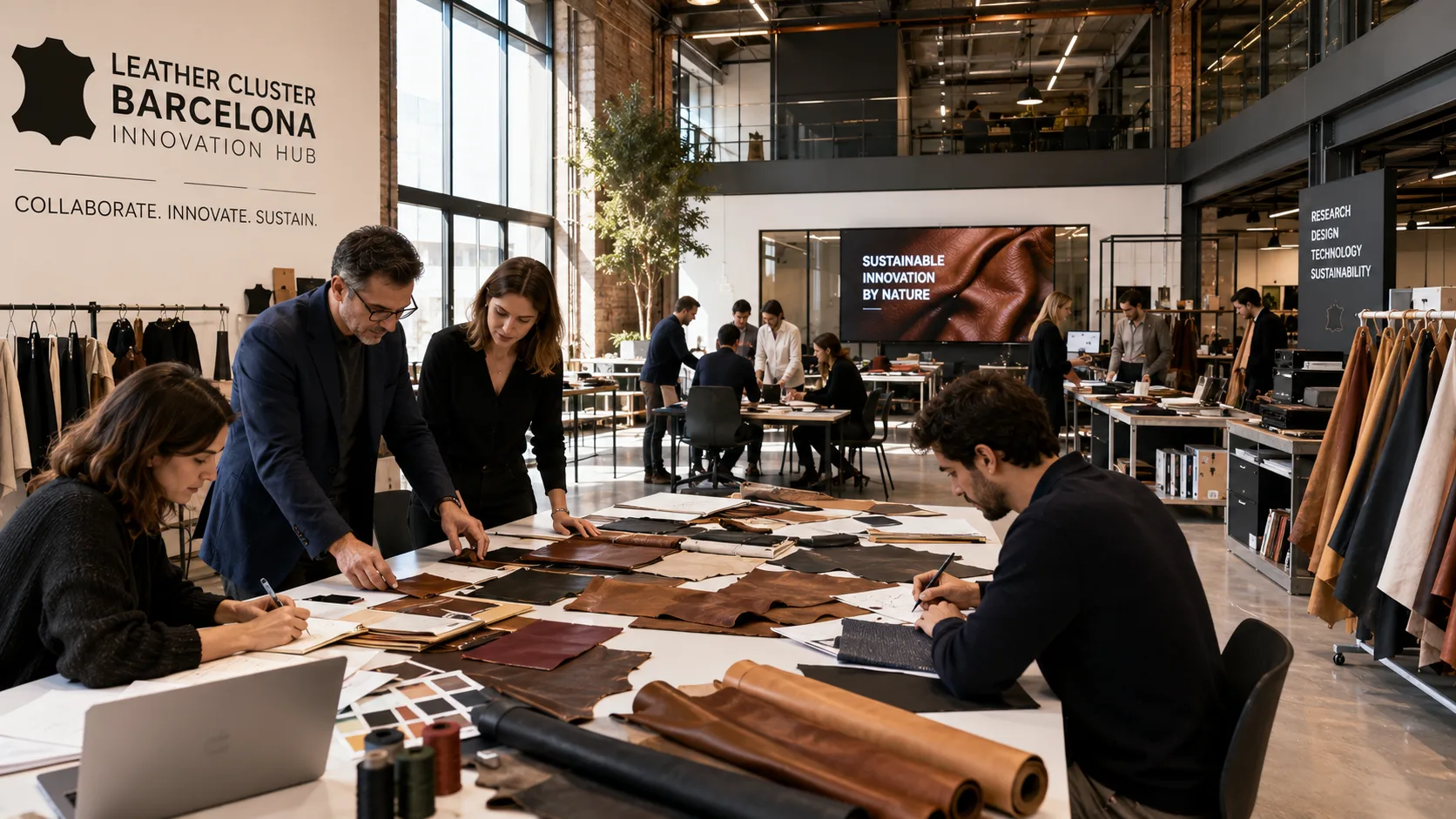
Location: Catalonia, Spain
Key Fact: A network of 78 companies and research centers
Leather Cluster Barcelona is a modern example of how clusters can drive innovation, sustainability, and international collaboration. It acts as a space for connection, cohesion, and impulse for the entire leather value chain, fostering projects between tanneries, brands, designers, manufacturers, technology providers, knowledge centers, and innovation agents.
The cluster strengthens its role as an international benchmark for the leather industry through participation in global trade fairs like Lineapelle, one of the world’s most prestigious exhibitions for leather, accessories, and components for the footwear, leather goods, clothing, and furniture sectors. The 2025 edition featured 1,150 exhibitors from 37 countries.
Leather Cluster Barcelona actively promotes collaboration across the value chain. In one notable initiative, the cluster connected Colomer 1792, a historic tannery company, with fashion designer Javier Guijarro, enabling the designer to create a collection using leather provided by the company. The resulting Fall/Winter 2026 collection included a skirt, two dresses, a jacket, and a bag. Such initiatives exemplify how clusters serve as bridges between industrial tradition and innovation, productive capacity and creativity, and business needs and specialized knowledge.
The cluster is an accredited entity within the Shared Value policies program, reinforcing its commitment to sustainability and social impact.
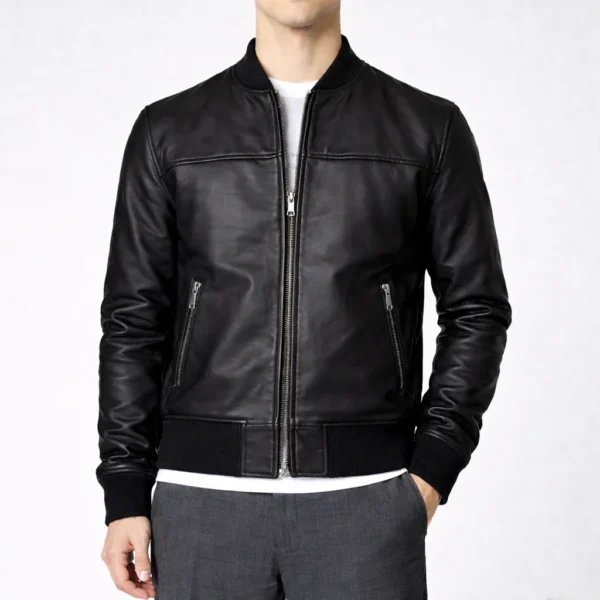


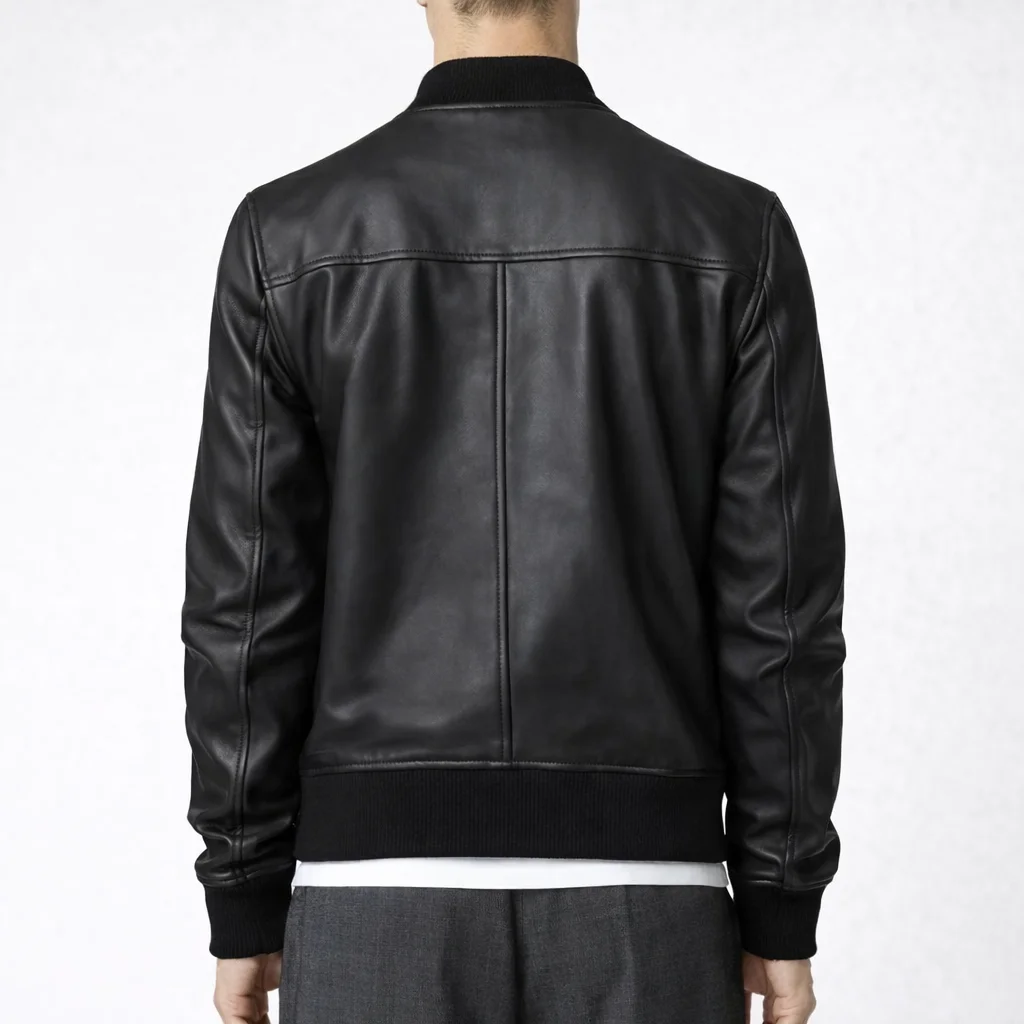
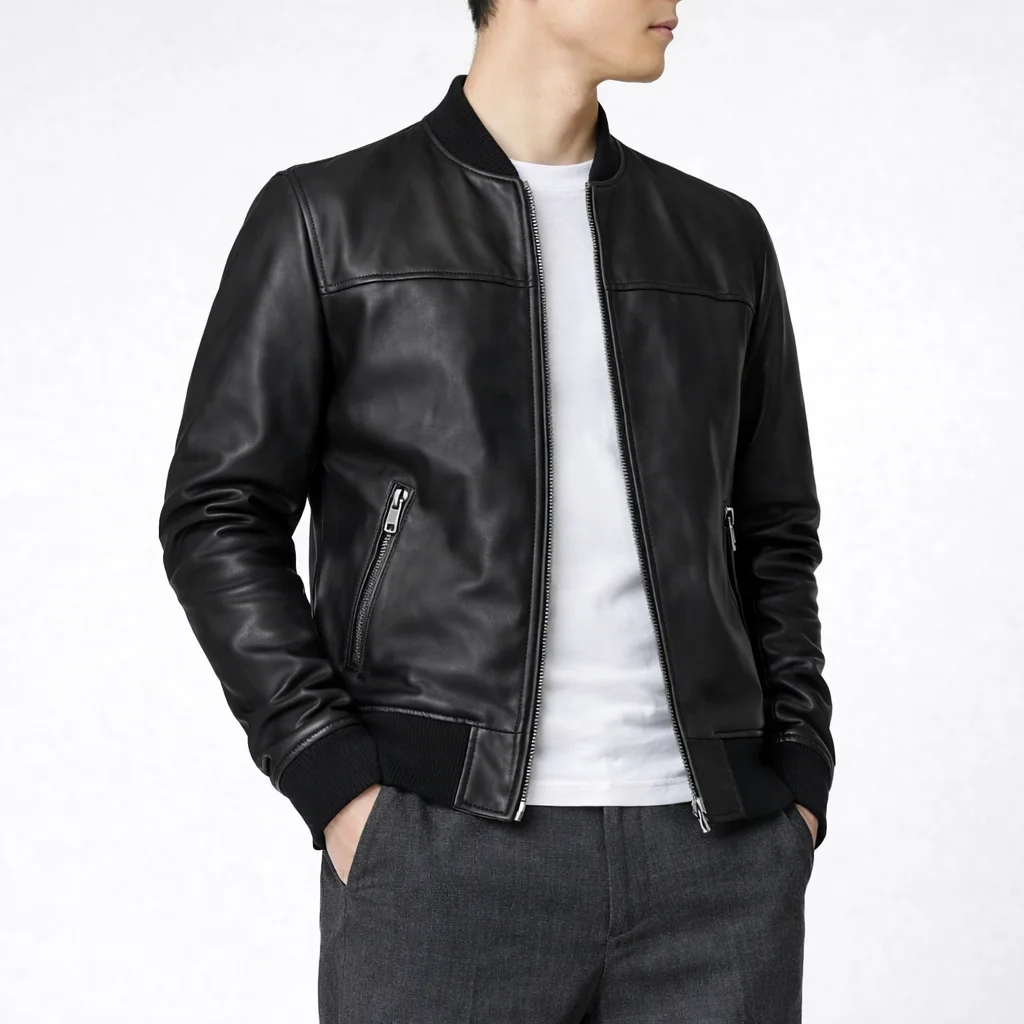
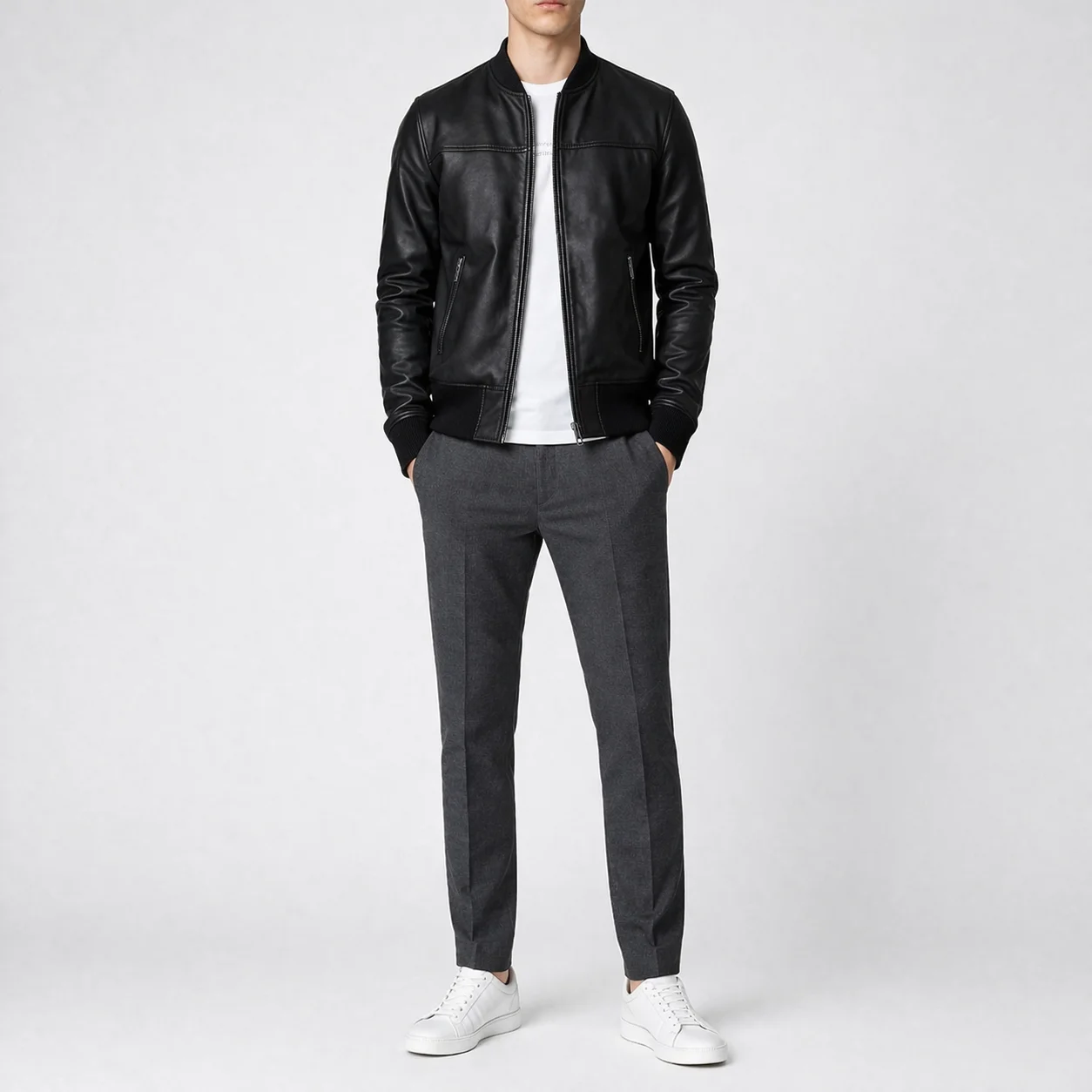
ALVIN Black Leather Bomber Jacket For Men
Italian Leather Districts
Location: Various regions, Italy
Key Fact: Italy accounts for 65% of European leather production and 18% of global production
Italy is home to some of the world’s most famous leather districts, each with its own specialization.
Arzignano (Veneto region) represents the largest leather district in terms of quantity of production and workers, accounting for 53% of Italy’s national total. It is composed of small-medium businesses and large industrial groups specialized in large cowhide for upholstery, car interiors, shoes, and leather goods. The Veneto tanning region, centered around Arzignano, accounts for over half of all Italian leather and more than a third of the total European Union leather produced by value.
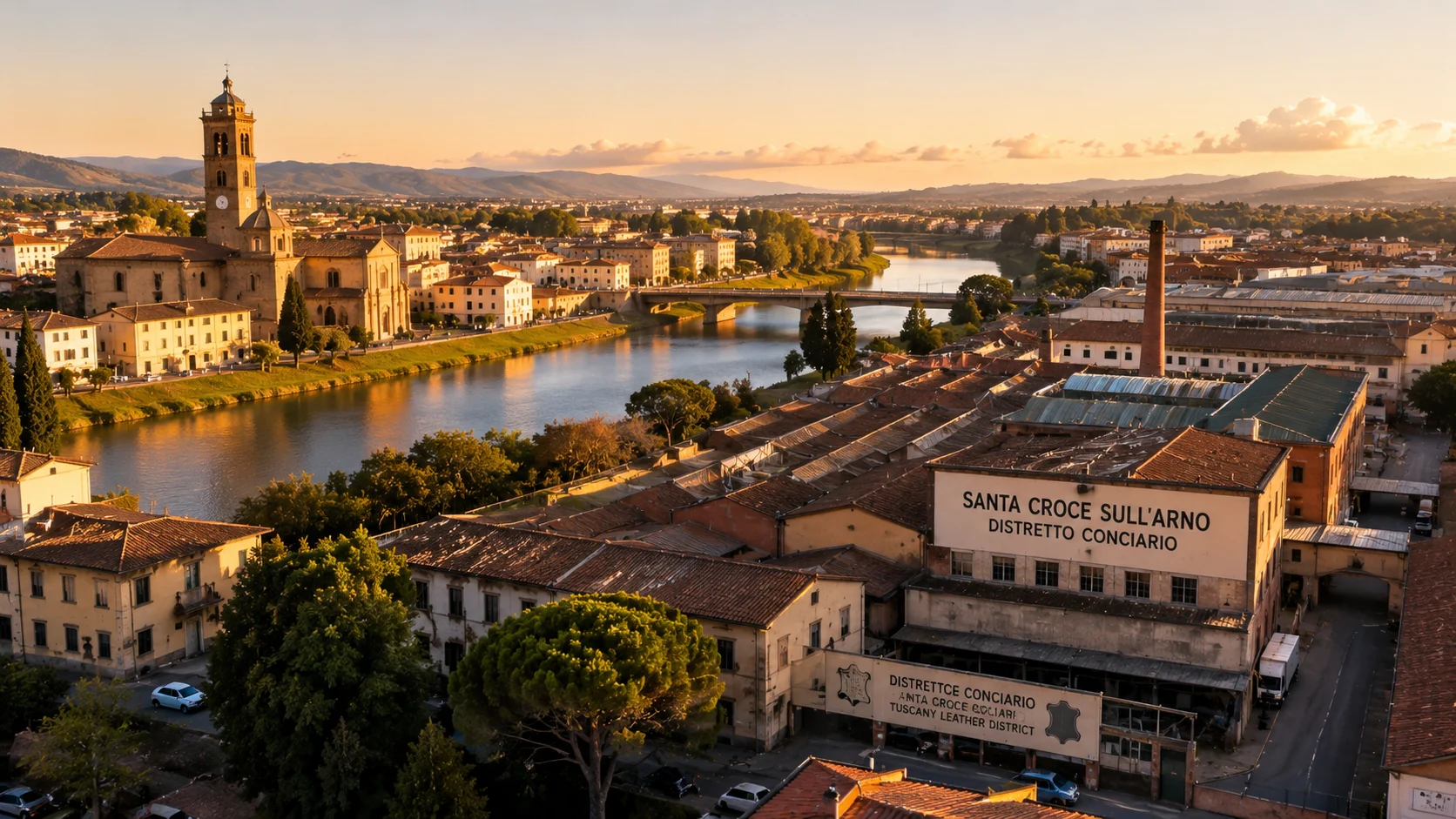
Santa Croce sull’Arno (Tuscany) is the most famous district because of the importance given to production quality, representing 28% of Italy’s national total. It is renowned for its high level of craftsmanship and flexibility and its close relationship with the world of high fashion. The first tanneries settled in Santa Croce at the beginning of the 1800s, and the industry grew exponentially in the second half of the twentieth century. Together with the adjacent area of Ponte a Egola, the district represents 19% of all leather produced in the European Union.
Solofra (Campania) specializes in processing sheepskin for use in clothing, footwear, and leather goods (8% of the national total).
Magenta (Lombardy) has few tanneries mainly specialized in the production of sheep and goat skins for haute couture.
In December 2015, the total number of Italian tanneries including small and medium enterprises was 1,254, employing 18,000 workers. Footwear is historically the main use for Italian leather (43% of tanning production), followed by leather goods (25%), furniture upholstery (15%), car interiors (10%), and clothing (5%).
The Economic Impact of Leather Clusters
The global leather market is substantial and growing. The Global Leather Market is projected at USD 38.8 billion in 2025 and is expected to reach USD 67.8 billion by 2033, growing at a CAGR of 7.21%. The broader Leather and Allied Products Market is valued at USD 375.1 billion in 2025 and is projected to reach USD 845.5 billion by 2034.
Leather clusters are critical to this economic activity. They provide employment for millions of people worldwide, generate significant export revenues, and support entire regional economies. For example:
- The Kolkata cluster employs approximately 500,000 people.
- The Sialkot cluster engages more than 200,000 people directly or indirectly in export activities.
- The Italian tanning industry employs 18,000 workers across 1,254 tanneries.
The demand for leather products is distributed across various sectors, with footwear accounting for 40%, automotive for 25%, fashion for 20%, and upholstery for 15%.
Challenges and the Future of Leather Clusters
Despite their success, leather clusters face significant challenges:
Environmental Concerns
Tannery operations have significant environmental impacts due to liquid, solid, and gaseous waste discharges, along with substantial consumption of resources like raw hides, energy, chemicals, and water. When tannery effluent is improperly disposed of, it contaminates water and sewage, releases heavy metals into the environment, and has negative effects on human health.
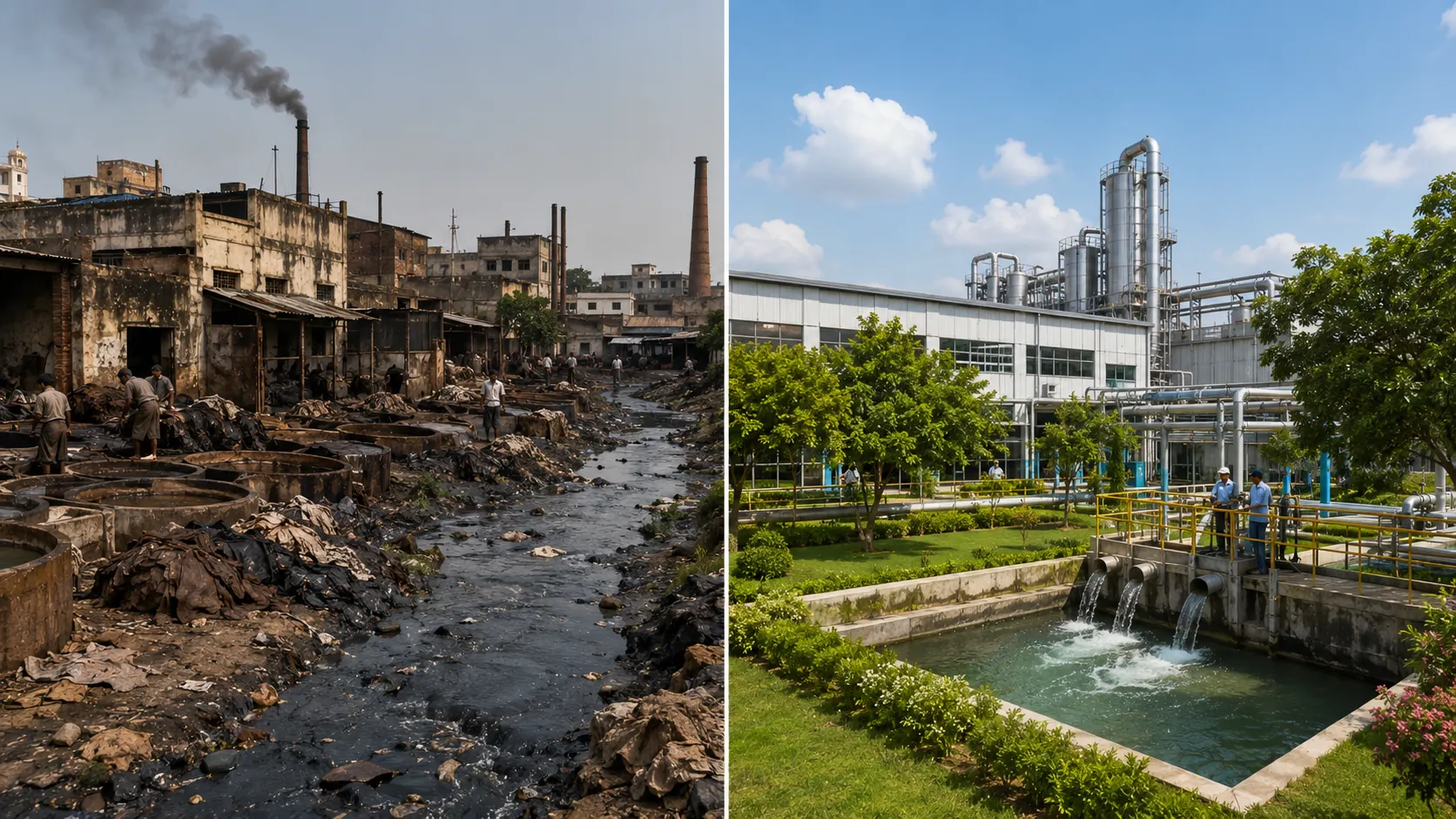
The historical development of clusters has often led to environmental degradation. In Kolkata, for example, tanning zones that were once on the outskirts of the city are now surrounded by dense populations. Effluent treatment and waste disposal systems are often lacking, with wastewater discharged into open roadside drains and solid waste dumped without regulation.
Modernization and Technology Gaps
Many clusters struggle with outdated technology and lack of space for modern pollution control equipment. The Kolkata clusters, for instance, produce less than 50% of their potential capacity approximately 23 million square meters annually against a potential of 52 million square meters.
Global Competition and Trade Policies
Clusters are increasingly affected by global trade dynamics and shifting demand. The Kolkata cluster, which exports leather goods worth around Rs 870 crore to the US annually, has been significantly impacted by tariff changes. Some factories have halted production altogether, while others run skeletal shifts just to preserve raw materials.
The Future: Sustainable and Innovative Clusters

Despite these challenges, leather clusters are evolving. The future of leather clusters lies in:
Sustainability: Clusters are increasingly adopting Common Effluent Treatment Plants (CETPs) and sustainable practices to mitigate environmental impact.
Innovation: Clusters like Leather Cluster Barcelona are actively fostering connections between tanneries, designers, and technology providers to drive innovation and create new value.
Specialization: Italian clusters demonstrate the power of specialization each district focuses on specific types of leather and end-uses, creating world-class expertise.
Collaboration: Clusters are becoming platforms for “cooperative competition,” where businesses compete in some areas while collaborating in others to achieve shared goals.
Frequently Asked Questions About Leather Clusters
1. What is a leather cluster?
A leather cluster is a geographic concentration of interconnected businesses, suppliers, and institutions involved in all stages of the leather industry from raw hide processing to finished products like leather jackets, bags, and footwear. These clusters bring together tanneries, chemical suppliers, manufacturers, designers, exporters, and research centers within a defined area, creating a complete ecosystem that supports the entire value chain.
2. Why are leather clusters important?
Leather clusters are vital because they create competitive advantages through proximity. When all stages of production are located close together, transportation costs decrease, production speeds increase, and knowledge sharing becomes easier. Clusters also enable shared infrastructure like Common Effluent Treatment Plants (CETPs), which help manage environmental waste more efficiently. They foster innovation through collaboration and provide concentrated employment opportunities the Kolkata cluster alone employs approximately 500,000 people.
3. Where are the major leather clusters located?
Some of the world’s most significant leather clusters are located in:
- Kolkata, India – Houses over 500 tanneries and contributes 50% of India’s leather exports
- Kanpur, India – A 150-year-old cluster known for saddlery and leather goods
- Sialkot, Pakistan – Global hub for leather gloves and sports goods, with 200,000+ workers
- Barcelona, Spain – A network of 78 companies focusing on high-end leather and sustainability
- Italy (Arzignano, Santa Croce, Solofra) – Italian districts that produce 65% of European leather
4. How do leather clusters benefit the economy?
Leather clusters generate significant economic impact through exports, employment, and industrial growth. For example:
- The global leather market is projected to reach USD 67.8 billion by 2033
- Sialkot’s exports exceed US$2.2 billion annually
- The Kolkata cluster has an aggregate turnover of ₹45 billion (approximately $540 million USD)
- Italian tanneries employ 18,000 workers across 1,254 facilities
5. What types of products come from leather clusters?
Leather clusters produce a wide range of products including:
- Footwear – 40% of global leather demand
- Leather goods – bags, belts, wallets (25%)
- Furniture upholstery – 15%
- Automotive interiors – 10%
- Clothing – leather jackets and garments
- Industrial products – leather gloves, motorbike wear, sports goods
- Equestrian goods – saddles and related items
6. What challenges do leather clusters face?
Leather clusters face several significant challenges:
Environmental Concerns: Tannery operations produce liquid, solid, and gaseous waste that can contaminate water, release heavy metals, and harm human health when improperly managed.
Modernization Gaps: Many clusters struggle with outdated technology. The Kolkata cluster, for example, produces less than 50% of its potential capacity 23 million square meters annually against a potential of 52 million square meters.
Global Competition: Trade policies and shifting demand affect cluster viability. Tariff changes have significantly impacted exports from clusters like Kolkata to markets like the US.
Regulatory Compliance: Meeting international environmental and quality standards requires ongoing investment and adaptation.
7. How are leather clusters becoming more sustainable?
Leather clusters are evolving to address environmental challenges through:
- Common Effluent Treatment Plants (CETPs): Shared facilities that treat wastewater collectively, reducing costs and environmental impact
- Circular Economy Practices: Recycling and reusing water, chemicals, and materials
- Innovation Hubs: Clusters like Leather Cluster Barcelona actively connect tanneries with designers and technology providers to develop sustainable solutions
- Certification Programs: Adopting international standards for sustainable leather production
- Collaboration with Research Centers: Working with institutions to develop cleaner tanning technologies
8. How can I identify quality leather products from these clusters?
When purchasing leather products from major clusters, look for:
- Reputation of the cluster – Italian leather from Santa Croce is world-renowned for quality
- Certifications – Look for standards like ISO, REACH compliance, or sustainability certifications
- Craftsmanship – Italian and European clusters often emphasize superior craftsmanship
- Product labeling – Check for information about origin and materials
For high-quality leather products and expert care guides, explore our collection at Lammberg Shop.
9. What is the difference between leather clusters and leather districts?
These terms are often used interchangeably, but:
- A leather cluster is a broader concept encompassing all related businesses and institutions in a geographic area
- A leather district typically refers to a specific, well-defined geographic area with a historical concentration of leather production, such as the Italian leather districts of Arzignano, Santa Croce sull’Arno, and Solofra
Italian leather districts are particularly famous for their specialization each district focuses on specific types of leather and end-uses, creating world-class expertise in their niche.
10. How do leather clusters foster innovation?
Clusters foster innovation through:
Knowledge Spillovers: The informal exchange of ideas between businesses, workers, and institutions drives continuous improvement
Research Collaboration: Clusters like Leather Cluster Barcelona connect tanneries, designers, and technology providers to create new products and processes
Proximity to Design Centers: Many European clusters are located near major fashion capitals like Milan, Florence, and Barcelona, allowing close collaboration between designers and manufacturers
Shared R&D: Collective investment in research and development, often in partnership with universities and research centers
Training Programs: Clusters often support specialized training to ensure a skilled workforce
11. How does the quality of leather vary between clusters?
Leather quality varies significantly between clusters based on:
Raw Materials: Access to different types of hides and skins
Processing Techniques: Traditional craftsmanship vs. modern industrial methods
Environmental Controls: Proper tanning and finishing processes
Market Focus: Clusters serving luxury markets typically produce higher quality leather
Regulatory Standards: European clusters often meet higher environmental and quality standards
Italian leather, particularly from the Santa Croce district, is world-renowned for its exceptional quality and is often used by luxury fashion brands. Sialkot is known for high-quality leather gloves and sports goods, while Indian clusters offer competitive pricing for a wide range of products.
12. Where can I learn more about leather care and maintenance?
Proper leather care is essential for preserving the beauty and longevity of leather products. To learn more about how to care for your leather items, visit:
- Leather Jacket MYTHS VS. FACTS Guide
- Sustainable Leather Products
- How to Care for Leather Products
Explore high-quality leather products and care solutions at Lammberg.
Conclusion
Leather clusters are much more than simple agglomerations of businesses. They are dynamic ecosystems that combine tradition with innovation, craftsmanship with industry, and local identity with global reach. From the historic tanneries of Kanpur and Kolkata to the cutting-edge collaborations of Leather Cluster Barcelona, these clusters demonstrate the enduring power of geographic concentration in driving economic growth and industrial excellence.
As the global leather market continues to grow projected to reach nearly $68 billion by 2033 leather clusters will remain at the heart of this industry, adapting to new challenges and seizing new opportunities. Their ability to balance tradition with innovation, economic development with environmental responsibility, and local identity with global competitiveness will determine their success in the decades to come.
Related Articles:
- The Incredible Story of Leather: 7,000 Years of History That Changed Fashion Forever
- Don’t Buy a Leather Jacket Until You Read These 7 Expert Tips
- 15 Leather Jacket Myths That Are Costing You Money (Fact #7 Surprises Everyone)
- Real vs Fake Leather Jackets: 10 Easy Ways to Spot the Difference in Seconds
- What Makes a Premium Leather Jacket So Expensive? The Craftsmanship Explained
- Never Buy Bonded Leather Until You Read This Complete Guide
- Peacoat vs Trench Coat: Which One Makes You Look Better?
- 11 Men’s Leather Jacket Trends That Will Dominate Fashion in 2025
- How to Remove Bad Smells from a Leather Jacket (Without Damaging It)
- The Ultimate Leather Jacket Size Guide: Get the Perfect Fit Every Time
- How to Measure Yourself Correctly Before Buying a Leather Jacket Online
- Top Women’s Leather Coat Trends Everyone Will Be Wearing in 2026
- 10 Men’s Leather Coats That Make You Look Rich in 2026
- The Only Jacket Guide You’ll Ever Need for Every Season
- Top 10 Genuine Leather Jackets in the USA (Ranked by Experts)
- Best Lightweight Packable Puffer Jackets That Travelers Swear By
- How Fashion Experts Style Leather Jackets in 2026 (Copy These Looks)
- How to Wear a Men’s Leather Jacket Without Looking Outdated
- How to Remove Wrinkles from a Leather Jacket Without Ruining It
- 10 Leather Jacket Outfit Ideas That Make Every Woman Look Stylish Instantly
- The Hidden World of Leather Clusters: How the Global Leather Industry Really Works
- Can You Wash a Leather Jacket in a Washing Machine? The Answer May Surprise You
- 25 Best Leather Coats to Buy in 2026 (Expert Picks)
- The 25 Best Leather Jackets of 2026 You Won’t Regret Buying
- 5 Types of Leather Jackets Every Stylish Man & Woman Should Own
- The Untold History of Leather Jackets: From War Heroes to Hollywood Legends
- 10 Leather Blazer Office Outfits Every Working Woman Should Copy in 2026
- 10 Leather Blazer Office Looks That Instantly Upgrade Your Style
- How to Remove Cigarette Smell & Mildew from Leather Jackets Fast (Pro Methods)
- Do Police Officers Still Wear Leather Jackets? The Truth Will Surprise You

































What Is Bison Leather? Durability, Uses & Cowhide Comparison
What Is Bovine Leather?