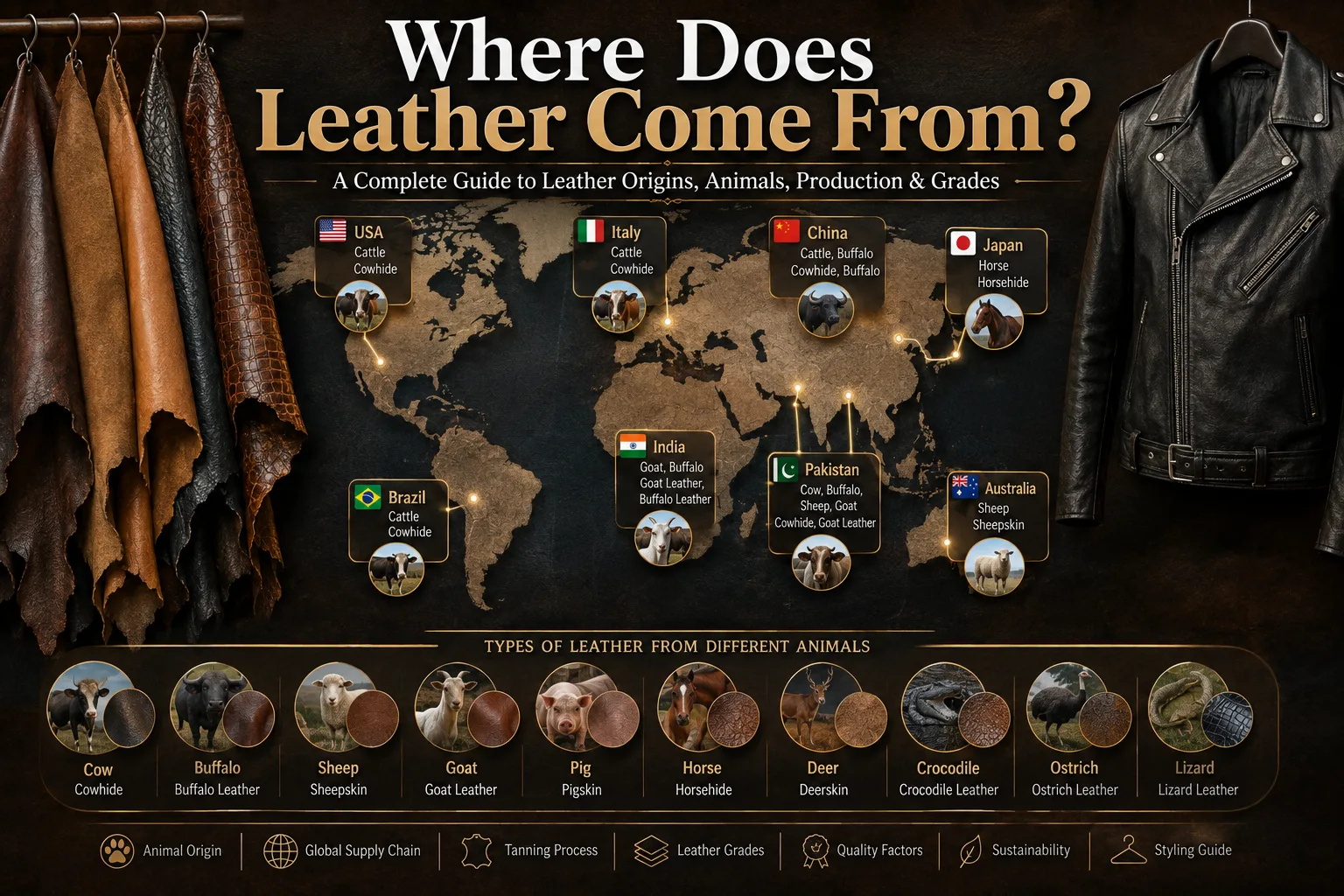
The short answer is that leather comes from the hides and skins of animals, most often cattle, which are cleaned, preserved, and chemically treated through a process called tanning until they become the durable, flexible material we recognize as leather. Cows are the biggest single source, but sheep, goats, buffalo, pigs, and even horses and exotic species like crocodiles and ostriches all contribute meaningfully to the global leather supply.
The longer answer is more interesting, and a bit more tangled. A single leather jacket might start with a hide from a cattle ranch in Brazil, get tanned in a facility in another country entirely, and be sewn into a finished garment somewhere else again before it ever reaches a store shelf. That’s why “where does leather come from” doesn’t really have one clean answer it depends whether you’re asking about the animal, the tannery, or the factory that cut and stitched the final piece.
This guide walks through all of it: what leather is made of, which animals it comes from, how a hide becomes leather, why certain countries are associated with certain kinds of leather, what terms like “full-grain” and “genuine leather” actually mean, and why two jackets that both say “real leather” on the label can be worlds apart in quality and price.
What Is Leather?
What Is Leather Made Of?
Leather is made from the skin of an animal. Skin is mostly collagen, a fibrous structural protein arranged in a dense, interwoven network. That network is what gives raw hide its strength, but on its own, untreated skin will rot, stiffen, or fall apart depending on how it dries. Tanning is the chemical step that stabilizes those collagen fibers permanently, so the material stays flexible and resists decay instead of putrefying like the rest of the animal’s tissue would.
Structurally, the top layer of skin (the grain) contains the tightest fiber weave and the hair follicles, which is why it shows the most natural character pores, fine lines, small scars. The layers underneath are looser and coarser. How a tannery slices and treats these layers determines whether the result is dense and long-wearing or soft and short-lived, which is the whole basis for leather grading discussed later in this guide.
Is Genuine Leather Made From Animals?
Yes. Despite how the phrase sounds in casual use, “genuine leather” always refers to material made from real animal hide, not a synthetic. But that’s precisely where the confusion starts: in the leather trade, “genuine leather” is actually a specific, lower-tier grade name, not a general assurance of quality. It means the product contains real leather, but it says nothing about which layer of the hide was used or how it was processed. A full-grain jacket and a bargain-bin “genuine leather” wallet are both technically made from animals they are just not the same material in any practical sense.
What Animals Are Used to Make Leather?
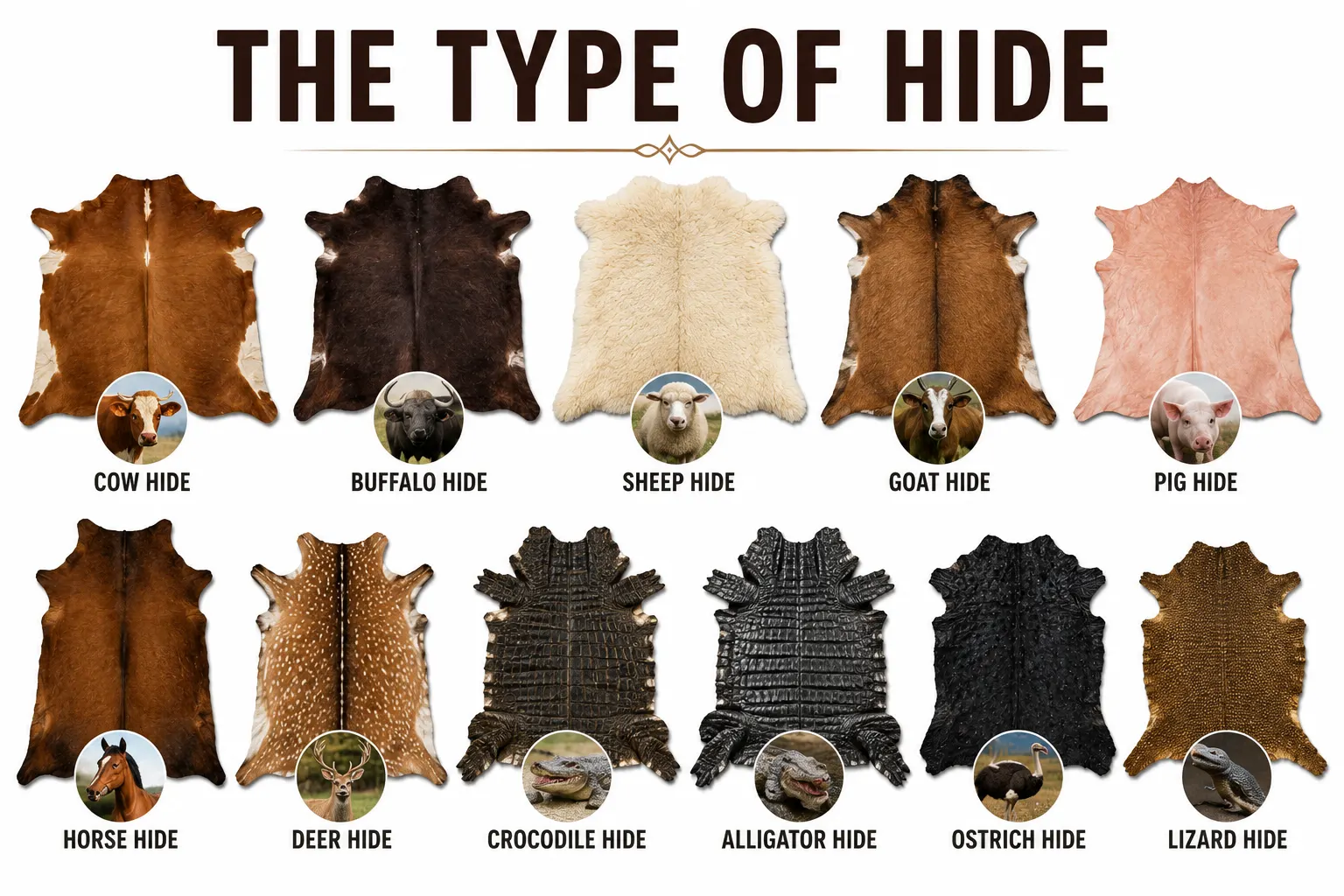
Cattle hides dominate global leather production by volume, commonly cited as somewhere around three-quarters or more of the world’s leather depending on the source and measurement method. Sheep and goat skins follow as the next largest categories, then buffalo, pig, and smaller volumes of horse, deer, and exotic species such as crocodile, alligator, ostrich, and various lizards. Each animal produces a different grain pattern, thickness, and set of characteristics, which is why the choice of animal matters as much as the tanning method.
Where Does Leather Come From?
Where Does Leather Come From on a Cow?
A cowhide isn’t uniform. It’s typically divided into a few working sections, and each has a different feel, strength, and best use.
- Shoulder — the area over the neck and front legs. It’s strong and flexible because of how much the cow moves its head, but it also tends to carry more natural wrinkles and grain variation than other areas.
- Neck — part of the shoulder region, thick and tough, but the most heavily wrinkled part of the hide.
- Back / bend — the section running along the spine, considered one of the more consistent and useful areas of the hide, often favored for structured goods.
- Butt / croupon — the rear section over the hindquarters. Fibers here are the most tightly packed on the animal, making it the densest and generally strongest part of the hide, which is why it’s commonly used for belts, saddles, and other items that need to resist stretching.
- Belly and flank — the underside and sides. This area stretched and moved the most on the living animal, so the fibers are looser, the leather is thinner and more elastic, and it’s more prone to unevenness. It’s generally reserved for smaller or softer pieces rather than structural items.
Because quality varies this much across one hide, a single cow doesn’t produce one uniform grade of leather a tannery may grade and sort pieces from the same skin differently depending on which section they came from.
Where Does Leather Come From in the World?
Globally, leather follows a supply chain that can cross several borders before it becomes a finished product: animal → hide or skin removed after slaughter → preservation (usually salting) → shipped to a tannery → tanned and finished into leather → sent to a manufacturer → cut and sewn into a finished good → sold to a retailer. Raw hides, semi-processed “wet blue” leather (hide that has been through the initial tanning stage but not finished), and fully finished leather are all traded internationally, and each stage can happen in a different country. A hide from an animal raised in one country might be tanned in a second country and turned into a jacket in a third before being sold under a brand based in a fourth. Keeping animal origin, tanning location, and manufacturing location separate in your head is the single most useful thing to understand about where leather “comes from.”
| Stage | What happens | Where it can happen |
|---|---|---|
| Livestock raising | Cattle, sheep, goats, or other animals are raised, primarily for meat and dairy | Major cattle-producing regions such as Brazil, the U.S., India, and China |
| Slaughter and hide removal | The hide is separated as a co-product of meat processing and salted or chilled for preservation | Wherever the animal was processed |
| Tanning | The hide is chemically stabilized and turned into leather | Major tanning hubs including China, Italy, Brazil, India, and Pakistan |
| Finishing | Dyeing, embossing, and surface treatment | Often the same country as tanning, sometimes a separate specialist facility |
| Manufacturing | Cutting and sewing the finished leather into a product | Varies widely; garment manufacturing is common in Pakistan, China, Vietnam, and Italy |
| Retail / brand | The product is sold under a brand name | Anywhere in the world |
Shop new arrivals
-

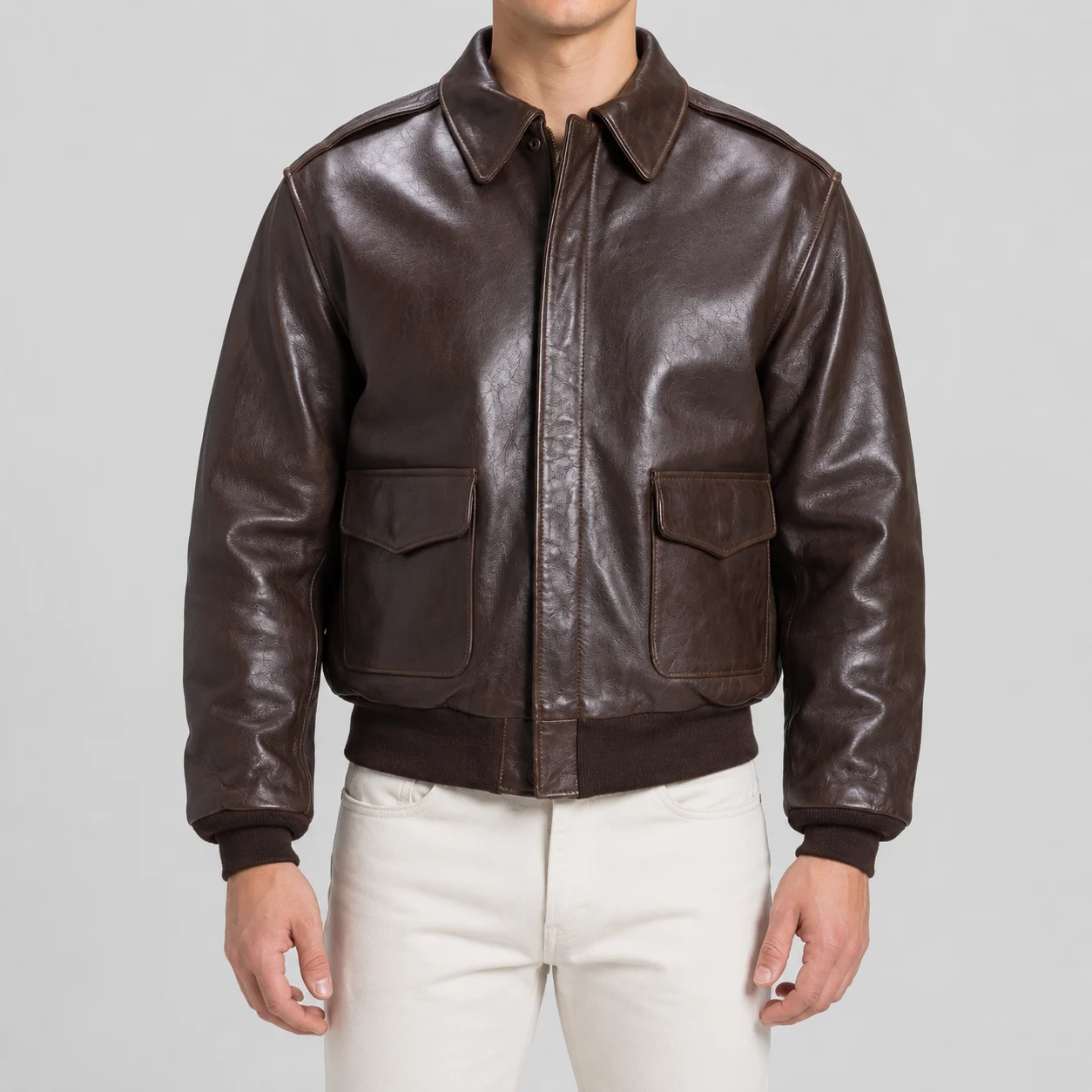
A-2 Antique WWII Leather Flight Jacket For Men
Price: $299
-

ALICE Black Leather Jacket For Women
Price: $299
-
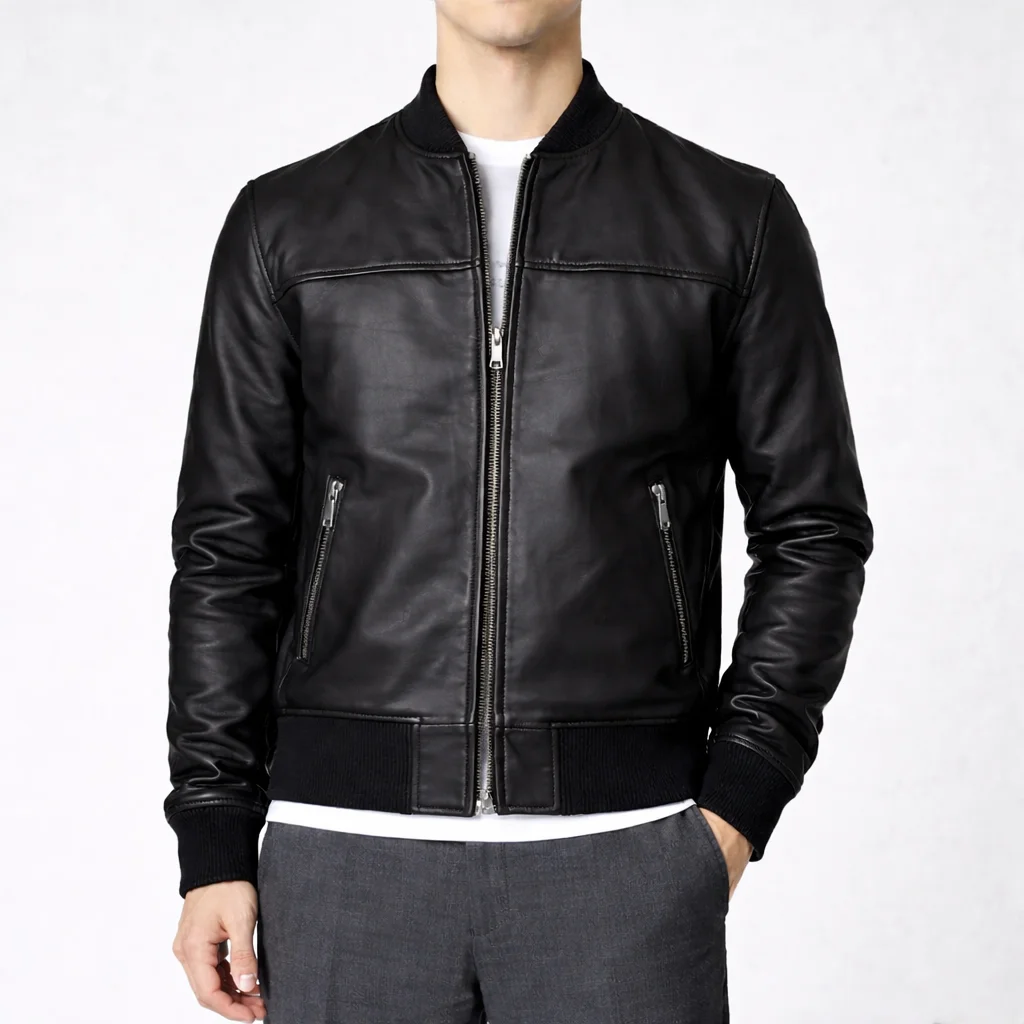
ALVIN Black Leather Bomber Jacket For Men
Price: $299
-
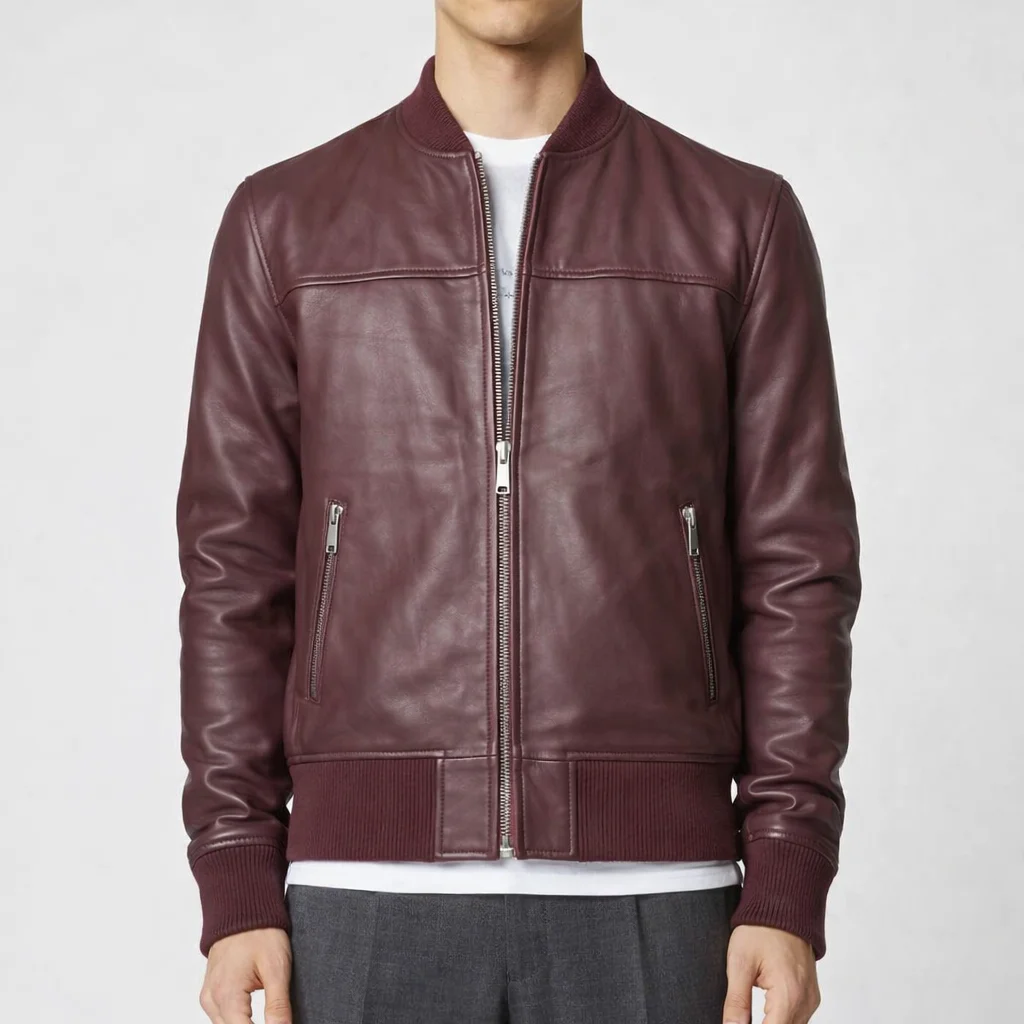
ALVIN Burgundy Leather Jacket For Men
Price: $299
-
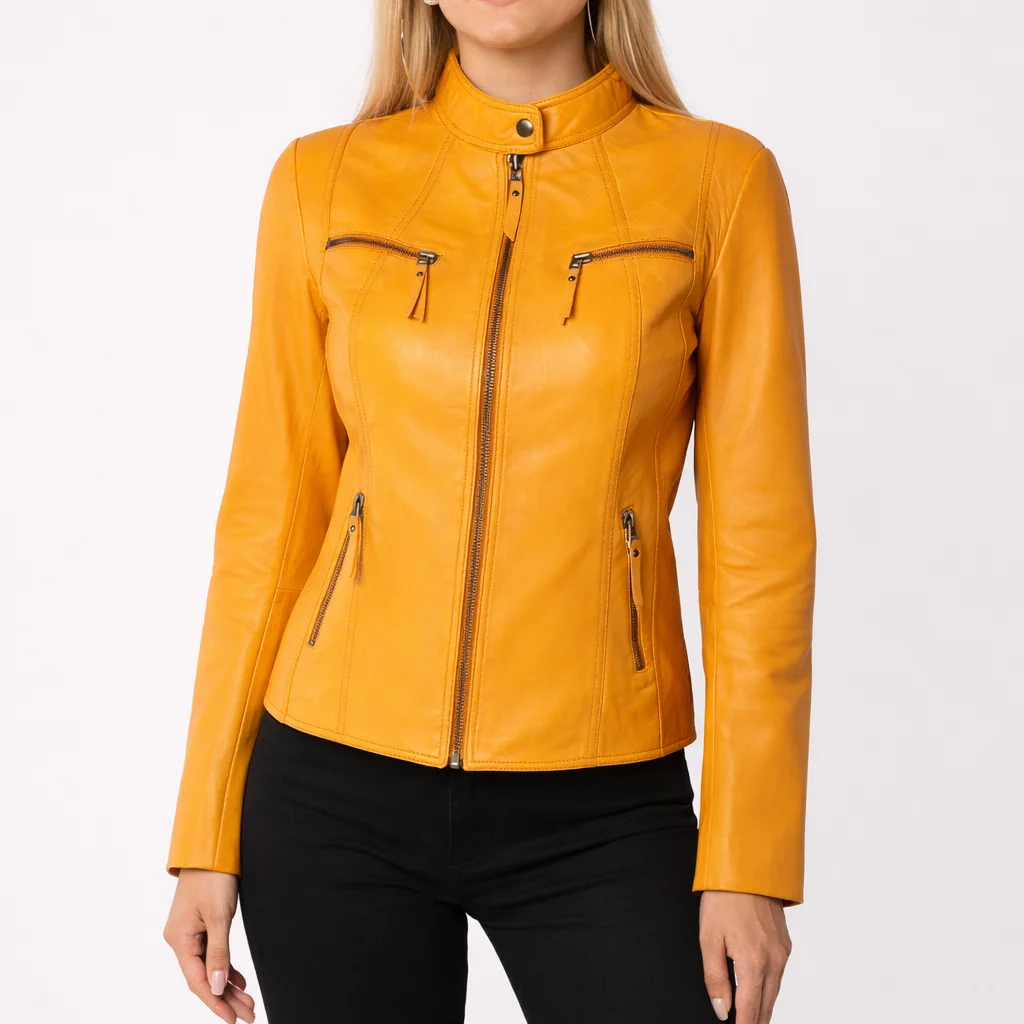
AMAZE Yellow Leather Jacket For Women
Price: $299

Does Leather Come From Italy?
Yes, but rarely in the way people assume. Italy is not a major cattle-raising country in global terms, so the animal a piece of “Italian leather” came from is often raised elsewhere and the hide imported. What Italy is genuinely known for is tanning and finishing: regions like Tuscany have a long-established tanning industry, and Italian tanneries are widely respected for their finishing techniques, including a strong tradition of vegetable tanning. Italy is consistently one of the world’s leading exporters of finished leather and leather apparel by value, which reflects its role in processing and craftsmanship rather than raising the source animals. “Made in Italy” on a leather product typically refers to where the tanning, finishing, or manufacturing happened, not where the cow lived.
Does Leather Come From Japan?
Yes, on a much smaller and more specialized scale. Japan has centuries-old tanning traditions, most famously in the Himeji area of Hyogo Prefecture, where a distinctive chemical-free method known as shironameshi (white tanning) developed using local river water, salt, and rapeseed oil. Himeji is also home to some of the world’s few remaining tanneries capable of producing shell cordovan, a specialty leather cut from a horse’s hindquarters. Japan is not a major producer by global volume; its leather industry is valued instead for craftsmanship and long-standing regional specialties rather than for supplying mass-market leather.
Does Leather Come From the United States?
Yes, primarily as a hide supplier and exporter rather than a major finished-leather manufacturing hub. Cattle raised in the U.S. produce large volumes of raw and salted hides, and the country has historically been one of the largest exporters of raw cattle hides, with China among its biggest buyers. Domestic tanning capacity has shrunk considerably compared to the mid-20th century, when tanning was a much larger American industry, so a significant share of U.S.-origin hides today are exported and tanned elsewhere before returning as finished leather goods.
Does Leather Come From the United Kingdom?
Yes, though on a smaller scale than countries like Italy or China. The UK has a long tanning heritage, with specific tanneries recognized internationally for producing leather used in upholstery, automotive interiors, and premium goods. British leather production today tends to focus on this kind of specialized, higher-value output rather than competing on raw volume.
Does Leather Come From Germany?
Yes. Germany’s leather industry is medium-sized by global standards but concentrated on high-quality output, particularly automotive and furniture leather, which together account for the large majority of German leather production, with the rest split between footwear leather and leather goods. German tanners have historically emphasized sourcing hides from Germany, Austria, and Switzerland, regions associated with well-managed livestock and low hide damage from parasites, which supports the reputation for consistent quality. Germany was also historically significant in the history of tanning chemistry itself: chrome tanning has documented roots in 19th-century German and Swedish research.
Does Leather Come From Pakistan?
Yes, and it plays a genuine, if modest, role in the global industry. Pakistan’s tanning clusters are concentrated around Kasur, Sialkot, Karachi (including Korangi), Multan, Sahiwal, and Gujranwala, with Kasur alone home to roughly 250 or more active tanneries and Sialkot a similar number. The country has several hundred tanneries in total, processes cow, buffalo, goat, and sheep hides drawn largely from its own sizeable livestock population, and produces both wet-blue and finished leather, along with garments, gloves, and footwear for export. Pakistan’s leather exports run in the range of roughly one billion dollars a year depending on the year and category measured, a meaningful but modest share of the global leather trade compared with giants like China, Italy, and Brazil. The industry is a genuine source of employment, supporting an estimated 200,000 to 300,000 workers, though it does not rank among the world’s very largest leather producers by volume.
Does Leather Come From India?
Yes. India has a large and diversified leather industry built on a very large domestic livestock population, particularly cattle, buffalo, goats, and sheep, and is consistently ranked among the world’s largest exporters of leather and leather goods. Indian tanneries produce everything from raw and semi-processed hides to finished leather and manufactured goods such as footwear, garments, and accessories, with major clusters in states like Tamil Nadu.
Does Leather Come From China?
Yes, and by most measures of processing volume, China is the largest player in the world. China both raises livestock domestically and imports huge quantities of raw and semi-processed hides from other countries, particularly for cattle hides, which it then tans, finishes, and manufactures into leather goods on a massive scale, often cited as the largest processing hub globally for finished leather. Provinces such as Guangdong and Zhejiang are known manufacturing hubs for leather products. China’s dominance is in processing and manufacturing capacity rather than in raising a disproportionate share of the world’s cattle.
Does Leather Come From Brazil?
Yes, very directly. Brazil has one of the largest cattle herds in the world, and its leather industry is built almost entirely on bovine hides from its own domestic beef industry. Brazil is consistently ranked among the top producers and exporters of bovine leather globally, and a significant share of its leather exports goes toward automotive upholstery, alongside footwear and other goods.
Does Leather Come From Russia?
Yes, though its role is smaller and less internationally visible than countries like China, Italy, or Brazil. Russia has a domestic cattle industry that supplies hides for its own tanning sector, and it appears in various industry rankings as a leather exporter, but reliable, granular data on Russia’s exact global ranking is harder to verify than for the larger, more transparently tracked producers, so any specific ranking claim should be treated cautiously.
Which Animals Does Leather Come From?
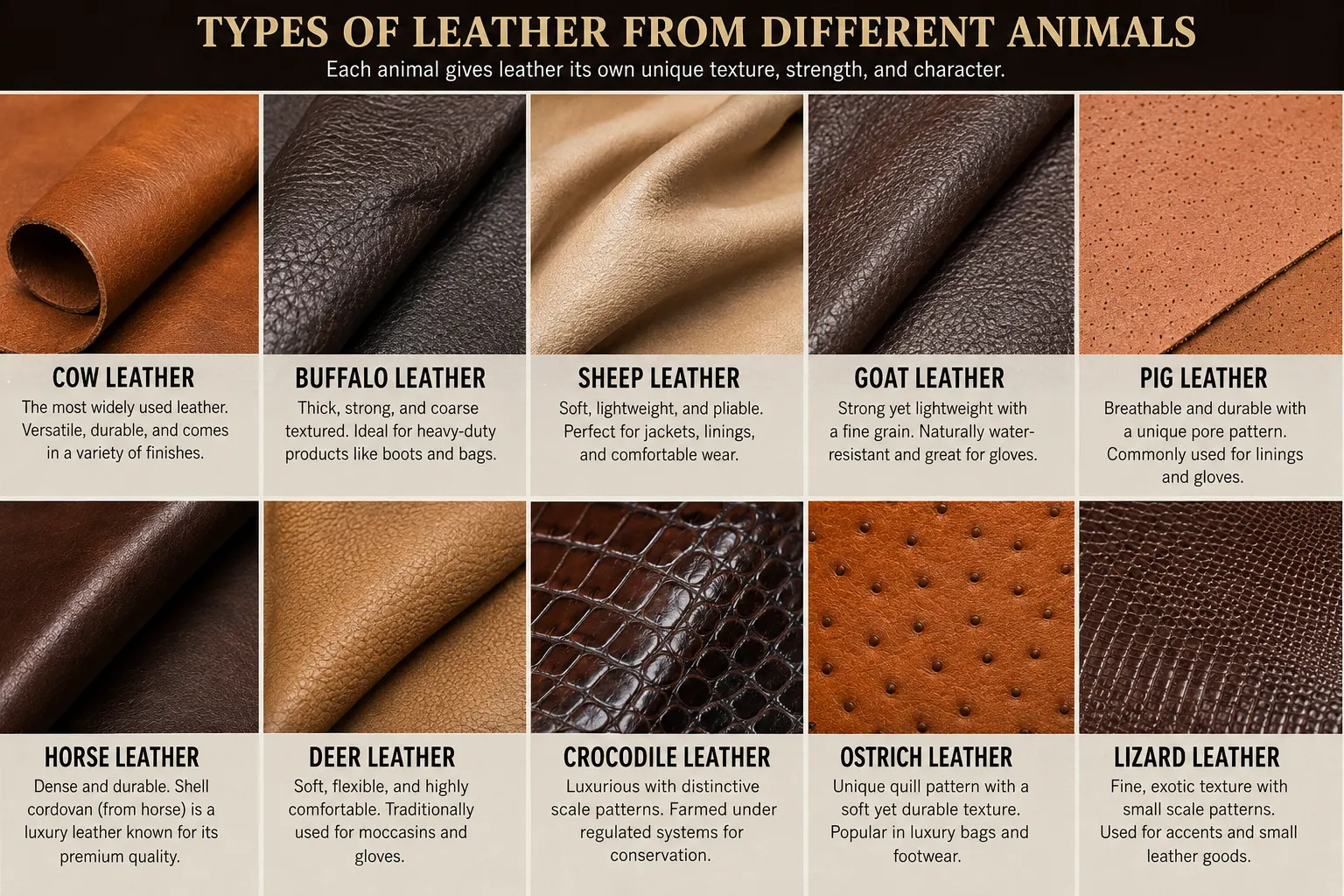
| Animal | Typical characteristics | Common uses |
|---|---|---|
| Cow / cattle | Thick, durable, widely available in various weights and grains | Jackets, shoes, bags, belts, furniture, automotive interiors |
| Buffalo | Thick, coarse grain, very durable, often heavier than cowhide | Heavy-duty bags, belts, footwear |
| Sheep | Soft, lightweight, supple, less abrasion-resistant than cattle hide | Lightweight jackets, gloves, linings |
| Goat | Fine, textured grain, strong for its weight, naturally water-resistant surface | Gloves, bags, bookbinding, some footwear |
| Pig | Distinctive bristle-hole grain pattern, breathable, durable | Linings, gloves, some upholstery |
| Horse | Dense and tight-grained, especially the rump area (shell cordovan) | Premium shoes, watch straps, select leather goods |
| Deer | Soft, porous, flexible | Gloves, moccasins, soft goods |
| Crocodile / alligator | Distinctive scale pattern, dense, expensive to produce | Luxury handbags, wallets, watch straps |
| Ostrich | Distinctive quill-follicle pattern, soft yet durable | Luxury bags, boots, accessories |
| Lizard | Fine, small-scaled texture | Small leather goods, accessories |
Cow Leather
Cowhide is the workhorse of the industry. It’s relatively large, reasonably consistent, and comes off an animal that’s already being raised at scale for meat and dairy, which keeps supply steady. Depending on which part of the hide and how it’s tanned, cowhide can be stiff and structural (belts, saddles) or soft and drapey (jackets, bags). This is the leather people picture by default, and for good reason, it accounts for the large majority of global leather production.
Buffalo Leather
Buffalo hide tends to be thicker and heavier than cattle hide, with a coarser, more pronounced grain. It’s popular where durability matters more than a refined look heavy bags, work boots, industrial belts. India and Pakistan, both home to large water buffalo populations, are notable sources.
Sheep Leather
Sheepskin leather is soft, light, and drapes well, which is why it’s a common choice for lightweight jackets and linings. It doesn’t have the same abrasion resistance as cattle hide, so it’s generally chosen for comfort and feel rather than heavy-duty use.
Goat Leather
Goat leather punches above its weight in strength relative to its thickness, and has a naturally fine, pebbled grain. It also tends to resist water reasonably well on the surface due to the natural lanolin content in goat skin, which is part of why it’s historically favored for gloves.
Pig Leather
Recognizable by its pattern of small groups of bristle holes arranged in a triangular formation, pigskin is breathable and durable, and often used for linings, gloves, and some upholstery, though it’s less commonly the star material of a finished piece.
Horse Leather
Horsehide is dense and tightly fibered, which makes it durable, but the standout product from horses is shell cordovan a small, dense membrane layer found in the hindquarters, not the surface of the hide at all. Cordovan tanning is a specialized, slow process practiced by only a small number of tanneries worldwide, which is part of why cordovan products carry a premium price.
Deer Leather
Deerskin is soft, porous, and flexible, historically used in moccasins and gloves, valued more for comfort and hand-feel than structural toughness.
Crocodile and Alligator Leather
Crocodile and alligator leather are prized for their distinctive scute (scale) patterns. Both are farmed under regulated, permit-based systems in various countries, since wild harvesting of these species is tightly restricted by conservation law. The usable belly section of each skin is relatively small, and the tanning process is specialized and labor-intensive, all of which pushes prices well above conventional cattle leather.
Ostrich Leather
Ostrich leather is identifiable by its raised quill-follicle pattern, most pronounced on the “crown” section of the skin. It’s simultaneously soft and durable, which makes it a favored material for luxury handbags and boots.
Lizard Leather
Lizard skins are small, so lizard leather is generally used for accents and small accessories rather than full garments. The fine, geometric scale pattern is the main draw.
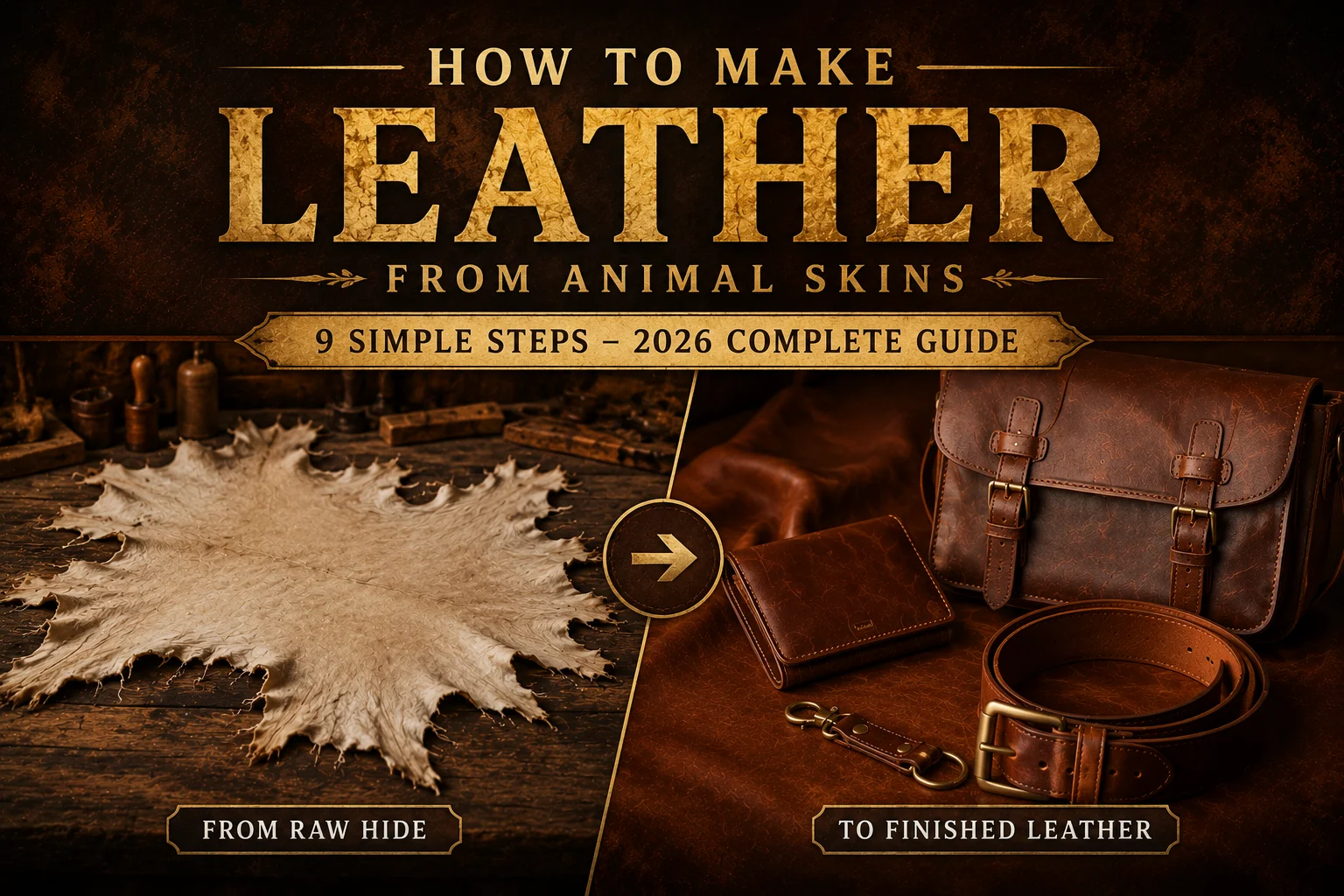
How Is Leather Made?
Turning a raw hide into finished leather is a multi-stage industrial process. The exact sequence varies by tannery, but the following stages are broadly standard.
Step 1 Obtaining the Hide or Skin
The hide is removed from the animal at the point of slaughter, as part of meat processing rather than a separate, standalone activity.
Step 2 Preserving the Hide
Fresh hides decompose quickly, so they’re preserved almost immediately, usually by salting (wet-salting in stacked piles, or brining), which draws out moisture and halts bacterial growth until the hide reaches the tannery.
Step 3 Soaking
At the tannery, the hide is soaked in water to rehydrate it, wash out the curing salt, and remove surface dirt, returning it closer to its original moisture content.
Step 4 Liming and Hair Removal
The hide is treated in an alkaline lime solution, which loosens hair and breaks down the outer epidermis layer so it can be removed, while also swelling and opening up the fiber structure to prepare it for the chemical steps ahead.
Step 5 Fleshing
Remaining flesh, fat, and tissue on the underside of the hide are mechanically scraped away.
Step 6 Splitting
If needed, the hide is split horizontally into layers to achieve a consistent thickness. The upper layer, the grain split, retains the natural surface and becomes full-grain or top-grain leather; the lower layers, called splits, are used for suede or lower-grade leather products.
Step 7 Deliming and Bating
Acidic treatment reduces the alkalinity from liming, and enzymes are used in bating to further soften the fiber structure and remove remaining non-collagen material.
Step 8 Pickling
The hide is treated with acid and salt to bring it to the correct pH and prepare the fibers to properly accept tanning agents in the next stage.
Step 9 Tanning
This is the defining chemical step. Tanning agents, chromium salts, vegetable tannins, or other compounds, permanently bond with the collagen fibers, stabilizing them so the material no longer decays and gains the flexibility and durability associated with leather. Before this step, the material is technically a “pelt,” not yet leather.
Step 10 Retanning, Dyeing and Fatliquoring
Additional tanning agents may be applied to fine-tune the leather’s feel and performance, dyes are added for color, and fatliquoring reintroduces oils into the fiber structure to restore suppleness that the earlier chemical stages strip away.
Step 11 Drying and Finishing
The leather is dried using methods like vacuum drying or frame-drying, then finished with surface treatments that can range from minimal (for full-grain, aniline-finished leather) to heavier coatings, embossing, or pigmentation that mask imperfections on lower-grade material.
Step 12 Quality Inspection
Finished leather is graded and sorted based on surface quality, consistency, thickness, and the presence of natural marks or defects, which determines what it’s ultimately suited for and priced at.
What Is Tanning and Why Is It Important?
What Does Tanning Do to Leather?
Tanning permanently alters the collagen structure in skin so it resists decomposition, heat, and moisture in ways that raw, untreated skin cannot. Without it, hide would simply rot or turn brittle and crack depending on how it dried. Tanning is what actually separates “leather” from “animal skin.”
Chrome Tanning
Chrome tanning uses trivalent chromium salts and was developed in the mid-1800s. It’s fast, often completing in around a day, and produces soft, pliable, water-resistant leather that takes dye well, which is why it’s estimated to be used for the large majority of leather made worldwide today. The tradeoff is that chrome-tanned scraps and wastewater require careful handling, since chromium compounds are a regulated pollutant if released untreated.
Vegetable Tanning
Vegetable tanning uses natural tannins extracted from tree bark, wood, and other plant material. It’s a much slower process, often taking a month or more, and produces firmer leather that develops a rich patina over time. It’s often marketed as the more “natural” option, and while it does avoid heavy-metal tanning agents, life-cycle research shows vegetable tanning is not automatically lower-impact overall it typically uses more water and can carry higher energy and climate impacts at certain stages, such as producing the tanning extracts themselves and the longer processing time.
Chrome-Free and Other Tanning Methods
Other methods exist, including aldehyde tanning, syntan (synthetic tannin) processes, and traditional oil or brain-tanning techniques still used in some craft and indigenous contexts. Japan’s shironameshi white-tanning tradition, using only salt, oil, and water, is one well-documented historical example of a chrome-free method still practiced by a small number of specialist tanners today.
Which Tanning Method Is Better?
Neither method is universally “better” they suit different needs. Chrome tanning is faster, more water-resistant, and better suited to mass production of soft, flexible leather for shoes, upholstery, and apparel. Vegetable tanning produces a firmer, more structured leather that ages distinctively and is often preferred for belts, saddlery, and heritage-style goods, but at the cost of a much longer, more resource-intensive process. On environmental impact specifically, credible life-cycle studies find the picture is genuinely mixed rather than a clear win for either side, which is why blanket claims that one method is “eco-friendly” and the other isn’t don’t hold up well under scrutiny.
How Was Leather Discovered?
When Did Humans First Use Animal Hides?
There’s no single inventor or invention date. Humans have used animal skins for warmth and protection since prehistoric times, likely tens of thousands of years ago, well before anything resembling deliberate tanning existed. Early hides were simply dried, scraped, and worked by hand.
How Early Humans Preserved Animal Skins
Before true tanning, prehistoric people used techniques like smoking hides over fire, working fat or brain matter into the skin, or simply drying and flexing it by hand to keep it usable. These methods slowed decay and improved flexibility but weren’t as permanent or reliable as later chemical tanning. Tanning using plant tannins is generally dated to around five thousand years ago, based on archaeological and historical evidence from the ancient Near East.
Early Uses of Leather
Early leather use centered on practical survival needs: footwear, simple containers, and coverings, gradually expanding into clothing, tents, and tools as tanning techniques improved.
A Brief History of Leather
Leather in Prehistoric Societies
Long before written history, hides were a critical survival material, providing clothing, shelter, and carrying containers for early humans, well before any formalized tanning process existed.
Leather in Ancient Egypt
Ancient Egyptians used leather extensively, for sandals, military equipment, furniture, and even decorative and ceremonial items. Leatherworking is depicted in Egyptian tomb art, and archaeological finds, including elaborate sandals discovered in Tutankhamun’s tomb, show that leathercraft had reached a genuinely high level of skill by the New Kingdom period. Leather sandals in Egypt were originally reserved largely for nobles, priests, and warriors before becoming more widely worn.
Leather in Mesopotamia and the Ancient Near East
Mesopotamia developed one of the earliest documented tanning traditions, with evidence of hide processing and the use of tree-bark tannins dating back to around 3000 BCE. Cuneiform trade records from the region even document leather goods, trades, and prices, making them some of the oldest known written records of a systematic leather trade.
Leather in Ancient Greece and Rome
Both Greek and Roman societies used leather widely, for sandals, military gear, shields, and later, under Roman rule, leather production became regulated by law, reflecting its recognized economic importance across the empire’s trade networks.
Leather During the Middle Ages
Vegetable tanning using tree bark became the standard method across medieval Europe, producing leather tough enough for armor components, harness and saddlery, and everyday goods, while tanning itself developed into an organized craft trade.
The Rise of European Tanneries
Tanning guilds and dedicated tannery districts formed across European cities as demand grew, laying the groundwork for the specialized regional tanning traditions, like those in Italy, Germany, and the UK, that persist in some form today.
Leather During the Industrial Revolution
Industrialization brought mechanized tools for fleshing, splitting, and other steps that had previously been entirely manual, increasing tannery output and setting the stage for the next major shift in the industry.
Modern Leather Manufacturing
The single biggest turning point in modern leather history was the development of chrome tanning in the mid-1800s. It cut tanning time from months to days and enabled the softer, more water-resistant leather that dominates mass-market production today, while vegetable tanning persisted as a slower, more traditional alternative for specific product categories.
Where Is Leather Produced Today?
It helps to separate a few different things that “leather production” can mean: raising the livestock that supplies hides, tanning raw hides into finished leather, and manufacturing that leather into finished goods. A country can lead in one category without leading in the others Brazil raises enormous numbers of cattle but doesn’t dominate finished-goods manufacturing the way China does, while Italy tans and finishes an outsized share of premium leather without being a major cattle-raising nation at all.
China
China is widely regarded as the largest leather-processing country in the world by volume, both tanning domestically raised hides and importing large volumes of raw cattle hides from other countries, including the U.S. and Brazil, then finishing and manufacturing them into goods, largely centered in provinces like Guangdong and Zhejiang.
Italy
Italy is one of the top exporters of finished leather and leather apparel by value, built on a strong tanning and finishing tradition centered in regions like Tuscany, rather than a large domestic cattle industry.
Brazil
Brazil’s leather industry is built directly on its very large cattle herd, and the country is consistently ranked among the top global exporters of bovine leather, with a significant share going toward automotive upholstery.
India
India combines a large domestic livestock base with significant tanning and manufacturing capacity, and ranks among the world’s leading leather and leather-goods exporters.
United States
The U.S. is a major exporter of raw and salted cattle hides, but its domestic finished-leather tanning capacity has shrunk considerably since the mid-20th century, when the American tanning industry was much larger.
Pakistan
Pakistan tans hides from its own large livestock population across established clusters in Kasur, Sialkot, and Karachi, exporting roughly a billion dollars a year in leather and leather products, a real but comparatively modest share of the global trade.
Vietnam
Vietnam has become one of the largest leather footwear exporters in the world, benefiting significantly from manufacturing that has shifted there from China due to lower labor costs, even though Vietnam is not a major raw-hide producer itself.
South Korea
South Korea plays a smaller, more specialized role, with its leather demand closely tied to its fashion and footwear industries rather than large-scale raw leather production.
Japan
Japan’s leather industry, centered around Himeji, is small on a global scale but internationally recognized for craftsmanship and specialty products, including shell cordovan and traditional white-tanned leather.
Germany
Germany focuses on high-value output, primarily automotive and furniture leather, sourced substantially from cattle raised in Germany, Austria, and Switzerland.
Because rankings depend heavily on whether you’re measuring livestock numbers, raw hide volume, tanning output, or export value, it’s genuinely accurate to say the “top leather-producing country” changes depending on which metric you use, and sources that present a single, tidy top-ten list without specifying the metric should be read with some caution.
What Are the Different Grades of Leather?
The commonly repeated idea of one universal ladder full-grain at the top, then top-grain, then genuine leather, then bonded leather at the bottom is a useful simplification, but leather grading isn’t governed by a single global standard the way, say, gold purity or diamond clarity is. Terminology can be, and often is, used loosely in marketing.
| Term | What it actually means | Important clarification |
|---|---|---|
| Full-grain leather | Retains the complete original grain layer of the hide; only the hair is removed | Generally the most durable and expensive category, but the animal, tanning, and finishing still matter |
| Top-grain leather | The grain layer with the outermost surface sanded or split away to remove imperfections, then often refinished | More uniform in appearance than full-grain, slightly less durable, still a genuine grain-layer product |
| Corrected-grain leather | Heavily sanded to remove the natural surface almost entirely, with an artificial grain pattern embossed on top | Often marketed alongside top-grain terminology, which can mislead buyers about how processed it is |
| Split leather | The lower, looser layers separated from the grain layer during splitting | Lacks the natural surface entirely and is often coated or embossed to imitate it |
| Genuine leather | A specific, lower industry grade, often made from split or corrected hide | Despite the name, it is not a quality guarantee. it is a technical classification, and often the lowest grade of true leather |
| Bonded leather | Ground leather scraps and fibers bonded with adhesive onto a fabric backing | Contains real leather content but performs more like a composite material; not comparable to whole-hide leather in durability |
| Suede | The underside (flesh side) of a split, buffed to a soft nap | Soft and textured, but more vulnerable to water and staining than grain leather |
| Nubuck | Full-grain leather buffed lightly on the grain side to create a fine, velvety nap | Retains more of the hide’s strength than suede since it starts from the grain layer |
Is Genuine Leather the Best Grade?
No, and this is one of the more persistent misconceptions in the industry. “Genuine leather” sounds like reassurance, but in trade terminology it typically describes a lower grade made from split or corrected hide, not the highest-quality material. Full-grain and top-grain leather are made from higher, more intact layers of the hide and are generally considered superior for durability and long-term appearance, even though they’re less likely to carry the word “genuine” prominently on a label.
What Is the Most Expensive Leather?
Crocodile Leather
Crocodile leather regularly ranks among the priciest conventional leathers, largely because usable skin per animal is limited, farming and tanning are tightly regulated and specialized, and demand from luxury fashion houses is high.
Alligator Leather
Alligator leather is frequently cited as even more expensive than crocodile leather in premium goods, in part because alligators are farmed in a comparatively smaller geographic range (primarily the southeastern United States) than the many crocodile species found across multiple continents.
Ostrich Leather
Ostrich leather sits in a comparable luxury tier, prized for the distinctive quill-follicle pattern and a combination of softness and strength that’s unusual among exotic leathers.
Shell Cordovan
Shell cordovan is often described as the most expensive non-reptile leather in the world. It comes from a small, dense membrane in a horse’s hindquarters, not the hide’s surface, requires a long and highly specialized tanning process, and only a handful of tanneries worldwide are capable of producing it properly.
Why Are Exotic Leathers So Expensive?
The cost comes from a combination of factors rather than any single one: the usable surface area per animal is small, farming or raising these species is heavily regulated (partly for conservation reasons), tanning is slow and requires specialized expertise, and quality control losses are high, meaning a portion of every batch doesn’t meet standards for premium use. All of that gets absorbed into the price of the pieces that do make the cut, on top of the brand markup that’s typical of luxury goods generally.
It’s worth noting that “most expensive” claims should be read as general tendencies rather than a strict universal ranking, since pricing depends heavily on grade, size, farming source, and current market demand.
Why Is Leather So Expensive?
Cost of Raw Hides
Hide prices fluctuate with livestock markets, and even though hides are a co-product of the meat industry rather than the main product, tanners still compete for quality raw material, which affects cost.
Tanning Costs
Tanning requires specialized chemicals, water treatment, labor, and equipment, all of which vary significantly by method a month-long vegetable-tanning process ties up capital and facility space far longer than a one-day chrome-tanning run.
Labor and Craftsmanship
Sorting, cutting, sewing, and finishing leather goods, especially structured items like jackets, requires skilled labor. Hand-finishing and detailed stitching add cost that machine-only production doesn’t.
Energy and Water
Tanning is a resource-intensive process; the global leather industry’s water use is substantial, and both major tanning methods require meaningful water and energy inputs at different stages.
Dyeing and Finishing
Higher-end finishing techniques, like aniline dyeing that shows the natural grain instead of masking it with heavy pigment, generally cost more than techniques used to disguise lower-grade hide.
Quality Control and Material Waste
Natural hide has imperfections. Cutting around scars, brand marks, and inconsistent areas to get usable pieces for premium goods means a portion of every hide goes unused, which is factored into the price of what remains.
Transportation and Global Supply Chains
Because hides frequently move between countries for tanning, finishing, and manufacturing, shipping and logistics costs are baked into the price of many finished leather products.
Why Some Full-Grain Leather Costs More
Full-grain leather uses the smallest, most valuable portion of the hide relative to total surface area, requires more careful sourcing to find sections without significant flaws, and demands finishing methods that don’t hide defects but rather leave them visible, so tanneries have less room to disguise problem material. All of that adds up to a higher price than corrected-grain or split leather, even though, at a glance, all of it might be labeled “real leather.”
Is Leather Waterproof?
Is Genuine Leather Waterproof?
No. Leather in its natural, untreated state is porous, so it will absorb water rather than repel it indefinitely.
Is Full-Grain Leather Waterproof?
Not fully, but it’s the most water-resistant of the common grades because its tightly packed fibers and intact grain slow water absorption more effectively than lower grades. It still isn’t waterproof in the strict sense and will eventually absorb moisture with prolonged exposure.
Is Leather Water-Resistant?
Generally yes, to a meaningful degree, especially full-grain and top-grain leather, but “water-resistant” and “waterproof” are genuinely different claims. Water-resistant means it slows or reduces water penetration for a period; waterproof means water essentially cannot get through at all, which is a much higher bar that natural leather doesn’t clear on its own.
What Happens When Leather Gets Wet?
Occasional light moisture is usually fine if it’s dried properly. Prolonged or repeated soaking can cause leather to stiffen, darken unevenly, lose its natural oils, or in more severe cases warp and crack as it dries.
How to Protect Leather From Water
Waxes, oils, and dedicated leather protectant sprays can meaningfully improve water resistance, though even treated leather is more accurately described as water-repellent than truly waterproof. Only leather that’s had a synthetic coating applied over the surface (or synthetic leather itself, which is inherently waterproof because it’s plastic-based) approaches true waterproofing.
Does a Cow Have to Be Killed to Make Leather?
Is Leather a By-Product of the Meat Industry?
For the overwhelming majority of conventional leather, yes. Hides and skins arise from animals that were already being raised and slaughtered primarily for meat and dairy production; the leather industry relies on these by-products for the large majority of its raw material rather than driving the decision to raise or slaughter the animal in the first place.
Are Cattle Raised Specifically for Leather?
Not typically, and not as the primary driver. The hide’s share of an animal’s total value has actually declined significantly over recent decades as demand and pricing have shifted, meaning cattle economics are overwhelmingly driven by meat and dairy markets, not the leather trade. Exotic leathers are a partial exception: species like crocodiles and ostriches are often farmed where skin is a significant part of the economic motivation alongside meat, though this varies by operation and species.
Does Leather Production Cause Animal Death?
The animal’s death, in conventional cattle, sheep, goat, and pig leather, happens as part of meat production regardless of whether the hide is used for leather afterward. Whether the leather industry itself is described as “causing” that death is a matter of ongoing ethical debate rather than settled fact; what’s more empirically clear is that halting leather production on its own would not stop meat production, since leather is downstream of that decision, not the driver of it.
What Happens to Hides After Slaughter?
If not converted into leather, hides that arise from meat processing have to be disposed of some other way, and industry sources argue that the volume involved, estimated at several million tons of hides annually, would create a substantial waste and landfill problem if the leather industry didn’t process them. It’s worth noting this argument is made largely by industry and pro-leather advocacy sources, so it should be weighed alongside animal-welfare organizations’ separate ethical objections to leather production itself, which focus on the treatment of animals during farming and slaughter rather than solely on the waste-disposal question.
Where Does Leather Come From in the Supply Chain?
Pulling the earlier sections together, a typical leather supply chain runs: farm or ranch (livestock) → animal → slaughter and meat processing → hide or skin removed → curing and preservation → shipped to a tannery → tanning → dyeing, retanning, and finishing → finished leather → product manufacturer → retailer → consumer. Any single finished leather item, a jacket, a bag, a pair of boots, can realistically pass through three, four, or more countries across that chain before it reaches a customer, which is exactly why country-of-origin labeling on leather goods can be genuinely ambiguous unless a brand is specific about which stage the label refers to.
Does “Made in Italy” Mean the Leather Comes From Italy?
Animal Origin vs Tanning Origin
Not necessarily. “Made in Italy” (or similar labeling for other countries) generally refers to where a significant part of the manufacturing happened, most often the tanning, finishing, or garment construction, not necessarily where the source animal was raised. A hide can be born, raised, and slaughtered in one country and still be legitimately tanned and turned into a product labeled with a different country’s name.
Tanning Country vs Manufacturing Country
These can also differ from each other. Leather might be tanned in one country, shipped to a second for cutting and sewing, and sold under a brand headquartered in a third. Country-of-origin rules for labeling purposes typically hinge on where the most significant transformation of the material happened, which varies by country’s own regulations, rather than tracing all the way back to the animal.
What “Italian Leather” Actually Means
In practice, “Italian leather” is most accurately understood as leather tanned and/or finished in Italy, reflecting Italy’s genuine strength in tanning technique and finishing quality, rather than a claim about where the cow was raised. That distinction matters because it means “Italian leather” describes a process and a level of craftsmanship, not an animal’s birthplace.
What Determines Leather Quality?
Animal and Hide Quality
The breed, age, diet, and living conditions of the animal all affect the hide’s natural quality before tanning ever begins. Livestock raised with fewer parasites, less fencing-related scarring, and better overall care tend to produce hides with fewer natural defects.
Grain Structure
Whether the natural grain layer is intact (full-grain), lightly corrected (top-grain), or heavily processed determines much of the leather’s long-term durability and how it ages.
Hide Thickness
Thickness affects both durability and suitability for different products; thicker leather generally suits structural items, while thinner leather suits garments that need to drape.
Natural Marks and Defects
Scars, insect bites, brand marks, and wrinkles are natural and don’t necessarily indicate poor tanning; how a tannery cuts around or works with these marks affects the usable yield and appearance of the final product.
Tanning Method
Chrome versus vegetable versus other tanning agents changes the leather’s feel, flexibility, and water resistance, independent of the animal it came from.
Finishing
How the surface is treated, minimal aniline finishing versus heavy pigmented coating, affects both appearance and how well the leather ages and can be repaired over time.
Craftsmanship
Cutting, stitching, and construction quality in the finished product matter just as much as the raw material; excellent leather poorly assembled will still fail prematurely.
Traceability
Increasingly, buyers and brands are asking tanneries to document where hides originated and how they were processed, both for quality assurance and for verifying environmental and labor claims.
Put simply, a country name on its own tells you very little about actual leather quality. The tannery, the tanning method, the grain grade, and the craftsmanship of the finished product matter far more than the flag on the label.
Is Leather Sustainable?
Is Leather a By-Product or Co-Product?
Terminology here is genuinely debated. Industry sources generally describe hides as a by-product or co-product of meat and dairy production, since livestock isn’t primarily raised for leather. Critics of that framing point out that even as a by-product, the leather industry still profits from and depends on livestock farming’s overall environmental footprint, so calling it “just a by-product” can understate its economic and environmental relationship to that farming.
Environmental Impact of Leather Production
Leather’s environmental footprint has two genuinely separate components that are easy to blur together: the impact of raising the livestock itself (land use, feed, methane emissions, water for farming) and the impact of the tanning and finishing process specifically (water use, chemical use, energy, wastewater). Claims that treat “leather” as a single environmental number often conflate these two very different stages.
Water Use in Tanning
Tanning is genuinely water-intensive; industry estimates put global water use in leather processing in the hundreds of billions of liters annually, and both chrome and vegetable tanning require substantial water at various stages, though the specific pinch points differ between the two methods.
Chemicals Used in Tanning
Chrome tanning uses trivalent chromium salts, which are broadly regarded as manageable when handled and disposed of correctly, but which can pose real environmental and health risks if wastewater isn’t properly treated, particularly in facilities without strong regulatory oversight. Vegetable tanning avoids heavy metals but uses its own chemical and water inputs and isn’t automatically free of environmental impact.
Tannery Wastewater
Untreated tannery wastewater is a recognized pollution risk in regions with weak environmental regulation, which is part of why third-party auditing bodies like the Leather Working Group exist, to verify that tanneries are managing chemical use, water treatment, and traceability responsibly rather than assuming compliance.
Can Leather Be More Responsibly Produced?
Yes. Tanneries audited and certified by organizations like the Leather Working Group are assessed on measurable environmental practices, including water and energy management, chemical handling, and traceability, meaning “responsible leather” is best identified through specific, verifiable certifications rather than through tanning method alone.
What Is Responsible Leather Sourcing?
In practice, this means favoring tanneries with credible third-party environmental audits, transparent chemical management, and traceable hide sourcing, rather than assuming a country name, a tanning method, or a marketing phrase like “eco-leather” is a reliable guarantee on its own.
Leather vs Faux Leather
What Is Faux Leather?
Faux leather is a general term for synthetic materials designed to mimic leather’s look and feel, most commonly made from plastic-based materials like polyurethane (PU) or PVC.
What Is PU Leather?
PU leather is a plastic-based synthetic made with a polyurethane coating, generally considered more flexible and breathable than PVC alternatives, though it is still fundamentally a plastic product rather than an animal-derived one.
What Is PVC Leather?
PVC leather uses polyvinyl chloride as its base, tends to be less breathable and more rigid than PU, and is generally the less expensive of the two common synthetic categories.
Genuine Leather vs Faux Leather
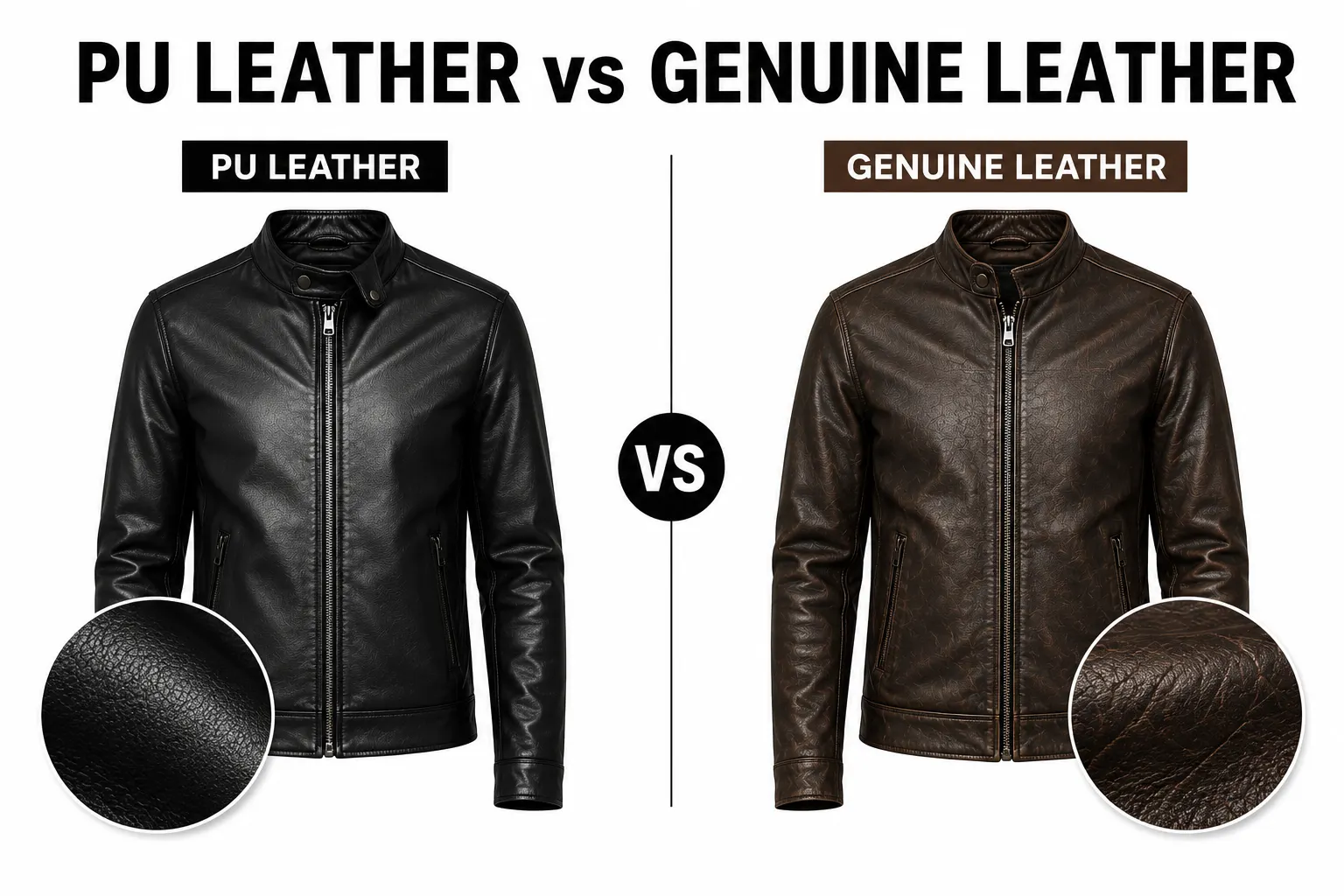
Genuine leather is a natural, porous, animal-derived material that develops character over time (patina, softening, natural wear), while faux leather is uniform, doesn’t develop the same kind of aging character, and is inherently waterproof because it’s plastic. Genuine leather generally outlasts faux leather with proper care, but faux leather avoids animal-derived materials and can be lower-cost upfront.
Leather vs Bonded Leather
Bonded leather contains genuine leather content, but as ground fiber bonded to a fabric backing rather than a continuous hide, which means it behaves more like a composite material and typically lacks the durability of whole-hide leather.
Which One Lasts Longer?
There’s no single universal winner. High-quality full-grain leather, properly cared for, generally outlasts synthetic alternatives by a wide margin and improves in appearance with age. Lower grades of leather, like bonded leather, can actually wear out faster than a well-made synthetic. Durability depends more on the specific material grade than on the broad “leather versus faux leather” category alone.
Leather From Different Countries: What Actually Changes?
Does Country of Origin Determine Leather Quality?
Not on its own. A country’s name is more a signal of typical specialization (Italy for finishing craftsmanship, Brazil for bovine hide supply, China for processing scale) than a guaranteed quality tier.
Why Tannery Matters More Than Country Alone
Individual tanneries within the same country can vary enormously in equipment, expertise, chemical management, and quality control. A well-run tannery in a less internationally famous country can outperform a mediocre one in a country with a strong general reputation.
How Animal Breed, Age and Hide Condition Affect Quality
Breed, age at slaughter, diet, and how well the animal was cared for during its life all influence hide quality before the tannery ever touches it, independent of geography.
How Tanning and Finishing Affect Quality
The choice of tanning agent, the amount of surface correction applied, and the finishing technique used all shape the final leather’s feel, durability, and appearance far more directly than which country processed it.
Why “Italian Leather” Is Not Automatically Better Than All Other Leather
Italy has a genuinely strong tanning and finishing tradition, but “Italian leather” isn’t a regulated quality certification, and quality still varies between individual Italian tanneries. Excellent leather is also produced in Germany, Japan, Brazil, and elsewhere; treating any single country as an automatic guarantee of superiority oversimplifies a much more tannery-specific reality.
Where Does Leather Come From in Everyday Products?
Leather Jackets
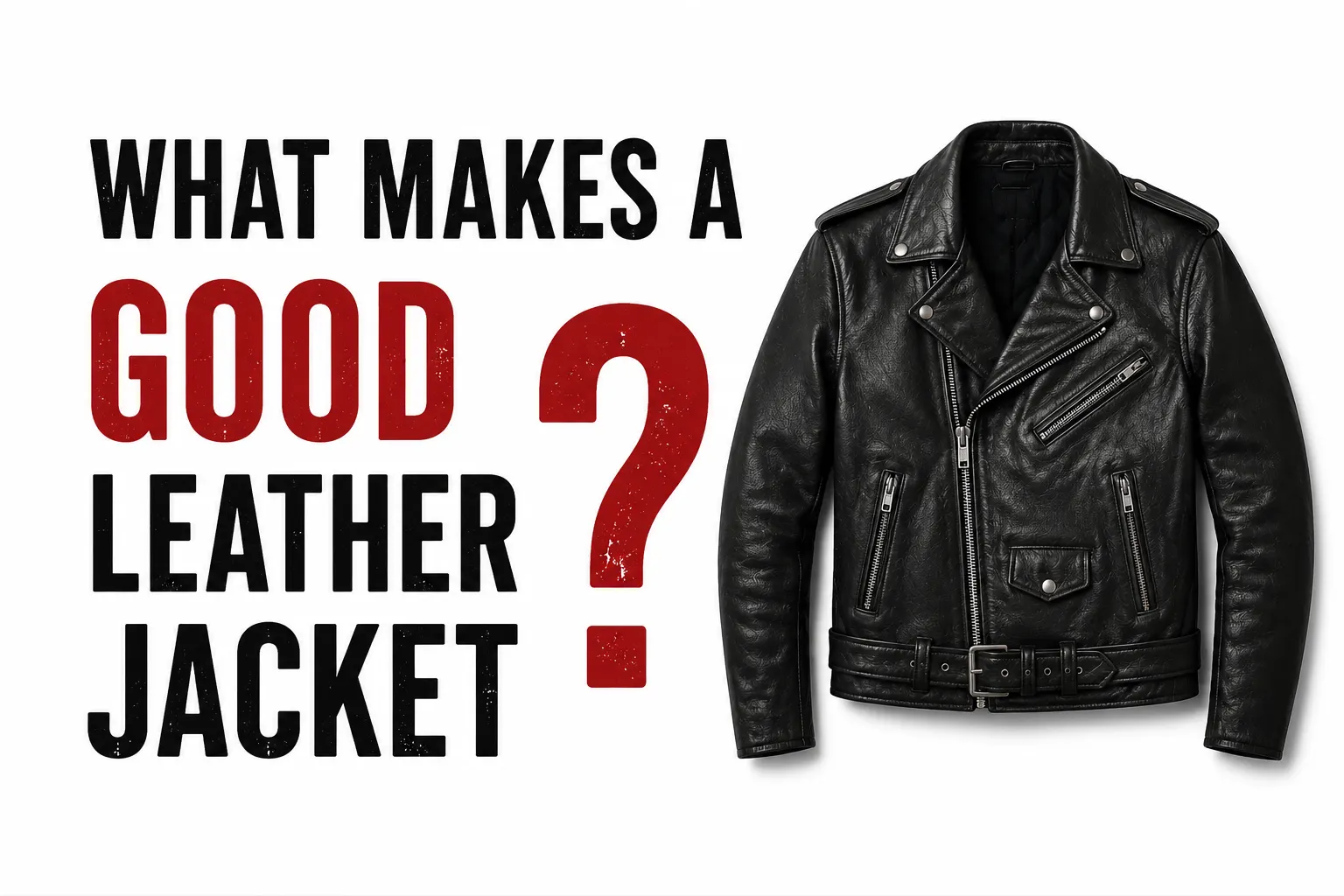
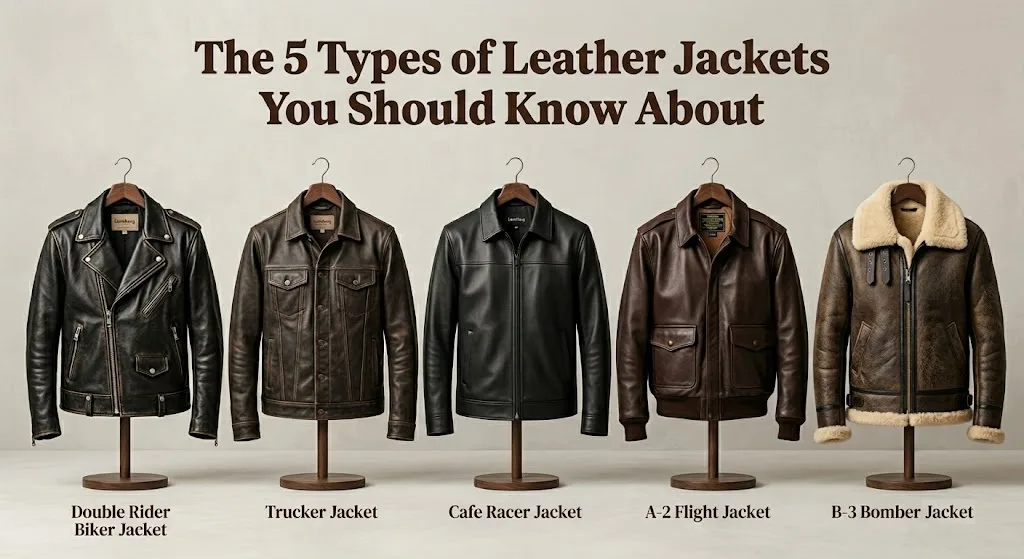
Typically made from cowhide, lambskin, or goat leather depending on the desired weight and drape, ranging from structured biker styles to soft, lightweight bomber cuts. [INTERNAL LINK OPPORTUNITY: Lammberg leather jacket collection]
Leather Shoes and Boots
Often use full-grain or top-grain cattle leather for uppers, chosen for durability and the ability to be resoled and repaired over time.
Leather Bags
Uses a wide range of grades and animals depending on price point, from full-grain cowhide in premium bags to bonded or corrected-grain leather in budget options.
Leather Belts and Wallets
Frequently made from the denser butt section of cattle hide because of its natural strength and resistance to stretching.
Car Interiors
Automotive leather is a significant end use for cattle hide globally, and specifically favors leather that’s been treated for consistent color and enhanced durability under prolonged sun and temperature exposure.
Furniture
Upholstery leather prioritizes large, consistent panels, which is part of why furniture leather often uses correction or heavier finishing to minimize visible natural marks across big surfaces.
Bookbinding
Historically a significant use of leather, particularly goat and calf leather, valued for a fine grain that takes tooling and embossing well.
Where Does Leather Come From in Minecraft?
This is worth answering separately, since it’s a completely different search intent from real-world leather production.
How Do You Get Leather in Minecraft?
The most common method is killing cows, which drop leather (along with raw beef) upon death. Leather can also be obtained by fishing (as a “junk” item), through villager trades, by bartering with piglins using gold ingots, from loot chests in certain generated structures, and by crafting it from rabbit hide.
What Animals Drop Leather in Minecraft?
Besides cows, mooshrooms, horses, donkeys, mules, llamas, trader llamas, and hoglins can all drop leather when killed, and foxes sometimes spawn already carrying a piece of leather.
Common Misconceptions About Leather
“Genuine Leather Means the Highest Quality”
Untrue. In trade terminology, “genuine leather” is often the lowest true-leather grade, not the highest.
“Italian Leather Always Comes From Italian Cows”
Untrue. “Italian leather” typically refers to where the hide was tanned or finished, not where the source animal was raised.
“All Leather Is Waterproof”
Untrue. Natural leather is porous and, at best, water-resistant; true waterproofing requires a synthetic coating or comes from plastic-based faux leather instead.
“Leather Only Comes From Cows”
Untrue. Sheep, goats, buffalo, pigs, horses, deer, and various exotic species all supply meaningful volumes of leather.
“Leather Is Always a Luxury Material”
Untrue. Leather spans an enormous price and quality range, from inexpensive bonded leather to ultra-premium exotic skins; “leather” alone says nothing about where a specific product sits on that spectrum.
“Bonded Leather Is the Same as Full-Grain Leather”
Untrue. Bonded leather is a manufactured composite of leather scraps and adhesive, fundamentally different in structure and durability from a continuous hide cut of full-grain leather.
“All Brown Leather Is Vintage Leather”
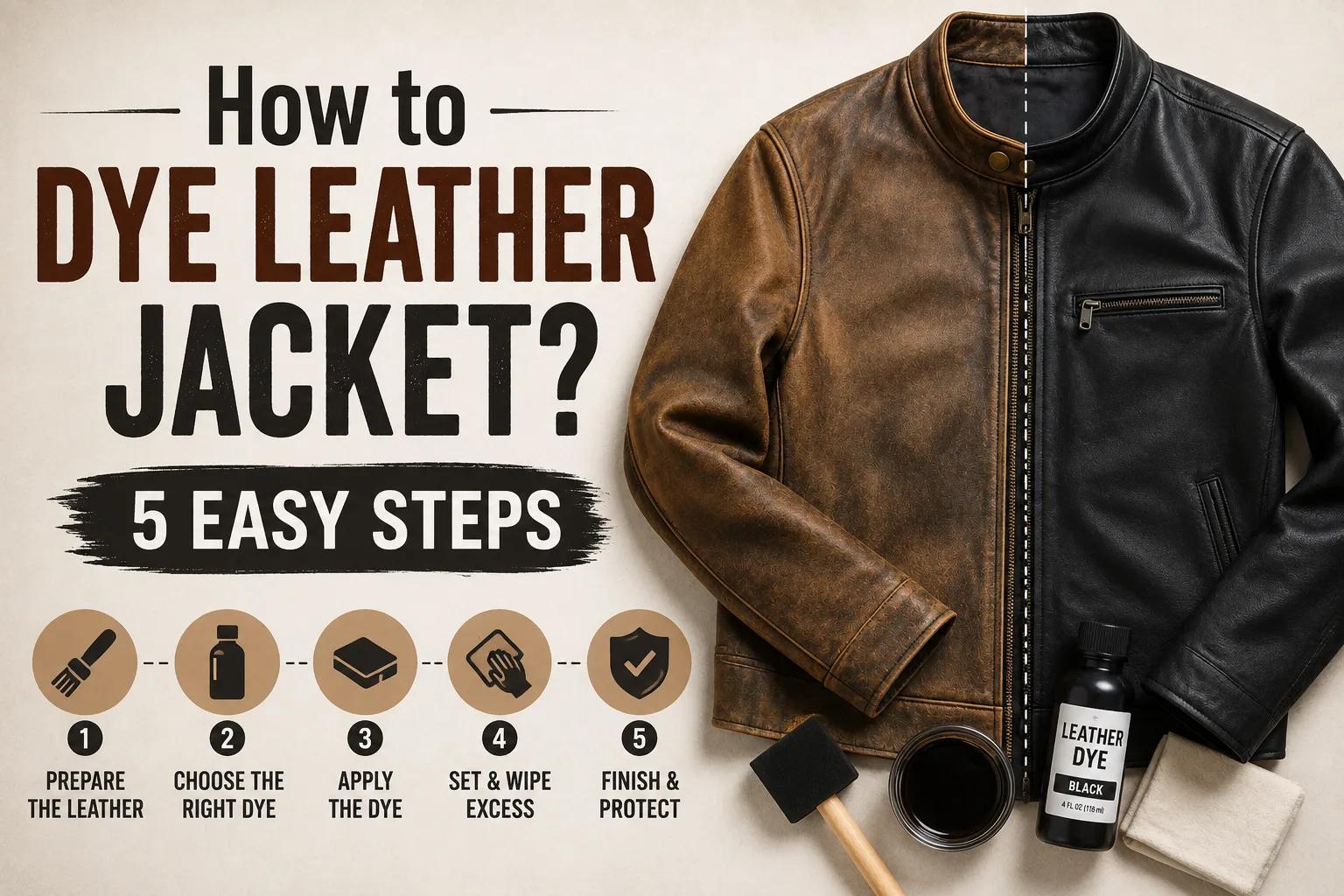
Untrue. Brown coloring can come from natural aging and patina, but it can just as easily be a deliberate dye or finishing choice applied to brand-new leather.
Frequently Asked Questions About Where Leather Comes From
Where does leather come from?
Leather comes from animal hides and skins, most commonly cattle, that are preserved and chemically tanned to make them durable and usable.
Where does leather come from on a cow?
From different sections of the hide, including the shoulder, neck, back, butt (the densest, strongest area), and belly (the most stretchy and least consistent area).
What animal is leather made from?
Most commonly cattle, but also sheep, goats, buffalo, pigs, horses, deer, and exotic species like crocodile and ostrich.
Is genuine leather made from animals?
Yes, though the term “genuine leather” refers to a specific, generally lower trade grade rather than a guarantee of top quality.
Does leather come from horses?
Yes. Horsehide is used for general leather goods, and the hindquarter area specifically yields shell cordovan, a rare, dense specialty leather.
Does leather come from cows?
Yes, and cattle hide accounts for the large majority of leather produced worldwide.
Does leather come from sheep?
Yes. Sheepskin leather is soft and lightweight, commonly used for jackets and linings.
Does leather come from goats?
Yes. Goat leather is fine-grained, strong for its weight, and traditionally popular for gloves.
Is leather made from animal skin?
Yes, specifically the skin or hide, chemically stabilized through tanning so it doesn’t decay.
Where does leather come from in the world?
Leather can involve several countries in one supply chain: the country where the animal was raised, the country where the hide was tanned, and the country where the final product was manufactured, and these are frequently not the same place.
Does leather come from Italy?
Yes, primarily through tanning and finishing rather than raising large numbers of cattle domestically.
Does leather come from Pakistan?
Yes. Pakistan has an established tanning industry centered in Kasur, Sialkot, and Karachi, processing cow, buffalo, goat, and sheep hides.
Does leather come from India?
Yes. India is among the world’s largest leather and leather-goods exporters, drawing on a large domestic livestock population.
Does leather come from China?
Yes. China is widely considered the largest leather-processing country in the world by volume, both raising livestock and importing hides for tanning and manufacturing.
Is leather waterproof?
No, not in its natural state. It’s porous and can be made water-resistant with treatment, but true waterproofing requires a synthetic coating.
Why is leather so expensive?
Costs come from raw hide prices, the tanning process itself, skilled labor, water and energy use, finishing techniques, and the amount of material wasted trimming around natural imperfections.
What is the most expensive leather?
Exotic leathers like crocodile, alligator, and ostrich, along with shell cordovan from horsehide, are generally considered among the most expensive, though exact rankings shift with market conditions.
Do cows have to be killed for leather?
Conventional cattle leather comes from animals slaughtered primarily for meat and dairy; the hide is a by-product of that process rather than the primary reason for the slaughter.
How is leather made?
Through a multi-step process: obtaining and preserving the hide, soaking, liming, fleshing, splitting, pickling, tanning, retanning and dyeing, drying, finishing, and quality inspection.
Where does leather come from in Minecraft?
Mainly from killing cows, along with mooshrooms, horses, donkeys, mules, llamas, and hoglins, plus fishing, villager trades, and piglin bartering.
My Final View: Where Does Leather Really Come From?
Leather comes from animals that part is simple. What’s less simple, and more useful to actually understand, is everything that happens after the animal. Cattle supply most of the world’s leather, but sheep, goats, buffalo, pigs, and a range of other species make up a meaningful share too. From there, a hide can travel through several countries: one for raising the animal, another for tanning, another again for manufacturing, before it ever becomes a finished product with a brand name on it.
Tanning is what actually turns skin into leather, and the method used, chrome, vegetable, or otherwise, shapes how the material looks, feels, and ages far more than any country label does. The same goes for grading: terms like “full-grain” and “genuine leather” sound similar but describe very different materials, and understanding that difference matters more than chasing a specific country of origin.
Quality, in the end, comes down to the hide itself, the skill of the tannery, and the craftsmanship of whoever turns that leather into a finished piece, whether that’s a jacket, a bag, or a pair of boots. Responsible sourcing and transparent, audited tanning practices matter more for both quality and environmental impact than any single country’s reputation. A product made from real leather, whatever animal or country it started with, is only as good as the choices made at every step between the hide and the finished good.
Sources & Research References
- Food and Agriculture Organization of the United Nations (FAO) hide and skin production data, and reporting via Leather Naturally / Nothing to Hide industry fact-checking initiatives citing FAO figures
- Leather Working Group (LWG) environmental auditing standards and tannery certification framework
- UN Comtrade trade data, as referenced in Pakistani and Indian leather export industry reporting
- Pakistan Tanners Association and Trade Development Authority of Pakistan (TDAP) sector reporting on the Kasur and Sialkot tanning clusters
- Academic and industry life-cycle assessment research comparing chrome and vegetable tanning environmental impacts (ScienceDirect, ResearchGate-indexed studies)
- Regional industry and tannery histories for Himeji, Japan; Freudenberg/Weinheimer Leder, Germany; and Buffalo Jackson / Nothing to Hide industry production-volume reporting
- Historical and archaeological sourcing on ancient Egyptian and Mesopotamian leather use, including Metropolitan Museum of Art object records and regional historical institutes
- Minecraft Wiki (Mojang-affiliated fan wiki) for current in-game leather-acquisition mechanics















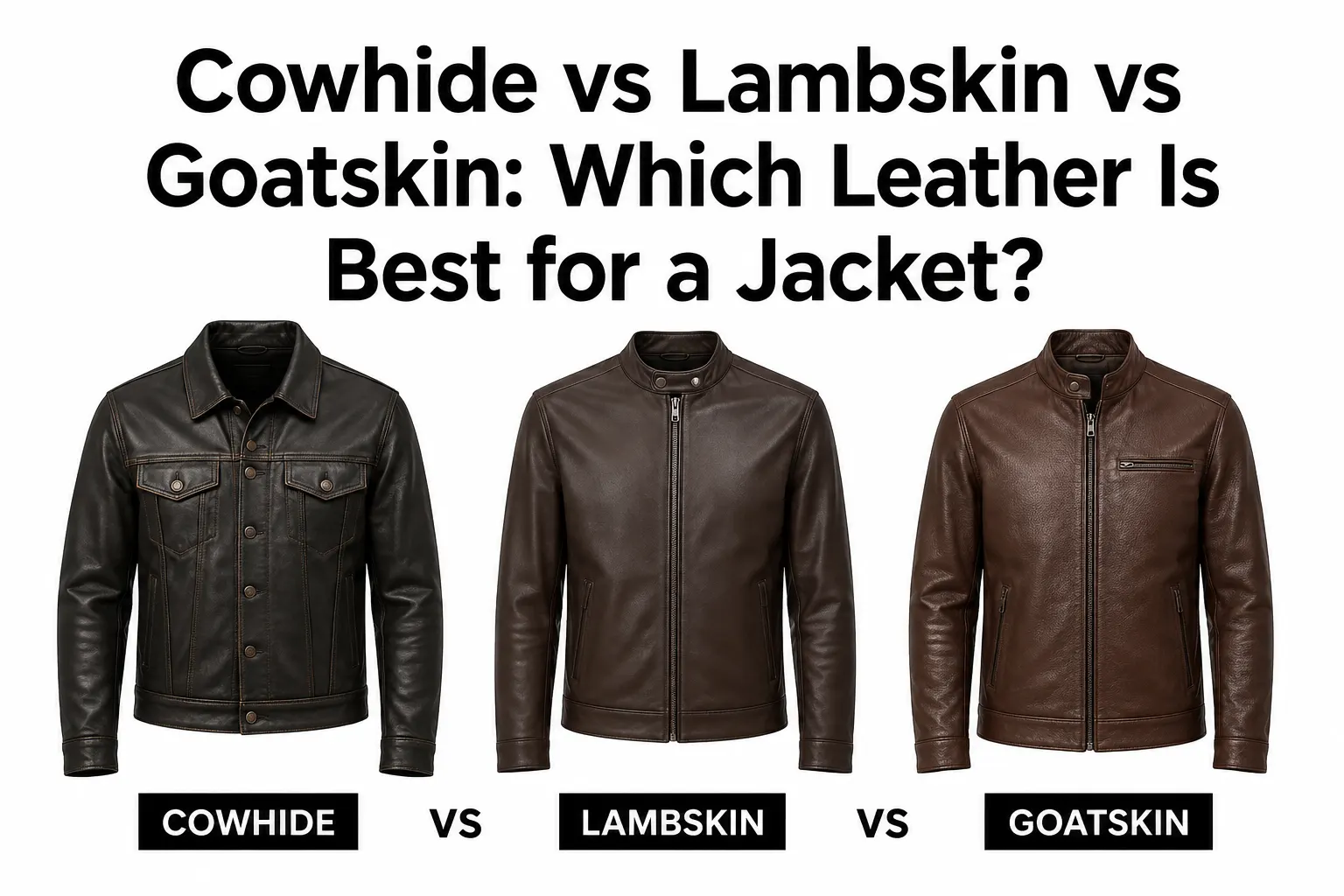
Cowhide vs Lambskin vs Goatskin: Which Leather Is Best for a Jacket?
How to Dye Leather Jacket? 5 Easy Steps